ICSE Class 10 Biology — All Questions

709 solved questions from 20 papers. Filter by year, section or marks, or search the full bank.

Year
Section
Marks
Insight
1(i)1 Mark · 2027 · Section A · 2027 SpecimenFull page

Komal, a biology student of class X observed that the smell of freshly cut grass in her garden spread rapidly in the air around it. This phenomenon is an example of:

Show SolutionHide Solution↓

diffusion

Reason — Diffusion is the movement of molecules from a region of their higher concentration to a region of their lower concentration. The scent molecules of the freshly cut grass move from the region where they are concentrated into the surrounding air, just as the fragrance of a lighted incense stick spreads through a room.
1(ii)1 Mark · 2027 · Section A · 2027 SpecimenFull page

While playing cricket on a hot, summer afternoon, Rohan felt a little dizzy though he had a balanced meal. The doctor advised him to take an oral rehydration solution. What was most likely the reason for Rohan’s condition?

Show SolutionHide Solution↓

Excessive perspiration

Reason — While playing on a hot afternoon, a large amount of water and salts is lost from the body as sweat. This loss leads to dehydration, which causes dizziness. An oral rehydration solution replaces the water and salts that have been lost.

1(iii)1 Mark · 2027 · Section A · 2027 SpecimenFull page

Assertion (A): Plants do not have sense organs but still respond to different stimuli.

Reason (R): Plants have a well-developed hormonal system to respond to sunlight, gravity, water, etc.

Show SolutionHide Solution↓

Both (A) and (R) are true and (R) is the correct explanation of (A).

Reason — Plants have neither sense organs nor a nervous system, yet they respond to stimuli such as light, gravity and water. These responses are brought about by phytohormones like auxins. Hence the hormonal system correctly explains why plants are able to respond to stimuli.

1(iv)1 Mark · 2027 · Section A · 2027 SpecimenFull page

Which of the following correctly describes the level of urea in the two blood vessels after a meal containing protein?

Show SolutionHide Solution↓

Renal Artery - High; Renal Vein - Low

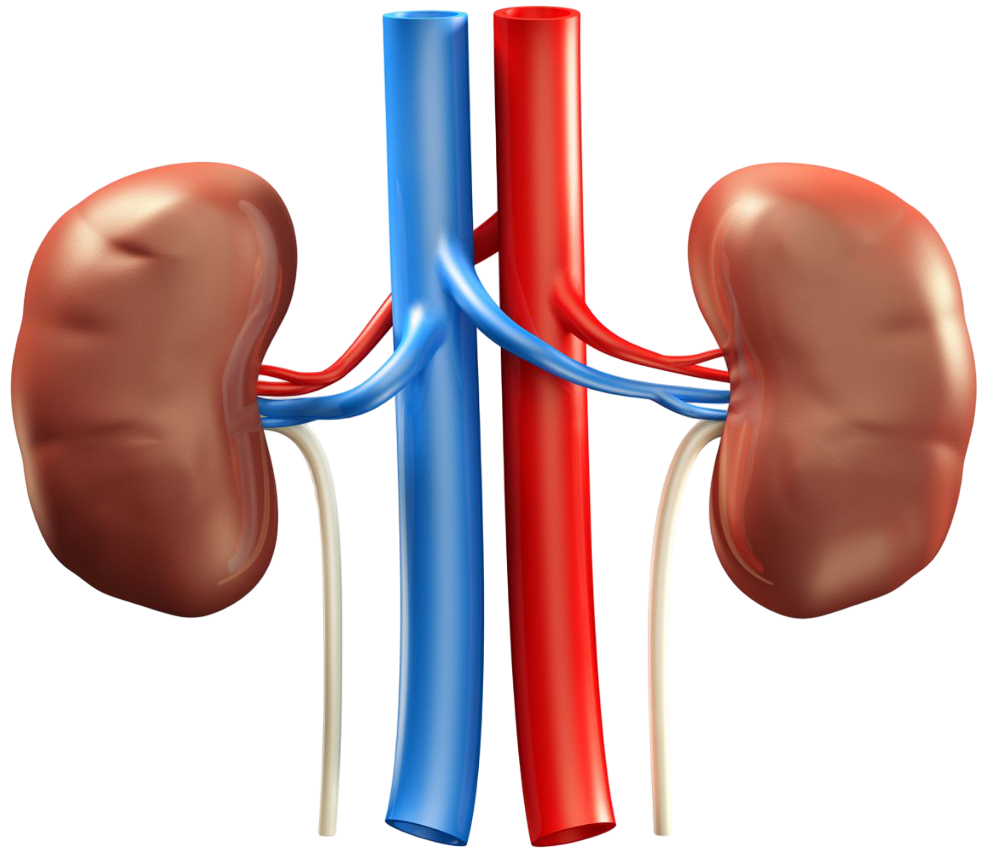
Reason — The excess amino acids of a protein meal are deaminated in the liver to form urea. The renal artery brings this urea rich blood to the kidney, where urea is filtered out and removed in the urine. So the blood leaving the kidney through the renal vein contains much less urea.

1(v)1 Mark · 2027 · Section A · 2027 SpecimenFull page

A patient suffering with severe cholera:

Show SolutionHide Solution↓

passes very little urine due to severe dehydration.

Reason — In cholera, a large quantity of water is lost from the body through severe diarrhoea and vomiting. To conserve the little water that is left, the kidney tubules reabsorb more water, so only a small quantity of concentrated urine is passed.

1(vi)1 Mark · 2027 · Section A · 2027 SpecimenFull page

Which of the following statements are correct?

P – Cobalt ions help in the opening of stomata.

Q – Strawberry leaves show guttation.

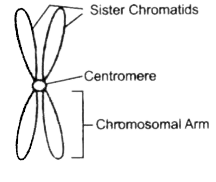
R – Duplicated chromosomes are joined at centrosome.

S – Conversion of ADP to ATP occurs in the light dependent phase.

Show SolutionHide Solution↓

Q and S

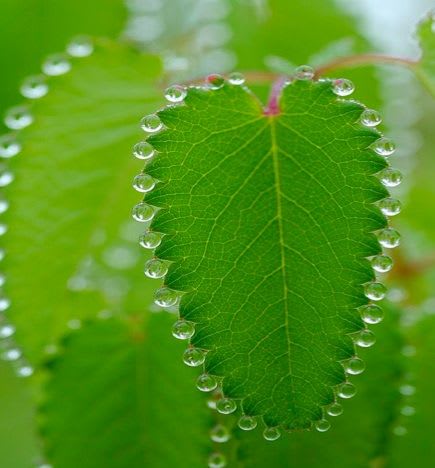
Reason — Guttation is the loss of water as droplets along the margins of leaves through hydathodes. It can be observed in many plants and is quite common in banana, nasturtium and strawberry so Q is correct. ADP is converted to ATP during the light dependent phase of photosynthesis, so S is correct. P is wrong because stomatal opening takes place by potassium ion exchange and not by cobalt ions. R is wrong because duplicated chromosomes are joined at the centromere and not at the centrosome.

1(vii)1 Mark · 2027 · Section A · 2027 SpecimenFull page

Meena’s mother prepared a cucumber salad and garnished it with salt and pepper. After some time, she noticed that a lot of water had accumulated in the salad bowl. The cucumber slices underwent:

Show SolutionHide Solution↓

exosmosis

Reason — The salt sprinkled on the cucumber makes the solution outside the cells more concentrated, that is hypertonic. Water therefore moves out of the cucumber cells through their semipermeable membranes and collects in the bowl. This outward movement of water is called exosmosis.

1(viii)1 Mark · 2027 · Section A · 2027 SpecimenFull page

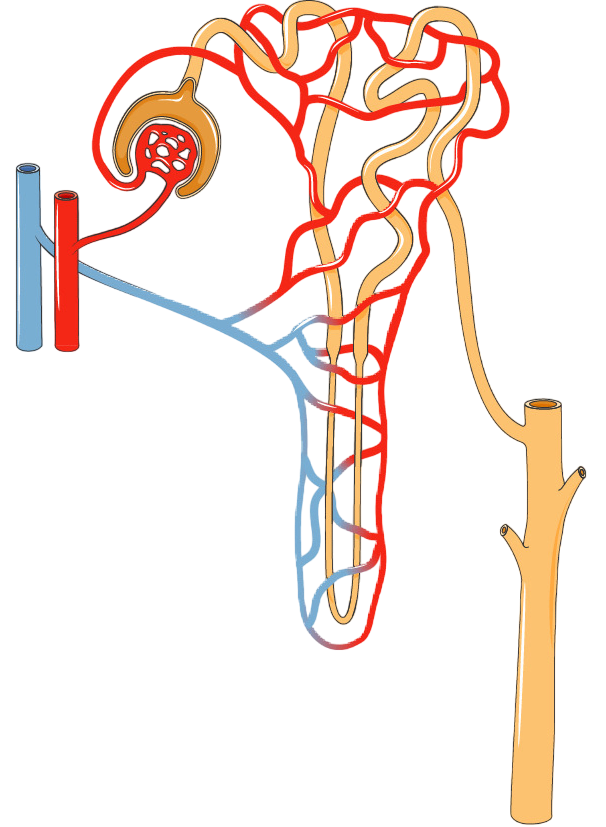
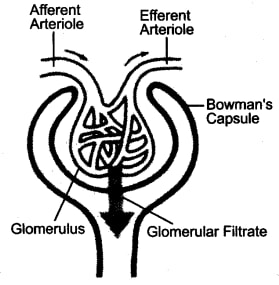
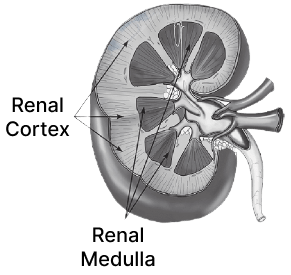
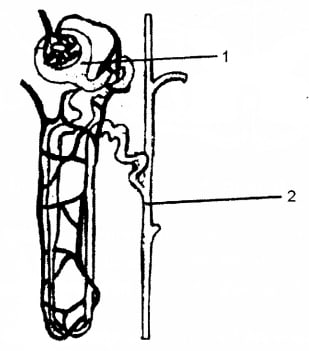
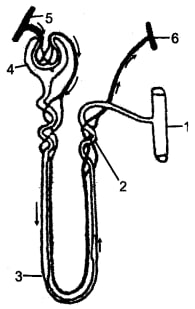
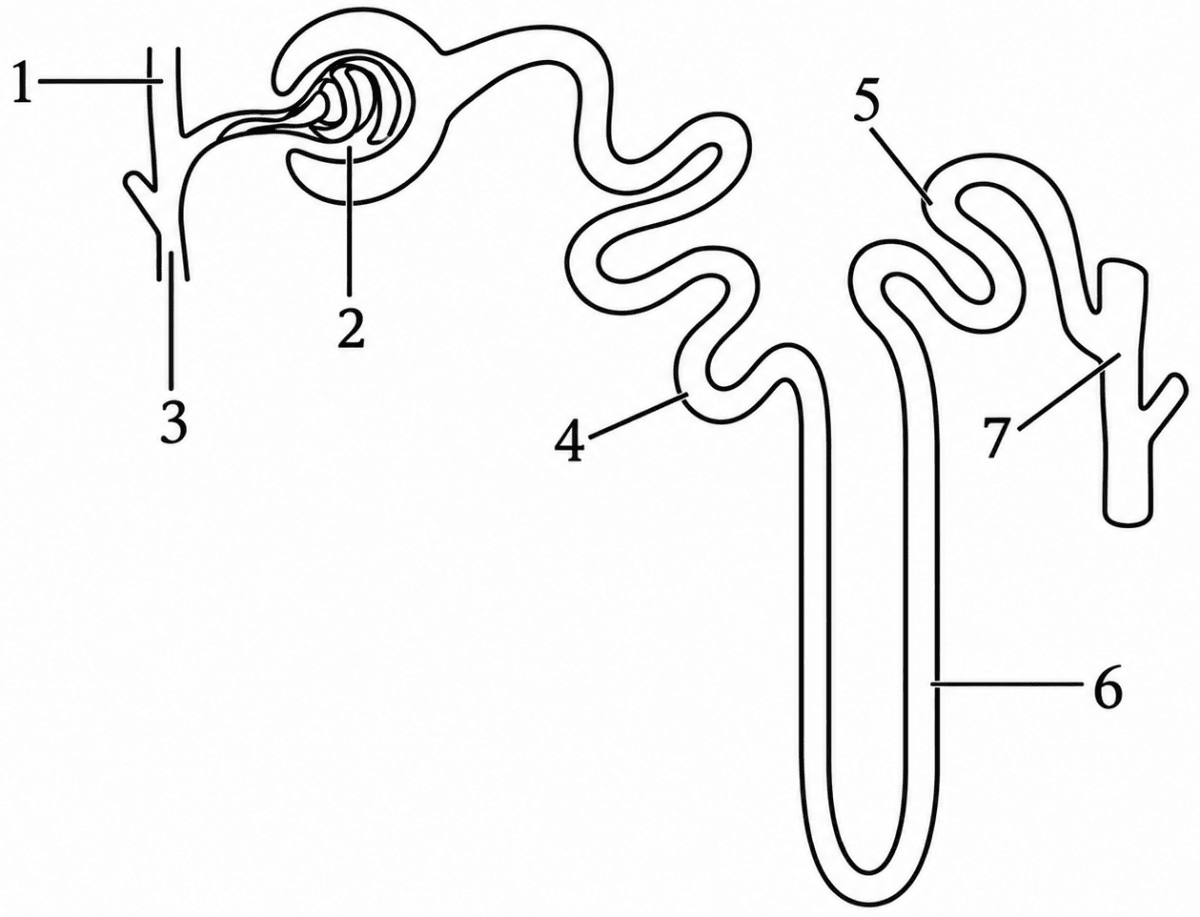
Which parts of the nephrons are present in the renal cortex and renal medulla?

Which parts of the nephrons are present in the renal cortex and renal medulla? Specimen Paper 2027, ICSE Biology 2027 Specimen Paper Solved.
Show SolutionHide Solution↓

Renal Cortex – 1, 2, 3, 4, 5; Renal Medulla – 6, 7

Reason — In the figure, 1 is the afferent arteriole, 2 the glomerulus, 3 the efferent arteriole, 4 the proximal convoluted tubule and 5 the distal convoluted tubule. All of these lie in the renal cortex. The loop of Henle (6) and the collecting duct (7) run down into the renal medulla.

1(ix)1 Mark · 2027 · Section A · 2027 SpecimenFull page

As the school bell rang for the lunch break, Tina’s mouth started watering thinking of her favourite food in the lunch box. This is a/an:

Show SolutionHide Solution↓

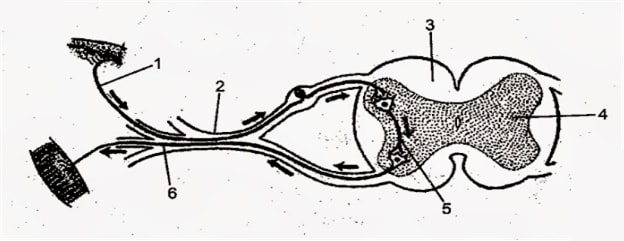
acquired reflex

Reason — Watering of the mouth at the mere sound of the school bell is a learnt response, formed by associating the bell with food. Such learnt responses are called acquired or conditioned reflexes, as shown by Pavlov in his experiment on a dog.

1(x)1 Mark · 2027 · Section A · 2027 SpecimenFull page

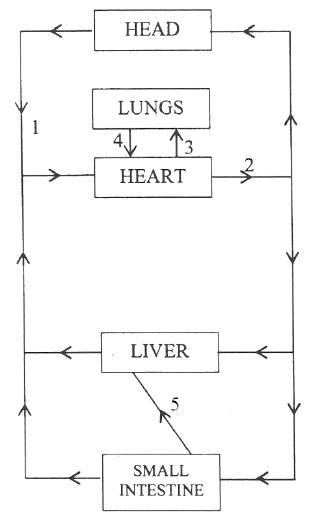
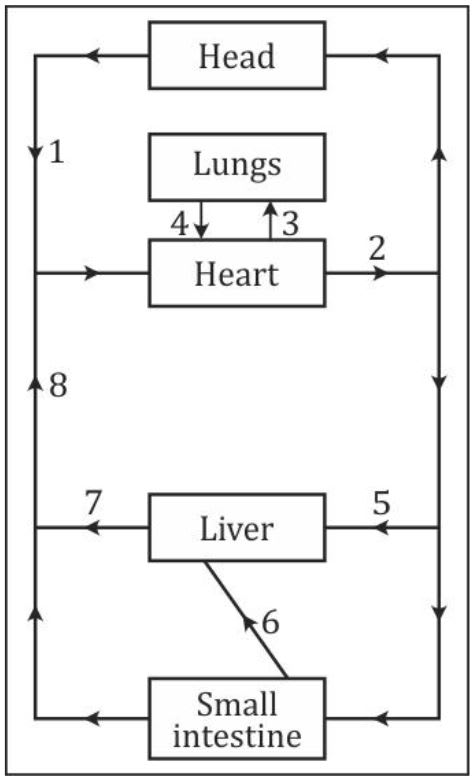
The path of blood flow during pulmonary circulation is:

Show SolutionHide Solution↓

Right auricle, Right ventricle, Pulmonary artery, Lungs, Pulmonary veins, Left auricle.

Reason — In pulmonary circulation, deoxygenated blood is pumped from the right ventricle through the pulmonary artery to the lungs. After being oxygenated in the lungs, the blood returns to the left auricle through the pulmonary veins.

1(xi)1 Mark · 2027 · Section A · 2027 SpecimenFull page

A rabbit in a food chain occupies the position of:

Show SolutionHide Solution↓

primary consumer

Reason — A rabbit is a herbivore and feeds directly on green plants, which are the producers. Organisms that feed directly on producers occupy the position of primary consumers in a food chain.

1(xii)1 Mark · 2027 · Section A · 2027 SpecimenFull page

Assertion (A): Pericardial fluid is present between the heart and pericardium.

Reason (R): The human heart has four chambers.

Show SolutionHide Solution↓

Both (A) and (R) are true, but (R) is not the correct explanation of (A).

Reason — Pericardial fluid is present between the heart wall and the pericardium, and the human heart does have four chambers. However, the number of chambers has nothing to do with the presence of this fluid. The pericardial fluid protects the heart from shocks and reduces friction during its beating.

1(xiii)1 Mark · 2027 · Section A · 2027 SpecimenFull page

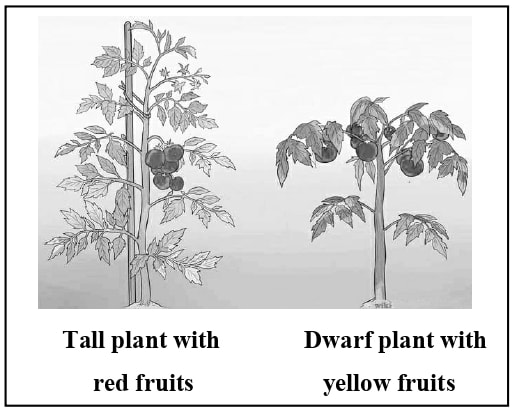
Tongue rolling is a dominant trait. Arun who cannot roll his tongue, marries a woman who is a carrier of the trait. What percentage of their children can roll their tongue?

Tongue rolling is a dominant trait. Arun who cannot roll his tongue, marries a woman who is a carrier of the trait. What percentage of their children can roll their tongue? Specimen Paper 2027, ICSE Biology 2027 Specimen Paper Solved.
Show SolutionHide Solution↓

50%

Reason — Arun cannot roll his tongue, so he is homozygous recessive (tt). His wife is a carrier, so she is heterozygous (Tt). The cross tt × Tt gives 50% Tt children, who can roll their tongue, and 50% tt children, who cannot.

1(xiv)1 Mark · 2027 · Section A · 2027 SpecimenFull page

For the past few years there has been irregular rainfall, leading to crop failures and water shortages. This is a result of:

Show SolutionHide Solution↓

climate change

Reason — A long term change in the pattern of rainfall and temperature, leading to crop failure and water shortage, is an effect of climate change brought about by global warming.

1(xv)1 Mark · 2027 · Section A · 2027 SpecimenFull page

Root hairs are epidermal outgrowths of the outermost layer of roots. They are well suited for absorption of water from the soil due to:

P – Large surface area

Q – Lower concentration of cell sap

R – Higher concentration of cell sap

S – Freely permeable cell membrane

Show SolutionHide Solution↓

P and R

Reason — Root hairs are very fine and numerous, which gives them a large surface area for absorption. The cell sap inside them is more concentrated than the soil water, so water enters by endosmosis. Q is wrong because the cell sap is more concentrated, not less, and S is wrong because the cell membrane of the root hair is semipermeable, not freely permeable.

2(i)1 Mark · 2027 · Section A · 2027 SpecimenFull page

Give the biological / technical terms for the following:

(a) Respiratory openings present on the stems of woody plants.

(b) The fluid present between the cornea and lens of the eye.

(c) The canal through which the testes descend into scrotum just before the birth of a male baby.

(d) The type of cell division for the formation of gametes in humans.

(e) The neurotransmitter stored in the axon endings of neurons.

Show SolutionHide Solution↓

(a) Lenticels

(b) Aqueous humour

(c) Inguinal canal

(d) Meiosis

(e) Acetylcholine

2(ii)1 Mark · 2027 · Section A · 2027 SpecimenFull page

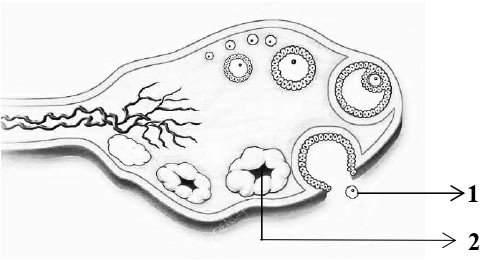
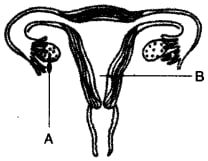
The ovaries are a pair of small oval-shaped reproductive organs situated in the pelvic cavity of a female. They perform two main functions – production of female gametes and secretion of hormones. These hormones regulate the menstrual cycle and bring about the development of secondary sexual characteristics in females.

Select the correct terms to fill in the blanks:

[fertilisation, 280, uterus, oviduct, ova, 40, ovulation, ovules, parturition]

(a) The gametes produced by ovaries are called ................

(b) The release of a mature ovum from graafian follicle is known as ................

(c) Menstrual flow occurs when ............... of the female gamete fails to occur.

(d) Implantation of the embryo is in the ................

(e) The gestation period lasts for ............... weeks.

Show SolutionHide Solution↓

(a) ova

(b) ovulation

(c) fertilisation

(d) uterus

(e) 40

2(iii)1 Mark · 2027 · Section A · 2027 SpecimenFull page

Choose the ODD term out from each of the following set of terms. Mention the category to which the remaining three belong:

(a) Neutrophil, Monocyte, Eosinophil, Basophil

(b) TSH, ADH, ACTH, FSH

(c) Wisdom tooth, Pinna, Tongue, Vermiform appendix

(d) Haemoglobin, Fibrin, Prothrombin, Fibrinogen

(e) Vas deferens, Endometrium, Seminiferous tubule, Vas efferens

Show SolutionHide Solution↓

(a) Odd term — Monocyte
Category of the remaining terms — Granulocytes.

(b) Odd term — ADH
Category of the remaining terms — Hormones secreted by the anterior lobe of the pituitary gland.

(c) Odd term — Tongue
Category of the remaining terms — Vestigial organs.

(d) Odd term — Haemoglobin
Category of the remaining terms — Components involved in blood clotting.

(e) Odd term — Endometrium
Category of the remaining terms — Parts of the male reproductive system.

2(iv)1 Mark · 2027 · Section A · 2027 SpecimenFull page

Tanya, a ten-year-old girl had a severe earache. Her mother took her to an E.N.T. doctor for a checkup. The doctor noticed that she had a throat infection which had spread to her ear. Answer the following questions:

(a) Name the structure that connects the throat and ear.

(b) What is the collective term for the three cartilaginous structures present in the middle ear?

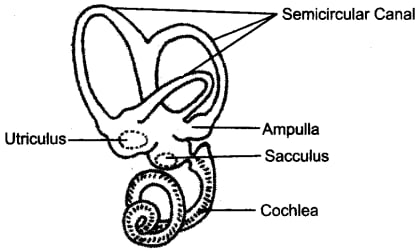
(c) Which is the sensory organ located in cochlea?

(d) What is the significance of the tiny hair present in the auditory canal?

(e) What is the function of auditory nerve?

Show SolutionHide Solution↓

(a) Eustachian tube.

(b) Ossicles.

(c) Organ of Corti.

(d) The tiny hairs, along with the wax secreting glands of the auditory canal, prevent dust and other small foreign particles from entering the ear and reaching the ear drum.

(e) The auditory nerve carries nerve impulses from the inner ear to the brain, for hearing and for maintaining body balance.

2(v)1 Mark · 2027 · Section A · 2027 SpecimenFull page

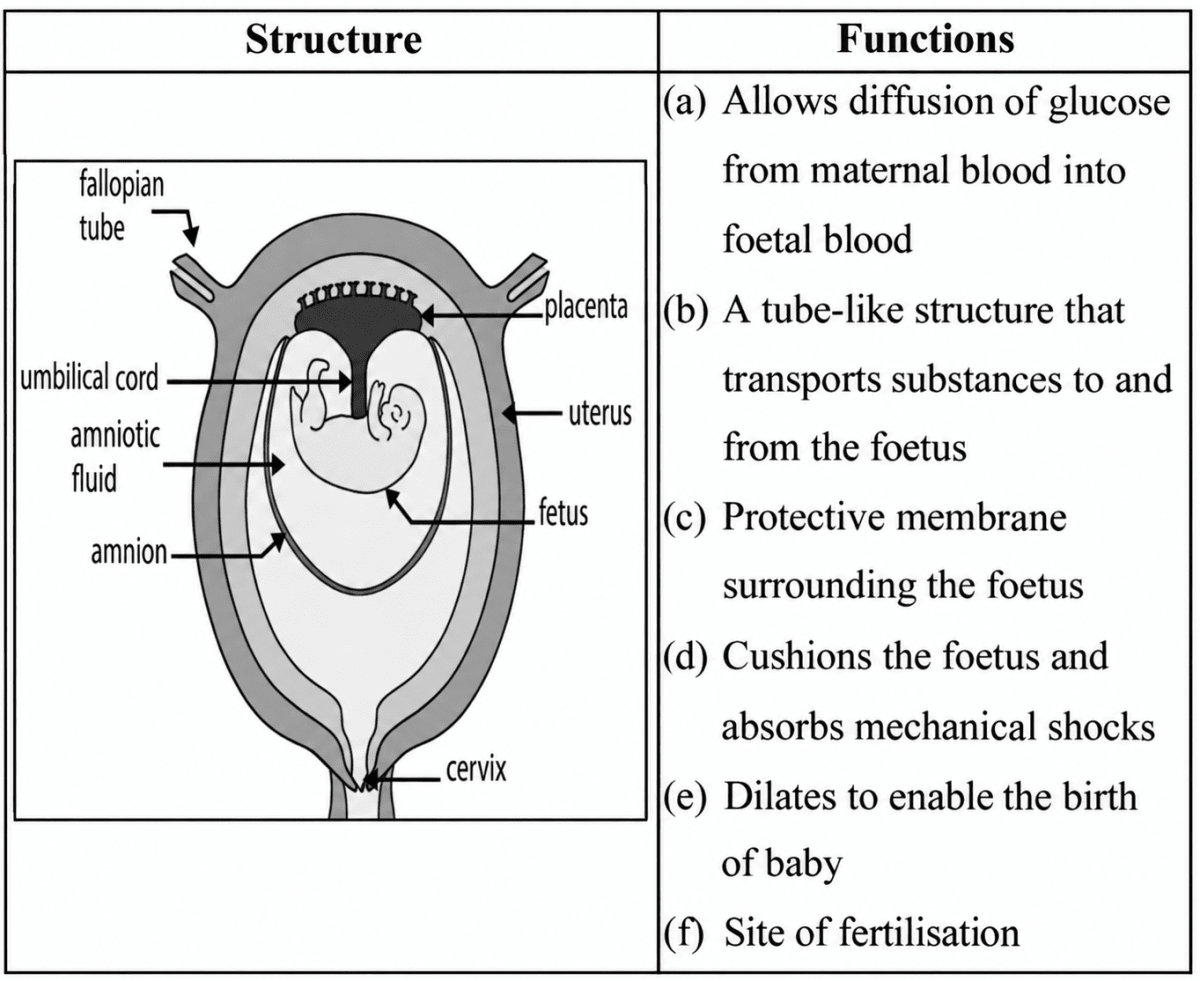
Study the diagram given below and match the structure with its function:

Example: Fallopian tube – (f)

Study the diagram given below and match the structure with its function: Example: Fallopian tube – (f). Specimen Paper 2027, ICSE Biology 2027 Specimen Paper Solved.
Show SolutionHide Solution↓

(a) Placenta - Allows diffusion of glucose from maternal blood into foetal blood

(b) Umbilical cord - A tube-like structure that transports substances to and from the foetus

(c) Amnion - Protective membrane surrounding the foetus

(d) Amniotic fluid - Cushions the foetus and absorbs mechanical shocks

(e) Cervix - Site of fertilisation

3(i)Written · 2027 · Section B · 2027 SpecimenFull page

Avinash placed a potted plant on a windowsill on a hot summer morning. By afternoon, the leaves had wilted though the soil was well watered. He moved the plant indoors and the leaves regained their turgidity.

Name the process responsible for the wilting of leaves.

Show SolutionHide Solution↓

Transpiration

3(ii)Written · 2027 · Section B · 2027 SpecimenFull page

Define the above process.

Show SolutionHide Solution↓

Transpiration is the loss of water in the form of water vapour from the aerial parts of a plant, mainly from the leaves.

3(iii)Written · 2027 · Section B · 2027 SpecimenFull page

Explain how the process will differ on a rainy day.

Show SolutionHide Solution↓

On a rainy day the atmosphere is highly humid. As there is very little difference between the amount of water vapour inside the leaf and that in the surrounding air, the diffusion of water vapour out of the leaf becomes slow. Hence the rate of transpiration is much lower on a rainy day.

3(iv)Written · 2027 · Section B · 2027 SpecimenFull page

Which are the primary pores through which the above process takes place? Where are they located?

Show SolutionHide Solution↓

The primary pores are the stomata.
They are present mainly on the surface of the leaves and also on young green stems.

3(v)Written · 2027 · Section B · 2027 SpecimenFull page

List three adaptations in plants to reduce this process.

Show SolutionHide Solution↓

Three adaptations in plants to reduce transpiration are:

  1. A thick waxy cuticle develops over the epidermis, as in the banyan tree.
  2. The number of stomata is reduced and they are placed on the lower surface of the leaf.
  3. The stomata are sunken in pits and covered with hair, as in Nerium.
4(i)Written · 2027 · Section B · 2027 SpecimenFull page

Pallavi, a 30-year-old woman showed certain male characteristics such as growth of moustache, beard and hair on her chest. The endocrinologist diagnosed it as a hormonal disorder.

(a) Mention the biological term for the disorder.

(b) Which hormone is responsible for this disorder? Name the gland which secretes this hormone.

(c) Explain the term hormone.

(d) Expand the following abbreviations:

Show SolutionHide Solution↓

(a) Adrenal virilism.

(b) Cortical hormones, that is the sex corticoids or androgens, are responsible for this disorder. They are secreted by the adrenal gland.

(c) Hormones are chemical messengers secreted in very small amounts by the ductless or endocrine glands directly into the blood. They are carried by the blood to the target organs, where they regulate physiological processes.

(d) 1. TSH — Thyroid Stimulating Hormone
2. ACTH — Adreno Cortico Tropic Hormone

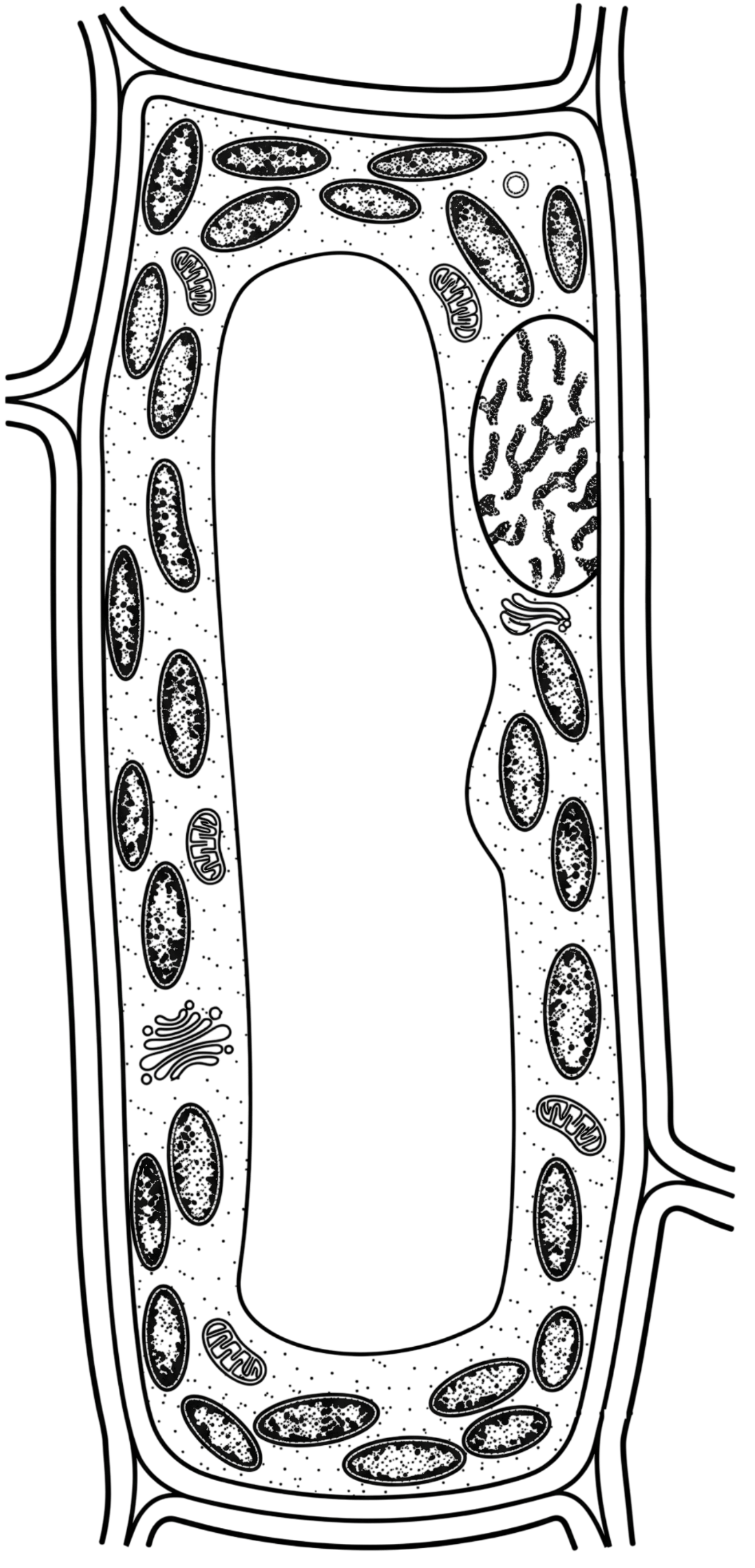
4(ii)Written · 2027 · Section B · 2027 SpecimenFull page

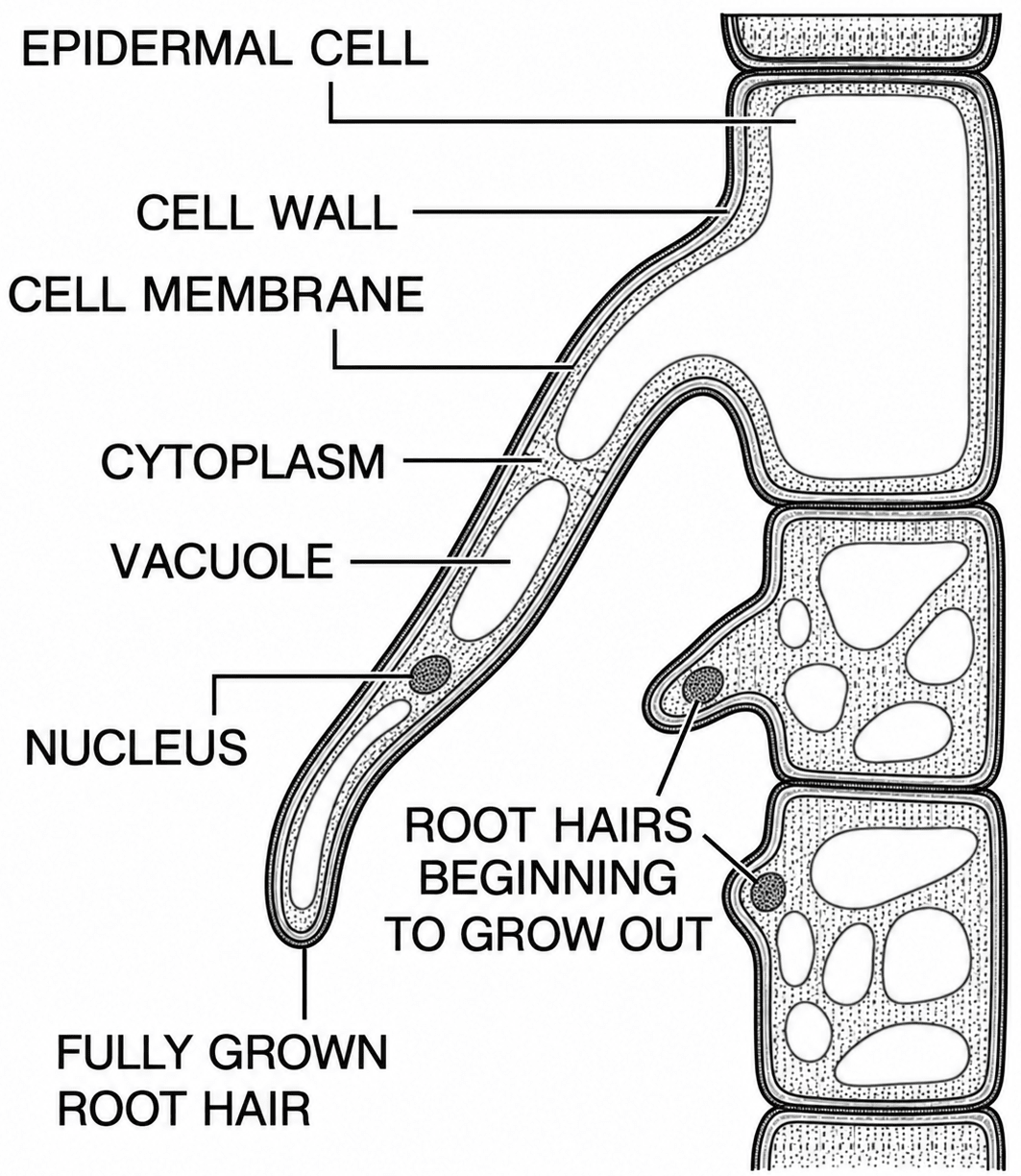
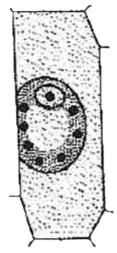
Draw a neat, labelled diagram of a turgid root hair cell.

Show SolutionHide Solution↓

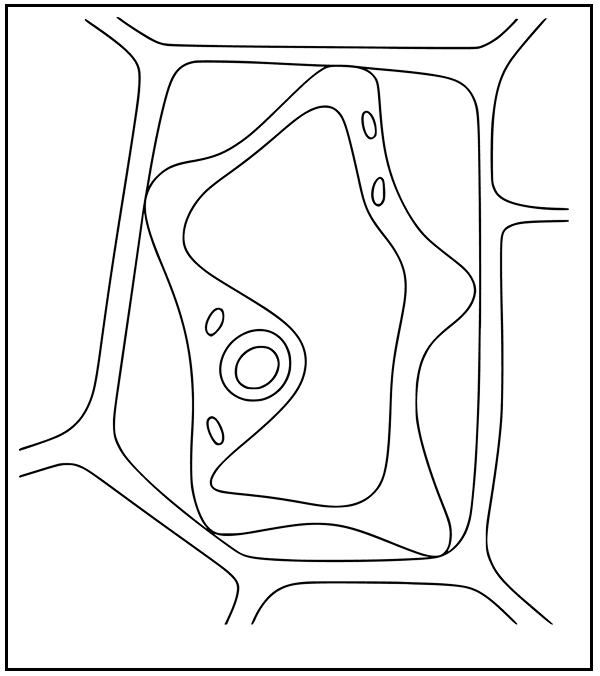
A neat, labelled diagram of a turgid root hair cell is shown below:

Draw a neat, labelled diagram of a turgid root hair cell. Specimen Paper 2027, ICSE Biology 2027 Specimen Paper Solved.
5(i)Written · 2027 · Section B · 2027 SpecimenFull page

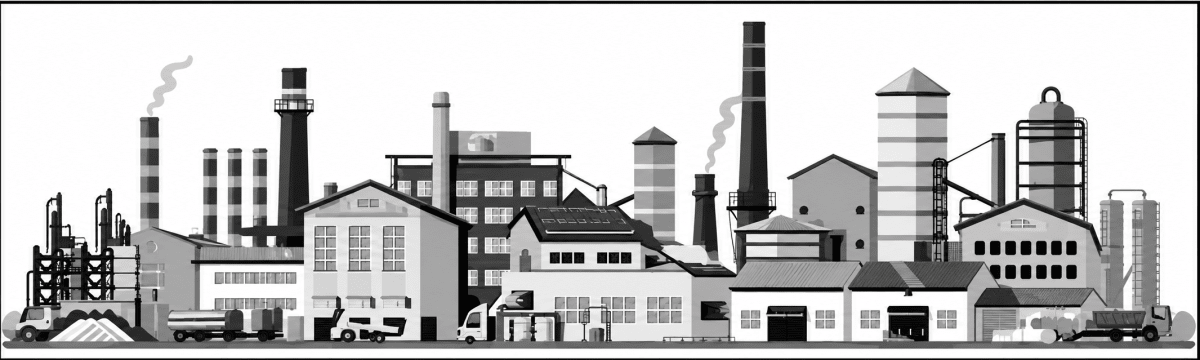
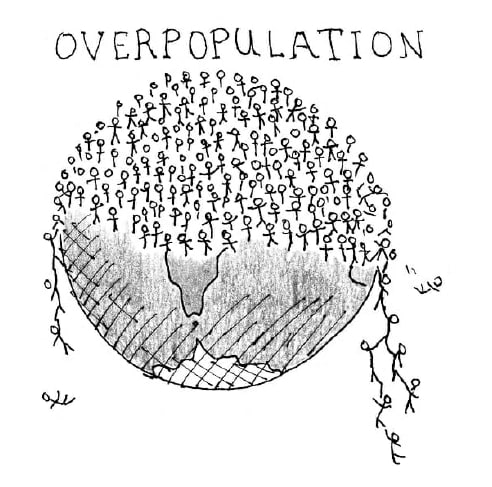
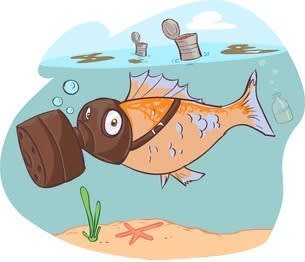
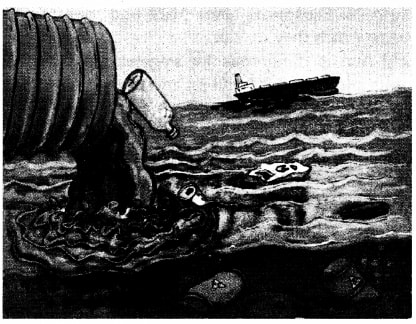
Kiran lived with his family in the outskirts of a city which had a lot of greenery around. After a few years, a number of factories mushroomed which affected the quality of life of the people living there.

Kiran lived with his family in the outskirts of a city which had a lot of greenery around. After a few years, a number of factories mushroomed which affected the quality of life of the people living there. What message does the picture convey to you? Specimen Paper 2027, ICSE Biology 2027 Specimen Paper Solved.

What message does the picture convey to you?

Show SolutionHide Solution↓

The picture shows a large number of factories giving out smoke into the air. It conveys the message that factories should not be built close to residential areas, and that industrial growth should not be allowed to spoil the environment.

5(ii)Written · 2027 · Section B · 2027 SpecimenFull page

Name any two types of pollution caused by the factories.

Show SolutionHide Solution↓

Air pollution and water pollution.

5(iii)Written · 2027 · Section B · 2027 SpecimenFull page

Mention two reasons for population explosion in India.

Show SolutionHide Solution↓

Two reasons for population explosion in India are:

  1. High birth rate.
  2. Lack of education and awareness about family planning methods.
5(iv)Written · 2027 · Section B · 2027 SpecimenFull page

State any two health problems that the residents may face in this case.

Show SolutionHide Solution↓

Two health problems that the residents may face are:

  1. Respiratory diseases such as asthma and bronchitis.
  2. Allergies and skin infections.
5(v)Written · 2027 · Section B · 2027 SpecimenFull page

List any three resources that come under pressure due to rising population.

Show SolutionHide Solution↓

Three resources that come under pressure due to rising population are:

  1. Food
  2. Fossil fuels
  3. Minerals
6(i)Written · 2027 · Section B · 2027 SpecimenFull page

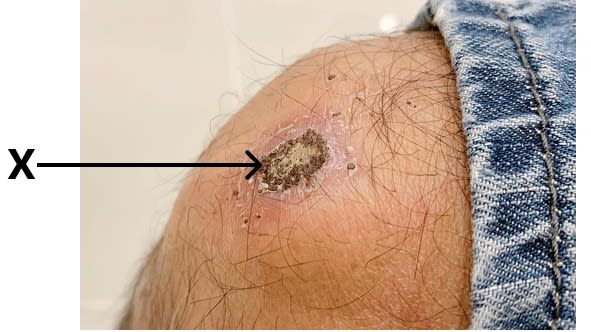
Rahul fell down while riding a bicycle and injured his knee. The injury healed within a few days due to a kind of cell division.

Name the type of cell division responsible for the healing of wound.

Show SolutionHide Solution↓

Mitosis

6(ii)Written · 2027 · Section B · 2027 SpecimenFull page

How many chromosomes are present in each cell of the human body? What will be number of chromosomes in the daughter cells during the healing process?

Show SolutionHide Solution↓

Each cell of the human body contains 46 chromosomes, that is 23 pairs.
The wound heals by mitosis, in which the daughter cells receive the same number of chromosomes as the parent cell. So each daughter cell will also contain 46 chromosomes.

6(iii)Written · 2027 · Section B · 2027 SpecimenFull page

State Mendel’s Law of Segregation of gametes.

Show SolutionHide Solution↓

Mendel’s Law of Segregation of gametes states that during the formation of gametes (sperm or eggs), the two alleles for a given gene separate, or segregate, so that each gamete carries only one allele for each gene. When gametes fuse during fertilization, the resulting offspring inherits one allele from each parent, restoring the diploid number of alleles for that gene.

6(iv)Written · 2027 · Section B · 2027 SpecimenFull page

Why is haemophilia uncommon in human females?

Show SolutionHide Solution↓

Haemophilia is a sex linked recessive disorder carried on the X chromosome. A female has two X chromosomes, so she will suffer from the disease only if both of them carry the recessive gene. If only one X chromosome carries it, the normal dominant gene on the other X chromosome suppresses the disease and she remains a carrier. A male has only one X chromosome, so a single recessive gene expresses itself and he shows the disease. This is why haemophilia is uncommon in human females.

6(v)Written · 2027 · Section B · 2027 SpecimenFull page

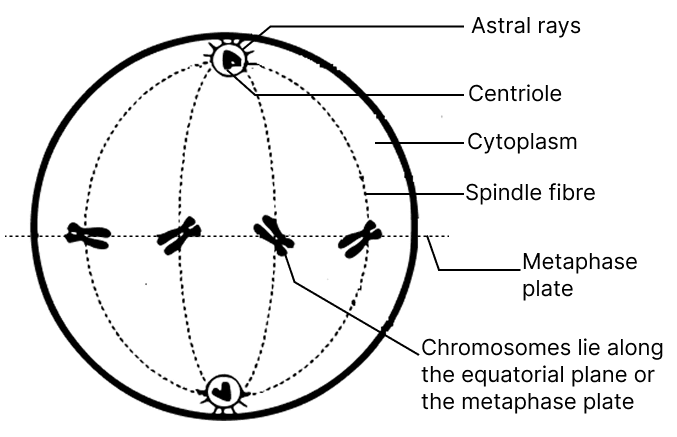
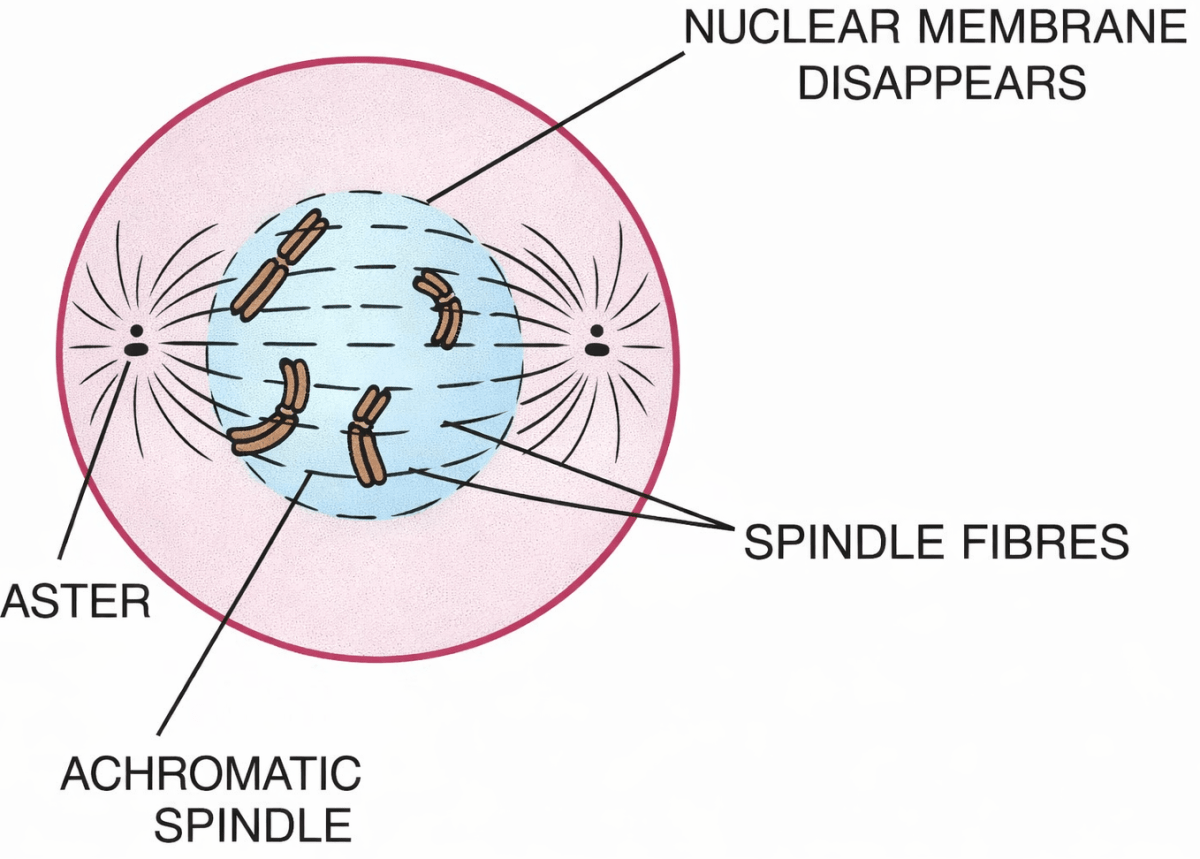
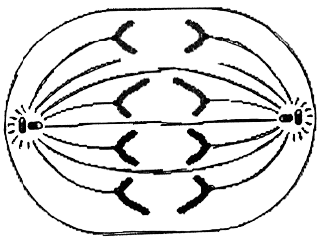
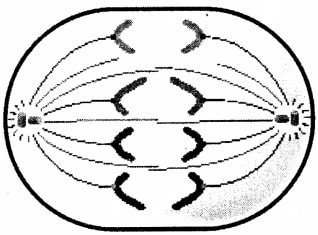
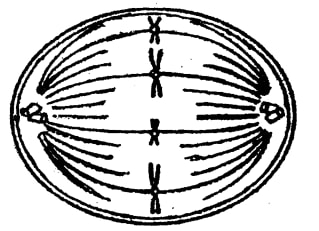
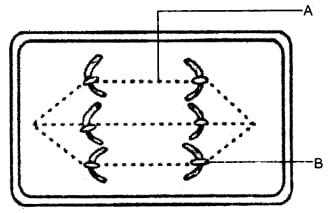
Draw a neat, labelled diagram of an animal cell having 4 chromosomes in the metaphase stage.

Show SolutionHide Solution↓

A neat, labelled diagram of an animal cell having 4 chromosomes in the metaphase stage is shown below:

Draw a neat, labelled diagram of an animal cell showing Metaphase with four chromosomes. ICSE 2025 Biology Solved Question Paper.
7(i)Written · 2027 · Section B · 2027 SpecimenFull page

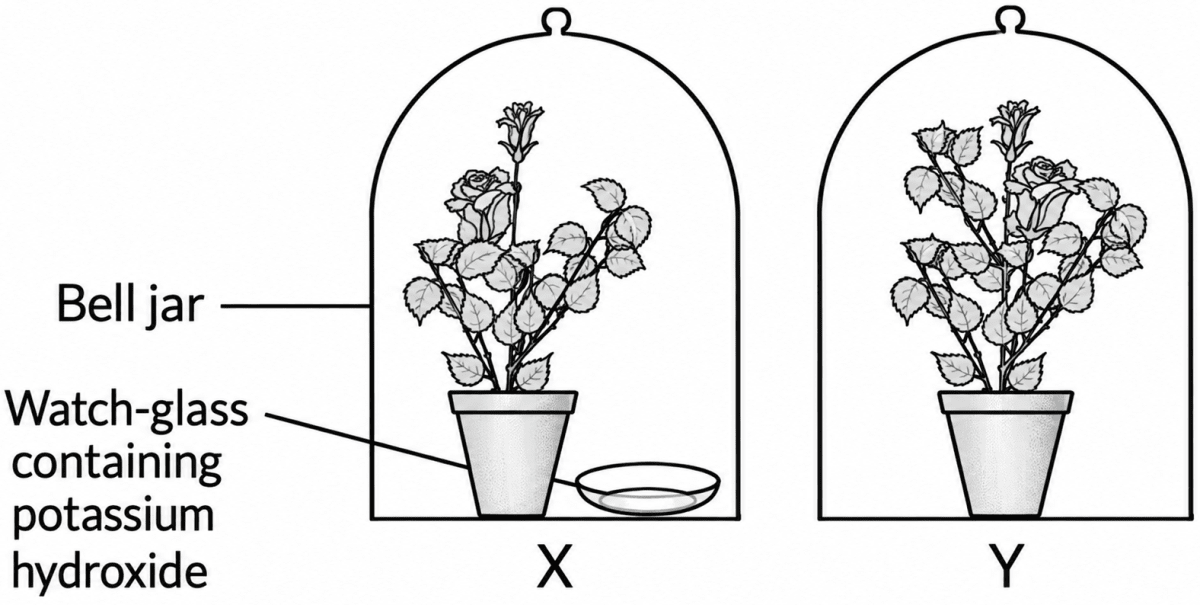
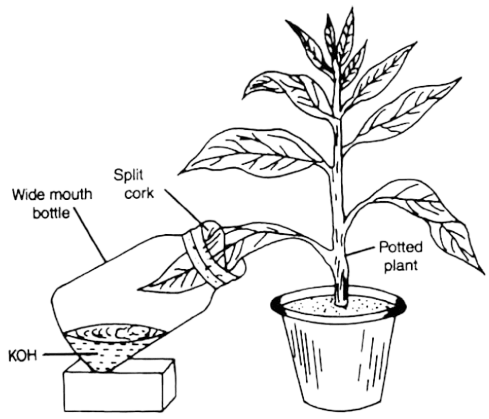
A potted plant under a bell jar with a watch glass containing potassium hydroxide is placed under sunlight for three hours. After exposure to sunlight none of the leaves of the plant “X” turned blue black when tested with iodine, while the leaves of the control plant “Y” did.

A potted plant under a bell jar with a watch glass containing potassium hydroxide is placed under sunlight for three hours. After exposure to sunlight none of the leaves of the plant X turned blue black when tested with iodine, while the leaves of the control plant Y did. What is the aim of the experiment? Specimen Paper 2027, ICSE Biology 2027 Specimen Paper Solved.

What is the aim of the experiment?

Show SolutionHide Solution↓

The aim of the experiment is to prove that carbon dioxide is necessary for photosynthesis.

7(ii)Written · 2027 · Section B · 2027 SpecimenFull page

Write the balanced equation for photosynthesis. Name the mineral element essential for the formation of chlorophyll.

Show SolutionHide Solution↓

$6\text{CO}_2 + 12\text{H}_2\text{O} \xrightarrow[\text{chlorophyll}]{\text{light energy}} \text{C}_6\text{H}_{12}\text{O}_6 + 6\text{H}_2\text{O} + 6\text{O}_2 \uparrow$

The mineral element essential for the formation of chlorophyll is magnesium.

7(iii)Written · 2027 · Section B · 2027 SpecimenFull page

Explain the conclusion drawn from this experiment after the iodine test.

Show SolutionHide Solution↓

In plant X, the potassium hydroxide kept in the watch glass absorbed all the carbon dioxide present inside the bell jar. In the absence of carbon dioxide, photosynthesis could not take place, so no starch was formed and the leaves did not turn blue black with iodine.

In the control plant Y, carbon dioxide was available, so photosynthesis took place and starch was formed. Hence its leaves turned blue black with iodine.

This proves that carbon dioxide is essential for photosynthesis.

7(iv)Written · 2027 · Section B · 2027 SpecimenFull page

Which hormone promotes the growth of plants towards sunlight? What is this tropic movement called?

Show SolutionHide Solution↓

Auxin is the hormone that promotes the growth of plants towards sunlight.
This tropic movement is called phototropism.

7(v)Written · 2027 · Section B · 2027 SpecimenFull page

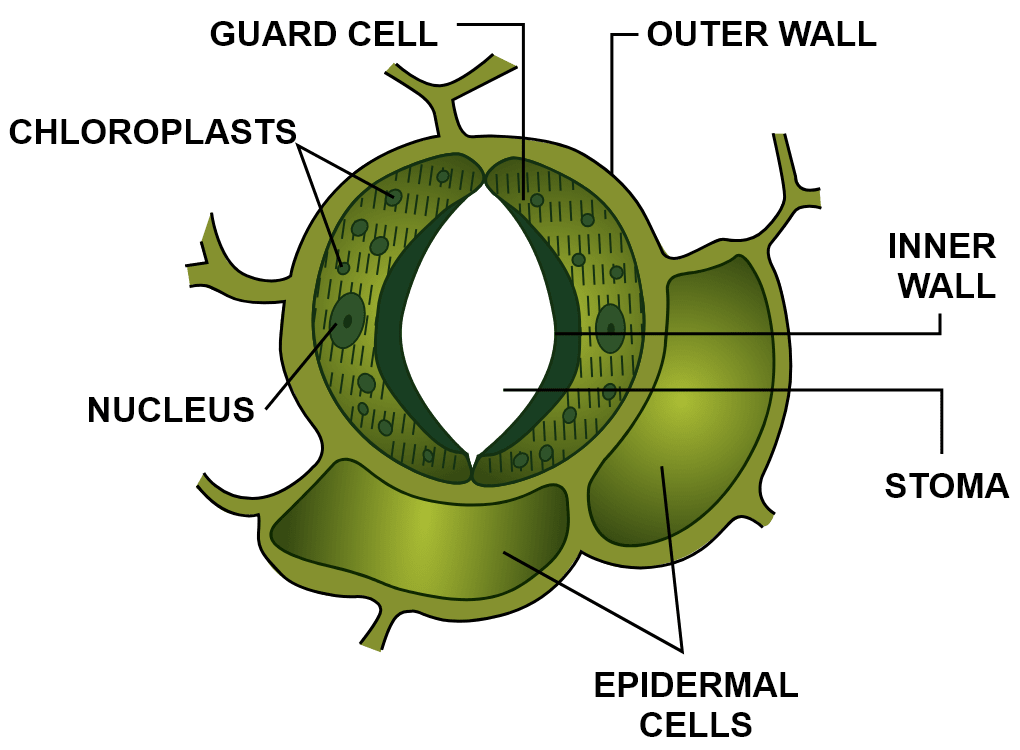
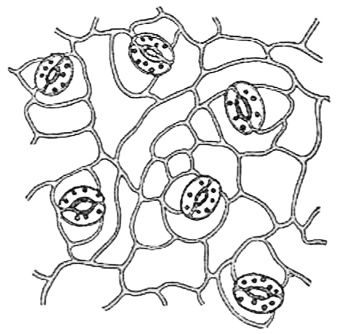
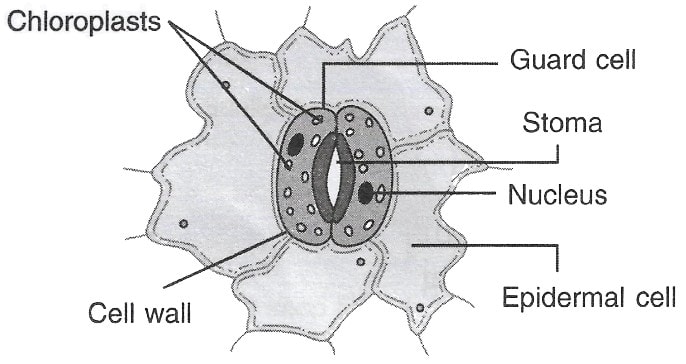
Draw a neat, labelled diagram of a stomatal apparatus surrounded by epidermal cells.

Show SolutionHide Solution↓

Below diagram shows the stomatal apparatus found in the epidermis of leaves with all the different parts labelled:

Draw a neat diagram of the stomatal apparatus found in the epidermis of leaves and label the Stoma, Guard cells, Chloroplast, Epidermal cells, Cell wall and Nucleus. Photosynthesis, Concise Biology Solutions ICSE Class 10.
8(i)Written · 2027 · Section B · 2027 SpecimenFull page

Who proposed the theory of ‘Natural Selection’?

Show SolutionHide Solution↓

Charles Darwin

8(ii)Written · 2027 · Section B · 2027 SpecimenFull page

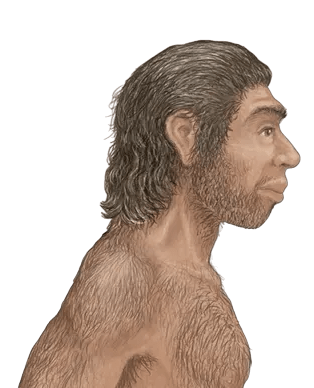
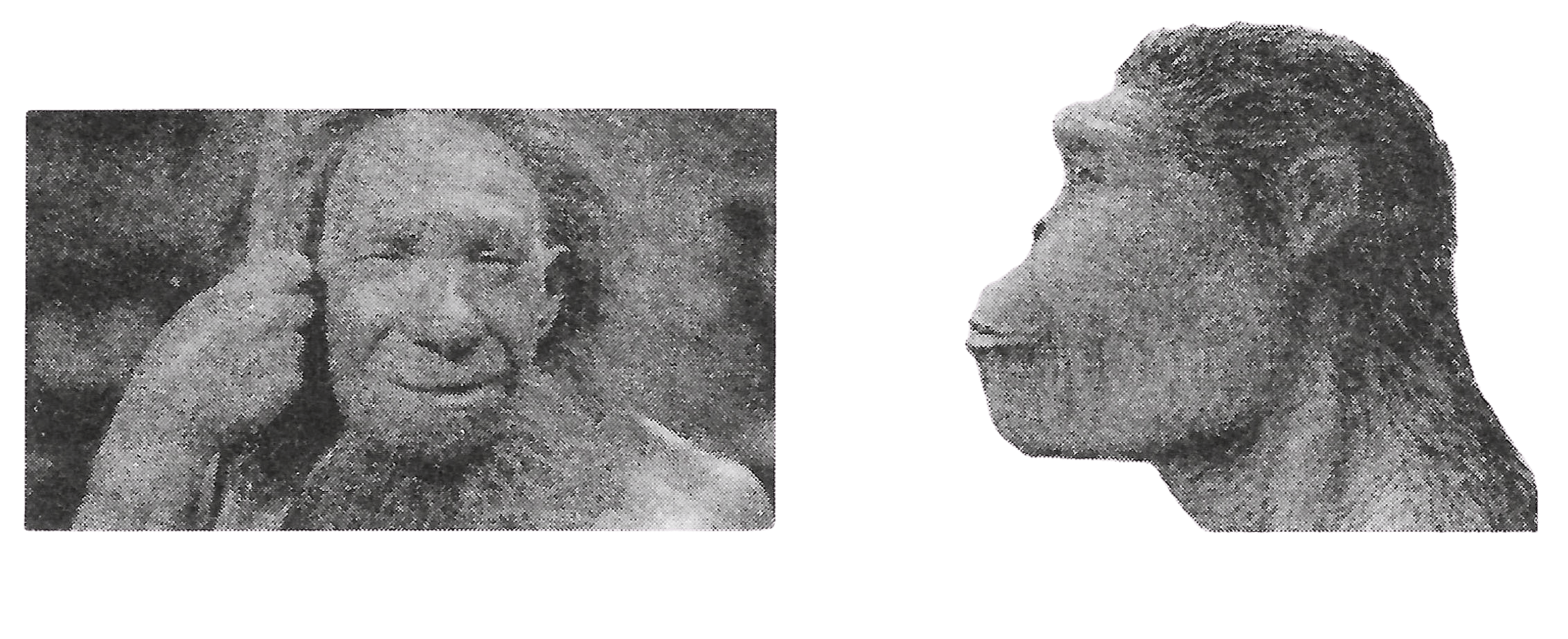
Mention two characteristic features of Australopithecus.

Show SolutionHide Solution↓

Two characteristic features of Australopithecus are:

  1. Absence of chin.
  2. Body covered with hair.
8(iii)Written · 2027 · Section B · 2027 SpecimenFull page

What is the reason for Hyperopia? How can it be corrected?

Show SolutionHide Solution↓

Hyperopia or hypermetropia is caused either by the shortening of the eyeball from front to back or by the lens becoming too flat. As a result, the image of nearby objects is formed behind the retina and near vision becomes blurred.

It is corrected by using spectacles with convex (biconvex) lenses.

8(iv)Written · 2027 · Section B · 2027 SpecimenFull page

State one difference between identical twins and fraternal twins.

Show SolutionHide Solution↓

One difference between identical twins and fraternal twins is:

Identical TwinsFraternal Twins
They develop from a single fertilised egg which splits into two, so they are always of the same sex.They develop from two separate eggs fertilised by two different sperms, so they may be of the same or of different sexes.
8(v)Written · 2027 · Section B · 2027 SpecimenFull page

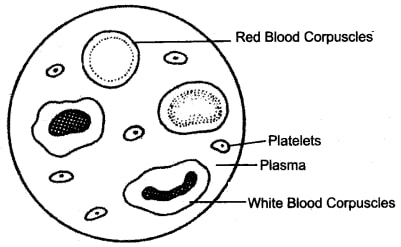
Draw a neat, labelled diagram of a human blood smear.

Show SolutionHide Solution↓

A neat, labelled diagram of a human blood smear is shown below:

Figure unavailable in the source: Draw a neat, labelled diagram of a human blood smear. Photosynthesis, Concise Biology Solutions ICSE Class 10.
1(i)1 Mark · 2026 · Section A · 2026 Paper · 🔁 also 2024Full page

Four friends P, Q, R and S were discussing the examples of genetic disorders. The examples they quoted were as follows:

P. Colour blindness and Malaria

Q. Albinism and Cholera

R. Haemophilia and Colour blindness

S. Haemophilia and Albinism

Who gave the correct examples?

Show SolutionHide Solution↓

R and S

Reason — Malaria and Cholera are not genetic disorders. They are caused by plasmodium and bacteria respectively. Haemophilia, Colour blindness and Albinism are genetic disorders.

1(ii)1 Mark · 2026 · Section A · 2026 PaperFull page

During the ventricular systole, the atrioventricular valves (P) ............... and the semilunar valves (Q) ............... .

Show SolutionHide Solution↓

P-close and Q-open

Reason — The atrioventricular valves close to prevent the backflow of blood into the atria, and the semilunar valves open to allow blood to be pumped into the pulmonary artery and aorta.

1(iii)1 Mark · 2026 · Section A · 2026 PaperFull page

Assertion (A): A thick cuticle reduces transpiration by acting as a barrier.

Reason (R): Desert plants have large, thin leaves for transpiration.

Show SolutionHide Solution↓

(A) is true and (R) is false

Reason — A thick cuticle helps to reduce transpiration because it forms a protective, waxy barrier on the leaf surface and reduces water loss. Therefore, Assertion (A) is true.

The Reason (R) is false because desert plants do not have large, thin leaves. They usually have small leaves or leaves modified into spines to reduce water loss through transpiration.

Therefore, (A) is true and (R) is false.

1(iv)1 Mark · 2026 · Section A · 2026 PaperFull page

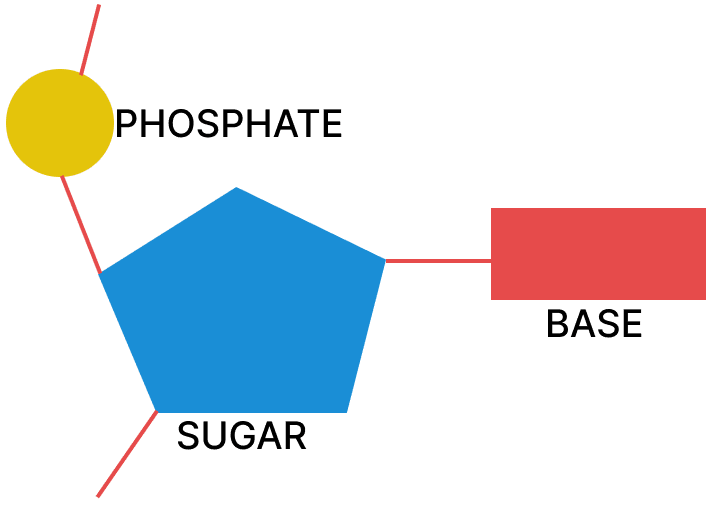
A sequence of DNA has 300 nitrogenous base pairs, of which 75 are Guanine. What is the number of Thymine in this sequence ?

Show SolutionHide Solution↓

75

Reason

If Guanine = 75, then cytosine = 75
So, Guanine + Cytosine = 75 + 75 = 150

Remaining bases = 300 - 150 = 150

Adenine + Thymine = 150

Since, Adenine = Thymine
So, we will divide 150 equally between them.

150/2 = 75

So, Adenine = Thymine = 75

1(v)1 Mark · 2026 · Section A · 2026 PaperFull page

Assertion (A): Abscisic acid promotes stomatal closure during a drought.

Reason (R): Abscisic acid helps the plant to conserve water during stress.

Show SolutionHide Solution↓

Both (A) and (R) are true and (R) is the correct explanation of (A).

Reason — During drought stress, abscisic acid signals the guard cells to close stomata, which reduces transpiration and prevents excessive water loss.
Therefore, Both (A) and (R) are true (R) is the correct explanation of (A).

1(vi)1 Mark · 2026 · Section A · 2026 PaperFull page

Assertion (A): Leukoderma is the biological term for blood cancer.

Reason (R): An abnormal increase in the number of WBCs causes blood cancer.

Show SolutionHide Solution↓

(A) is false and (R) is true

Reason — (A) is false because leukoderma is not blood cancer; it is a skin condition in which loss of pigmentation occurs. Blood cancer is called leukaemia, and it involves an abnormal increase in the number of white blood cells. Therefore, (R) is true.

Hence, (A) is false and (R) is true.

1(vii)1 Mark · 2026 · Section A · 2026 PaperFull page

A health organization wants to educate the rural audience about population control using visually engaging methods. Which of these would be effective?

P. Posters

Q. Loudspeakers

R. Film shows

S. Street plays

Show SolutionHide Solution↓

P, R and S

Reason — For educating the rural audience about population control through visually engaging methods, the most effective options are:

  • Posters (P) – attract attention through pictures and short messages.
  • Film shows (R) – provide information in an interesting visual form.
  • Street plays (S) – are easy to understand and highly effective in rural areas.

Loudspeakers (Q) only provide audio and are not visually engaging.

Therefore, the correct combination is P, R and S.

1(viii)1 Mark · 2026 · Section A · 2026 PaperFull page

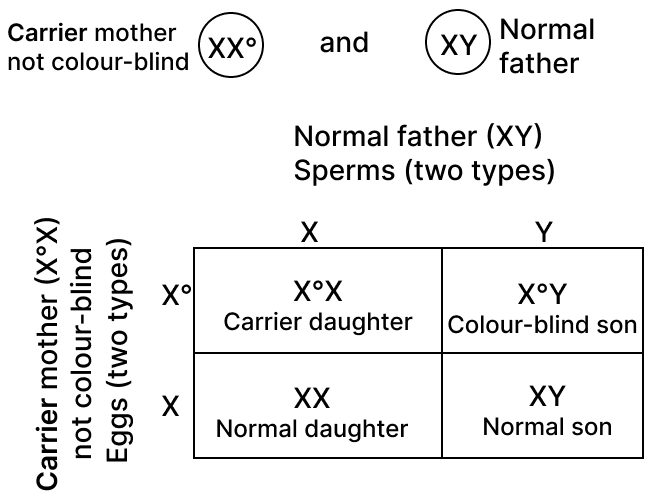
A family has a history of colour blindness. During genetic testing, it was found that the mother is a carrier of colour blindness (XCX) and the father has normal vision (XY). What is the probability of their sons being colour-blind?

Show SolutionHide Solution↓

50%

Reason —

 Normal father (XY)
 XY
Carrier mother
(XC)
XCX
Carrier daughter
XCY
Colour-blind son
Carrier mother
(X)
XX
Normal daughter
XY
Normal son
1(ix)1 Mark · 2026 · Section A · 2026 PaperFull page

Bharat woke up late in the morning and missed the school bus.

Bharat woke up late in the morning and missed the school bus. ICSE 2026 Biology Solved Question Paper.

This situation stimulated the nerves of the sympathetic system which resulted in

Show SolutionHide Solution↓

Bronchodilation

Reason — When Bharat panicked after missing the bus, his sympathetic nervous system became active. This prepared the body for an emergency situation by widening the air passages so that more air could enter the lungs and more oxygen could be supplied to the muscles. This widening of the air passages is called bronchodilation.

In such situations, the coronary arteries dilate, the muscles become more active, and the respiration rate increases.

1(x)1 Mark · 2026 · Section A · 2026 PaperFull page

Which is the correct sequence of blood flow in the Pulmonary and Systemic circulation?

Show SolutionHide Solution↓

Right Atrium → Right Ventricle → Lungs → Left Atrium → Left Ventricle → Body tissues

Reason — Deoxygenated blood from the body enters the right atrium, then goes to the right ventricle. From there, it is pumped to the lungs for oxygenation. Oxygenated blood returns to the left atrium, passes into the left ventricle, and is then pumped to the body tissues.

1(xi)1 Mark · 2026 · Section A · 2026 PaperFull page

Karan was standing on a high stool and cleaning the ceiling fan.

Karan was standing on a high stool and cleaning the ceiling fan. ICSE 2026 Biology Solved Question Paper.

He suddenly loses balance and sustains a head injury. An examination reveals that his pupils have lost the capacity to constrict in bright light. Which structure has been damaged?

Show SolutionHide Solution↓

Medulla oblongata

Reason — The pupil constricts in bright light due to a reflex action. Reflex centres for such involuntary actions are controlled by parts of the brainstem. If, after a head injury, the pupils lose the ability to constrict in bright light, it indicates damage to the medulla oblongata, which helps control involuntary reflexes.
Suspensory ligaments hold the eye lens in position for focus.
Eye lens only helps in focusing light on the retina and not the size of the pupil.
Eyelids protect the eye and control opening/closing of the eye.

1(xii)1 Mark · 2026 · Section A · 2026 PaperFull page

A person suffering from kidney failure has proteins in the urine. What is this condition called?

Show SolutionHide Solution↓

Albuminuria

Reason — The presence of proteins in urine is called albuminuria. It occurs due to kidney damage, when proteins leak into the urine. Haematuria is the presence of blood in urine. Glycosuria is the presence of glucose in urine. Anaemia is a condition in which the haemoglobin level is lower than normal.

1(xiii)1 Mark · 2026 · Section A · 2026 PaperFull page

What does Swachh Bharat Abhiyan aim to achieve in India?

Show SolutionHide Solution↓

Improved sanitation and solid waste management.

Reason — Swachh Bharat Abhiyan is a national cleanliness campaign aimed at improving hygiene, sanitation and waste management across India. The mission focuses on protecting the environment, not destroying forests. It aims to reduce waste generation and manage it properly, not simply increase landfill areas. The programme encourages cleanliness and waste reduction, not increasing pollution or waste.

1(xiv)1 Mark · 2026 · Section A · 2026 PaperFull page

Varun's mother added plenty of salt to the mango pickle she made. This is to:

A. enhance the colour of the pickle.

B. inhibit the growth of microorganisms.

C. increase the nutritional value.

D. create a hypertonic solution.

Show SolutionHide Solution↓

B and D

Reason —

  • A – Salt does not enhance the colour of the pickle.
  • C – Salt does not increase the nutritional value; it mainly acts as a preservative.
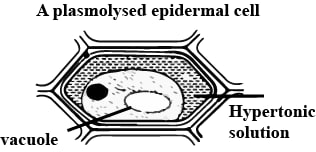
  • B – Salt inhibits the growth of microorganisms by drawing water out of their cells and causing plasmolysis.
  • D – Salt creates a hypertonic medium that helps prevent microbial growth.

Therefore, B and D are correct.

1(xv)1 Mark · 2026 · Section A · 2026 PaperFull page

During which phase of the menstrual cycle does the endometrium shed?

Show SolutionHide Solution↓

Menstrual phase

Reason — The shedding of the endometrium occurs when fertilisation does not take place, leading to menstruation. This happens during the menstrual phase. In the follicular phase, Follicle Stimulating Hormone stimulates the growth of ovarian follicles. In the ovulatory phase, the mature ovum is released from the ovary. In the luteal phase, after ovulation, the empty follicle becomes the corpus luteum, which releases progesterone and maintains the uterine lining for possible pregnancy. If fertilisation does not occur, the lining breaks down at the end of this phase.

2(i)1 Mark · 2026 · Section A · 2026 PaperFull page

Give the biological/technical terms for the following:

(a) The tropic movement wherein the tendrils of a pea plant twine around a support.

(b) A defect in our eye in which some parts of the object are in focus while the other parts are blurred.

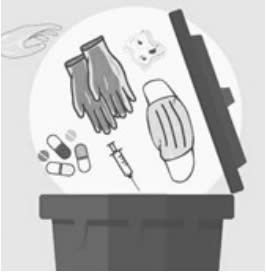
(c) The type of waste generated in hospitals and pathological laboratories.

(d) The surgical technique for females that can be used to prevent pregnancy.

(e) The evolutionary process by which new species arise from the existing one.

Show SolutionHide Solution↓

(a) Thigmotropism

(b) Astigmatism

(c) Biomedical waste

(d) Tubectomy

(e) Speciation

2(ii)1 Mark · 2026 · Section A · 2026 PaperFull page

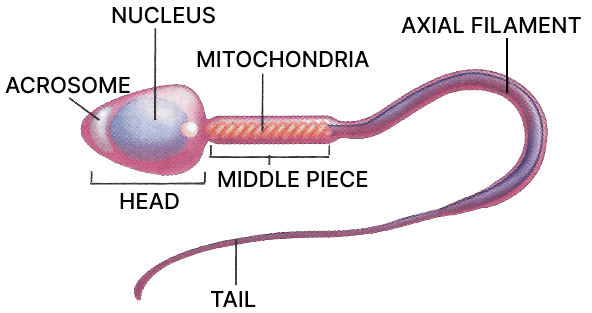
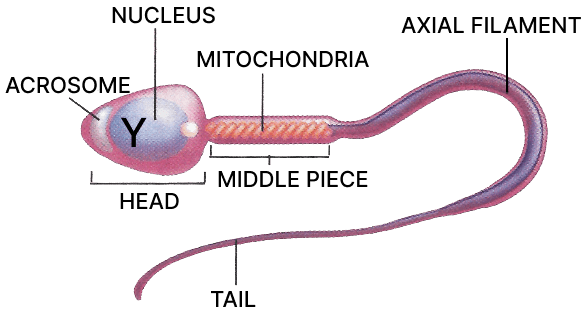
Given below is the diagram of a human sperm. Read the information below the diagram and fill in the blanks:

Given below is the diagram of a human sperm. Read the information below the diagram and fill in the blanks. ICSE 2026 Biology Solved Question Paper.

Living organisms reproduce to form new individuals of their own kind. This is essential for the survival and continuation of species. Human sperms are microscopic structures that carry genetic material.

The head of the sperm has a cap like organelle called (a) ............... (Lysosome / Acrosome) which produces an enzyme (b) ...............(Hyaluronidase / Amylase) that dissolves the outer layer of the ovum to facilitate fertilisation. The nucleus of the sperm has (c) ............... (23 / 46) chromosomes. The middle piece has (d) ............... (Chloroplast / Mitochondria) to provide energy for the motility of the sperm. (e) ............... (Semen / Hymen) is a mixture of sperms and the fluids produced by the male accessory glands.

Show SolutionHide Solution↓

(a) Acrosome

(b) Hyaluronidase

(c) 23

(d) Mitochondria

(e) Semen

2(iii)1 Mark · 2026 · Section A · 2026 PaperFull page

Choose the odd one out from the following terms and name the category to which the others belong:

(a) Auxin, Oxytocin, Gibberellin, Cytokinin

(b) Growth Hormone, Vasopressin, Thyroid Stimulating Hormone, Gonadotropic Hormone

(c) Urochrome, Urea, Uric acid, Nucleic acid

(d) Cervix, Chordae Tendinea, Papillary Muscles, Sinoatrial node

(e) Morula, Blastocyst, Oviduct, Foetus

Show SolutionHide Solution↓

(a) Odd one : Oxytocin
Auxin, Gibberellin, Cytokinin - Plant hormones

(b) Odd one : Vasopressin
Growth Hormone, Thyroid Stimulating Hormone, Gonadotropic Hormone - Anterior pituitary gland secretions

(c) Odd one : Nucleic acid
Urochrome, Urea, Uric acid - Excretory waste products

(d) Odd one : Cervix
Chordae Tendinea, Papillary Muscles, Sinoatrial node - Parts of heart

(e) Odd one : Oviduct Morula, Blastocyst, Foetus - Stages of embryonic development

2(iv)1 Mark · 2026 · Section A · 2026 PaperFull page

Mohit, a 30-year-old man was a software professional leading a sedentary life. He showed signs of high blood sugar during a routine health check-up despite having a normal body weight.

Mohit, a 30-year-old man was a software professional leading a sedentary life. He showed signs of high blood sugar during a routine health check-up despite having a normal body weight. ICSE 2026 Biology Solved Question Paper.

Answer the following :

(a) The hormonal disorder he is suffering from.
(b) The hormone responsible for this disorder.

(c) The organ that secretes this hormone.

(d) One symptom experienced by Mohit due to this disorder.

(e) One change in lifestyle to lower the blood sugar level.

Show SolutionHide Solution↓

(a) Diabetes mellitus

(b) Insulin

(c) Pancreas

(d) Frequent urination

(e) Regular physical exercise

2(v)1 Mark · 2026 · Section A · 2026 PaperFull page

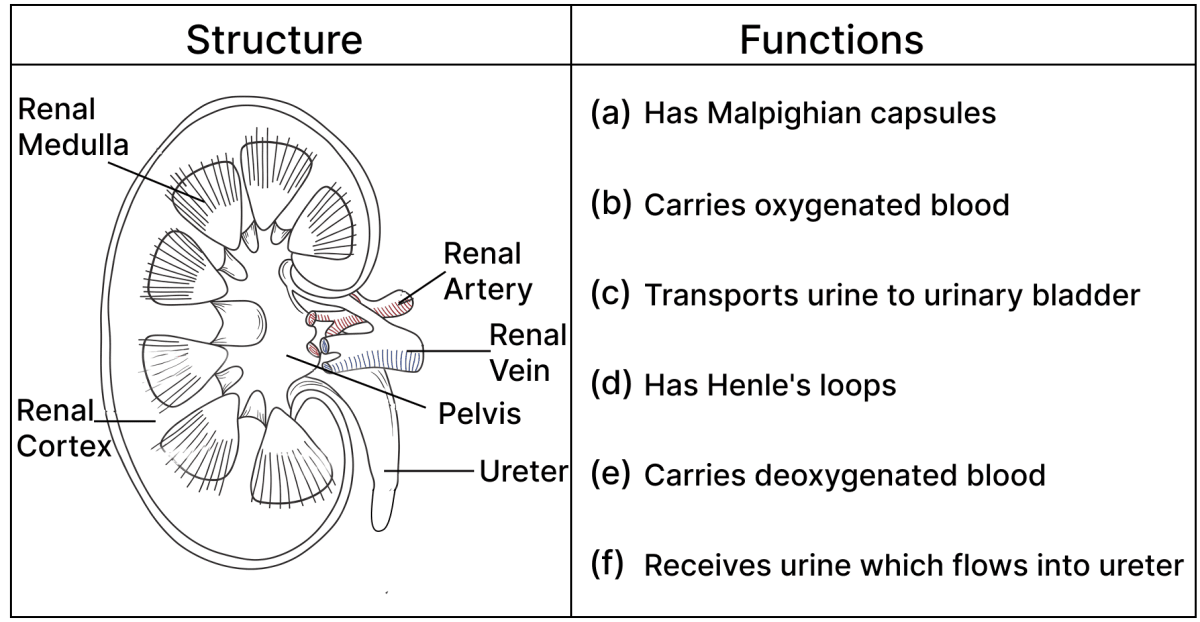
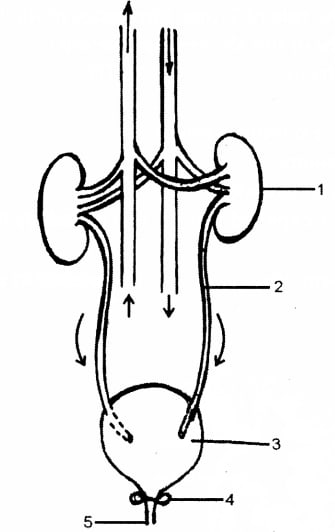
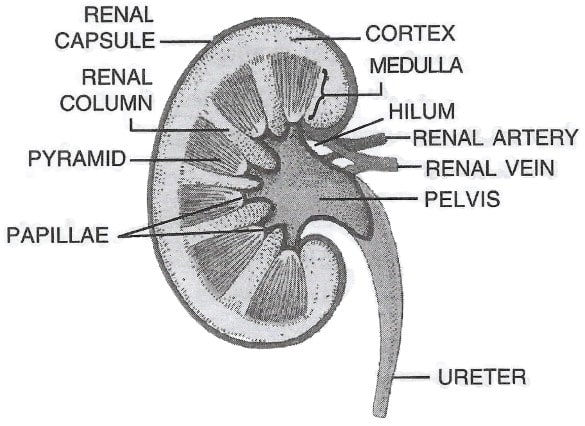
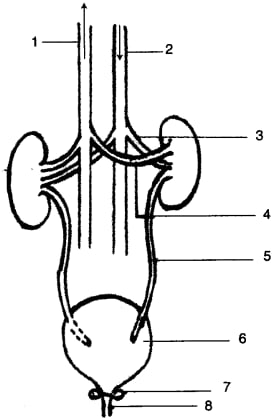
Study the diagram given below and match the structure with its functions :

Study the diagram given below and match the structure with its functions. ICSE 2026 Biology Solved Question Paper.

Example: Pelvis - (f)

Show SolutionHide Solution↓

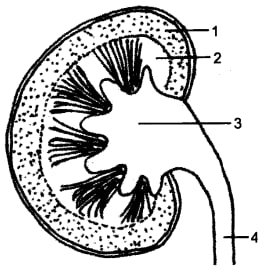
(a) Renal cortex

(b) Renal artery

(c) Ureter

(d) Renal medulla

(e) Renal vein

(f) Pelvis

3(i)Written · 2026 · Section B · 2026 PaperFull page

Which is the resting but metabolically active stage of the cell cycle?

Show SolutionHide Solution↓

Interphase is the resting but metabolically active stage of the cell cycle.

3(ii)Written · 2026 · Section B · 2026 PaperFull page

Given below is the picture of an eagle.

Given below is the picture of an eagle. ICSE 2026 Biology Solved Question Paper.

Eagles have binocular vision. What is the advantage of such a vision?

Show SolutionHide Solution↓

Binocular vision provides better depth perception and helps in accurately judging distance.

3(iii)Written · 2026 · Section B · 2026 PaperFull page

Mention the number of Autosomes and Allosomes in a human body cell.

Show SolutionHide Solution↓

There are 44 autosomes and 2 allosomes in a human body cell.

3(iv)Written · 2026 · Section B · 2026 PaperFull page

Two well-watered, identical plants were placed in brightly lit rooms at different temperatures — one at 15°C and the other at 38°C. The plant in the warmer room showed wilting by the end of the day.

(a) Which plant phenomenon resulted in the wilting of the leaves?

(b) Mention the factor of the phenomenon that is being tested.

Show SolutionHide Solution↓

(a) Transpiration

(b) Temperature

3(v)Written · 2026 · Section B · 2026 PaperFull page

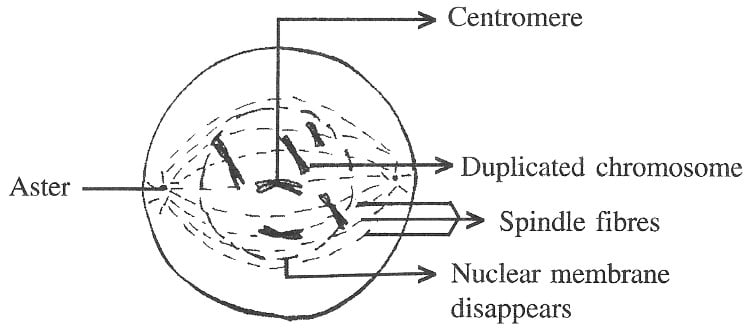
Draw a neat, labelled diagram of an animal cell showing the Prophase stage of Mitosis with four chromosomes.

Show SolutionHide Solution↓
Draw a neat, labelled diagram of an animal cell showing the Prophase stage of Mitosis with four chromosomes. ICSE 2026 Biology Solved Question Paper.
4(i)Written · 2026 · Section B · 2026 PaperFull page

What is the scientific name of modern man?

Show SolutionHide Solution↓

The scientific name of modern man is Homo sapiens sapiens.

4(ii)Written · 2026 · Section B · 2026 PaperFull page

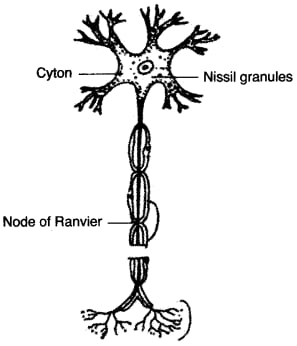
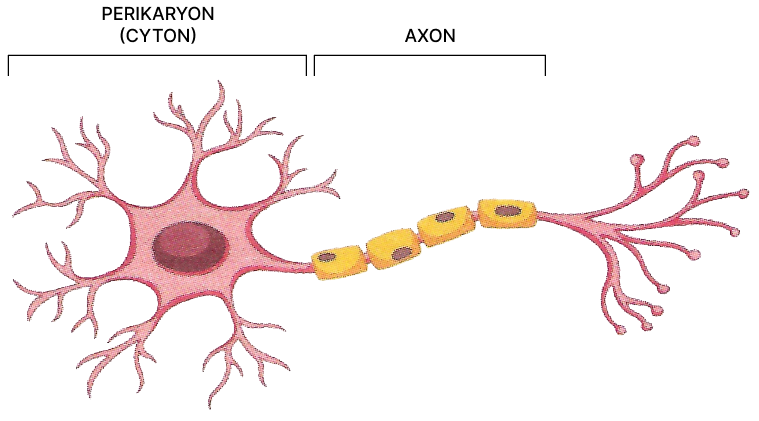
How are the Cytons and Axons of neurons arranged in the following?

(a) Cerebrum

(b) Spinal cord

Show SolutionHide Solution↓

(a) In the cerebrum, the Cytons are present in the outer gray matter, while the Axons are present in the inner white matter.

(b) In the spinal cord, the Cytons are present in the inner gray matter, while the Axons are present in the outer white matter.

4(iii)Written · 2026 · Section B · 2026 PaperFull page

(a) Who proposed the theory of Natural Selection?

(b) Name the organism which was used as an example to explain Industrial Melanism.
Show SolutionHide Solution↓

(a) The theory of Natural Selection was proposed by Charles Darwin.
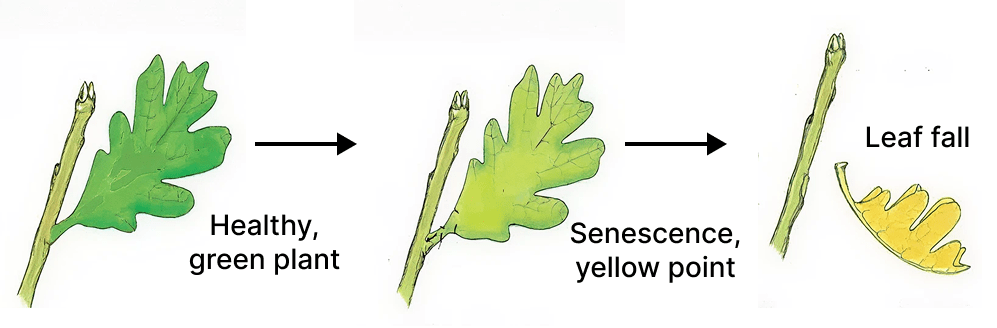
(b) The organism used to explain industrial melanism is Biston betularia.

4(iv)Written · 2026 · Section B · 2026 PaperFull page

Differentiate between Plasmolysis and Deplasmolysis.

Show SolutionHide Solution↓

Difference between Plasmolysis and Deplasmolysis:

PlasmolysisDeplasmolysis
It refers to the shrinkage of the cytoplasm and withdrawal of the plasma membrane from the cell wall caused due to the withdrawal of water when placed in a hypertonic solution.Deplasmolysis is the recovery of a plasmolysed cell when it is placed in water, wherein the cell's protoplasm again swells up due to the re-entry of water.
In Plasmolysis, the cell becomes flaccid.In Deplasmolysis, the cell becomes turgid.
4(v)Written · 2026 · Section B · 2026 PaperFull page

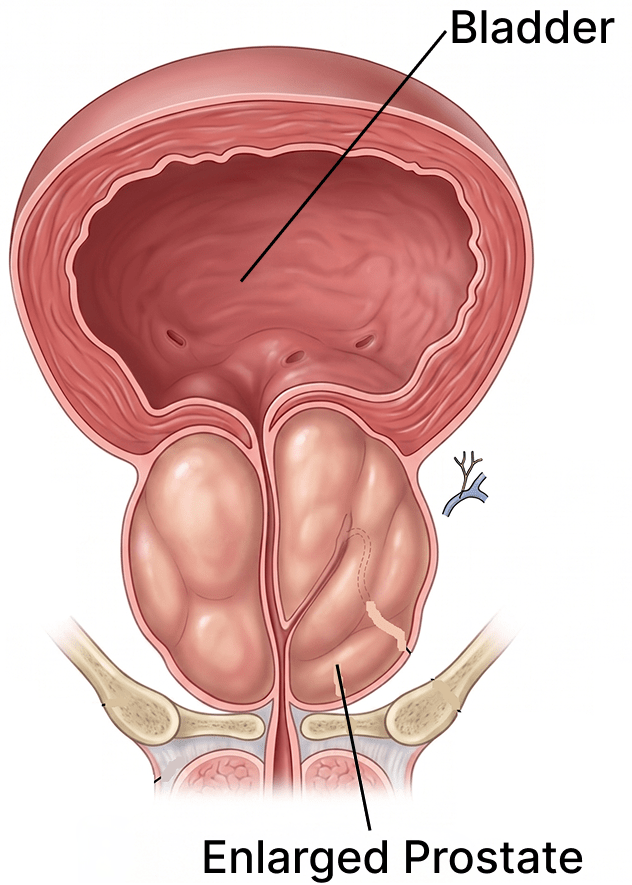
Akshay's father had a tumour in his prostate gland. His doctor advised him to get it removed surgically. One side effect of the surgery was incontinence of urine, i.e., leakage of urine from the urinary bladder.

Akshay's father had a tumour in his prostate gland. His doctor advised him to get it removed surgically. One side effect of the surgery was incontinence of urine, i.e., leakage of urine from the urinary bladder. ICSE 2026 Biology Solved Question Paper.

(a) Where is the prostate gland located?

(b) Why does the prostate gland produce an alkaline secretion?

(c) Name the structure that regulates the flow of urine from the urinary bladder into the urethra.

Show SolutionHide Solution↓

(a) The prostate gland is located just below the urinary bladder, surrounding the urethra close to its origin from the bladder.

(b) The prostate gland produces an alkaline secretion to neutralise the acidity of the urethra and vagina.

(c) The structure that regulates the flow of urine from the urinary bladder into the urethra is the internal urethral sphincter.

5(i)Written · 2026 · Section B · 2026 PaperFull page

RBCs do not have nuclei. Discuss its advantage.

Show SolutionHide Solution↓

The advantages of RBCs not having nuclei are:

  1. It allows more space for haemoglobin, the oxygen-carrying pigment.
  2. It helps the RBC to maintain a biconcave shape, which increases the surface area for faster gas exchange.
5(ii)Written · 2026 · Section B · 2026 PaperFull page

Arrange the following food chains in a proper sequence.

(a) Small fish, Algae, Mosquito larvae, Kingfisher

(b) Frog, Snail, Crow, Green leaves

Show SolutionHide Solution↓

(a) Algae → Mosquito larvae → Small fish → Kingfisher

(b) Green leaves → Snail → Frog → Crow

5(iii)Written · 2026 · Section B · 2026 PaperFull page

A 28-year-old pregnant lady goes to a gynecologist for a check-up. Her doctor explains that there is normal growth of the foetus and the placenta is functioning well.

(a) Mention one function of the placenta.

(b) What connects the placenta to the foetus?

Show SolutionHide Solution↓

(a) One function of the placenta is the exchange of materials between the mother and the foetus, such as supplying oxygen and nutrients to the foetus and removing waste products from it.

(b) The structure that connects the placenta to the foetus is the umbilical cord.

5(iv)Written · 2026 · Section B · 2026 PaperFull page

Mention any two secondary sexual characteristics in a 15-year-old boy.

Show SolutionHide Solution↓

Two secondary sexual characteristics in a 15-year-old boy are:

  1. Growth of facial hair such as moustache and beard.
  2. Deepening of the voice due to enlargement of the larynx.
5(v)Written · 2026 · Section B · 2026 PaperFull page

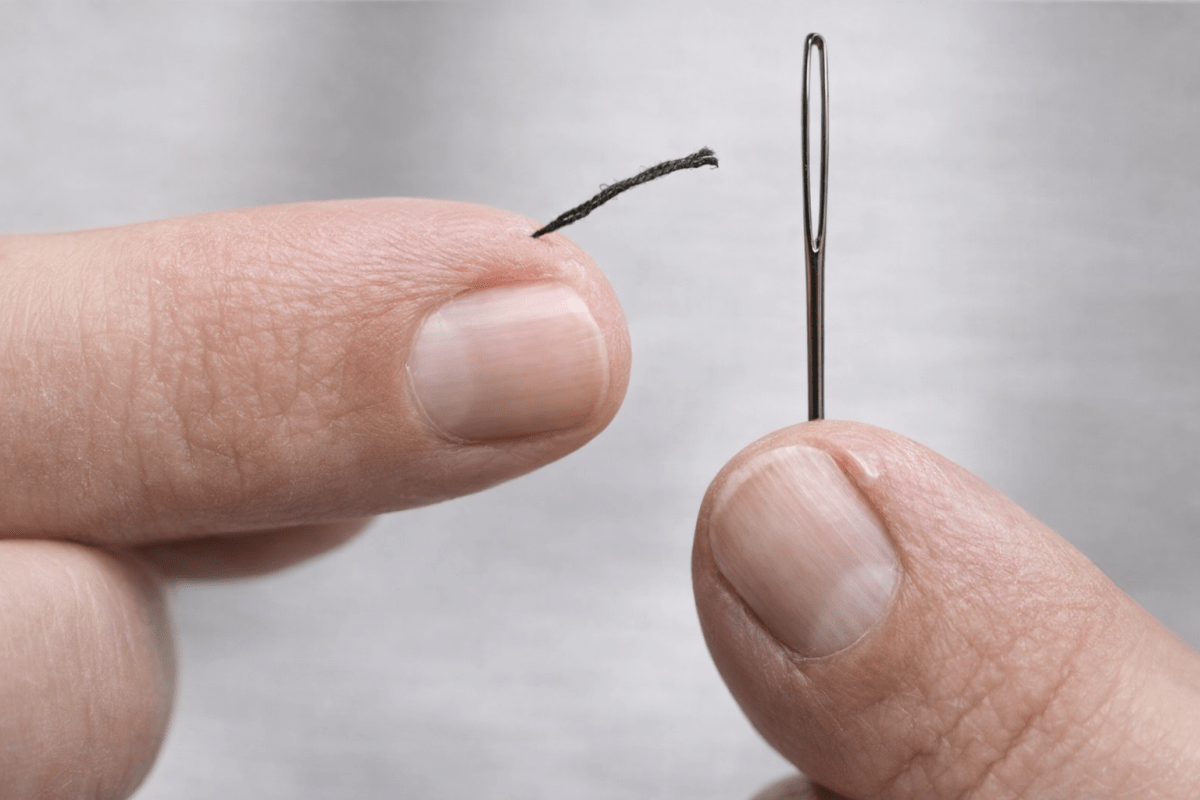
Tara's grandmother is 70 years old and has a passion for embroidery. She faces difficulty in threading the needle as the eye of the needle appears blurred. The ophthalmologist diagnosed it as an age-related disorder.

Tara's grandmother is 70 years old and has a passion for embroidery. She faces difficulty in threading the needle as the eye of the needle appears blurred. The ophthalmologist diagnosed it as an age-related disorder. ICSE 2026 Biology Solved Question Paper.

(a) Name the eye disorder she is suffering from.
(b) How can the above defect be corrected?

(c) Where is the image formed in the above disorder?

Show SolutionHide Solution↓

(a) The eye disorder is presbyopia.

(b) It can be corrected by using a convex lens.

(c) In this defect, the image is formed behind the retina.

6(i)Written · 2026 · Section B · 2026 PaperFull page

Explain the term 'Population Density' with reference to human beings.

Show SolutionHide Solution↓

Population density is the number of people living per square kilometre at a given time.

6(ii)Written · 2026 · Section B · 2026 PaperFull page

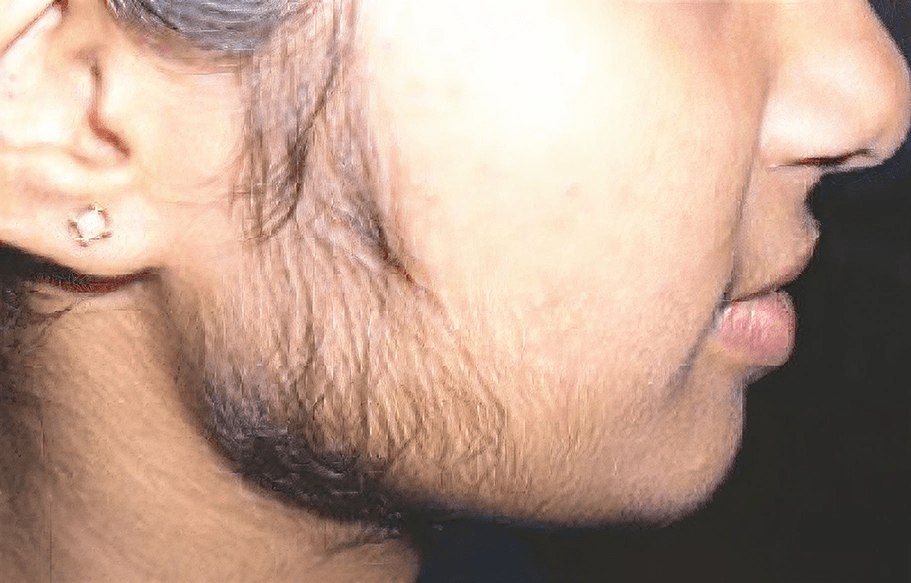
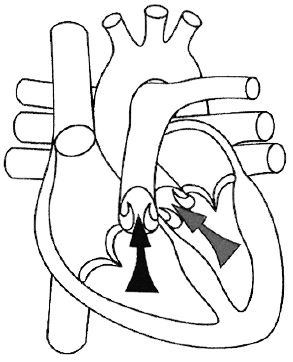
A 17-year-old girl was having irregular menstrual cycle. Her mother took her to their family physician. She was diagnosed with adrenal virilism. Study the picture given below and answer the following question:
A 17-year-old girl was having irregular menstrual cycle. Her mother took her to their family physician. She was diagnosed with adrenal virilism. Study the picture given below and answer the following question: ICSE 2026 Biology Solved Question Paper.
(a) Hypersecretion of which hormone results in Adrenal Virilism in human females?

(b) Mention one symptom of this disorder.

Show SolutionHide Solution↓

(a) Hypersecretion of androgens from the adrenal cortex results in adrenal virilism in human females.

(b) One symptom of this disorder is excessive growth of facial and body hair.

6(iii)Written · 2026 · Section B · 2026 PaperFull page

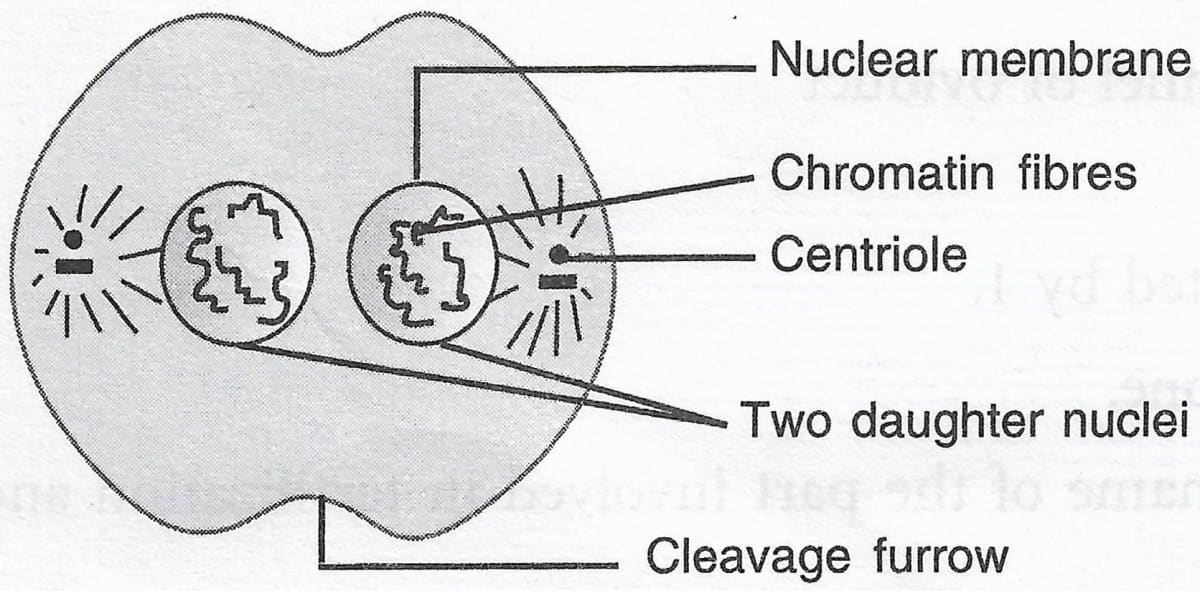
Differentiate between Mitosis in plant cell and animal cell based on Cytokinesis.

Show SolutionHide Solution↓
Mitosis in plant cellMitosis in animal cell
Cytokinesis occur by cell plate formation. The cell plate is laid down at the centre of the cell which then grows and extends towards the cell membrane.Cytokinesis occur by furrowing of cytoplasm. The furrow starts from the cell membrane which then proceeds to the centre of the cell.
6(iv)Written · 2026 · Section B · 2026 PaperFull page

Sara placed a healthy potted plant in a dark room for 48 hours to perform an experiment on photosynthesis. She plucked one of the leaves and tested it for starch. The leaf did not turn blue-black on adding Iodine solution.

(a) Why was the plant placed in the dark for 48 hours?

(b) What is the significance of boiling the leaf in alcohol during the starch test?

Show SolutionHide Solution↓

(a) The plant was placed in the dark for 48 hours to destarch it, so that the stored starch would be used up in respiration.

(b) The leaf is boiled in alcohol to remove chlorophyll so that the colour change with iodine can be clearly observed.

6(v)Written · 2026 · Section B · 2026 PaperFull page

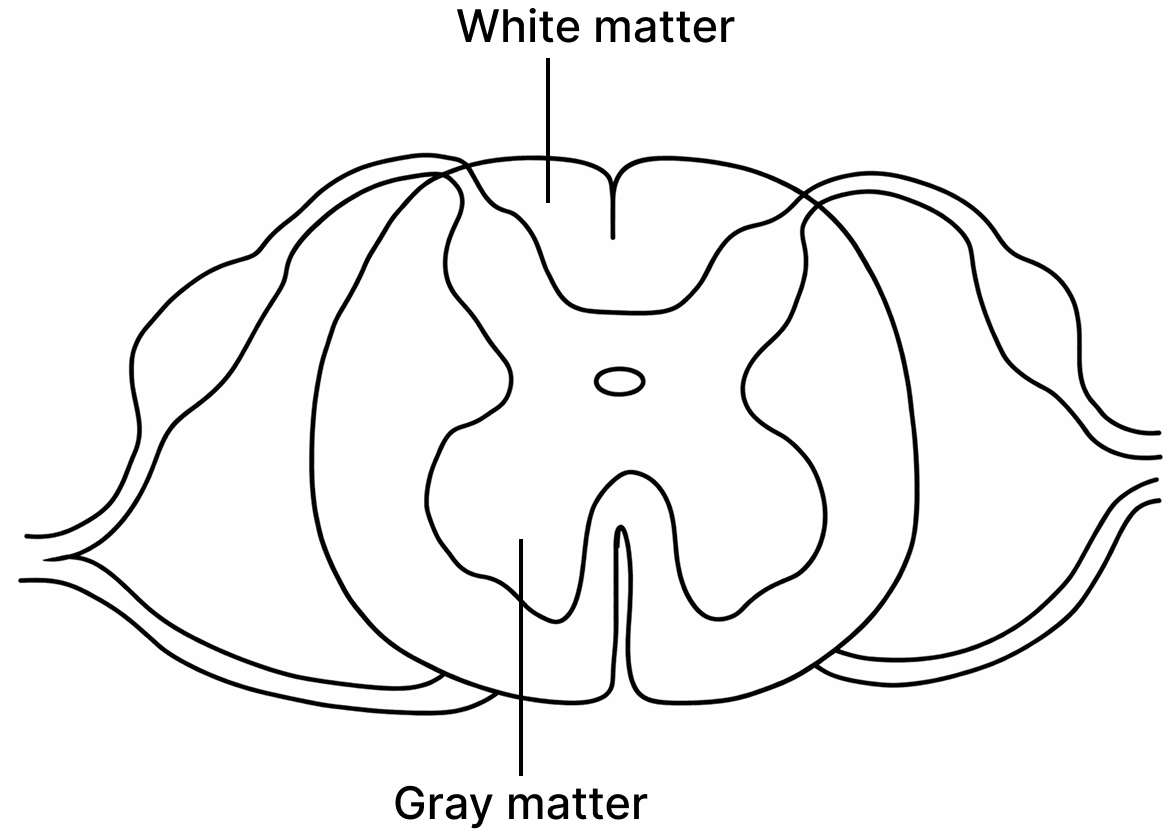
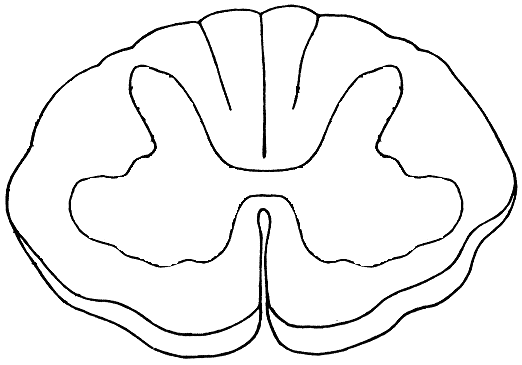
Copy the diagram given below.

Copy the diagram given below. ICSE 2026 Biology Solved Question Paper.

(a) Name the structure.

(b) Label Gray matter and White matter.

Show SolutionHide Solution↓

(a) The structure shown is a cross-section of the spinal cord.

(b) Gray matter and White matter is labelled in the below diagram:

Label Gray matter and White matter. ICSE 2026 Biology Solved Question Paper.
7(i)Written · 2026 · Section B · 2026 Paper · 🔁 also 2023 & 2025Full page

Write the overall chemical equation for photosynthesis.

Show SolutionHide Solution↓

$6\text{CO}_2 + 12\text{H}_2\text{O} \xrightarrow[\text{chlorophyll}]{\text{light energy}} \text{C}_6\text{H}_{12}\text{O}_6 + 6\text{H}_2\text{O} + 6\text{O}_2 \uparrow$

7(ii)Written · 2026 · Section B · 2026 PaperFull page

Expand the abbreviations:

(a) NADP
(b) ADP

Show SolutionHide Solution↓

(a) Nicotinamide Adenine Dinucleotide Phosphate

(b) Adenosine Diphosphate

7(iii)Written · 2026 · Section B · 2026 PaperFull page

(a) Explain the term Synapse.

(b) Name the neurotransmitter that allows the transmission of impulses across the synapse.

Show SolutionHide Solution↓

(a) A synapse is the junction between the terminal branches of the axon of one neuron and the dendrites or cell body of another neuron, separated by a minute gap.

(b) The neurotransmitter responsible for transmission across the synapse is acetylcholine.

7(iv)Written · 2026 · Section B · 2026 PaperFull page

What is the role of the following?

(a) Leydig cells

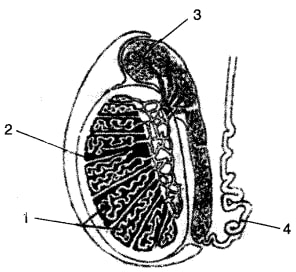
(b) Seminiferous tubules

Show SolutionHide Solution↓

(a) Leydig cells produce testosterone, which controls the development of male secondary sexual characteristics and supports sperm formation.

(b) Seminiferous tubules are the sites where sperms are produced in the testes.

7(v)Written · 2026 · Section B · 2026 PaperFull page

"Vanishing Greenery; A Growing Urban Crisis"

In most of our cities, rapid urbanisation has led to a significant decrease in greenery over the past two decades. As the population increased, the demand for housing, roads and commercial buildings grew, leading to clearing of parks, gardens and natural resources. This has contributed to several problems.

In most of our cities, rapid urbanisation has led to a significant decrease in greenery over the past two decades. As the population increased, the demand for housing, roads and commercial buildings grew, leading to clearing of parks, gardens and natural resources. This has contributed to several problems. ICSE 2026 Biology Solved Question Paper.

(a) Mention one significant problem caused by the reduction in urban greenery.

(b) How do green plants contribute to improving the air quality?

(c) What role can you, as a citizen, play in protecting urban greenery?

Show SolutionHide Solution↓

(a) One significant problem caused by the reduction in urban greenery is an increase in air pollution.

(b) Green plants improve air quality by absorbing carbon dioxide during photosynthesis, releasing oxygen, and trapping dust and pollutants on their leaves.

(c) As a citizen, I can help by planting more trees, protecting existing plants in my surroundings, avoiding unnecessary cutting of trees, and supporting green initiatives.

8(i)Written · 2026 · Section B · 2026 PaperFull page

Write the term for the pressure exerted by the cell contents on the cell wall.

Show SolutionHide Solution↓

The term for the pressure exerted by the cell contents on the cell wall is Turgor pressure.

8(ii)Written · 2026 · Section B · 2026 PaperFull page

(a) Name the fluid present between the meninges in spinal cord.

(b) What is its function?

Show SolutionHide Solution↓

(a) The fluid present between the meninges in the spinal cord is cerebrospinal fluid.

(b) It acts as a shock-proof cushion and forms a medium for the exchange of food materials, waste products and respiratory gases with neurons.

8(iii)Written · 2026 · Section B · 2026 PaperFull page

Given below is the diagram of a turgid plant cell:

Given below is the diagram of a turgid plant cell. ICSE 2026 Biology Solved Question Paper.

Copy the diagram and label Vacuole and Plasma membrane.

Show SolutionHide Solution↓

The labelled diagram is given below:

Given below is the diagram of a turgid plant cell. ICSE 2026 Biology Solved Question Paper.
8(iv)Written · 2026 · Section B · 2026 PaperFull page

Select and write the two biodegradable wastes from the given list:

Styrofoam, Metallic cans, Decaying fruits, Plastic bottles, Newspapers

Show SolutionHide Solution↓

Decaying fruits and newspapers are two biodegradable wastes.

8(v)Written · 2026 · Section B · 2026 PaperFull page

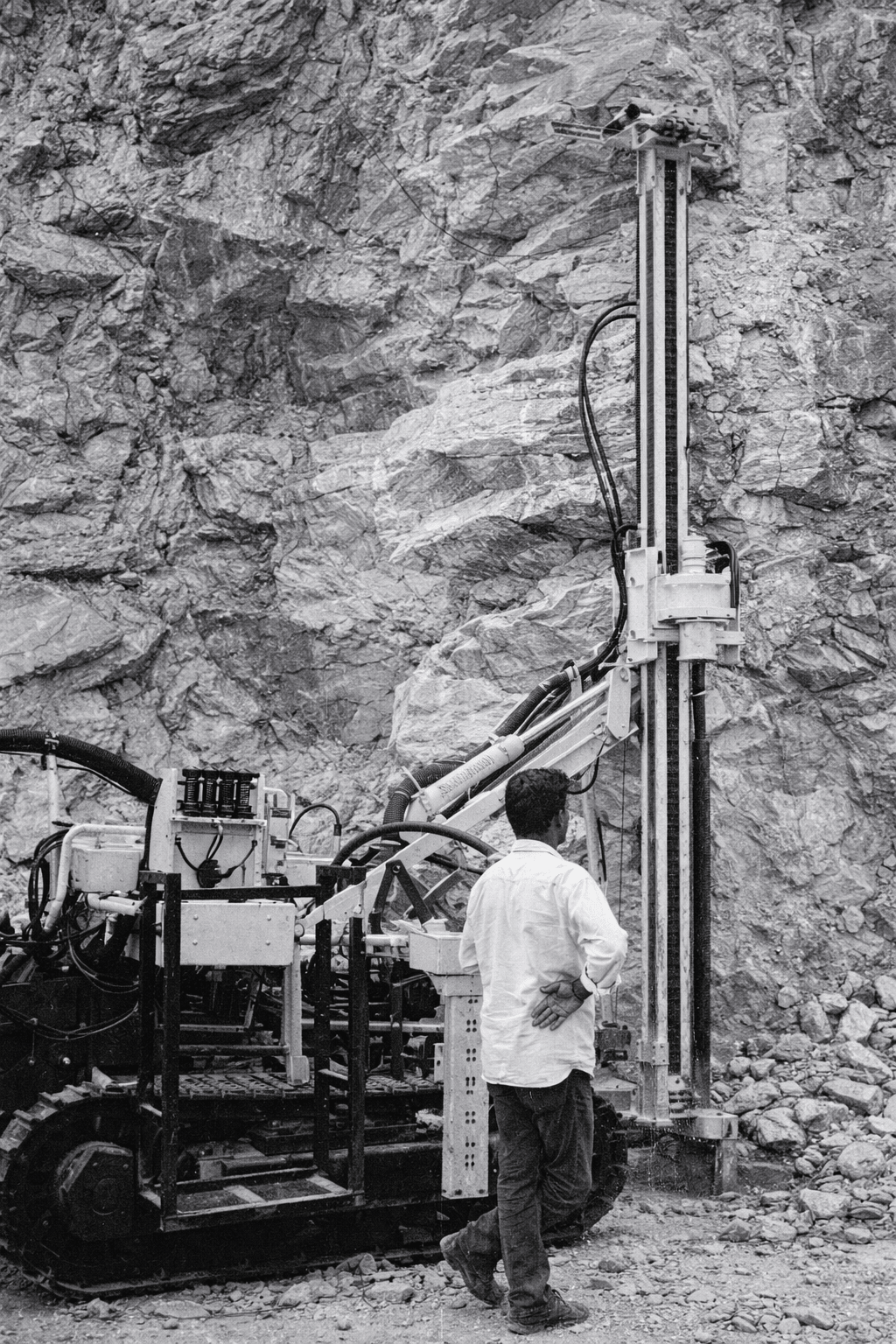
Rajat Singh was working as a supervisor in a stone quarry where rock, sand and gravel are extracted by techniques like digging, drilling and blasting. As the years rolled by, Rajat started facing a loss in hearing. The high decibel sounds had damaged a part of his internal ear, though the tympanic membrane was intact.

Rajat Singh was working as a supervisor in a stone quarry where rock, sand and gravel are extracted by techniques like digging, drilling and blasting. As the years rolled by, Rajat started facing a loss in hearing. The high decibel sounds had damaged a part of his internal ear, though the tympanic membrane was intact. ICSE 2026 Biology Solved Question Paper.

(a) Give the collective term for the structure located in the internal ear.

(b) Name the sensory organ in the Cochlea which was damaged for Rajat Singh.

(c) What kind of pollution do the workers face in the stone quarry?

Show SolutionHide Solution↓

(a) Membranous labyrinth.

(b) Organ of Corti.

(c) Noise pollution.

1(i)1 Mark · 2026 · Section A · 2026 ImprovementFull page

The surgical method of sterilisation in a male involves ligation of the:

Show SolutionHide Solution↓

Sperm Duct

Reason — The surgical method of sterilisation in males is called vasectomy. In this operation a small cut is made in the scrotum, the vas deferens (sperm duct) is ligated and a small piece between the two ligatures is removed, so that the semen contains no spermatozoa.

1(ii)1 Mark · 2026 · Section A · 2026 ImprovementFull page

Which one of the following does NOT affect the rate of photosynthesis?

Show SolutionHide Solution↓

Oxygen

Reason — Carbon dioxide and water are the raw materials of photosynthesis and temperature affects the enzymes involved, so all three influence the rate of photosynthesis. Oxygen is an end product of the process and is not a factor that controls its rate.

1(iii)1 Mark · 2026 · Section A · 2026 ImprovementFull page

A gland which is both endocrine and exocrine in function is:

Show SolutionHide Solution↓

Pancreas

Reason — Pancreas is a heterocrine gland. As an exocrine gland it pours pancreatic juice into the duodenum through a duct, and as an endocrine gland its Islets of Langerhans secrete insulin, glucagon and somatostatin directly into the blood.

1(iv)1 Mark · 2026 · Section A · 2026 ImprovementFull page

What is one way women can contribute to controlling population explosion in India?

Show SolutionHide Solution↓

By making informed choices about family planning methods.

Reason — Population growth can be checked by voluntary family planning. When women are educated and make informed choices about the methods of contraception available to them, the number and spacing of children can be regulated and the birth rate comes down.

1(v)1 Mark · 2026 · Section A · 2026 ImprovementFull page

A 60-year-old man met with an accident and had difficulty in hearing. It was due to a damage to the sensory cells in the cochlea. Which structure has been affected?

Show SolutionHide Solution↓

Organ of Corti

Reason — The organ of Corti lies inside the cochlea and carries the sensory hair cells of hearing. Vibrations of the basilar membrane stimulate these cells, which send impulses to the brain through the auditory nerve.

1(vi)1 Mark · 2026 · Section A · 2026 ImprovementFull page

Assertion (A): Plants growing in shade tend to have larger leaves.

Reason (R): This is because they need to capture more sunlight for photosynthesis.

Show SolutionHide Solution↓

Both (A) and (R) are true and (R) is the correct explanation of (A).

Reason — Light intensity is a limiting factor for photosynthesis. Plants growing in shade receive less light, so they develop a larger leaf surface area to trap the maximum amount of the available sunlight.

1(vii)1 Mark · 2026 · Section A · 2026 ImprovementFull page

Sonu’s grandmother keeps mangoes in a rice bin to ripen. The mangoes ripen after a few days because of the phytohormone:

Show SolutionHide Solution↓

Ethylene

Reason — Ethylene is a gaseous phytohormone which aids in the ripening of fruits. In a closed rice bin the ethylene given out by the fruit is trapped around it, so the mangoes ripen faster.

1(viii)1 Mark · 2026 · Section A · 2026 ImprovementFull page

Assertion (A): The loop of Henle helps concentrate or dilute urine.

Reason (R): The loop of Henle regulates the amount of water, reabsorbed into the bloodstream.

Show SolutionHide Solution↓

Both (A) and (R) are true and (R) is the correct explanation of (A).

Reason — Water and sodium ions are reabsorbed along the loop of Henle. By varying the quantity of water returned to the blood, the loop of Henle decides whether the urine leaving the nephron is concentrated or dilute.

1(ix)1 Mark · 2026 · Section A · 2026 ImprovementFull page

According to Charles Darwin’s theory of evolution, what drives the process of natural selection?

Show SolutionHide Solution↓

Survival of the fittest

Reason — Darwin observed that more offspring are produced than can survive, which leads to a struggle for existence. Individuals with favourable variations are better fitted to their surroundings, survive and reproduce. This is the survival of the fittest, which drives natural selection.

1(x)1 Mark · 2026 · Section A · 2026 ImprovementFull page

During atrial systole, the tricuspid valve (P) ............... and semilunar valve (Q) ................

Show SolutionHide Solution↓

opens, closes

Reason — During atrial systole the atria contract and push blood into the ventricles, so the tricuspid and bicuspid valves open. The semilunar valves at the base of the pulmonary artery and aorta remain closed at this stage to prevent blood from flowing back into the ventricles.

1(xi)1 Mark · 2026 · Section A · 2026 ImprovementFull page

Some raisins were added to a rice pudding. After a while, it was observed that the raisins had swollen up. What is the scientific phenomenon behind the swelling of these raisins?

Show SolutionHide Solution↓

Hypotonic, Endosmosis

Reason — The pudding around the raisins has a lower solute concentration than the cell sap of the dried raisins, so it is hypotonic to them. Water therefore moves into the raisins through their semi-permeable membranes by endosmosis and they swell up.

1(xii)1 Mark · 2026 · Section A · 2026 ImprovementFull page

In a dividing cell, the nuclear membrane reappears during:

Show SolutionHide Solution↓

Telophase

Reason — Telophase is essentially the reverse of prophase. The chromosomes reach the poles and uncoil, the nucleolus reappears and a new nuclear membrane is formed around each group of chromosomes.

1(xiii)1 Mark · 2026 · Section A · 2026 ImprovementFull page

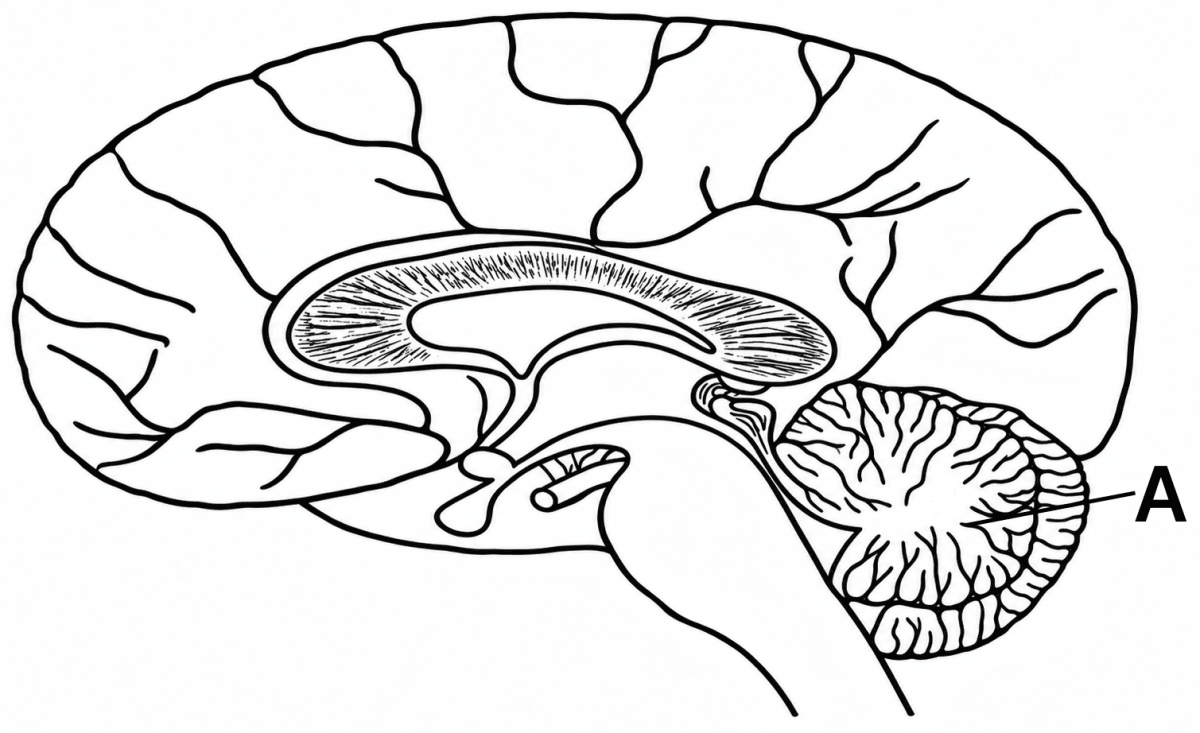
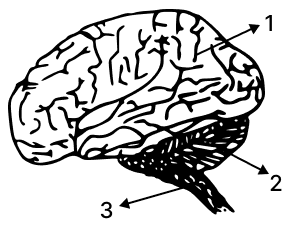
A person under the influence of alcohol has difficulty in maintaining body balance and coordinating movements while walking. Which part of the brain is affected in such cases?

Show SolutionHide Solution↓

Cerebellum

Reason — The cerebellum maintains posture, equilibrium and muscle tone and coordinates voluntary muscular movements. Under the influence of alcohol the cerebellum cannot coordinate these movements, so balance and walking are affected.

1(xiv)1 Mark · 2026 · Section A · 2026 ImprovementFull page

Surya’s father was diagnosed with Diabetes Insipidus. What are the primary symptoms of Diabetes Insipidus that Surya’s father must have experienced?

P: Weight gain

Q: More-urine formation

R: Joint pain

S: Excessive thirst

Show SolutionHide Solution↓

Q and S

Reason — Diabetes insipidus is caused by the hyposecretion of ADH (vasopressin). As very little water is reabsorbed, the patient passes frequent and copious urine and consequently suffers from excessive thirst. No glucose is lost in the urine of such patients.

1(xv)1 Mark · 2026 · Section A · 2026 ImprovementFull page

Assertion (A): Transpiration decreases the amount of moisture in the atmosphere.

Reason (R): A dense forest contributes to bringing rain due to transpiration.

Show SolutionHide Solution↓

(A) is false and (R) is true.

Reason — Transpiration adds water vapour to the air and therefore increases the moisture of the atmosphere, so (A) is false. It is because of this large-scale loss of water vapour that a dense forest raises the humidity of the region and helps in bringing rainfall, so (R) is true.

2(i)1 Mark · 2026 · Section A · 2026 ImprovementFull page

Give the biological / technical terms for the following:

(a) The respiratory pigment found in RBCs.

(b) The veins which start with capillaries and end in capillaries.

(c) The part of the eye grafted during eye donation.

(d) Collective term for the protective coverings of the brain and spinal cord.

(e) The epidermal pores through which guttation takes place.

Show SolutionHide Solution↓

(a) Haemoglobin

(b) Portal veins (e.g. hepatic portal vein)

(c) Cornea

(d) Meninges

(e) Hydathodes (water stomata)

2(ii)1 Mark · 2026 · Section A · 2026 ImprovementFull page

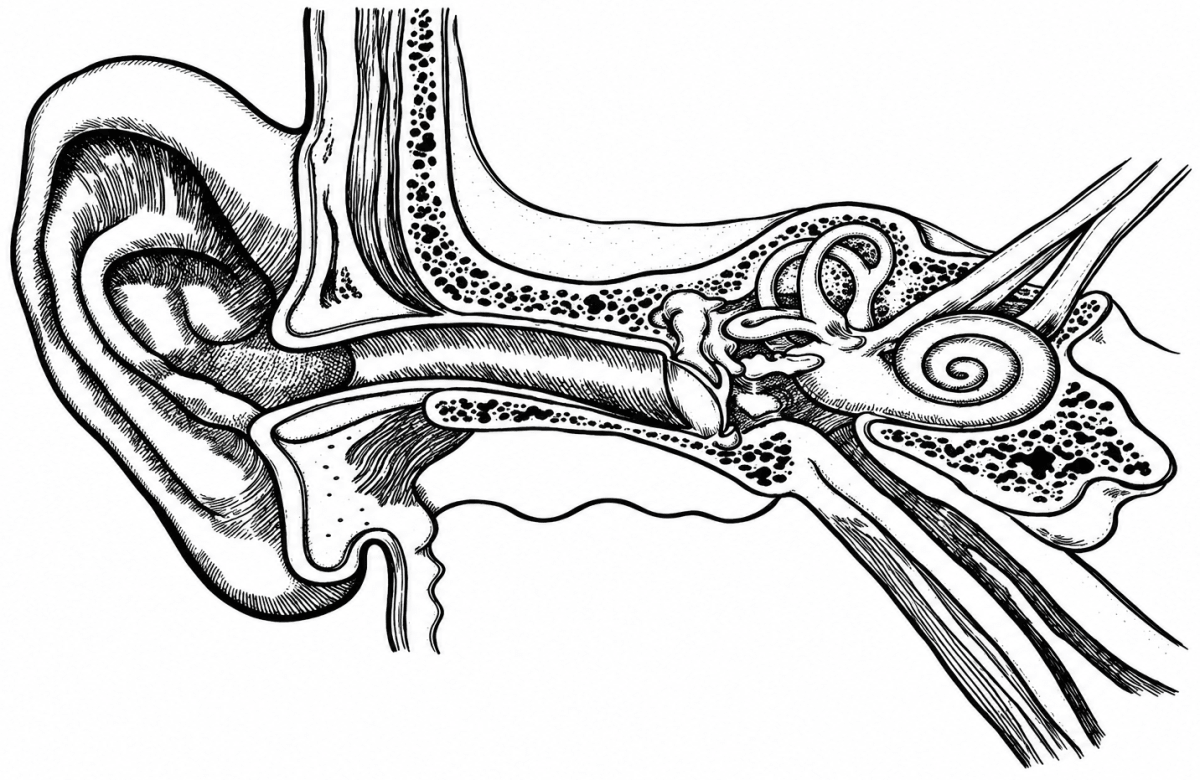
Given below is the transverse section of the human ear. Read the information below the diagram and fill in the blanks:

Given below is the transverse section of the human ear. Read the information below the diagram and fill in the blanks. Improvement Paper 2026, ICSE Biology 2026 Improvement Paper Solved.

The sense organs enable us to be aware of the conditions of our external and internal environment. The human ear is concerned with two functions, hearing and body balance.

The outer ear consists of the projecting part (a) ............... (pinna, pharynx) and the passage auditory canal leading to the (b) ............... (thrombus, tympanum). The middle ear contains three bones and a (c) ............... (eustachian tube, effector) which connects the cavity of the middle ear with the throat. The three bones are collectively called the (d) ............... (organelles, ossicles). The inner ear has three parts. One of them is spiral-shaped and looks like a snail shell which is called the (e) ............... (cochlea, canine).

Show SolutionHide Solution↓

The outer ear consists of the projecting part (a) pinna and the passage auditory canal leading to the (b) tympanum. The middle ear contains three bones and a (c) eustachian tube which connects the cavity of the middle ear with the throat. The three bones are collectively called the (d) ossicles. The inner ear has three parts. One of them is spiral-shaped and looks like a snail shell which is called the (e) cochlea.

2(iii)1 Mark · 2026 · Section A · 2026 ImprovementFull page

Choose the ODD one out from the following terms and name the category to which the others belong:

(a) Mitochondria, Nucleotide, Gene, Chromatid

(b) Urea, Bile, Ammonia, Creatinine

(c) Hepatic artery, Renal artery, Pulmonary artery, Dorsal aorta

(d) Oxygen, Hydrogen, Glucose, Starch

(e) Kidney, Skin, Heart, Lungs

Show SolutionHide Solution↓

(a) Odd one — Mitochondria. The others are parts of the hereditary material (chromosome and DNA).

(b) Odd one — Bile. The others are nitrogenous excretory wastes.

(c) Odd one — Pulmonary artery. The others are arteries carrying oxygenated blood.

(d) Odd one — Starch. The others are small, diffusible substances which can pass through a semi-permeable membrane.

(e) Odd one — Heart. The others are excretory organs of the human body.

2(iv)1 Mark · 2026 · Section A · 2026 ImprovementFull page

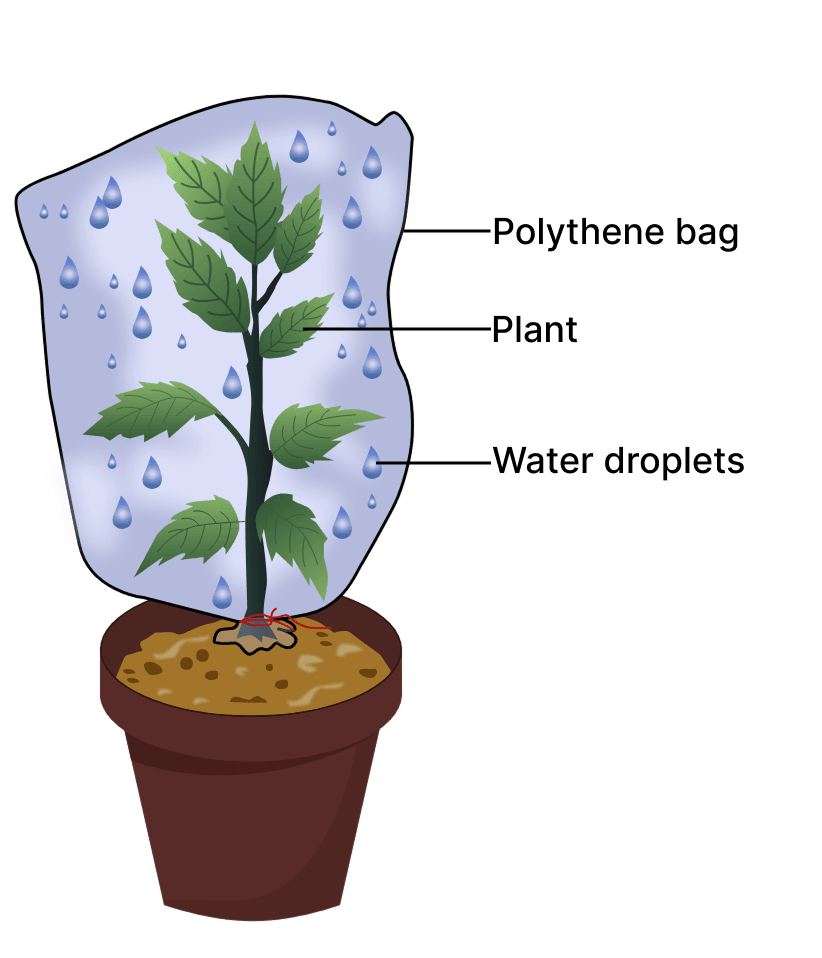
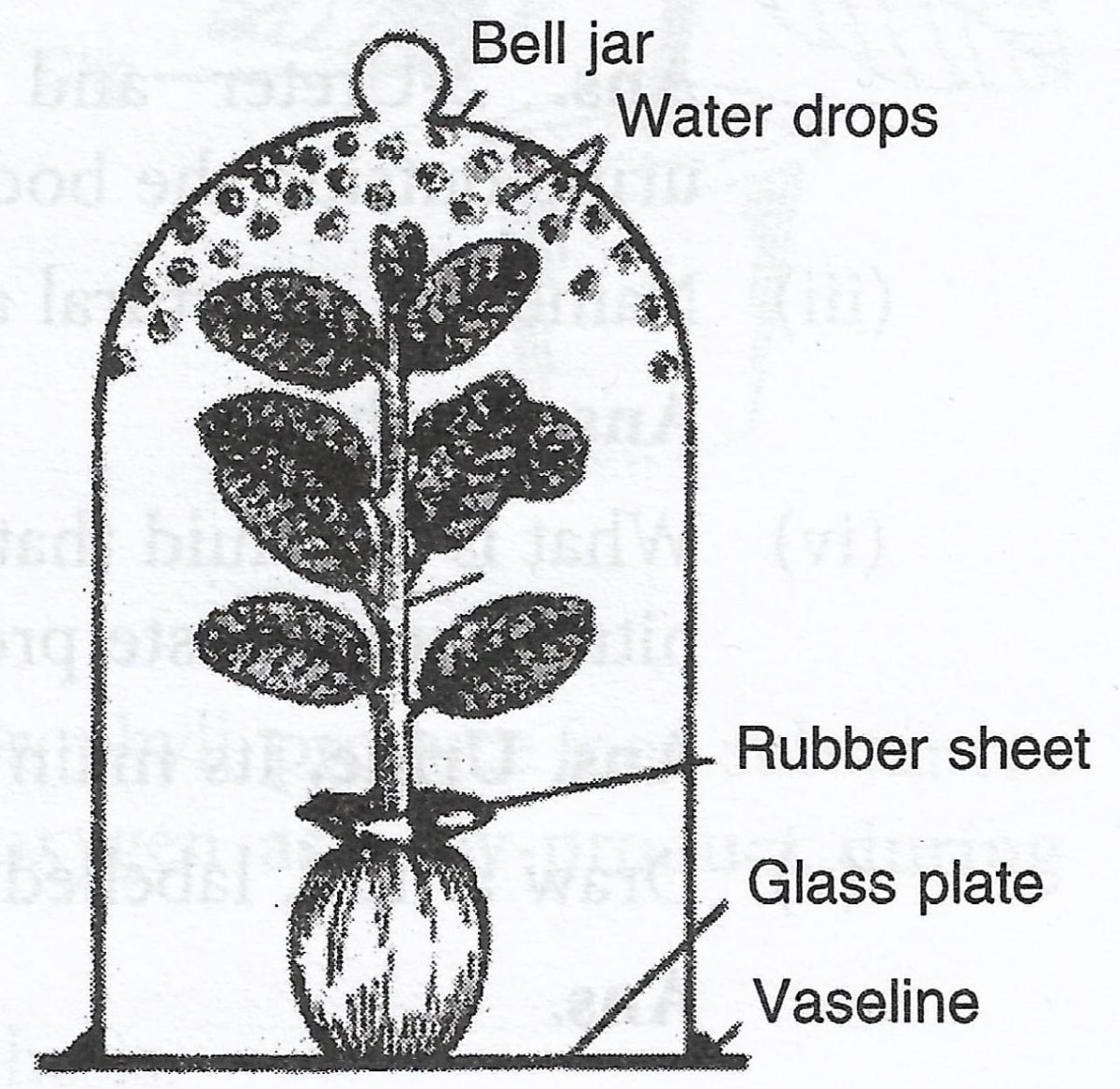
A potted plant is kept in sunlight and the plant is covered with a polythene cover. Water droplets appear inside the cover after few hours. Answer the following questions:

A potted plant is kept in sunlight and the plant is covered with a polythene cover. Water droplets appear inside the cover after few hours. Answer the following questions. Improvement Paper 2026, ICSE Biology 2026 Improvement Paper Solved.

(a) Name the process that is observed in the above experiment.

(b) From which part of the plant does water loss mainly occur?

(c) How does this process help in water conduction?

(d) Name one environmental factor that can increase the process mentioned in (a).

(e) What will happen if the process in (a) stops?

Show SolutionHide Solution↓

(a) Transpiration

(b) Water loss occurs mainly from the leaves, through the stomata.

(c) The loss of water vapour from the leaves creates a suction force called transpiration pull. This pull draws a continuous column of water upwards through the xylem from the roots to the leaves, bringing about the ascent of sap.

(d) High temperature.

(e) If transpiration stops, the transpiration pull will be lost and the upward conduction of water and dissolved minerals will slow down. The plant will also not be able to cool itself, and excess water in the plant may be given out as droplets by guttation.

2(v)1 Mark · 2026 · Section A · 2026 ImprovementFull page

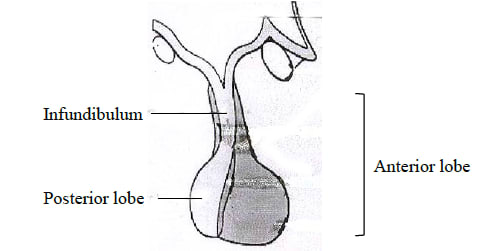
Study the diagram given below and match the gland with its functions:

Example: Thyroid gland – (f) secretes thyroxine

Study the diagram given below and match the gland with its functions: *Example: Thyroid gland – (f) secretes thyroxine*. Improvement Paper 2026, ICSE Biology 2026 Improvement Paper Solved.
Show SolutionHide Solution↓

Pituitary gland – (d) secretes vasopressin

Adrenal glands – (e) secretes adrenaline

Pancreas – (b) secretes glucagon

Ovaries – (c) secretes oestrogen

Testicles – (a) secretes testosterone

3(i)Written · 2026 · Section B · 2026 ImprovementFull page

Define mutation.

Show SolutionHide Solution↓

Mutation is a sudden random change in the genetic material of a cell that may cause it to differ in appearance or behaviour from the normal type.

3(ii)Written · 2026 · Section B · 2026 ImprovementFull page

Give one difference between the number of chromosomes passed on to each daughter cell in mitosis and meiosis.

Show SolutionHide Solution↓
MitosisMeiosis
Each daughter cell receives the same number of chromosomes as the parent cell, i.e. the diploid number (46 in humans).Each daughter cell receives half the number of chromosomes of the parent cell, i.e. the haploid number (23 in humans).
3(iii)Written · 2026 · Section B · 2026 ImprovementFull page

Hema, a 25-year-old woman has normal vision, but is a carrier of colour blindness (XoX). Her husband is colour blind (XoY).

(a) What percentage of their sons will be colour blind?

(b) Can a daughter be colour blind in this case?

Show SolutionHide Solution↓

(a) 50% of their sons will be colour blind. The mother gives either Xo or X, while the father gives Y to all sons, so half the sons are XoY (colour blind) and half are XY (normal).

(b) Yes. The father passes Xo to every daughter, so a daughter who receives Xo from the mother will be XoXo and colour blind, and a daughter who receives X from the mother will be XXo and a carrier. Therefore half the daughters will be colour blind and half will be carriers.

3(iv)Written · 2026 · Section B · 2026 ImprovementFull page

Mention the functions of the following:

(a) Scrotum

(b) Epididymis

Show SolutionHide Solution↓

(a) Scrotum — It is a pouch of skin that holds the testes outside the abdominal cavity and keeps them at a temperature about 2°C lower than the body temperature, which is necessary for the production of sperms.

(b) Epididymis — It is a highly coiled tube in which the spermatids mature into functional spermatozoa. It also serves as a temporary storage site for the sperms.

3(v)Written · 2026 · Section B · 2026 ImprovementFull page

Ratan, a 10-year-old boy was going home from school on a rainy day. He hears a loud thunderbolt and closes his ears suddenly.

(a) What kind of reflex action is this?

(b) Which part of the brain is involved in this action?

(c) Which sense organ triggered it?

Show SolutionHide Solution↓

(a) It is natural (inborn) reflex action, as it is an automatic protective response which is not learnt.

(b) Medulla oblongata

(c) Ear

4(i)Written · 2026 · Section B · 2026 ImprovementFull page

State Mendel’s law of dominance.

Show SolutionHide Solution↓

Law of dominance states that when a pair of contrasting characters is present together, only one of them is able to express itself in the F1 generation while the other remains suppressed. The character that is expressed is called the dominant character and the suppressed one is called the recessive character.

4(ii)Written · 2026 · Section B · 2026 ImprovementFull page

Expand the biological abbreviations:

(a) TSH

(b) CNG

Show SolutionHide Solution↓

(a) TSH — Thyroid Stimulating Hormone

(b) CNG — Compressed Natural Gas

4(iii)Written · 2026 · Section B · 2026 ImprovementFull page

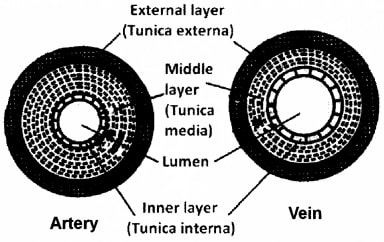
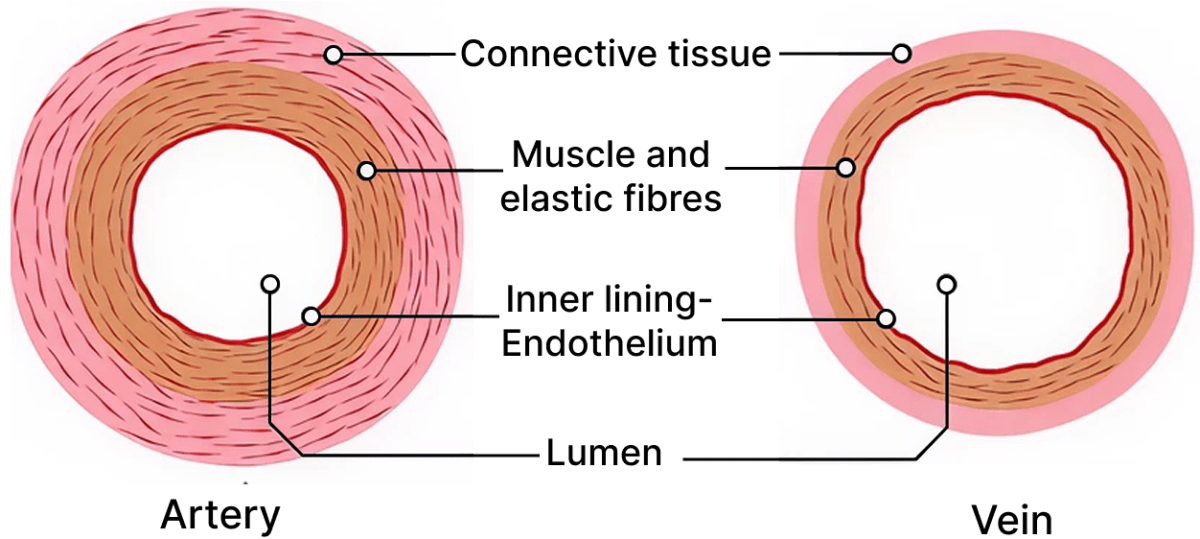
Differentiate between an artery and a vein with reference to size of lumen.

Show SolutionHide Solution↓
ArteryVein
It has a narrow lumen.It has a wide lumen.
4(iv)Written · 2026 · Section B · 2026 ImprovementFull page

We urinate fewer times in summer than in winter and the urine is generally thicker. Explain with reasons.

Show SolutionHide Solution↓

In summer a large amount of water is lost from the body as sweat, in order to keep the body temperature normal.
To make up for this loss, the kidneys reabsorb more water from the filtrate. As a result less urine is formed, we urinate fewer times, and the urine that is passed is more concentrated or thicker.

4(v)Written · 2026 · Section B · 2026 ImprovementFull page

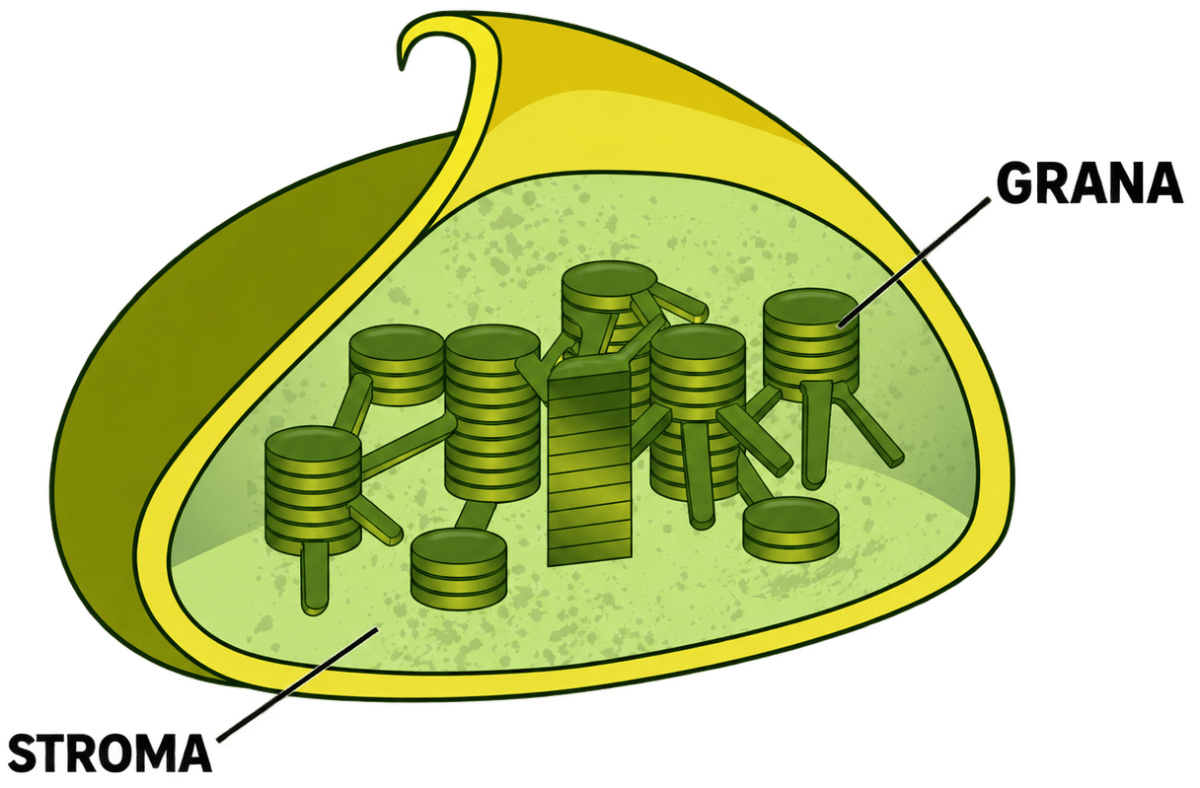
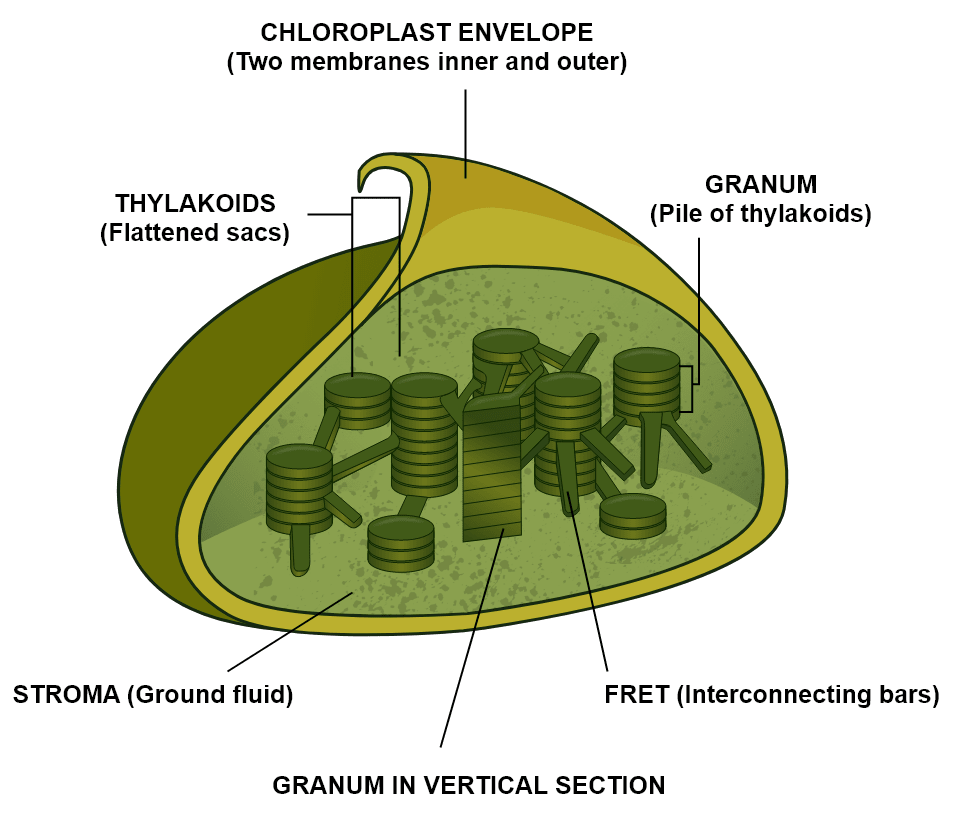
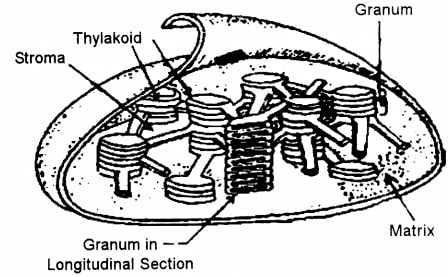
Draw a neat, labelled diagram of the cell organelle which is responsible for photosynthesis and label the following parts:

(a) Stroma

(b) Grana

Show SolutionHide Solution↓

The cell organelle responsible for photosynthesis is the chloroplast. Below diagram shows the structure of a chloroplast with its parts labelled:

Draw a neat, labelled diagram of the cell organelle which is responsible for photosynthesis and label the following parts:. Improvement Paper 2026, ICSE Biology 2026 Improvement Paper Solved.
5(i)Written · 2026 · Section B · 2026 ImprovementFull page

What is Parturition?

Show SolutionHide Solution↓

Parturition is the childbirth in viviparous mammals, i.e. the expulsion of the fully developed young one from the uterus of the mother at the end of the gestation period. In humans it occurs after about 280 days and is brought about by labour pains caused by the contraction of the uterine wall.

5(ii)Written · 2026 · Section B · 2026 ImprovementFull page

Sanjay, a 14-year-old boy observed droplets of water on the grass when he went for a walk in the morning.

(a) What is this phenomenon of formation of water droplets on grass called?

(b) Name the structures through which the water droplets come out.

Show SolutionHide Solution↓

(a) Guttation

(b) Hydathodes (water stomata)

5(iii)Written · 2026 · Section B · 2026 Improvement · 🔁 also 2024Full page

Write any two objectives of ‘Swachh Bharat Abhiyan’.

Show SolutionHide Solution↓

Two objectives of Swachh Bharat Abhiyan are:

  1. To eliminate open defecation: The mission aims to ensure that all households have access to toilets and promote the construction and use of sanitary latrines.
  2. To promote cleanliness and hygiene: It seeks to create awareness about sanitation and cleanliness practices, improve waste management systems, and maintain cleanliness in public spaces.
5(iv)Written · 2026 · Section B · 2026 ImprovementFull page

Mention the function of the following plant hormones:

(a) Abscisic acid

(b) Gibberellins

Show SolutionHide Solution↓

(a) Abscisic acid — It acts as a growth inhibitor. It prevents or slows down seed germination, causes closure of stomata and promotes the abscission of leaves, flowers and fruits. It also increases the tolerence of plants to various kinds of stresses. Therefore it is also called the "stress harmone".

(b) Gibberellins — They bring about elongation of the internodes of the stem, overcome genetic dwarfism in plants and help in breaking the dormancy of seeds and buds.

5(v)Written · 2026 · Section B · 2026 ImprovementFull page

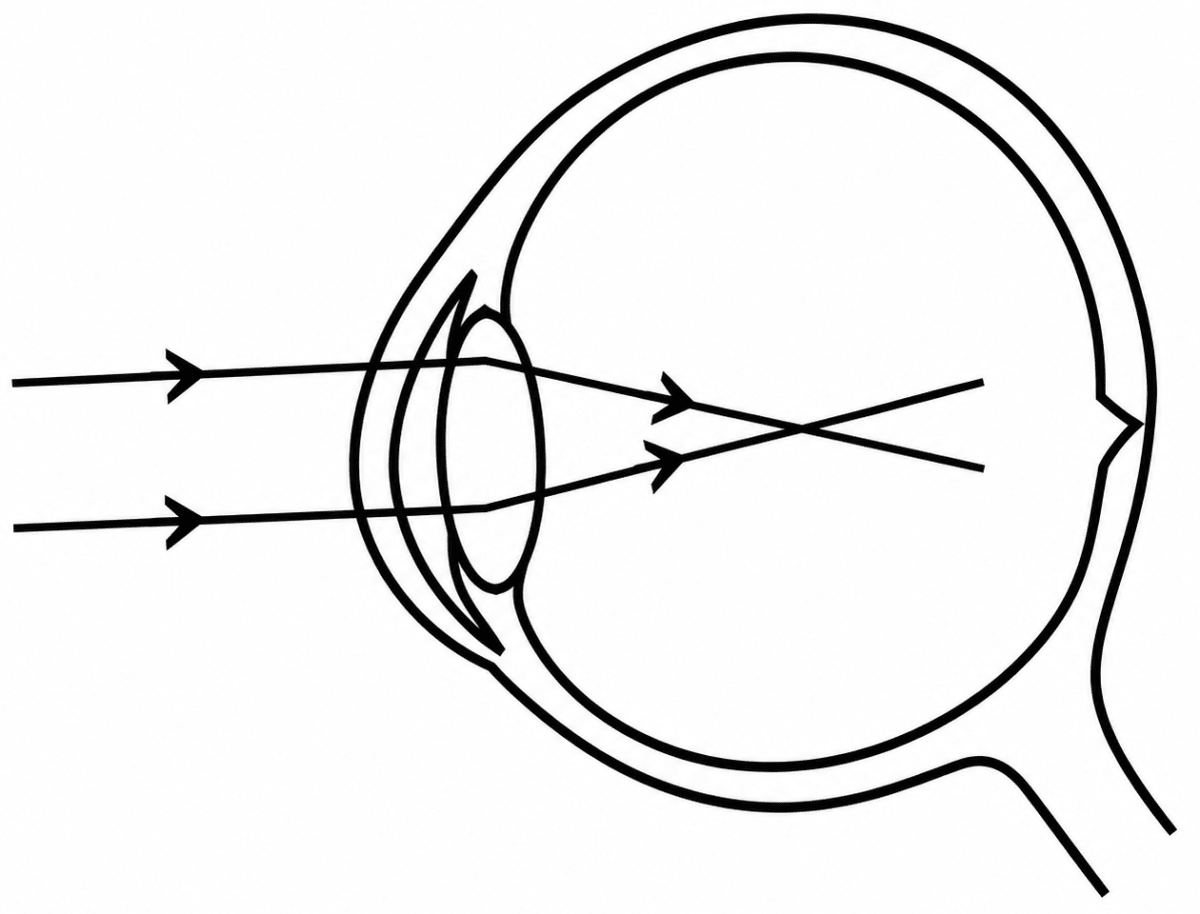
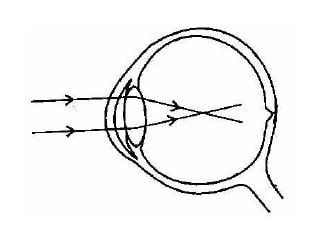
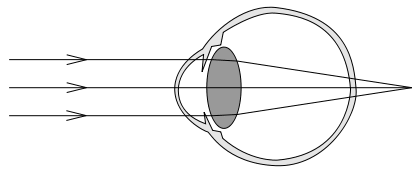
Given below is a diagram depicting a defect of the human eye. Study the same and answer the questions that follow:

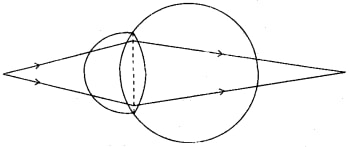
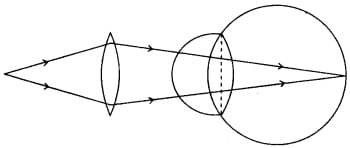
Given below is a diagram depicting a defect of the human eye. Study the same and answer the questions that follow:. Improvement Paper 2026, ICSE Biology 2026 Improvement Paper Solved.

(a) Name the defect shown in the diagram.

(b) What is the possible reason that causes this defect?

(c) Name the type of lens used to correct this defect.

Show SolutionHide Solution↓

(a) Myopia (short-sightedness or near-sightedness)

(b) The image of a distant object is formed in front of the retina, either because the eyeball has become elongated from front to back or because the lens has become too convex.

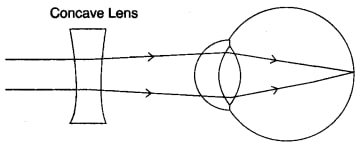
(c) Concave lens

6(i)Written · 2026 · Section B · 2026 ImprovementFull page

What do you understand by the term birth rate in population?

Show SolutionHide Solution↓

Birth rate, also called natality, is the number of births per 1000 individuals in a population per year.

6(ii)Written · 2026 · Section B · 2026 ImprovementFull page

State two differences between Fraternal twins and Identical twins.

Show SolutionHide Solution↓

Two differences between Fraternal twins and Identical twins are:

Fraternal twinsIdentical twins
They are formed when two ova released at the same time are fertilised by two different sperms.They are formed when a single fertilised ovum splits into two embryos.
They are genetically different and may be of the same or different sexes.They are genetically alike and are always of the same sex.
6(iii)Written · 2026 · Section B · 2026 ImprovementFull page

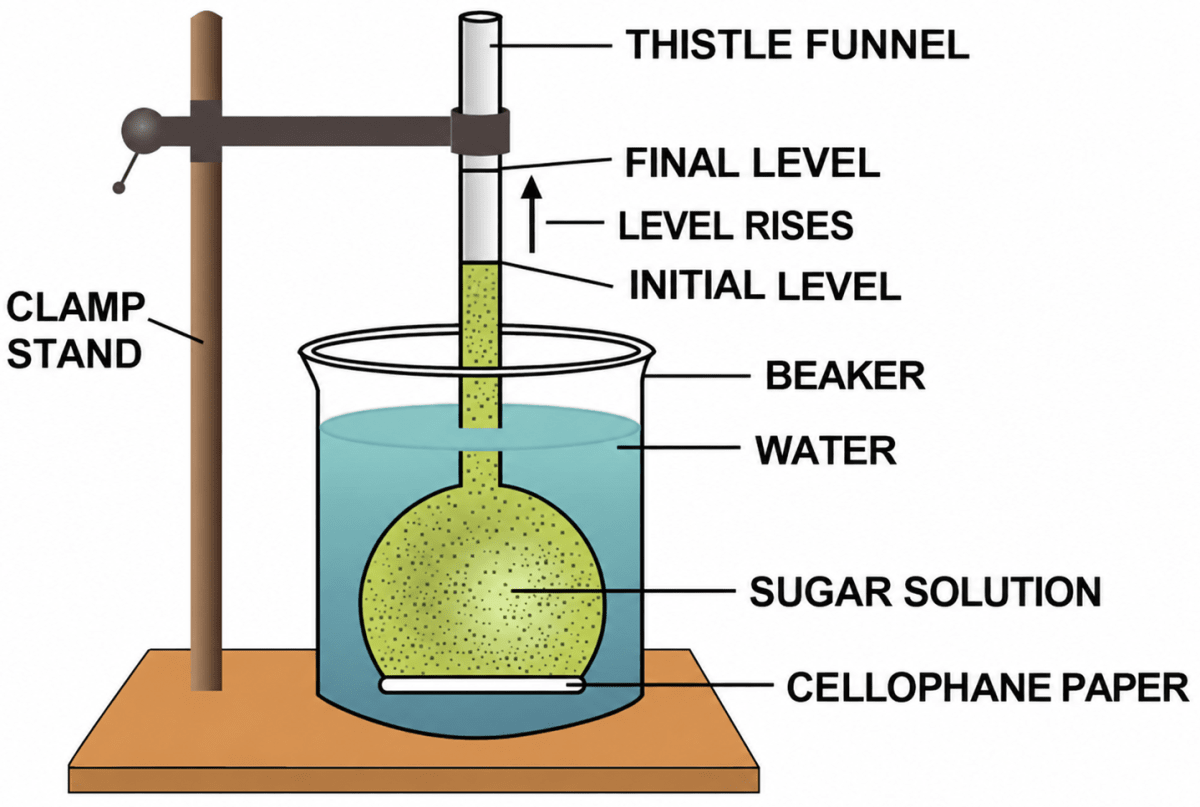
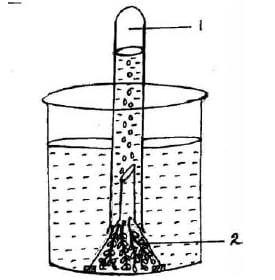
The experiment below shows the thistle funnel containing sugar solution.

The experiment below shows the thistle funnel containing sugar solution. Define the phenomenon taking place in the above experiment. Improvement Paper 2026, ICSE Biology 2026 Improvement Paper Solved.

Define the phenomenon taking place in the above experiment.

Show SolutionHide Solution↓

The phenomenon taking place is osmosis, more precisely endosmosis.
Osmosis is the net movement of water molecules from a region of their higher concentration to a region of their lower concentration through a semi-permeable membrane. Here water from the beaker passes through the cellophane paper into the sugar solution, so the level in the thistle funnel rises.

6(iv)Written · 2026 · Section B · 2026 ImprovementFull page

What would happen if the cellophane was replaced by the following in the above experiment?

(a) A rubber sheet

(b) A muslin cloth

Show SolutionHide Solution↓

(a) A rubber sheet is impermeable, so water molecules cannot pass through it. No osmosis will take place and the level of the sugar solution in the thistle funnel will not rise.

(b) A muslin cloth is freely permeable, so both water and sugar molecules can pass through it in either direction. Osmosis will not take place; the sugar solution will simply diffuse out into the beaker and the level in the thistle funnel will not rise.

6(v)Written · 2026 · Section B · 2026 ImprovementFull page

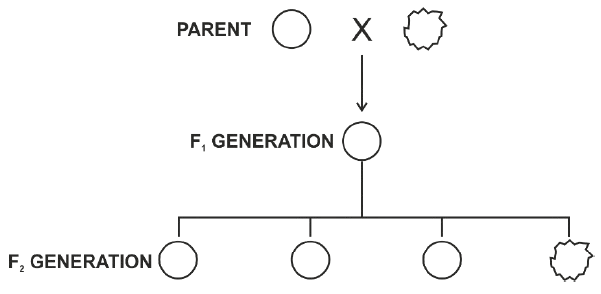
Homozygous pea plant bearing red coloured flowers (R) is crossed with a homozygous pea plant bearing white flowers (r):

(a) Give the phenotype of the F1 generation.

(b) Write the monohybrid ratio of the offsprings of the F2 generation.

(c) What is the genotype obtained in F2 generation?

Show SolutionHide Solution↓

(a) All the plants of the F1 generation bear red flowers, as red is dominant over white.

(b) The monohybrid phenotypic ratio of the F2 generation is 3 red : 1 white, i.e. 3 : 1.

(c) The genotypes obtained in the F2 generation are RR, Rr and rr in the ratio 1 : 2 : 1.

7(i)Written · 2026 · Section B · 2026 ImprovementFull page

Explain the term Fertilization.

Show SolutionHide Solution↓

Fertilisation is the fusion of a haploid male gamete (sperm) with a haploid female gamete (ovum) to form a diploid cell called the zygote. In human beings fertilisation is internal and usually takes place in the ampulla of the fallopian tube.

7(ii)Written · 2026 · Section B · 2026 ImprovementFull page

Nitin, a student of class 10, learnt that sperms produced in the testes move into a highly coiled tube and stays there temporarily.

(a) Name this highly coiled tube.

(b) What is the function of this coiled tube?

Show SolutionHide Solution↓

(a) Epididymis

(b) In the epididymis the spermatids mature into functional spermatozoa. It also acts as a temporary storage site for the sperms before they pass into the vas deferens.

7(iii)Written · 2026 · Section B · 2026 ImprovementFull page

Name any two vestigial organs found in humans.

Show SolutionHide Solution↓

Two vestigial organs found in humans are:

  1. Vermiform appendix
  2. Wisdom teeth
7(iv)Written · 2026 · Section B · 2026 ImprovementFull page

Arrange the following food chains in a proper sequence beginning with the term that is underlined:

(a) Corn, Eagle, Fox, Rat

(b) Nectar, Crow, Bee, Lizard

Show SolutionHide Solution↓

(a) Corn → Rat → Fox → Eagle

(b) Nectar → Bee → Lizard → Crow

7(v)Written · 2026 · Section B · 2026 ImprovementFull page

Draw a neat, labelled diagram to show Anaphase stage of mitosis in an animal cell having 4 chromosomes.

Show SolutionHide Solution↓

Below diagram shows the anaphase stage of mitosis in an animal cell having 4 chromosomes, with all the parts labelled:

Draw a neat, labelled diagram to show Anaphase stage of mitosis in an animal cell having 4 chromosomes. Improvement Paper 2026, ICSE Biology 2026 Improvement Paper Solved.
8(i)Written · 2026 · Section B · 2026 ImprovementFull page

Mention the number of Cranial nerves in a man.

Show SolutionHide Solution↓

There are 12 pairs of cranial nerves in a man.

8(ii)Written · 2026 · Section B · 2026 ImprovementFull page

Study the diagram given below and answer the questions that follow:

Study the diagram given below and answer the questions that follow:. Improvement Paper 2026, ICSE Biology 2026 Improvement Paper Solved.

(a) Identify the part labelled A.

(b) What is its function?

Show SolutionHide Solution↓

(a) A is the cerebellum.

(b) The cerebellum maintains posture, equilibrium and muscle tone of the body, and coordinates the voluntary muscular movements initiated by the cerebrum.

8(iii)Written · 2026 · Section B · 2026 ImprovementFull page

Mention the two main processes in urine formation.

Show SolutionHide Solution↓

The two main processes in urine formation are:

  1. Ultrafiltration — In the glomerulus the blood is filtered under pressure, so that water, mineral salts, glucose, amino acids and nitrogenous wastes pass into the Bowman's capsule while blood cells and large molecules like proteins are retained.
  2. Selective reabsorption — As the filtrate passes along the renal tubule, useful materials such as most of the water, all the glucose and amino acids and some mineral salts are taken back into the surrounding blood capillaries.
8(iv)Written · 2026 · Section B · 2026 ImprovementFull page

Give the exact location of:

(a) Amniotic fluid

(b) Fovea centralis

Show SolutionHide Solution↓

(a) Amniotic fluid is present inside the amnion, the sac which surrounds and encloses the developing embryo in the uterus.

(b) Fovea centralis, also called the yellow spot, is present on the retina of the eye, directly behind the centre of the lens along the visual axis.

8(v)Written · 2026 · Section B · 2026 ImprovementFull page

People living in congested cities often complain of breathing problems. Visibility is also reduced due to smog.

(a) What is the type of pollution that is being referred to?

(b) What is smog?

(c) Name one harmful gas released from motor vehicles.

Show SolutionHide Solution↓

(a) Air pollution

(b) Smog is a thick haze formed near the ground when smoke and other particulate pollutants of the air mix with fog. It reduces visibility and causes breathing problems.

(c) Carbon monoxide (CO)

1(i)1 Mark · 2026 · Section A · 2026 SpecimenFull page

Allen’s blood report showed an abnormal decrease in the number of R.B.C. He is suffering from:

Show SolutionHide Solution↓

Erythropenia

Reason — Erythropenia refers to an abnormally low number of red blood cells (RBCs) in the blood.

1(ii)1 Mark · 2026 · Section A · 2026 SpecimenFull page

A farmer notices that storing ripe mangoes with unripe ones speeds up the ripening process. The phytohormone primarily responsible for this phenomenon is:

Show SolutionHide Solution↓

Ethylene

Reason — Ethylene is a gaseous plant hormone that promotes the ripening of fruits. Ripe mangoes release ethylene, which speeds up ripening in nearby unripe mangoes.

1(iii)1 Mark · 2026 · Section A · 2026 SpecimenFull page

Assertion (A): Oxygen is produced during light dependent reactions of photosynthesis.

Reason (R): Oxygen is released as a byproduct during photolysis.

Show SolutionHide Solution↓

Both (A) and (R) are true and (R) is the correct explanation of (A).

Reason — Photolysis occurs in the thylakoid membranes during the light-dependent stage, producing oxygen.

1(iv)1 Mark · 2026 · Section A · 2026 SpecimenFull page

Reena gets emotionally stressed when the school examinations are approaching. Which hormone is responsible for this condition?

Show SolutionHide Solution↓

Adrenaline

Reason — Adrenaline is the stress hormone secreted by the adrenal glands. It prepares the body for "fight or flight" during stressful situations. It increases heart rate, blood pressure, and energy supply.

1(v)1 Mark · 2026 · Section A · 2026 SpecimenFull page

The diagram given below is that of a Neutrophil. The function is ............... :

The diagram given below is that of a Neutrophil. ICSE Biology 2025 Specimen Paper Solved
Show SolutionHide Solution↓

Phagocytosis

Reason — Neutrophils are a type of white blood cell. Their main function is to engulf and destroy pathogens like bacteria (phagocytosis).

1(vi)1 Mark · 2026 · Section A · 2026 SpecimenFull page

Assertion (A): Pituitary gland is known as the master gland.

Reason (R): It regulates the activities of other exocrine glands.

Show SolutionHide Solution↓

(A) is true and (R) is false.

Reason — The pituitary gland is called the master gland because it controls the activity of many other endocrine glands.
The pituitary gland does not regulate exocrine glands (which have ducts and secrete substances like sweat or saliva). It regulates endocrine glands ( which are ductless like the thyroid, adrenal, etc.).

1(vii)1 Mark · 2026 · Section A · 2026 SpecimenFull page

Aruna went to a theatre to watch a movie on a bright sunny morning. As she came out of the theatre, she felt a dazzling effect and could not open her eyes. After a few minutes her vision became normal. This is due to:

Aruna went to a theatre to watch a movie on a bright sunny morning. As she came out of the theatre, she felt a dazzling effect and could not open her eyes. After a few minutes her vision became normal. This is due to. ICSE Biology 2025 Specimen Paper Solved
Show SolutionHide Solution↓

Adaptation of eyes

Reason — Adaptation of eyes is the ability of the eyes to adjust to changes in light intensity.

1(viii)1 Mark · 2026 · Section A · 2026 SpecimenFull page

Reflex actions provide a survival advantage because they:

Show SolutionHide Solution↓

Require no conscious thought, allowing rapid responses.

Reason — Reflex actions are automatic and quick responses to stimuli. They bypass the brain's conscious areas, allowing the body to react rapidly, which is necessary for survival (e.g., pulling your hand away from something hot).

1(ix)1 Mark · 2026 · Section A · 2026 SpecimenFull page

Industrial melanism is the phenomenon by which the peppered moth:

Show SolutionHide Solution↓

In polluted areas, became darker in colour for better camouflage.

Reason — Industrial melanism means moths in polluted areas became darker to blend in better and avoid predators.

1(x)1 Mark · 2026 · Section A · 2026 SpecimenFull page

The hormone that maintains the thickening of the endometrium during pregnancy is:

Show SolutionHide Solution↓

Progesterone

Reason — Progesterone maintains the thickened lining of the uterus (endometrium) during pregnancy. This helps support and nourish the developing embryo.

1(xi)1 Mark · 2026 · Section A · 2026 Specimen · 🔁 also 2025Full page

The onset of menstruation in a human female is called:

Show SolutionHide Solution↓

Menarche

Reason — Menarche refers to the first occurrence of menstruation in girls, marking the onset of puberty and reproductive maturity.

1(xii)1 Mark · 2026 · Section A · 2026 SpecimenFull page

The number of autosomes and allosomes present in a human cell:

Show SolutionHide Solution↓

22 pairs of autosomes, 1 pair of allosome

Reason — Humans have 23 pairs of chromosomes in total. 22 pairs are autosomes (non-sex chromosomes). 1 pair is allosomes (sex chromosomes — X and Y). So, the human cell contains 22 pairs of autosomes and 1 pair of allosomes.

1(xiii)1 Mark · 2026 · Section A · 2026 SpecimenFull page

Cultural revolution favours a steep rise in human population. Identify the correct sequence of revolution:

Show SolutionHide Solution↓

Tool making, Agricultural, Scientific and Industrial

Reason — Early humans started making tools, improving survival. Farming began, leading to food surplus and population growth. Advances in science and industry boosted living standards and population further.

1(xiv)1 Mark · 2026 · Section A · 2026 SpecimenFull page

Tanvi tried to match the phases of menstrual cycle with the number of days as given in the table below:

PHASEDAYS
P – Follicular PhaseDay 5 – 12
Q – Luteal PhaseDay 15 – 28
R – Menstrual PhaseDay 3 – 5
S – Ovulatory PhaseDay 13 or 14

Identify the correct sequence:

Show SolutionHide Solution↓

R, P, S, Q

Reason

R – Menstrual Phase: Day 1 to about Day 5.
P – Follicular Phase: After menstruation, roughly Day 5 to Day 12.
S – Ovulatory Phase: Around Day 13 or 14 (when ovulation occurs).
Q – Luteal Phase: After ovulation, Day 15 to Day 28.

2(i)1 Mark · 2026 · Section A · 2026 SpecimenFull page

Give the biological/technical terms for the following:

(a) A mixture of smoke and fog.

(b) The inner lining of uterus.

(c) The pressure that is responsible for the movement of water molecules across the cortical cells of the root.

(d) The ground substance present in a chloroplast.

(e) The fluid present between the layers of meninges.

Show SolutionHide Solution↓

(a) Smog

(b) Endometrium

(c) Root pressure

(d) Stroma

(e) Cerebrospinal fluid (CSF)

2(ii)1 Mark · 2026 · Section A · 2026 SpecimenFull page

Given below is the diagram of a human heart. Read the information below the diagram and fill in the blanks:

Given below is the diagram of a human heart. Read the information below the diagram and fill in the blanks: ICSE 2026 Specimen Biology Solved Question Paper.

The human heart pumps blood throughout the body. It is the size of a large fist. The heart is located between the lungs in the thoracic cavity. It has four chambers. The heart functions all through the lifespan of a person and is responsible for the survival of the person.

The heart is enclosed by a membrane called (a) ............... (Pericardium / Pleura). The ventricles give rise to two large blood vessels called (b) ............... (Pulmonary vein / Pulmonary artery) and (c) ............... (Aorta / Venacava). The flaps of the cuspid valves are kept in position by (d) ............... (Chordae tendinae / Endometrium). (e) ............... (Hepatic / Coronary) arteries supply oxygenated blood to the walls of the heart.

Show SolutionHide Solution↓

The heart is enclosed by a membrane called (a) Pericardium. The ventricles give rise to two large blood vessels called (b) Pulmonary artery and (c) Aorta. The flaps of the cuspid valves are kept in position by (d) Chordae tendinae. (e) Coronary arteries supply oxygenated blood to the walls of the heart.

2(iii)1 Mark · 2026 · Section A · 2026 SpecimenFull page

Choose the odd term out from each of the following set of terms. Mention the category to which the remaining three belong:

(a) Sulphur dioxide, Oxygen, Carbon monoxide, Nitrogen dioxide.

(b) Pons, Epidermis, Xylem, Phloem.

(c) Tympanum, Pinna, Auditory canal, Malleus.

(d) Ureter, Urethra, Uterus, Renal Pelvis.

(e) Stomata, Lenticles, Cuticle, Root hair.

Show SolutionHide Solution↓

(a) Odd term — Oxygen
Category of the remaining terms — Air Pollutants.

(b) Odd term — Pons
Category of the remaining terms — Plant tissues.

(c) Odd term — Malleus
Category of the remaining terms — Parts of outer ear.

(d) Odd term — Uterus
Category of the remaining terms — Parts of Excretory system.

(e) Odd term — Root hairs
Category of remaining terms — Structures involved in transpiration in plants.

2(iv)1 Mark · 2026 · Section A · 2026 SpecimenFull page

Rajeev, a 10 year old boy, went to an Ophthalmologist to get his eyes tested. He noticed a poster in the clinic with questions related to the parts of human eye. Help Rajeev answer the questions:

(a) Which is the fluid that lubricates the eye?

(b) Which cells help in colour vision?

(c) Which nerve sends impulses from the eyeball to the brain?

(d) Name the structure that gives colour to the eyes.

(e) Name the part that allows entry of light rays into the eye.

Show SolutionHide Solution↓

(a) Tears.

(b) Cone cells.

(c) Optic nerve.

(d) Iris.

(e) Pupil.

2(v)1 Mark · 2026 · Section A · 2026 SpecimenFull page

Study the diagram given below and match the structure with its function:

Study the diagram given below and match the structure with its function:. ICSE 2026 Biology Specimen Question Paper.
Show SolutionHide Solution↓

(a) Secrete Testosterone – Interstitial cells (Leydig cells)

(b) Transports sperms to Epididymis – Efferent ducts

(c) Stores sperms till maturation – Epididymis

(d) Transport sperms to urethra – Vas deferens

(e) Produce sperms – Seminiferous tubules

3(i)Written · 2026 · Section B · 2026 SpecimenFull page

Explain the term Menarche.

Show SolutionHide Solution↓

It is the first occurrence of menstruation in a human female, marking the onset of puberty and the beginning of her reproductive life. It usually occurs between the ages of 10 to 15 years.

3(ii)Written · 2026 · Section B · 2026 SpecimenFull page

In what form is water lost during transpiration and guttation from plants?

Show SolutionHide Solution↓

Transpiration — Water is lost in the form of water vapour through stomata.

Guttation — Water is lost in the form of liquid droplets from the tips or edges of leaves through hydathodes.

3(iii)Written · 2026 · Section B · 2026 SpecimenFull page

Ayush was in the final round of a carrom match. He was focussing intently on the strokes of the opponent player.

Ayush was in the final round of a carrom match. He was focussing intently on the strokes of the opponent player. ICSE 2026 Biology Specimen Question Paper.

(a) Which part of the brain helps Ayush to focus on the game?

(b) Name the part of the brain that co-ordinates his muscles while using the striker.

Show SolutionHide Solution↓

(a) Cerebrum

(b) Cerebellum

3(iv)Written · 2026 · Section B · 2026 SpecimenFull page

State the permeability of cell membrane and cell wall.

Show SolutionHide Solution↓

(a) Cell membrane — Semipermeable

(b) Cell wall — Freely permeable

3(v)Written · 2026 · Section B · 2026 SpecimenFull page

Draw a neat, labelled diagram of a cross section of an Artery and a Vein.

Show SolutionHide Solution↓
Draw a neat, labelled diagram of a cross section of an Artery and a Vein. ICSE 2026 Biology Specimen Question Paper.
4(i)Written · 2026 · Section B · 2026 SpecimenFull page

What is Excretion?

Show SolutionHide Solution↓

Excretion is the biological process by which harmful nitrogenous waste products are removed from the body.

4(ii)Written · 2026 · Section B · 2026 SpecimenFull page

Differentiate between Diabetes mellitus and Diabetes insipidus with reference to the hormone involved.

Show SolutionHide Solution↓

Diabetes mellitus occurs due to hyposecretion of insulin whereas Diabetes insipidus occurs due to hyposecretion of Antidiuretic hormone (ADH).

4(iii)Written · 2026 · Section B · 2026 SpecimenFull page

Give the common name and the scientific name of the plant on which Gregor Mendel conducted his breeding experiments.

Show SolutionHide Solution↓

Common name — Garden pea

Scientific name — Pisum sativum

4(iv)Written · 2026 · Section B · 2026 SpecimenFull page

Name the tonicity of the solutions for a living cell to show Endosmosis and Exosmosis.

Show SolutionHide Solution↓

Endosmosis occurs when a cell is placed in a hypotonic solution.

Exosmosis occurs when a cell is placed in a hypertonic solution.

4(v)Written · 2026 · Section B · 2026 SpecimenFull page

Plant hormones are produced in extremely low concentrations in plants to regulate the physiological processes and tropic movements –

Plant hormones are produced in extremely low concentrations in plants to regulate the physiological processes and tropic movements. ICSE 2026 Biology Specimen Question Paper.

(a) Name one plant hormone responsible for the changes shown in the above picture.

(b) Identify a hormone that has an opposite effect to the one depicted in the picture.

(c) Give an example of a plant that shows Thigmotropism.

Show SolutionHide Solution↓

(a) Abscisic acid, Ethylene

(b) Auxin

(c) Pea plant

5(i)Written · 2026 · Section B · 2026 SpecimenFull page

What are non-biodegradable wastes?

Show SolutionHide Solution↓

Non-biodegradable wastes are substances that cannot be broken down naturally by microorganisms (like bacteria or fungi) into harmless products. These wastes persist in the environment for a long time and can cause pollution. E.g., Plastics.

5(ii)Written · 2026 · Section B · 2026 SpecimenFull page

Mention any two objectives of the Swachh Bharat Abhiyan.

Show SolutionHide Solution↓
  1. To eliminate open defecation by constructing toilets and promoting sanitation practices in both rural and urban areas.
  2. To promote proper solid waste management through the collection, segregation, and disposal of garbage to keep surroundings clean.
5(iii)Written · 2026 · Section B · 2026 SpecimenFull page

Arrange the following food chain in a proper sequence:

(a) Small fish, Penguin, Algae, Seal, Mosquito larvae.

(b) Woodpecker, Caterpillar, Mountain lion, Fox, Cabbage.

Show SolutionHide Solution↓

(a) Algae, Mosquito larvae, Small fish, Penguin, Seal.

(b) Cabbage, Caterpillar, Wood pecker, Fox, Mountain lion.

5(iv)Written · 2026 · Section B · 2026 SpecimenFull page

Mention the number of cranial nerves and spinal nerves in a human being.

Show SolutionHide Solution↓

Cranial nerves: – 12 pairs

Spinal nerves: – 31 pairs

5(v)Written · 2026 · Section B · 2026 SpecimenFull page

Surya used a plant with variegated leaves for an experiment on photosynthesis. He tested a leaf with iodine after keeping the plant in sunlight for a few hours.

Surya used a plant with variegated leaves for an experiment on photosynthesis. He tested a leaf with iodine after keeping the plant in sunlight for a few hours. ICSE Biology 2025 Specimen Paper Solved

(a) Which parts of the leaf will turn blue black after the iodine test?

(b) What does this tell us about the role of chlorophyll in photosynthesis?

(c) Write the overall chemical equation for photosynthesis.

Show SolutionHide Solution↓

(a) The green parts of the variegated leaf will turn blue-black because they contain chlorophyll and can produce starch.

(b) It shows that chlorophyll is essential for photosynthesis because only the parts with chlorophyll produce starch (which turns blue-black with iodine).

(c) $6\text{CO}_2 + 12\text{H}_2\text{O} \xrightarrow[\text{chlorophyll}]{\text{light energy}} \text{C}_6\text{H}_{12}\text{O}_6 + 6\text{H}_2\text{O} + 6\text{O}_2 \uparrow$

6(i)Written · 2026 · Section B · 2026 SpecimenFull page

State Mendel’s Law of Dominance.

Show SolutionHide Solution↓

Law of Dominance — Out of a pair of contrasting characters present together, only one is able to express itself while the other remains suppressed. The one that expresses is the dominant character and the one that is unexpressed is the recessive one.

6(ii)Written · 2026 · Section B · 2026 SpecimenFull page

State the rate of transpiration when the air surrounding a plant has:

(a) More atmospheric humidity.

(b) Hot and dry air.

Show SolutionHide Solution↓

(a) More atmospheric humidity — Transpiration rate decreases.

(b) Hot and dry air — Transpiration rate increases.

6(iii)Written · 2026 · Section B · 2026 SpecimenFull page

Expand the following abbreviations:

(a) ACTH

(b) ADH

Show SolutionHide Solution↓

(a) ACTH — Adreno Cortico Tropic Hormone

(b) ADH — Antidiuretic Hormone

6(iv)Written · 2026 · Section B · 2026 SpecimenFull page

Which part of the ear equalizes air pressure on either side of the ear drum? Where is this structure located?

Show SolutionHide Solution↓

The part of the ear that equalizes air pressure on either side of the eardrum is the Eustachian tube.
It is located in the middle ear.

6(v)Written · 2026 · Section B · 2026 SpecimenFull page

Santosh loved his garden, especially his pea plants. One year, he noticed that all the pea plants he grew from one batch of seeds had round seeds. Curious, he took the seeds from one of those plants and grew a new generation. To his surprise, 75% of the new plants had round seeds, but 25% had wrinkled seeds.

Santosh loved his garden, especially his pea plants. One year, he noticed that all the pea plants he grew from one batch of seeds had round seeds. ICSE 2026 Biology Specimen Question Paper.

(a) What were the genotypes of the parent plants that Santosh originally planted?

(b) Which trait is dominant – round or wrinkled seeds?

(c) What is the genotypic ratio of the second generation (F2) plants?

Show SolutionHide Solution↓

(a) The genotypes of the parent plants that Santosh originally planted were heterozygous dominant (Rr).
Since all plants in the first generation (F1) had round seeds, the parents must have been pure round-seeded (RR) and wrinkled-seeded (rr) plants. Crossing RR (round, homozygous dominant) × rr (wrinkled, homozygous recessive) produces all Rr (heterozygous round) plants in F1.

(b) Round seeds are dominant over wrinkled seeds, because the F1 plants (Rr) all show the round seed phenotype.

(c) 1:2:1

7(i)Written · 2026 · Section B · 2026 SpecimenFull page

Explain the term Natality.

Show SolutionHide Solution↓

Natality (or birth rate) is the number of live births per 1000 people of population per year.

7(ii)Written · 2026 · Section B · 2026 SpecimenFull page

Distinguish between Sympathetic system and Parasympathetic system on the basis of heartbeat.

Show SolutionHide Solution↓

Sympathetic system increases heartbeat whereas Parasympathetic system decreases heartbeat and makes it normal.

7(iii)Written · 2026 · Section B · 2026 SpecimenFull page

Meena covered a potted plant as shown below with a transparent plastic bag. She observed water droplets inside the bag after a few hours when kept in sunlight.

Meena covered a potted plant as shown below with a transparent plastic bag. She observed water droplets inside the bag after a few hours when kept in sunlight. ICSE 2026 Biology Specimen Question Paper.

(a) Name the process that resulted in the formation of water droplets inside the bag.

(b) Define the process mentioned above.

Show SolutionHide Solution↓

(a) Transpiration

(b) Transpiration is the loss of water in the form of water vapour from the aerial parts (mainly leaves) of a plant.

7(iv)Written · 2026 · Section B · 2026 SpecimenFull page

Mention the regions of the kidney where we can find glomerulus and Henle's loop.

Show SolutionHide Solution↓

Glomerulus — Cortex (outer region) of the kidney.

Henle's loop — Medulla (inner region) of the kidney.

7(v)Written · 2026 · Section B · 2026 SpecimenFull page

Draw a neat, labelled diagram to show the internal structure of a root hair.

Show SolutionHide Solution↓
Draw a neat, labelled diagram to show the internal structure of a root hair. ICSE Biology 2025 Specimen Paper Solved
8(i)Written · 2026 · Section B · 2026 SpecimenFull page

How does the ozone layer depletion affect life on earth?

Show SolutionHide Solution↓

Ozone layer depletion allows more harmful UV rays from the sun to reach Earth. This causes skin cancer, cataract, and weakens the immune system in humans. It also harms plants, animals, and marine life and reduces crop yields.

8(ii)Written · 2026 · Section B · 2026 SpecimenFull page

Mention two body features of Australopithecus.

Show SolutionHide Solution↓

Two body features of Australopithecus are:

  1. Projecting eyebrow ridges.
  2. Absence of chin.
8(iii)Written · 2026 · Section B · 2026 SpecimenFull page

Identical twins are always of the same gender. Explain why.

Show SolutionHide Solution↓

Identical twins are formed when a single fertilized egg (zygote) splits into two embryos. Since they come from the same egg and sperm, they have exactly the same genetic material, including the sex chromosomes.

8(iv)Written · 2026 · Section B · 2026 SpecimenFull page

We should not insert sharp objects into the ear to remove ear wax. Give a suitable reason.

Show SolutionHide Solution↓

Inserting sharp objects into the ear can damage the delicate eardrum or ear canal, causing pain, infection, or even permanent hearing loss. It can also push the earwax deeper, making the problem worse

8(v)Written · 2026 · Section B · 2026 SpecimenFull page

In a school experiment, a few students grow plants in pots placed horizontally as shown below. After a few days, the students observed that the roots bent downward, and the shoots curved upward.

In a school experiment, a few students grow plants in pots placed horizontally as shown below. After a few days, the students observed that the roots bent downward, and the shoots curved upward. ICSE 2026 Biology Specimen Question Paper.

(a) Name the tropic movement seen in shoots.

(b) Why do roots always grow downwards?

(c) Which phytohormone regulates the above tropic movements?

Show SolutionHide Solution↓

(a) Phototropism

(b) Roots grow downward due to positive geotropism. They grow towards the gravitational pull to anchor the plant and absorb water and minerals from the soil.

(c) Auxins

1(i)1 Mark · 2025 · Section A · 2025 PaperFull page

The number of live births per thousand people per year is called:

Show SolutionHide Solution↓

Natality

Reason — Natality refers to the birth rate, or the number of live births per thousand people per year.

1(ii)1 Mark · 2025 · Section A · 2025 PaperFull page

The structure that lies at the junction of the choroid and the iris and is itself a part of the choroid is called:

Show SolutionHide Solution↓

Ciliary body

Reason — The ciliary body is a part of the choroid, located at the junction between the choroid and the iris. It plays key roles in producing aqueous humour and controlling the shape of the lens.

1(iii)1 Mark · 2025 · Section A · 2025 PaperFull page

Assertion (A): Seminal vesicles pour an alkaline secretion into the semen as it passes through the ureter.

Reason (R): The female vagina is acidic and needs to be neutralized for sperm survival.

Show SolutionHide Solution↓

A is False and R is True

Reason — Seminal vesicles secrete an alkaline fluid, but semen does not pass through the ureter. The ureter is part of the urinary system, carrying urine from the kidneys to the bladder, it is not related to the reproductive pathway. Semen passes through the ejaculatory duct and urethra, not the ureter.

1(iv)1 Mark · 2025 · Section A · 2025 PaperFull page

The hormone that induces vigorous contractions of the uterus in a pregnant mother is:

Show SolutionHide Solution↓

Oxytocin

Reason — Oxytocin is the hormone responsible for stimulating strong uterine contractions during labour and childbirth.

1(v)1 Mark · 2025 · Section A · 2025 PaperFull page

A scientist wanted to conduct a genetic experiment on mice. He cut the tails of all the mice and made them reproduce. What will be the phenotype of the offsprings?

Show SolutionHide Solution↓

All the offsprings will have tails.

Reason — Cutting a mouse’s tail is not an inheritable feature. As the procedure does not alter the DNA in the germ cells, the change cannot be inherited by the next generation. Therefore, every offspring produced will possess a normal tail.

1(vi)1 Mark · 2025 · Section A · 2025 PaperFull page

Assertion (A): A turgid plant cell is in a balanced state.

Reason (R): In a turgid cell, turgor pressure and wall pressure are equal and in the same direction.

Show SolutionHide Solution↓

A is True and R is False

Reason — In a turgid cell, turgor pressure pushes outward from inside the cell, while wall pressure pushes inward from the cell wall. They are equal in magnitude but act in opposite directions, balancing each other and keeping the cell firm. Therefore, the assertion is correct, but the reason is incorrect because the pressures are not in the same direction.

1(vii)1 Mark · 2025 · Section A · 2025 PaperFull page

The optimum temperature for photosynthesis is:

Show SolutionHide Solution↓

25 – 35°C

Reason — Photosynthesis is most efficient at moderate warm temperatures. Temperatures between 25 – 35°C provide the best conditions for the enzymes involved in photosynthesis to work effectively.

1(viii)1 Mark · 2025 · Section A · 2025 PaperFull page

Ajay and Vijay are siblings. Ajay can roll his tongue while Vijay cannot. What is the genotype of their parents?

Show SolutionHide Solution↓

Both the parents are heterozygous dominant.

Reason — Tongue rolling is controlled by a single gene: the dominant allele R allows rolling, while the recessive allele r prevents it.

  • Ajay can roll his tongue, so he carries at least one dominant allele (R).
  • Vijay cannot roll his tongue, so his genotype must be rr.

For Vijay to receive two recessive alleles (rr), each parent must contribute an r. At the same time, because each parent can roll the tongue themselves, they must also carry an R. Therefore, both parents must be heterozygous Rr.

1(ix)1 Mark · 2025 · Section A · 2025 PaperFull page

Assertion (A): Deficiency of Antidiuretic hormone causes an increase in urination.

Reason (R): Antidiuretic hormone acts on the kidney to reabsorb water from the kidney tubules.

Show SolutionHide Solution↓

Both A and R are True

Reason — ADH helps the kidneys reabsorb water, so less urine is made. If there’s not enough ADH, water isn’t reabsorbed properly, causing more urine to be produced.

1(x)1 Mark · 2025 · Section A · 2025 PaperFull page

A phase of cell division where the spindle fibres disappear is:

Show SolutionHide Solution↓

Telophase

Reason — During telophase, chromosomes arrive at opposite poles of the cell and the spindle fibres disappear as the nuclear envelopes re-form, marking the end of mitosis before cytokinesis begins.

1(xi)1 Mark · 2025 · Section A · 2025 PaperFull page

Assertion (A): Arachnoid layer helps in speeding up the transmission of nerve impulses along the axons.

Reason (R): Axon endings at the synapse secrete acetylene.

Show SolutionHide Solution↓

Both A and R are False

Reason — The arachnoid layer is the middle meningeal membrane surrounding the brain and spinal cord; it has no role in increasing the speed of impulse conduction. The structure that actually speeds impulse transmission is the myelin sheath around many axons.
Axon terminals at most synapses release the neurotransmitter acetylcholine not acetylene. Hence the stated Reason is incorrect.

1(xii)1 Mark · 2025 · Section A · 2025 PaperFull page

Many nuclear power plants are constructed near water sources. They use water for cooling their machinery and release it back into the water stream. Identify the kind of pollution caused.

Show SolutionHide Solution↓

Thermal pollution

Reason — Nuclear power plants use large amounts of water for cooling, and when this heated water is released back into rivers or lakes, it raises the water temperature. This sudden increase in temperature harms aquatic life by reducing oxygen levels and disrupting ecosystems. This type of pollution is called thermal pollution.

1(xiii)1 Mark · 2025 · Section A · 2025 PaperFull page

Owls are nocturnal animals. They are active at night and hunt small animals for food. Owls have large eyes and can see well at night. This is due to:

Owls are nocturnal animals. They are active at night and hunt small animals for food. Owls have large eyes and can see well at night. This is due to: ICSE 2025 Biology Solved Question Paper.
Show SolutionHide Solution↓

Rods and Rhodopsin

Reason — Owls see well at night because their eyes have many rods, which work in dim light. Rods contain rhodopsin, a pigment that helps detect light in the dark.

1(xiv)1 Mark · 2025 · Section A · 2025 PaperFull page

Sunil tried to match the tropic movements in plants with the stimulus they respond to. The tabulation is given below:

 TropismStimulus
PThigmotropismTouch
QGeotropismWater
RChemotropismChemicals
SPhototropismGravity

Identify the correct pair:

Show SolutionHide Solution↓

P and R

Reason — Thigmotropism (P) is the response to touch.
Chemotropism (R) is the response to chemicals.
Geotropism (Q) responds to gravity, not water.
Phototropism (S) responds to light, not gravity.

1(xv)1 Mark · 2025 · Section A · 2025 PaperFull page

Observe the following picture, identify the defect and the cause of the defect.

Observe the following picture, identify the defect and the cause of the defect. ICSE 2025 Biology Solved Question Paper.
Show SolutionHide Solution↓

Ex-ophthalmic goitre, over secretion of thyroxine.

Reason — Ex-ophthalmic goitre is caused by the over secretion of thyroxine hormone from the thyroid gland. It results in symptoms like protruding eyes, increased metabolism, swelling in the neck (goitre).

2(i)1 Mark · 2025 · Section A · 2025 PaperFull page

Name the following:

(a) The fully developed part of the ovary containing a mature ovum.

(b) A waxy layer on the upper epidermis of leaves meant to reduce Transpiration.

(c) The ear ossicle which opens into the oval window of Cochlea.

(d) The physiological process which is the starting point of all food chains.

(e) An insect which is a classic example of natural selection due to industrial melanism.

Show SolutionHide Solution↓

(a) Graafian follicle

(b) Cuticle

(c) Stapes

(d) Photosynthesis

(e) Peppered moth (Biston betularia)

2(ii)1 Mark · 2025 · Section A · 2025 PaperFull page

Given below is the diagram of a human heart. Read the information below the diagram and fill in the blanks:

Given below is the diagram of a human heart. Read the information below the diagram and fill in the blanks: ICSE 2025 Biology Solved Question Paper.

The human heart pumps blood throughout the body. It is the size of a large fist. The heart is located between the lungs in the thoracic cavity. It has four chambers. The heart functions all through the lifespan of a person and is responsible for the survival of the person.

The heart is enclosed by a membrane called (a) ............... . The ventricles give rise to two large blood vessels called (b) ............... and (c) ............... . The flaps of the cuspid valves are kept in position by (d) ............... . (e) ............... arteries supply oxygenated blood to the walls of the heart.

Show SolutionHide Solution↓

The heart is enclosed by a membrane called (a) Pericardium . The ventricles give rise to two large blood vessels called (b) Pulmonary artery and (c) Aorta . The flaps of the cuspid valves are kept in position by (d) Chordae tendineae . (e) Coronary arteries supply oxygenated blood to the walls of the heart.

2(iii)1 Mark · 2025 · Section A · 2025 PaperFull page

Arrange the terms in each group in the correct order. Write them in a logical sequence beginning with the term that is underlined.

(a) Palisade cells, Cuticle, Upper epidermis, Spongy cells.

(b) Hepatic portal vein, Stomach, Hepatic vein, Liver.

(c) Cyton, Dendrites, Synaptic cleft, Axon endings.

(d) Insulin release, High blood sugar, Lowers blood sugar, Stimulates glucose uptake from blood.

(e) Sperm duct, Seminiferous tubule, Epididymis, Efferent ducts.

Show SolutionHide Solution↓

(a) Cuticle, Upper epidermis, Palisade cells, Spongy cells.

(b) Stomach, Hepatic portal vein, Liver, Hepatic vein.

(c) Dendrites, Cyton, Axon endings, Synaptic cleft.

(d) High blood sugar, Insulin release, Stimulates glucose uptake from blood, Lowers blood sugar.

(e) Seminiferous tubule, Efferent ducts, Epididymis, Sperm duct.

2(iv)1 Mark · 2025 · Section A · 2025 PaperFull page

Read the explanations given below and name the structures:

Example: The tubules which produce sperms.

Show SolutionHide Solution↓

Seminiferous tubules

(a) The canal through which the testes descend down into the scrotum just before the birth of a male baby.

(b) The part of the brain that regulates the peristaltic movement of the alimentary canal.

(c) A structure that collects the soundwaves and conducts them through the external auditory canal.

(d) The point of attachment of two chromatids of a chromosome.

(e) Regulation of the opening and closing of stomata.

(a) Inguinal canal

(b) Medulla oblongata

(c) Pinna

(d) Centromere

(e) Guard cells

2(v)1 Mark · 2025 · Section A · 2025 PaperFull page

Given below is an outline of the human body showing the important endocrine glands. Match the glands marked (a) to (e) with their correct functions:

Example: (f) – 6. Secretes Testosterone.

Given below is an outline of the human body showing the important endocrine glands. Match the glands marked (a) to (e) with their correct functions: ICSE 2025 Biology Solved Question Paper.
Show SolutionHide Solution↓

(a) → (2)

(b) → (5)

(c) → (1)

(d) → (4)

(e) → (3)

Explanation

(a) is Pituitary gland, its function is (2) Secretes tropic hormones.
Tropic hormones stimulate other endocrine glands to secrete their hormones; for example, TSH from the pituitary activates the thyroid to release thyroxine.

(b) is Thyroid gland, its function is (5) Regulates basal metabolism.
The thyroid gland produces hormones (like thyroxine) that regulate basal metabolism, the rate at which the body uses energy at rest to maintain vital functions like breathing and heartbeat.

(c) is Adrenal gland, its function is (1) Prepares the body to face stress.
The adrenal gland releases hormones like adrenaline, which help the body respond to stress by increasing heart rate, breathing, and energy supply, preparing the body for "fight or flight" action.

(d) is Pancreas, its function is (4) Maintains blood sugar level.
The pancreas produces hormones like insulin and glucagon, which help maintain blood sugar levels by lowering or raising the glucose in the blood as needed.

(e) is Ovaries, its function is (3) Secretes Oestrogens.
The ovaries produce the hormone oestrogen, which helps in the development of female secondary sexual characteristics and regulates the menstrual cycle and reproductive functions.

3(i)Written · 2025 · Section B · 2025 Paper · 🔁 also 2023 & 2026Full page

Write the overall chemical equation for photosynthesis.

Show SolutionHide Solution↓

$6\text{CO}_2 + 12\text{H}_2\text{O} \xrightarrow[\text{chlorophyll}]{\text{light energy}} \text{C}_6\text{H}_{12}\text{O}_6 + 6\text{H}_2\text{O} + 6\text{O}_2 \uparrow$

3(ii)Written · 2025 · Section B · 2025 PaperFull page

Ramesh is a farmer who has a vineyard and cultivates grapes. To improve the shape of the grapes and make them elongated he sprays a particular phytohormone at the time of fruiting.

Ramesh is a farmer who has a vineyard and cultivates grapes. To improve the shape of the grapes and make them elongated he sprays a particular phytohormone at the time of fruiting. ICSE 2025 Biology Solved Question Paper.

(a) Name the phytohormone that Ramesh sprays on the plant at the time of fruiting.

(b) These grapes are said to be seedless. What is the technical term for the formation of such fruits?

Show SolutionHide Solution↓

(a) Gibberellins

(b) Parthenocarpy

3(iii)Written · 2025 · Section B · 2025 PaperFull page

Mention the two pairs of nitrogenous bases that are present in a DNA strand and pair with each other by hydrogen bonds.

Show SolutionHide Solution↓
  1. Adenine (A) pairs with Thymine (T): – Connected by 2 hydrogen bonds.

  2. Guanine (G) pairs with Cytosine (C): – Connected by 3 hydrogen bonds.

3(iv)Written · 2025 · Section B · 2025 PaperFull page

State any two disadvantages of living close to an airport.

Show SolutionHide Solution↓
  1. Noise Pollution — Constant sound from airplanes taking off and landing can disturb sleep, lower efficiency of work and disturb peace of mind.

  2. Air Pollution — Emissions from aircraft and airport traffic can lead to poor air quality, affecting respiratory health over time.

3(v)Written · 2025 · Section B · 2025 PaperFull page

Draw a neat, labelled diagram of an animal cell showing Metaphase with four chromosomes.

Show SolutionHide Solution↓
Draw a neat, labelled diagram of an animal cell showing Metaphase with four chromosomes. ICSE 2025 Biology Solved Question Paper.
4(i)Written · 2025 · Section B · 2025 PaperFull page

What is the structure of DNA as proposed by Watson and Crick?

Show SolutionHide Solution↓

Watson and Crick proposed the double helical model of DNA composed of two complementary strands wound around each other in a double helix. Each strand has a sugar-phosphate backbone with nitrogenous bases in the center.

4(ii)Written · 2025 · Section B · 2025 PaperFull page

Name the white blood cells that:

(a) Show phagocytosis

(b) Produce antibodies

Show SolutionHide Solution↓

(a) Neutrophils

(b) Lymphocytes

4(iii)Written · 2025 · Section B · 2025 PaperFull page

Complete the food chain by mentioning the names of the organisms in (c) and (d):

Complete the food chain by mentioning the names of the organisms in (c) and (d): ICSE 2025 Biology Solved Question Paper.
Show SolutionHide Solution↓

(c) Snake

(d) Hawk

4(iv)Written · 2025 · Section B · 2025 PaperFull page

State any two harmful effects of acid rain.

Show SolutionHide Solution↓
  1. Damages Plants and Crops: Acid rain harms leaves, reduces photosynthesis, and weakens plant growth by polluting soil.

  2. Pollutes Water Bodies: It makes lakes and rivers acidic, which can kill fish and other aquatic life.

4(v)Written · 2025 · Section B · 2025 PaperFull page

Given below is a picture of a tree. Mention the scientific phenomena occurring in the parts labelled (a), (b) and (c).

Given below is a picture of a tree. Mention the scientific phenomena occurring in the parts labelled (a), (b) and (c). ICSE 2025 Biology Solved Question Paper.
Show SolutionHide Solution↓

(a) Absorption of water

(b) Transportation of water

(c) Transpiration

5(i)Written · 2025 · Section B · 2025 PaperFull page

What is Micturition? Explain.

Show SolutionHide Solution↓

Micturition is the process by which urine is expelled from the urinary bladder out of the body through the urethra. It occurs when the bladder muscles contract and the sphincter muscles relax.

5(ii)Written · 2025 · Section B · 2025 PaperFull page

What are biomedical wastes? Give an example.

Show SolutionHide Solution↓

Biomedical wastes are the wastes generated from hospitals, clinics, laboratories, and other healthcare facilities during diagnosis, treatment, or immunization of humans or animals.
Example: Used syringes and needles.

5(iii)Written · 2025 · Section B · 2025 PaperFull page

Differentiate between the functions of Urethra and Uterus.

Show SolutionHide Solution↓
UrethraUterus
It carries urine from the bladder to outside the bodyIt supports and provides nutrients to the fertilized egg during pregnancy.
In males, it also carries semen during ejaculationIt contracts during childbirth to help deliver the baby
It is part of the urinary systemIt is a part of the reproductive system.
5(iv)Written · 2025 · Section B · 2025 PaperFull page

Rachna is an expert gymnast on the balance beam. She has been vigorously practising for the Olympic Games. Lately, she has been experiencing dizziness and losing her balance during the practice sessions.

Rachna is an expert gymnast on the balance beam. She has been vigorously practising for the Olympic Games. Lately, she has been experiencing dizziness and losing her balance during the practice sessions. ICSE 2025 Biology Solved Question Paper.

(a) Which part of the membranous labyrinth is responsible for maintaining the body balance on the beam?

(b) Which type of balance is maintained by the structure mentioned in (a)?

Show SolutionHide Solution↓

(a) The semicircular canals.

(b) Dynamic balance.

5(v)Written · 2025 · Section B · 2025 PaperFull page

Draw a neat, labelled diagram to show that oxygen is released during photosynthesis.

Show SolutionHide Solution↓

Below labelled diagram shows that oxygen is released during photosynthesis:

Draw a neat, labelled diagram to show that oxygen is released during photosynthesis. ICSE 2025 Biology Solved Question Paper.
6(i)Written · 2025 · Section B · 2025 PaperFull page

Where are Hydathodes located?

Show SolutionHide Solution↓

Hydathodes are located at the tips or edges of leaves.

6(ii)Written · 2025 · Section B · 2025 PaperFull page

What are Vestigial organs? Give one example of a vestigial structure in the human mouth.

Show SolutionHide Solution↓

Vestigial organs are those organs that have ceased to be of any use to the possessor but still persist generation after generation in a reduced form.

Example in the human mouth — Wisdom teeth.

6(iii)Written · 2025 · Section B · 2025 PaperFull page

Ahmed had a severe throat infection. After a few days he developed an earache too. What could be the reason for the pain in his ears? Explain.

Show SolutionHide Solution↓

Ahmed’s earache after a throat infection is likely because the infection spread from his throat to the middle ear through the eustachian tube (which connects the throat and the middle ear). This causes inflammation and fluid buildup in the middle ear, leading to pain and discomfort.

6(iv)Written · 2025 · Section B · 2025 PaperFull page

Mr. Sharma is a 76 year old man. His vision was gradually becoming blurred. He consulted an eye doctor and it was diagnosed as cataract.

Mr. Sharma is a 76 year old man. His vision was gradually becoming blurred. He consulted an eye doctor and it was diagnosed as cataract. ICSE 2025 Biology Solved Question Paper.

(a) Which part of the eye does cataract affect?

(b) Why does the vision become blurred?

Show SolutionHide Solution↓

(a) Lens

(b) The vision becomes blurred because the lens becomes cloudy or opaque, preventing light from passing clearly to the retina.

6(v)Written · 2025 · Section B · 2025 PaperFull page

Given below is the diagram of a plasmolysed cortical cell of a root.

Given below is the diagram of a plasmolysed cortical cell of a root. ICSE 2025 Biology Solved Question Paper.

Copy the diagram and label the following parts in the diagram:

(a) Cytoplasm

(b) Hypertonic solution

(c) Plasma membrane

Show SolutionHide Solution↓

The labelled diagram is shown below:

Given below is the diagram of a plasmolysed cortical cell of a root. ICSE 2025 Biology Solved Question Paper.
7(i)Written · 2025 · Section B · 2025 PaperFull page

Define the term Allele.

Show SolutionHide Solution↓

Alternative forms of a gene, occupying the same position on homologous chromosomes and depicting different forms of the same character are called alleles.

7(ii)Written · 2025 · Section B · 2025 PaperFull page

In the last century, the human population has increased tremendously. Death rate has reduced and life expectancy has increased. This rapid growth has placed significant pressure on resources. Global cooperation is needed for environmental preservation.

In the last century, the human population has increased tremendously. Death rate has reduced and life expectancy has increased. This rapid growth has placed significant pressure on resources. Global cooperation is needed for environmental preservation. ICSE 2025 Biology Solved Question Paper.

(a) Mention any one reason for reduction in the death rate.

(b) Name any one resource that is under pressure due to population explosion.

Show SolutionHide Solution↓

(a) Improved healthcare and medical facilities.

(b) Freshwater

7(iii)Written · 2025 · Section B · 2025 PaperFull page

Mention any two functions of amniotic fluid.

Show SolutionHide Solution↓
  1. Protects the foetus by cushioning it against jerks or mechanical shocks.
  2. Keeps an even pressure all around the embryo.
7(iv)Written · 2025 · Section B · 2025 PaperFull page

Expand the following abbreviations:

(a) CFC

(b) CNG

Show SolutionHide Solution↓

(a) CFC – Chlorofluorocarbon

(b) CNG – Compressed Natural Gas

7(v)Written · 2025 · Section B · 2025 PaperFull page

Vineet’s day begins with a cup of piping hot coffee. Caffeine is a stimulant present in coffee which increases the circulation of Adrenaline in the body. Vineet feels refreshed, alert and focussed.

Vineet’s day begins with a cup of piping hot coffee. Caffeine is a stimulant present in coffee which increases the circulation of Adrenaline in the body. Vineet feels refreshed, alert and focussed. ICSE 2025 Biology Solved Question Paper.

(a) Name the organ that is stimulated by caffeine which makes Vineet alert and focussed.

(b) Give the collective term for the protective membranes of the organ mentioned in (a).

(c) Which part of the autonomic nervous system increases the secretion of Adrenaline?

Show SolutionHide Solution↓

(a) Brain

(b) Meninges

(c) Sympathetic nervous system

8(i)Written · 2025 · Section B · 2025 PaperFull page

Explain the term Excretion.

Show SolutionHide Solution↓

Excretion is the removal of harmful and unwanted nitrogenous waste products from the body.

8(ii)Written · 2025 · Section B · 2025 PaperFull page

State the difference between Nephron and Neuron.

Show SolutionHide Solution↓
NephronNeuron
It filters blood and forms urineIt transmits nerve impulses
It is located in kidneyIt is located in nervous system (brain, spinal cord, nerves)
It is a tubular structure made up of PCT, DCT, Henle's loop and collecting duct.It is made up of cell body, dendrites, and axon
8(iii)Written · 2025 · Section B · 2025 PaperFull page

Mention any two objectives of Swachh Bharat Abhiyan.

Show SolutionHide Solution↓
  1. To eliminate open defecation through the construction of individual, cluster and community toilets.
  2. To improve overall cleanliness and hygiene in towns and rural areas.
8(iv)Written · 2025 · Section B · 2025 PaperFull page

Give any two characteristic features of a Cro-Magnon man.

Show SolutionHide Solution↓
  1. Cranial capacity 1450-1600 cm3.
  2. Large skull, broad face, rounded forehead and a prominent chin.
8(v)Written · 2025 · Section B · 2025 PaperFull page

A farmer cultivates a unique species of tomato plants. The two traits selected for breeding were: Colour of the fruits and height of the plants. The farmer initially crosses a homozygous tall plant bearing red fruits (TTRR) with a dwarf plant bearing yellow fruits (ttrr) and the genotype of all the offsprings of the F1 generation was TtRr. Next, he crosses two F1 generation plants (TtRr).

A farmer cultivates a unique species of tomato plants. The two traits selected for breeding were: Colour of the fruits and height of the plants. The farmer initially crosses a homozygous tall plant bearing red fruits with a dwarf plant bearing yellow fruits (ttrr) and the genotype of all the offsprings of the F1 generation was TtRr. ICSE 2025 Biology Solved Question Paper.

(a) Explain the phenotype of the offsprings of the F1 generation obtained from the initial cross.

(b) Mention the phenotypic ratio of the F2 generation offsprings.

(c) State Mendel's Law of Independent Assortment.

Show SolutionHide Solution↓

(a) All F1 plants are tall with red fruits, because the alleles for tallness (T) and red fruit colour (R) are dominant over dwarfness (t) and yellow colour (r).

(b) 9 : 3 : 3 : 1

(c) Mendel's Law of Independent Assortment states that when there are two pairs of characters, the distribution of the alleles of one character into the gametes is independent of the distribution of the alleles of the other character.

1(i)1 Mark · 2025 · Section A · 2025 ImprovementFull page

............... is the result of inward movement of water molecules.

Show SolutionHide Solution↓

Deplasmolysis

Reason — Deplasmolysis is the process where a plasmolysed cell (shrunken due to water loss) gains water through endosmosis, causing the cell membrane to return to its normal position close to the cell wall.

1(ii)1 Mark · 2025 · Section A · 2025 ImprovementFull page

Which of the following is an example of a natural reflex?

Show SolutionHide Solution↓

Sneezing

Reason — Sneezing is a natural (inborn) reflex that occurs automatically in response to irritation in the nasal passages. It doesn’t require learning or conscious effort.

1(iii)1 Mark · 2025 · Section A · 2025 ImprovementFull page

A newly married couple are expecting their first child. What is the probability of them having a daughter?

Show SolutionHide Solution↓

50%

Reason — A mother always gives an X chromosome, and the father can give either X or Y. If the father gives X, the child is a girl (XX). If he gives Y, the child is a boy (XY).
So, there's a 50% chance of having a daughter.

1(iv)1 Mark · 2025 · Section A · 2025 ImprovementFull page

Assertion (A): Veins starting from the intestines do not open directly into the inferior vena cava.

Reason (R): They unite and enter the liver as hepatic portal vein.

Show SolutionHide Solution↓

Both (A) and (R) are true.

Reason — Veins from the intestines do not open directly into the inferior vena cava. Instead, they join to form the hepatic portal vein, which first carries nutrient-rich blood to the liver for processing before it enters the general circulation.

1(v)1 Mark · 2025 · Section A · 2025 ImprovementFull page

The structure absent in a nerve cell is:

Show SolutionHide Solution↓

Centrosome

Reason — Nerve cell lack a centrosome, which is why neurons cannot divide.

1(vi)1 Mark · 2025 · Section A · 2025 ImprovementFull page

The number of chromosomes in the somatic cells of a human body before mitosis and after mitosis is:

Show SolutionHide Solution↓

46, 46

Reason — Somatic cells are body cells and have a diploid number of chromosomes, which is 46 in humans. During mitosis, the cell divides to form two identical daughter cells, each with the same number of chromosomes as the parent cell. The number of chromosomes before and after mitosis remains 46.

1(vii)1 Mark · 2025 · Section A · 2025 ImprovementFull page

The inorganic constituent of urine is:

Show SolutionHide Solution↓

Ammonia

Reason — Urea, uric acid, and creatinine are organic nitrogenous wastes. Ammonia is an inorganic compound. Although most ammonia is converted to urea in the liver, a small amount is excreted unchanged in urine.

1(viii)1 Mark · 2025 · Section A · 2025 ImprovementFull page

Assertion (A): Darwin preferred pea plants for his experiments on genetics as it is a unisexual plant.

Reason (R): Pea plants are normally self-pollinated.

Show SolutionHide Solution↓

(A) is false and (R) is true.

Reason — It was Gregor Mendel, not Darwin, who conducted genetic experiments using pea plants. Also, pea plants are bisexual, they have both male and female reproductive organs in the same flower.

1(ix)1 Mark · 2025 · Section A · 2025 ImprovementFull page

Anup participated in a marathon race and felt dehydrated by the end of the race. The human body has mechanisms to conserve water and prevent dehydration. Which part of the nephron is primarily responsible for the reabsorption of water to prevent dehydration?

(a) 3

(b) 2 and 3

(c) 1, 2 and 3

(d) 2, 3 and 4

Show SolutionHide Solution↓

2, 3 and 4

Reason — Water is mainly reabsorbed in the proximal convoluted tubule, loop of Henle, and distal convoluted tubule of the nephron to help the body save water and prevent dehydration. The glomerulus only filters blood, it doesn't reabsorb water.

1(x)1 Mark · 2025 · Section A · 2025 ImprovementFull page

Which of the following process occurs only in meiosis and NOT in mitosis:

Show SolutionHide Solution↓

Crossing over

Reason — Crossing over (exchange of genetic material between homologous chromosomes) occurs only in meiosis, increasing genetic variation.

1(xi)1 Mark · 2025 · Section A · 2025 ImprovementFull page

Assertion (A): Blood flows from the left atrium to the left ventricle of the heart.

Reason (R): The tricuspid valve separates the left atrium from the left ventricle.

Show SolutionHide Solution↓

(A) is true and (R) is false.

Reason — The bicuspid (mitral) valve separates the left atrium and left ventricle, not the tricuspid valve. The tricuspid valve is between the right atrium and right ventricle.

1(xii)1 Mark · 2025 · Section A · 2025 ImprovementFull page

Which adaptation is NOT associated with desert plants to minimise water loss through transpiration?

Show SolutionHide Solution↓

Increased leaf surface area

Reason — Desert plants have small or fewer leaves to reduce water loss. Increasing leaf surface area would cause more water to evaporate, so they do not have this adaptation.

1(xiii)1 Mark · 2025 · Section A · 2025 ImprovementFull page

Assertion (A): Spraying of pesticides and insecticides can cause water pollution.

Reason (R): Pesticides and insecticides are non-biodegradable agricultural wastes.

Show SolutionHide Solution↓

Both (A) and (R) are true.

Reason — Pesticides and insecticides don’t break down easily and can wash into water sources, causing pollution.

1(xiv)1 Mark · 2025 · Section A · 2025 ImprovementFull page

The diagram given below represents a nephron. Ultrafiltration of blood occurs in:

The diagram given below represents a nephron. Ultrafiltration of blood occurs in: ICSE Biology 2024 Specimen Paper Solved.
Show SolutionHide Solution↓

Glomerulus

Reason — Ultrafiltration happens in the glomerulus, where blood is filtered to form the filtrate that enters the nephron.

1(xv)1 Mark · 2025 · Section A · 2025 ImprovementFull page

Which of the following statements are correct?

P — Night blindness is caused by the deficiency of Vitamin A.

Q — Utriculus gives dynamic balance to the body.

R — Neuron is a single cell.

S — Fossil fuels are inexhaustible sources of energy.

Show SolutionHide Solution↓

P and R

Reason

P is correct — Night blindness is caused by Vitamin A deficiency.

Q is incorrect — Utriculus helps in static balance, not dynamic.

R is correct — A neuron is a single nerve cell.

S is incorrect — Fossil fuels are exhaustible, not inexhaustible.

2(i)1 Mark · 2025 · Section A · 2025 ImprovementFull page

Name the following:

(a) The endocrinal cells which secrete testosterone.

(b) The fluid which surrounds the developing embryo.

(c) A national campaign in India which aims to eliminate open defecation.

(d) Hormone responsible for the bending of a plant shoot towards light.

(e) The sensory organ present in the Cochlea for hearing.

Show SolutionHide Solution↓

(a) Leydig cells

(b) Amniotic fluid

(c) Swachh Bharat Abhiyan

(d) Auxin

(e) Organ of Corti

2(ii)1 Mark · 2025 · Section A · 2025 ImprovementFull page

Given below is an experiment to demonstrate the magnitude of transpiration in a dicot leaf. Read the information given below and fill in the blanks.

Given below is an experiment to demonstrate the magnitude of transpiration in a dicot leaf. Read the information given below and fill in the blanks. ICSE Biology 2024 Specimen Paper Solved.

Transpiration is the process of loss of water as water vapour from the aerial parts of the plant. It is the essential driving force for the ascent of sap. Less than 1% of the water absorbed by the roots is used in photosynthesis and plant growth. The rest of the water is lost during transpiration.

Pieces of dried (a) ............... paper are fixed to the two surfaces of a leaf. The leaf should remain attached to the plant. The plant is exposed to bright sunlight for a few hours. The colour of the paper on the lower surface of the leaf turns (b) ............... faster than the one on the upper surface. This proves that more (c) ............... occurs from the (d) ............... surface of the leaf as it has a greater number of (e) ............... .

Show SolutionHide Solution↓

Pieces of dried (a) cobalt chloride paper are fixed to the two surfaces of a leaf. The leaf should remain attached to the plant. The plant is exposed to bright sunlight for a few hours. The colour of the paper on the lower surface of the leaf turns (b) pink faster than the one on the upper surface. This proves that more (c) transpiration occurs from the (d) lower surface of the leaf as it has a greater number of (e) stomata.

2(iii)1 Mark · 2025 · Section A · 2025 ImprovementFull page

Arrange the terms in each group in the correct order. Write them in a logical sequence beginning with the term that is underlined.

(a) Follicular phase, Luteal phase, Menstrual phase, Ovulatory phase.

(b) Oval window, Auditory canal, Cochlea, Ear ossicles.

(c) Retina, Eyeball, Sclera, Choroid.

(d) Arterioles, Vein, Artery, Capillaries.

(e) Parturition, Implantation, Ovulation, Fertilisation.

Show SolutionHide Solution↓

(a) Menstrual phase, Follicular phase, Ovulatory phase, Luteal phase.

(b) Auditory canal, Ear ossicles, Oval window, Cochlea.

(c) Eyeball, Sclera, Choroid, Retina.

(d) Artery, Arterioles, Capillaries, Vein.

(e) Ovulation, Fertilisation, Implantation, Parturition.

2(iv)1 Mark · 2025 · Section A · 2025 ImprovementFull page

Given below is a vertical section of the human brain. Match the structures marked (a) to (e) with their correct functions.

Example: (f) – 6. Transfer information from one cerebral hemisphere to another.

Given below is a vertical section of the human brain. Match the structures marked (a) to (e) with their correct functions. ICSE Biology 2024 Specimen Paper Solved.
Show SolutionHide Solution↓

(a) → (5)

(b) → (3)

(c) → (4)

(d) → (2)

(e) → (1)

Explanation

(a) is Hypothalamus its function is to (5) Control body temperature and pituitary.

(b) is Medulla oblongata its function is to (3) Control the activities of the internal organs.

(c) is Thalamus its function is to (4) Relay pain and pressure impulse to cerebrum.

(d) is Cerebellum its function is to (2) Maintain body balance.

(e) is Cerebrum its function is the (1) Seat of intelligence.

2(v)1 Mark · 2025 · Section A · 2025 ImprovementFull page

Read the explanations given below and name the structures:

Example: A cord that connects the placenta with the foetus.

Show SolutionHide Solution↓

Umbilical cord

(a) The fibres which hold the lens of the eye in position.

(b) The cells of the islets of Langerhans that secrete the hormone glucagon.

(c) The part of the chloroplast where the light independent phase occurs.

(d) Cap like structure seen around the head of the human sperm.

(e) The glands located at the upper sideward portion of the orbit of eye.

(a) Suspensory ligaments

(b) Alpha cells

(c) Stroma

(d) Acrosome

(e) Lacrimal glands

3(i)Written · 2025 · Section B · 2025 ImprovementFull page

Ram has protruding eyes and a high metabolic rate.
Name the hormone responsible for this condition.

Show SolutionHide Solution↓

Thyroxine

3(ii)Written · 2025 · Section B · 2025 Improvement · 🔁 also 2024Full page

What are the two hormones secreted by corpus luteum?

Show SolutionHide Solution↓

The two hormones secreted by Corpus luteum are:

  1. Progesterone
  2. Oestrogen
3(iii)Written · 2025 · Section B · 2025 ImprovementFull page

What are phytohormones? Give an example of the growth retarding hormone.

Show SolutionHide Solution↓

Phytohormones are chemical substances produced in plants that regulate growth, development, and responses to stimuli.
Example of a growth-retarding hormone: Abscisic acid (ABA). It slows down growth and promotes dormancy in seeds and buds.

3(iv)Written · 2025 · Section B · 2025 ImprovementFull page

Distinguish between stoma and stroma.

Show SolutionHide Solution↓
StomaStroma
A tiny pore on the surface of a leafThe fluid-filled space inside a chloroplast
Found mostly on the lower epidermis of leavesFound inside chloroplasts, surrounding the grana
Regulates gas exchange and transpirationSite of the light-independent (dark) reactions of photosynthesis
3(v)Written · 2025 · Section B · 2025 ImprovementFull page

Navya is a high school biology student who recently visited a local farm as part of a school project. She observed water droplets on the leaves of certain plants early in the morning as shown in the figure.

Navya is a high school biology student who recently visited a local farm as part of a school project. She observed water droplets on the leaves of certain plants early in the morning as shown in the figure. ICSE 2025 Biology Solved Question Paper.

(a) Name the process observed.

(b) Explain the process mentioned in (a).

(c) Give the reason for the occurrence of the above-mentioned process.

Show SolutionHide Solution↓

(a) Guttation

(b) Guttation is the process by which water droplets are exuded from the edges or tips of leaves through special pores called hydathodes, usually during the early morning or at night.

(c) Guttation occurs when root pressure is high and transpiration is low, especially at night, pushing out extra water through special pores called hydathodes.

4(i)Written · 2025 · Section B · 2025 ImprovementFull page

Explain the term Gestation.

Show SolutionHide Solution↓

Gestation is the period between fertilisation and birth during which the embryo develops inside the uterus of the mother. In humans, the gestation period is about 9 months (approximately 280 days).

4(ii)Written · 2025 · Section B · 2025 ImprovementFull page

Expand the following abbreviations:

(a) ACTH

(b) ABA

Show SolutionHide Solution↓

(a) ACTH - Adrenocorticotropic Hormone

(b) ABA - Abscisic Acid

4(iii)Written · 2025 · Section B · 2025 ImprovementFull page

A basement godown is stocked with bags of food grains. It is observed that the walls of the godown cracked after being flooded with rain water. Explain the phenomenon.

Show SolutionHide Solution↓

When rainwater flooded the godown, the dry food grains soaked up water due to imbibition and swelled.
The swollen grains pressed hard on the walls, creating high pressure, which caused the walls to crack.

4(iv)Written · 2025 · Section B · 2025 ImprovementFull page

Name the compound formed when Haemoglobin combines with:

(a) Carbon monoxide

(b) Oxygen

Show SolutionHide Solution↓

(a) When Haemoglobin combines with carbon monoxide, it forms Carboxyhaemoglobin.

(b) When Haemoglobin combines with oxygen, it forms Oxyhaemoglobin.

4(v)Written · 2025 · Section B · 2025 ImprovementFull page

The Amazon rain forest is referred to as the ‘Lungs of the Earth’. It plays an important role in climate regulation through photosynthesis. However, this delicate ecosystem is facing threats from deforestation, climate change and human encroachment which can lead to irreversible environmental consequences.

The Amazon rain forest is referred to as the ‘Lungs of the Earth’. It plays an important role in climate regulation through photosynthesis. However, this delicate ecosystem is facing threats from deforestation, climate change and human encroachment which can lead to irreversible environmental consequences. ICSE 2025 Biology Solved Question Paper.

(a) How does photosynthesis contribute to the Amazon rain forests’ reputation as the ‘Lungs of the Earth’?

(b) In what way is the environment affected by deforestation?

(c) Name the pigment that captures the light energy during photosynthesis.

Show SolutionHide Solution↓

(a) Photosynthesis performed by the trees in the Amazon rain forest absorbs carbon dioxide and releases oxygen, which helps maintain atmospheric oxygen levels. This process supports life on Earth, earning it the name ‘Lungs of the Earth’.

(b) Deforestation reduces the number of trees, leading to less carbon dioxide being absorbed and more oxygen being depleted. It causes soil erosion, loss of biodiversity, and contributes to global warming and climate change.

(c) Chlorophyll.

5(i)Written · 2025 · Section B · 2025 ImprovementFull page

Ravi cuts his finger while chopping vegetables. The bleeding from the injury did not stop immediately. What kind of genetic disorder is he suffering from?

Ravi cuts his finger while chopping vegetables. The bleeding from the injury did not stop immediately. What kind of genetic disorder is he suffering from? ICSE 2025 Biology Solved Question Paper.
Show SolutionHide Solution↓

Ravi is suffering from Haemophilia.

5(ii)Written · 2025 · Section B · 2025 ImprovementFull page

Given below is a set of terms.

Medullary Sheath, Myelin Sheath, Dendron, Meninges, Nissl’s granules

(a) Choose the odd term from the above list.

(b) Mention the category to which the other terms belong.

Show SolutionHide Solution↓

(a) The odd term is Meninges.

(b) The other terms belong to parts or structures of a nerve cell (neuron).

5(iii)Written · 2025 · Section B · 2025 ImprovementFull page

Human kidney is a complex organ. Kidneys receive blood through blood vessels which directly branch from the Aorta. Inside each kidney are tiny functional units which filter the blood.

Human kidney is a complex organ. Kidneys receive blood through blood vessels which directly branch from the Aorta. Inside each kidney are tiny functional units which filter the blood.
 ICSE 2025 Biology Solved Question Paper.

(a) Name the blood vessels that supply blood to the kidneys.

(b) Which are the functional units that filter the blood?

Show SolutionHide Solution↓

(a) Renal arteries.

(b) Nephrons

5(iv)Written · 2025 · Section B · 2025 ImprovementFull page

Divya performed an experiment on photosynthesis. At the end of the experiment, she tested the experimental leaf for the presence of starch. During the starch test she first boiled the leaf in water and then in methylated spirit.

(a) Why did she boil the leaf in water?

(b) Mention the reason why she then boiled the leaf in methylated spirit.

Show SolutionHide Solution↓

(a) Divya boiled the leaf in water to kill the cells of the leaf and stop all chemical reactions.

(b) She then boiled the leaf in methylated spirit to remove chlorophyll, making the leaf decolorized so the starch test colour change is clearly visible.

5(v)Written · 2025 · Section B · 2025 ImprovementFull page

Draw a neat, labelled diagram of a stomatal apparatus.

Show SolutionHide Solution↓

Below diagram shows the stomatal apparatus found in the epidermis of leaves with all the different parts labelled:

Draw a neat diagram of the stomatal apparatus found in the epidermis of leaves and label the Stoma, Guard cells, Chloroplast, Epidermal cells, Cell wall and Nucleus. Photosynthesis, Concise Biology Solutions ICSE Class 10.
6(i)Written · 2025 · Section B · 2025 ImprovementFull page

State the overall chemical equation for photosynthesis.

Show SolutionHide Solution↓

$6\text{CO}_2 + 12\text{H}_2\text{O} \xrightarrow[\text{chlorophyll}]{\text{light energy}} \text{C}_6\text{H}_{12}\text{O}_6 + 6\text{H}_2\text{O} + 6\text{O}_2 \uparrow$

6(ii)Written · 2025 · Section B · 2025 ImprovementFull page

Name the structure responsible for each of the following:

(a) Conversion of mechanical sound waves to sound vibrations in the human ear.

(b) Maintaining equal air pressure on either side of the tympanum.

Show SolutionHide Solution↓

(a) Eardrum (Tympanic membrane)

(b) Eustachian tube

6(iii)Written · 2025 · Section B · 2025 ImprovementFull page

Given below are two statements which are incorrect. Rewrite the correct statements.

(a) Mendel proposed the theory of ‘Use and Disuse’ of organs.

(b) Meningitis is the inflammation of pericardium.

Show SolutionHide Solution↓

(a) Lamarck proposed the theory of ‘Use and Disuse’ of organs.

(b) Meningitis is the inflammation of meninges.

6(iv)Written · 2025 · Section B · 2025 ImprovementFull page

A colourblind child is born to a normal couple.

(a) Work out a cross to show how it is possible.

(b) Mention the sex of this child.

Show SolutionHide Solution↓
A colourblind child is born to a normal couple.. ICSE 2025 Biology Solved Question Paper.

(b) The child is a boy (male), because only males have XY chromosomes, and the recessive allele on the X chromosome leads to colourblindness in males.

6(v)Written · 2025 · Section B · 2025 ImprovementFull page

Mrs. Lata Mohan delivered twins – Lalit and Leela in the year 2014. The twins were not of the same gender but were born on the same day and around the same time.

(a) What kind of twins are Lalit and Leela?

(b) Are they monozygotic or dizygotic twins?

(c) Mention the sex chromosomes in each of the body cells of Lalit and Leela.

Show SolutionHide Solution↓

(a) Fraternal twins

(b) Dizygotic twins

(c) Lalit (boy): XY, Leela (girl): XX

7(i)Written · 2025 · Section B · 2025 ImprovementFull page

Name the inner lining of the uterus.

Show SolutionHide Solution↓

Endometrium

7(ii)Written · 2025 · Section B · 2025 ImprovementFull page

Based on the image of the Neanderthal Man given below, describe any two characteristic features of this human species.

Based on the image of the Neanderthal Man given below, describe any two characteristic features of this human species. ICSE Biology 2024 Specimen Paper Solved.
Show SolutionHide Solution↓

Two characteristic features of Neanderthal Man are:

  1. Cranial Capacity — Neanderthal Man had a cranial capacity of about 1450 cm3
  2. Development of Chin — Strong lower jaw with almost no chin.
7(iii)Written · 2025 · Section B · 2025 ImprovementFull page

State the location and function of the prostate gland present in the male reproductive system.

Show SolutionHide Solution↓

The prostate gland is located below the urinary bladder and surrounds the upper part of the urethra in the male reproductive system.
It produces a slightly alkaline fluid that forms part of the semen. It neutralises acid in female's vagina.

7(iv)Written · 2025 · Section B · 2025 ImprovementFull page

Viplav is a photographer. He finds that his vision gets blurred. This happens when he goes from taking pictures of faraway objects to reading text on his camera screen. He recalls learning about certain defects of the eyes during his school days.

Viplav is a photographer. He finds that his vision gets blurred. This happens when he goes from taking pictures of faraway objects to reading text on his camera screen. He recalls learning about certain defects of the eyes during his school days. ICSE 2025 Biology Solved Question Paper.

(a) Name the defect of the eyes which Viplav is suffering from.

(b) Mention the type of lens that can be used to correct the above defect.

Show SolutionHide Solution↓

(a) Hyperopia.

(b) Convex lens.

7(v)Written · 2025 · Section B · 2025 ImprovementFull page

Draw a neat labelled diagram of a nucleotide.

Show SolutionHide Solution↓
Draw a neat labelled diagram of a nucleotide. ICSE 2025 Biology Solved Question Paper.
8(i)Written · 2025 · Section B · 2025 ImprovementFull page

Explain the process of Phagocytosis.

Show SolutionHide Solution↓

Phagocytosis is the process in which most WBCs and particularly the neutrophils engulf particle-like solid substances, especially bacteria.

8(ii)Written · 2025 · Section B · 2025 ImprovementFull page

Give two examples of radiation pollutants.

Show SolutionHide Solution↓
  1. Radioactive waste from nuclear power plants
  2. X-rays from X-ray machine
8(iii)Written · 2025 · Section B · 2025 ImprovementFull page

The need to limit the size of the family is more vital today than ever before. Give two reasons.

Show SolutionHide Solution↓
  1. Overpopulation — A large population puts pressure on resources like food, water, and housing, leading to shortages and poor living conditions.
  2. Economic Stability — Smaller families can provide better education, healthcare, and opportunities for each child, improving overall quality of life.
8(iv)Written · 2025 · Section B · 2025 ImprovementFull page

The picture given below shows the athletes lined up at the starting line. The countdown begins and all are focused and alert waiting for the gunshot.

The picture given below shows the athletes lined up at the starting line. The countdown begins and all are focused and alert waiting for the gunshot. ICSE 2025 Biology Solved Question Paper.

(a) Which hormone prepares the body in such a situation given above?

(b) Name the endocrine gland that secretes the hormone mentioned in (a).

Show SolutionHide Solution↓

(a) Adrenaline

(b) Adrenal gland (Adrenal medulla)

8(v)Written · 2025 · Section B · 2025 ImprovementFull page

Madhu fell down while playing in the school playground and injured her knee. There was bleeding from the injured part but after some time a brown thick layer was formed on the injury to stop the bleeding.

Madhu fell down while playing in the school playground and injured her knee. There was bleeding from the injured part but after some time a brown thick layer was formed on the injury to stop the bleeding. ICSE 2025 Biology Solved Question Paper.

(a) Name the solid structure labelled X that is formed on the injury.

(b) What is the enzyme that initiates the formation of X?

(c) Which mineral element is essential for the formation of X?

Show SolutionHide Solution↓

(a) Thrombus (Blood clot)

(b) Thrombokinase

(c) Calcium

1(i)1 Mark · 2025 · Section A · 2025 SpecimenFull page

The Loops of Henle lie in

Show SolutionHide Solution↓

Renal Medulla

Reason — The Loops of Henle are structures within the kidneys that extend into the renal medulla.

1(ii)1 Mark · 2025 · Section A · 2025 SpecimenFull page

The antiseptic present in tears:

Show SolutionHide Solution↓

Lysozyme

Reason — Lysozyme is an enzyme that plays a role in the immune system, particularly in defense against bacterial infections.

1(iii)1 Mark · 2025 · Section A · 2025 SpecimenFull page

Assertion (A) : The foetus respires but does not breathe.

Reason (R): The maternal blood supplies oxygen to the foetus through placenta.

Show SolutionHide Solution↓

Both A and R are True

Reason — Respiration refers to the metabolic process by which cells break down nutrients (such as glucose) to produce energy, usually in the form of ATP (adenosine triphosphate). The foetus obtains oxygen and nutrients from the mother through the placenta.

1(iv)1 Mark · 2025 · Section A · 2025 SpecimenFull page

During ventricular systole, the atrioventricular valves (P) ............... and semilunar valves (Q) ............... .

Show SolutionHide Solution↓

P-close, Q-open

Reason — During ventricular systole, which is the phase of the cardiac cycle when the ventricles contract to pump blood out of the heart, the atrioventricular valves (P) closes and semilunar valves (Q) opens.

1(v)1 Mark · 2025 · Section A · 2025 SpecimenFull page

The two cerebral hemispheres are joined by a sheet of fibres called:

Show SolutionHide Solution↓

Corpus callosum

Reason — The corpus callosum is a thick band of nerve fibers that connects the two cerebral hemispheres of the brain. It facilitates communication between the left and right hemispheres.

1(vi)1 Mark · 2025 · Section A · 2025 Specimen · 🔁 also 2026Full page

The onset of menstruation in a human female is called:

Show SolutionHide Solution↓

Menarche

Reason — Menarche refers to the first occurrence of menstruation in girls, marking the onset of puberty and reproductive maturity.

1(vii)1 Mark · 2025 · Section A · 2025 SpecimenFull page

Assertion (A): Rods and Cones are photoreceptors in the sclera of eyeball.

Reason (R): Rods are sensitive to dim light.

Show SolutionHide Solution↓

A is False and R is True

Reason — Rods and cones are located in the retina, not the sclera.

1(viii)1 Mark · 2025 · Section A · 2025 SpecimenFull page

Priya tried to match the hormones with their effect on the human body. She tabulated the pairs as follows:

HormoneEffect on the body
PStimulates conversion of Glycogen to Glucose
QReabsorption of water by the Nephrons.

Identify the correct pair of hormones.

Show SolutionHide Solution↓

P- Glucagon, Q- Vasopressin

Reason — Glucagon is a hormone produced by the pancreas that stimulates the conversion of glycogen (stored form of glucose in the liver) to glucose. Vasopressin, also known as antidiuretic hormone (ADH), is produced by the posterior lobe of the pituitary gland. It acts on the kidney increasing reabsorption of water by the nephrons.

1(ix)1 Mark · 2025 · Section A · 2025 SpecimenFull page

While studying the stages in the evolution of man, a well-developed chin is observed in

Show SolutionHide Solution↓

Homo sapiens

Reason — A well-developed chin is a characteristic feature observed in Homo sapiens.

1(x)1 Mark · 2025 · Section A · 2025 SpecimenFull page

A pair of corresponding chromosomes of the same shape, size and one from each parent is called:

Show SolutionHide Solution↓

Homologous chromosomes

Reason — Homologous chromosomes are pairs of chromosomes that have the same genes at the same loci.

1(xi)1 Mark · 2025 · Section A · 2025 SpecimenFull page

Assertion (A): We urinate more in summer.

Reason (R): Sweat glands are more active in summer.

Show SolutionHide Solution↓

A is False and R is True

Reason — Urine output is less in summers as most of the water is lost in form of sweat.

1(xii)1 Mark · 2025 · Section A · 2025 SpecimenFull page

Rahul inserted a hairpin into his right ear to remove ear wax. He felt a sudden sharp pain with loss of hearing. This was due to:

Show SolutionHide Solution↓

Rupture of eardrum

Reason — Rupture of the eardrum, also known as tympanic membrane perforation, is a condition where there is a tear or hole in the thin membrane that separates the outer ear from the middle ear.

1(xiii)1 Mark · 2025 · Section A · 2025 SpecimenFull page

Assertion (A): All food chains begin with herbivores.

Reason (R): Green plants are heterotrophs.

Show SolutionHide Solution↓

Both A and R are False

Reason — All food chains begin with producers i.e., green plants.

1(xiv)1 Mark · 2025 · Section A · 2025 SpecimenFull page

A biology teacher asked her students to give two examples of vestigial organs in the human body.

Raj said: Wisdom teeth and Pinna

Sonu said: Body hair and large intestine

Lata said: Vermiform appendix and wisdom teeth

Abhay said: Pinna and Ossicles

Who were correct?

Show SolutionHide Solution↓

Raj and Lata

Reason — Wisdom teeth, Pinna and Vermiform appendix are vestigial organs whereas large intestine, ossicles and body hairs perform important functions in human body, hence, are not vestigial organs.

1(xv)1 Mark · 2025 · Section A · 2025 SpecimenFull page

During a practical exam, a plant cell in a particular solution was placed under a compound microscope. Students were told to observe the cell and name the tonicity of the solution and mention the process that occurred in the cell.

During a practical exam, a plant cell in a particular solution was placed under a compound microscope. Students were told to observe the cell and name the tonicity of the solution and mention the process that occurred in the cell. ICSE 2025 Biology Solved Question Paper.
Show SolutionHide Solution↓

Hypertonic, Exosmosis

Reason — If the solution is hypertonic, exosmosis occurs i.e., the sap moves outward from the cell to the solution. This outward movement of cell sap leads to shrinking of cell.

2(i)1 Mark · 2025 · Section A · 2025 SpecimenFull page

Name the following:

(a) The basic units of heredity.

(b) The undesirable change in the environment leading to its deterioration.

(c) The structure that connects placenta and the human foetus.

(d) The statistical study of human population.

(e) The nitrogenous base that pairs with adenine.

Show SolutionHide Solution↓

(a) Genes

(b) Pollution

(c) Umbilical Cord

(d) Demography

(e) Thymine

2(ii)1 Mark · 2025 · Section A · 2025 SpecimenFull page

Given below is the transverse section of the spinal cord. Read the information below the diagram and fill in the blanks:

Given below is the transverse section of the spinal cord. Read the information below the diagram and fill in the blanks: ICSE 2025 Biology Solved Question Paper.

The spinal cord extends from the medulla oblongata of the brain and runs down through the whole length of the vertebral column. The spinal cord is covered by the meninges. It conducts impulses from the skin and muscles to the brain. It also conducts impulses from the brain to the muscles of the trunk and limbs.

The spinal cord is a part of the (a) ............... Nervous System. The grey matter in the picture given above consists of (b) ............... while the white matter consists of (c) ............... . The spinal cord is concerned with the (d) ............... actions below the neck. (e) ............... is the bony structure that protects the spinal cord.

Show SolutionHide Solution↓

The spinal cord is a part of the (a) Central Nervous System. The grey matter in the picture given above consists of (b) cytons while the white matter consists of (c) axons. The spinal cord is concerned with the (d) reflex actions below the neck. (e) Vertebral column is the bony structure that protects the spinal cord.

2(iii)1 Mark · 2025 · Section A · 2025 SpecimenFull page

Arrange and rewrite the terms in each group in the correct order so as to be in a logical sequence beginning with the term that is underlined.

(a) Apical meristem, Positive phototropism, Auxins, Cell elongation.

(b) Urethra, Urinary bladder, Ureter, Kidney.

(c) Auditory canal, Organ of Corti, Stapes, Malleus.

(d) Cell membrane, Chromatin fibres, Cell wall, Cytoplasm.

(e) Lungs, Right auricle, Inferior venacava, Pulmonary Artery.

Show SolutionHide Solution↓

(a) Auxins, Apical meristem, Cell elongation, Positive phototropism

(b) Kidney, Ureter, Urinary bladder, Urethra

(c) Auditory canal, Malleus, Stapes, Organ of Corti

(d) Chromatin fibres, Cytoplasm, Cell membrane, Cell wall

(e) Inferior venacava, Right auricle, Pulmonary Artery, Lungs

2(iv)1 Mark · 2025 · Section A · 2025 SpecimenFull page

Read the explanations given below and name the structure:

Example: The largest gland in the human body that secretes bile.

Answer: Liver.

(a) Food conducting tissue in vascular plants.

(b) A cell formed by the fusion of gametes.

(c) The smallest blood vessels in the human body.

(d) A tubular passage that connects the pharynx and the middle ear.

(e) The openings on the barks of trees through which transpiration occurs.

Show SolutionHide Solution↓

(a) Phloem

(b) Zygote

(c) Capillaries

(d) Eustachian Tube

(e) Lenticels

2(v)1 Mark · 2025 · Section A · 2025 SpecimenFull page

Given below is a cross section of the human eye. Match the structures marked (a) to (e) with their correct functions:

Example: (f) - 6. Holds the lens in position

Given below is a cross section of the human eye. ICSE 2025 Biology Solved Question Paper.
Show SolutionHide Solution↓

(a) - 5. Transmits nerve impulses to brain

(b) - 1. Protects retina

(c) - 2. Regulates the size of the pupil

(d) - 4. Keeps the lens moist

(e) - 3. Alters the shape of the lens

3(i)Written · 2025 · Section B · 2025 SpecimenFull page

Explain the term — Active transport.

Show SolutionHide Solution↓

Active transport is the passage of a substance (salt or ion) from its lower to higher concentration through a living cell membrane using energy from the cell.

3(ii)Written · 2025 · Section B · 2025 SpecimenFull page

Name the structures through which Transpiration and Guttation occur in a plant.

Show SolutionHide Solution↓

Transpiration occurs through stomata, lenticel and cuticle. Guttation occurs through hydathodes.

3(iii)Written · 2025 · Section B · 2025 SpecimenFull page

How does the rate of Transpiration differ when there is :

(a) High temperature

(b) High humidity

Show SolutionHide Solution↓

(a) High temperature — The rate of transpiration increases with increase in temperature.

(b) High humidity — The rate of transpiration decreases with increase in humidity.

3(iv)Written · 2025 · Section B · 2025 Specimen · 🔁 also 2023 & 2026Full page

Write the overall chemical equation for Photosynthesis.

Show SolutionHide Solution↓

$6\text{CO}_2 + 12\text{H}_2\text{O} \xrightarrow[\text{chlorophyll}]{\text{light energy}} \text{C}_6\text{H}_{12}\text{O}_6 + 6\text{H}_2\text{O} + 6\text{O}_2 \uparrow$

3(v)Written · 2025 · Section B · 2025 SpecimenFull page

Sam observed a slide containing the lower epidermis of a leaf under a microscope. A number of tiny openings between the epidermal cells were present as shown below in the diagram:

Sam observed a slide containing the lower epidermis of a leaf under a microscope. A number of tiny openings between the epidermal cells were present as shown below in the diagram: ICSE 2025 Biology Solved Question Paper.

(a) What are these tiny openings called?

(b) Name the cells that regulate the opening and closing of the structures.

(c) Which ion is responsible for the opening and closing of the openings?

Show SolutionHide Solution↓

(a) Stomata

(b) Guard cells

(c) Potassium ions

4(i)Written · 2025 · Section B · 2025 SpecimenFull page

Why is Adrenaline called ‘The Emergency Hormone"?

Show SolutionHide Solution↓

Adrenaline is known as the Emergency hormone because it prepares the body to meet any emergency situation, for "fight" i.e. to face danger or for "flight" i.e. to run away from it. Extra energy and strength is provided to the body in that situation. It stimulates the sympathetic nervous system. When excited or angry, the adrenal medulla produces a lot of Adrenaline preparing the body for any emergency.

4(ii)Written · 2025 · Section B · 2025 SpecimenFull page

Expand the abbreviation — ADH. Give one example of a diuretic substance.

Show SolutionHide Solution↓

ADH stands for Antidiuretic Hormone. One example of a diuretic substance is caffeine.

4(iii)Written · 2025 · Section B · 2025 SpecimenFull page

Mention the significance of the following minerals:

(a) Iodine in our food.

(b) Magnesium for green plants.

Show SolutionHide Solution↓

(a) Iodine is required for the synthesis of thyroxine by thyroid gland.

(b) Magnesium is required for the synthesis of chlorophyll.

4(iv)Written · 2025 · Section B · 2025 SpecimenFull page

State two objectives of Swachh Bharat Abhiyan.

Show SolutionHide Solution↓

Two objectives of Swachh Bharat Abhiyan are:

  1. To eliminate open defecation: The mission aims to ensure that all households have access to toilets and promote the construction and use of sanitary latrines.
  2. To promote cleanliness and hygiene: It seeks to create awareness about sanitation and cleanliness practices, improve waste management systems, and maintain cleanliness in public spaces.
4(v)Written · 2025 · Section B · 2025 SpecimenFull page

Draw a neat, labelled diagram of a root hair.

Show SolutionHide Solution↓

Labelled diagram of a root hair is given below:

Draw a neat, labelled diagram of a root hair. ICSE Biology 2025 Specimen Paper Solved
5(i)Written · 2025 · Section B · 2025 SpecimenFull page

Mention one characteristic of roots for absorbing water from the soil.

Show SolutionHide Solution↓

One characteristic of roots for absorbing water from the soil is presence of thin cell walls in root hairs. This allows easy entry of water in the root hairs from the soil.

5(ii)Written · 2025 · Section B · 2025 SpecimenFull page

What is Parthenocarpy? Give one example.

Show SolutionHide Solution↓

Parthenocarpy is a phenomenon in plants where fruits develop without fertilization of ovules. In other words, fruits are formed without the need for pollination and fertilization. One example of a parthenocarpic fruit is the banana.

5(iii)Written · 2025 · Section B · 2025 SpecimenFull page

State the difference between Micturition and Parturition.

Show SolutionHide Solution↓
MicturitionParturition
Micturition refers to the process of urination, which is the expulsion of urine from the urinary bladder through the urethra to the outside of the body.Parturition refers to the expulsion of the fully developed foetus from the uterus at the end of gestation.
5(iv)Written · 2025 · Section B · 2025 SpecimenFull page

Write any two functions of Lymph.

Show SolutionHide Solution↓

The two key functions of lymph are:

  1. It drains excess tissue fluid into blood.
  2. Fats from the intestine are absorbed through lymphatics.
5(v)Written · 2025 · Section B · 2025 SpecimenFull page

Study the picture given below and answer the questions:

Study the picture given below and answer the questions: ICSE 2025 Biology Solved Question Paper.

(a) How does water get polluted?

(b) What is the effect of water pollution on human life?

(c) Mention one control measure to stop the pollution of water bodies.

Show SolutionHide Solution↓

(a) Water gets polluted due to:

  • Factories and industrial facilities releasing pollutants such as chemicals, heavy metals, and toxins into water bodies.
  • Pesticides, herbicides, and fertilizers used in agriculture can wash into rivers, lakes, and streams through runoff, especially after heavy rainfall.

(b) Contaminated water can carry pathogens such as bacteria, viruses, and parasites that cause waterborne diseases like cholera, dysentery, hepatitis A, and giardiasis. Long-term exposure to polluted water containing harmful chemicals, such as heavy metals (e.g., lead, mercury) and industrial pollutants, can result in chronic health issues.

(c) By ensuring that all industrial, agricultural, and municipal wastewater is properly treated before being released into water bodies, harmful pollutants and contaminants can be significantly reduced.

6(i)Written · 2025 · Section B · 2025 SpecimenFull page

State Mendel’s Law of Segregation

Show SolutionHide Solution↓

During the formation of gametes (sperm or eggs), the two alleles for a given gene separate, or segregate, so that each gamete carries only one allele for each gene. When gametes fuse during fertilization, the resulting offspring inherits one allele from each parent, restoring the diploid number of alleles for that gene.

6(ii)Written · 2025 · Section B · 2025 SpecimenFull page

What are Tropic hormones? Give one example.

Show SolutionHide Solution↓

Tropic hormones are hormones that stimulate other endocrine glands to produce and release their hormones. They act on target glands rather than directly on tissues or organs. Tropic hormones play a crucial role in regulating various physiological processes by controlling the activity of other endocrine glands. For example: TSH (Thyroid Stimulating Hormone) activates thyroid to secrete thyroxin.

6(iii)Written · 2025 · Section B · 2025 SpecimenFull page

Differentiate between the terms Phenotype and Genotype.

Show SolutionHide Solution↓
PhenotypeGenotype
The phenotype is the observable physical or physiological traits of an organism resulting from the interaction of its genotype with the environment.The genotype refers to the genetic makeup of an organism, specifically the alleles or combinations of alleles it possesses for a particular gene or set of genes.
It represents the underlying genetic code that contributes to an organism’s traits.It represents how the genetic information is expressed in the organism.
6(iv)Written · 2025 · Section B · 2025 SpecimenFull page

What is the significance of Testes being placed in Scrotal sacs?

Show SolutionHide Solution↓

Testes are responsible for the production of male gametes i.e., sperms. The normal body temperature does not allow the maturation of the sperms. Being suspended outside the body cavity, the temperature in the scrotal sac is 2 to 3°C lower than that of the body which is the suitable temperature for the maturation of the sperms.

6(v)Written · 2025 · Section B · 2025 SpecimenFull page

Draw a neat, labelled diagram of a human sperm.

Show SolutionHide Solution↓

Labelled diagram of a human sperm is shown below:

Draw a neat, labelled diagram of a human sperm. ICSE 2025 Biology Specimen Solved Question Paper.
7(i)Written · 2025 · Section B · 2025 SpecimenFull page

What is the scientific name of the pea plant that Mendel used for his experiments?

Show SolutionHide Solution↓

Pisum Sativum

7(ii)Written · 2025 · Section B · 2025 SpecimenFull page

Mention the surgical methods of contraception in:

(a) Men

(b) Women

Show SolutionHide Solution↓

(a) Men - Vasectomy

(b) Women - Tubectomy

7(iii)Written · 2025 · Section B · 2025 SpecimenFull page

Name two harmful effects of noise pollution.

Show SolutionHide Solution↓

Two harmful effects of noise pollution are:

  • Disturbs sleep.
  • Interrupts concentration of thoughts
7(iv)Written · 2025 · Section B · 2025 SpecimenFull page

Which parts of a plant exhibit:

(a) Negative Geotropism

(b) Positive Hydrotropism

Show SolutionHide Solution↓

(a) Negative Geotropism - Shoot

(b) Positive Hydrotropism - Root

7(v)Written · 2025 · Section B · 2025 SpecimenFull page

Kathak is an Indian classical dance which involves a lot of spinning by the dancers. The learners of this dance experience dizziness in the beginning while spinning.

Kathak is an Indian classical dance which involves a lot of spinning by the dancers. The learners of this dance experience dizziness in the beginning while spinning. ICSE 2025 Biology Solved Question Paper.

(a) Name the part of the membranous labyrinth responsible for this dizziness.

(b) Give a suitable reason for your answer.

(c) Mention the nerve that carries the impulse for dizziness to the brain.

Show SolutionHide Solution↓

(a) Semicircular canal

(b) The fluid in the semi-circular canals continue to spin for a short time even after the dancer stops. This results in dizziness.

(c) Auditory nerve

8(i)Written · 2025 · Section B · 2025 SpecimenFull page

How does Transpiration help in the uptake of water from the soil?

Show SolutionHide Solution↓

Transpiration is the process by which water is lost from the plant, primarily through small openings called stomata on the leaves. As water evaporates from the leaf surfaces, it creates a negative pressure (or suction) within the leaf's xylem vessels. This negative pressure in the leaf creates a "suction effect" that pulls water upward from the roots through the xylem vessels.

8(ii)Written · 2025 · Section B · 2025 SpecimenFull page

Given below are two statements which are incorrect. Rewrite the correct Statements:

(a) Fresh water fish when placed in hypertonic salt solution absorb water and burst.

(b) Seminiferous tubules secrete Testosterone.

Show SolutionHide Solution↓

(a) Freshwater fish when placed in a hypertonic salt solution lose water and may shrink.

(b) Seminiferous tubules are involved in the production of sperm, while testosterone is secreted by the interstitial cells (Leydig cells) in the testes.

8(iii)Written · 2025 · Section B · 2025 SpecimenFull page

During Mitosis what is the position of chromatids in:

(a) Metaphase

(b) Anaphase

Show SolutionHide Solution↓

(a) Metaphase - In the equatorial plane.

(b) Anaphase - Sister chromatids separate and move towards opposite poles.

8(iv)Written · 2025 · Section B · 2025 SpecimenFull page

Chris was watching the display of fireworks in the sky.

Chris was watching the display of fireworks in the sky. ICSE 2025 Biology Solved Specimen Paper.

(a) Trace the path of the light rays using the following terms:

Fovea, Lens, Conjunctiva, Pupil, Cornea

(b) Name the nerve that carries the impulse for vision to the brain.

Show SolutionHide Solution↓

(a) Conjunctiva → Cornea → Pupil → Lens → Fovea

(b) Optic Nerve.

8(v)Written · 2025 · Section B · 2025 Specimen · 🔁 also 2023Full page

Draw a neat, labelled diagram of a Malpighian Capsule.

Show SolutionHide Solution↓

Below labelled diagram shows Malpighian Capsule:

Draw neat and labelled diagrams of Malpighian Capsule. ICSE 2025 Biology Solved Specimen Paper.
1(i)1 Mark · 2024 · Section A · 2024 PaperFull page

Duplicated chromosomes are joined at a point termed:

Show SolutionHide Solution↓

Centromere

Reason — Duplicated chromosomes (sister chromatids) are joined at a point termed Centromere.

1(ii)1 Mark · 2024 · Section A · 2024 PaperFull page

The process of conversion of ADP to ATP during photosynthesis is called:

Show SolutionHide Solution↓

Photophosphorylation

Reason — Photophosphorylation is the synthesis of ATP (adenosine triphosphate) from ADP (adenosine diphosphate) and inorganic phosphate (Pi) using light energy (photons).

1(iii)1 Mark · 2024 · Section A · 2024 PaperFull page

The process in which water is lost from the margins of strawberry leaves is:

Show SolutionHide Solution↓

Guttation

Reason — Guttation is the exudation of water from the tip or edges of leaves of some herbaceous plants.

1(iv)1 Mark · 2024 · Section A · 2024 PaperFull page

The hormone that affects urination is:

Show SolutionHide Solution↓

Vasopressin

Reason — Vasopressin is produced by the posterior pituitary gland. Also known as ADH (Anti-diurectic hormone), it plays role in reabsorption of water in kidneys.

1(v)1 Mark · 2024 · Section A · 2024 PaperFull page

Which one of the following helps in the opening of stomata:

Show SolutionHide Solution↓

Potassium ions

Reason — During sunlight K⁺ ions rush into the guard cells. It is followed by osmosis. The guard cells then swell, and the stomata opens.

1(vi)1 Mark · 2024 · Section A · 2024 PaperFull page

A zygote which has Y chromosome inherited from the father will develop into a:

Show SolutionHide Solution↓

Boy

Reason — Child always inherits X chromosome from the mother, and either X or Y chromosome from father. If X chromosome is inherited from father, a girl child develops and inheritance of a Y chromosome results in a boy.

1(vii)1 Mark · 2024 · Section A · 2024 PaperFull page

The ear ossicle that transports sound vibrations to the inner ear:

Show SolutionHide Solution↓

Stapes

Reason — It is the smallest bone in the human body and plays a crucial role in transmitting sound vibrations from the tympanic membrane (eardrum) to the oval window of the cochlea in the inner ear.

1(viii)1 Mark · 2024 · Section A · 2024 PaperFull page

If a person has a heart attack, what must be done immediately?

P. Loosen his/her clothing

Q. Make him/her lie down in an airy room

R. Rush him/her to the hospital

S. Engage him/her in a conversation

Show SolutionHide Solution↓

P, Q and R

Reason — Engaging in conversation may exhaust the patient. Loosening clothes, ventilated room and taking the patient to the hospital are things that should be done as quickly as possible.

1(ix)1 Mark · 2024 · Section A · 2024 PaperFull page

Adjusting the focal length of the eye lens to view objects at different distances is done by:

Show SolutionHide Solution↓

Ciliary muscles

Reason — The contraction and relaxation of ciliary muscles lead to adjustment of focal length of eye.

1(x)1 Mark · 2024 · Section A · 2024 Paper · 🔁 also 2026Full page

Four friends P, Q, R and S were discussing the examples of genetic disorders. The examples they quoted were as follows:

P. Colour blindness and Malaria

Q. Albinism and Cholera

R. Haemophilia and Colour blindness

S. Haemophilia and Albinism

Who gave the correct examples?

Show SolutionHide Solution↓

R and S

Reason — Malaria and Cholera are not genetic disorders. They are caused by plasmodium and bacteria respectively. Haemophilia, Colour blindness and Albinism are genetic disorders.

1(xi)1 Mark · 2024 · Section A · 2024 PaperFull page

Osmosis takes place when there is:

Show SolutionHide Solution↓

A selectively permeable membrane

Reason — Osmosis takes place through a selectively permeable, differentially permeable or semi-permeable membrane.

1(xii)1 Mark · 2024 · Section A · 2024 PaperFull page

A male gorilla has 48 chromosomes in each of its body cells. How many chromosomes will each of the sperms have?

A male gorilla has 48 chromosomes in each of its body cells. How many chromosomes will each of the sperms have. ICSE 2024 Biology Solved Question Paper.
Show SolutionHide Solution↓

24

Reason — Gametes are haploid i.e., they have half the number of chromosomes present in somatic cells.

1(xiii)1 Mark · 2024 · Section A · 2024 PaperFull page

Assertion (A): Sympathetic nervous system prepares the body for violent action against abnormal conditions.

Reason (R): Sympathetic nervous system accelerates heartbeat.

Which of the following is correct?

Show SolutionHide Solution↓

Both A and R are True

Reason — The Sympathetic nervous system prepares our body for action when faced with danger, stress, or excitement. It’s the ultimate “fight-or-flight” response coordinator.

1(xiv)1 Mark · 2024 · Section A · 2024 PaperFull page

Birth rate is the number of live births per thousand persons in:

Show SolutionHide Solution↓

1 year

Reason — Birth rate represents the total number of live human births per 1,000 population during a year.

1(xv)1 Mark · 2024 · Section A · 2024 PaperFull page

Industrial Melanism was observed in:

Show SolutionHide Solution↓

Peppered Moth

Reason — This phenomenon refers to the darkening of the moth's wings due to natural selection driven by pollution-induced changes in the environment during the Industrial Revolution in England.

2(i)1 Mark · 2024 · Section A · 2024 PaperFull page

Name the following:

(a) Unicellular outgrowths from the epidermis of roots.

(b) A defect in our eyes, in which some parts of the object are in focus while the other parts are blurred.

(c) The tropic movement of plant parts in response to chemicals.

(d) The main nitrogenous waste formed in the body.

(e) The process of attachment of fertilized ovum to the wall of uterus.

Show SolutionHide Solution↓

(a) Root hairs

(b) Astigmatism

(c) Chemotropism

(d) Urea

(e) Implantation

2(ii)1 Mark · 2024 · Section A · 2024 PaperFull page

Arrange and rewrite the terms in each group in the correct order to be in a logical sequence beginning with the term that is underlined:

(a) Australopithecus, Cro-Magnon, Homo erectus, Neanderthal man.

(b) Pupil, Aqueous humour, Retina, Vitreous humour.

(c) Effector, Receptor, Motor neuron, Sensory neuron.

(d) Loop of Henle, Distal convoluted tubule, Bowman’s Capsule, Proximal convoluted tubule.

(e) Water vapour, Soil water, Leaves, Ascent of Sap

Show SolutionHide Solution↓

(a) Australopithecus → Homo erectus → Neanderthal man→ Cro-Magnon

(b) Aqueous humour → Pupil→ Vitreous humour → Retina

(c) Receptor→ Sensory neuron → Motor neuron→ Effector

(d) Bowman’s Capsule → Proximal convoluted tubule→ Loop of Henle → Distal convoluted tubule

(e) Soil water → Ascent of Sap → Leaves → Water vapour

2(iii)1 Mark · 2024 · Section A · 2024 PaperFull page

Study the diagram given below and fill in the blanks with suitable words:

Study the diagram given below and fill in the blanks with suitable words: ICSE 2024 Biology Solved Question Paper.

In order to prove that carbon dioxide is necessary for (a) ............... , a potted plant is placed in dark for 48 hours to (b) ............... the leaves. A part of a leaf is inserted into a conical flask containing potassium hydroxide solution. This is to absorb (c) ............... from the flask. The plant is then placed in sunlight for a few hours. The experimental leaf is tested for starch. The part of the leaf that was inside the conical flask turns (d) ............... , whereas the part of the leaf outside turns (e) ............... in colour.

Show SolutionHide Solution↓

In order to prove that carbon dioxide is necessary for (a) photosynthesis , a potted plant is placed in dark for 48 hours to (b) destarch the leaves. A part of a leaf is inserted into a conical flask containing potassium hydroxide solution. This is to absorb (c) carbon dioxide from the flask. The plant is then placed in sunlight for a few hours. The experimental leaf is tested for starch. The part of the leaf that was inside the conical flask turns (d) brown , whereas the part of the leaf outside turns (e) blue-black in colour.

2(iv)1 Mark · 2024 · Section A · 2024 PaperFull page

Choose the odd one out from the following terms and name the category to which the others belong:

(a) Prothrombin, Thrombin, Fibrinogen, Albumin

(b) Tonsils, Glomerulus, Spleen, Lymph nodes

(c) Neutrophils, Basophils, Monocytes, Eosinophils

(d) Leaves, Styrofoam, Grass, Cow Dung

(e) Pulmonary artery, Renal artery, Coronary artery, Hepatic artery

Show SolutionHide Solution↓

(a) Odd one : Albumin
Prothrombin, Thrombin, Fibrinogen — Involved in clotting of blood.

(b) Odd one : Glomerulus
Tonsils, Spleen, Lymph nodes — Parts of the lymphatic system.

(c) Odd one : Monocytes
Neutrophils, Basophils, Eosinophils — Granular WBCs or Granulocytes.

(d) Odd one : Styrofoam
Leaves, Grass, Cow Dung — Biodegradable substances.

(e) Odd one : Pulmonary artery
Renal artery, Coronary artery, Hepatic artery — Carry oxygenated blood.

2(v)1 Mark · 2024 · Section A · 2024 PaperFull page

Match the items given in Column I with most appropriate ones in Column II and rewrite the correct matching pairs:

Column IColumn II
(a) Leydig CellsLack of thyroxine in children
(b) Stoma12 pairs
(c) OvaTestosterone
(d) Cranial nerveDiffusion of respiratory gases
(e) CretinismHaploid cells
 31 Pairs
 Diploid cells
Show SolutionHide Solution↓
Column IColumn II
(a) Leydig CellsTestosterone
(b) StomaDiffusion of respiratory gases
(c) OvaHaploid cells
(d) Cranial nerve12 pairs
(e) CretinismLack of thyroxine in children
3(i)Written · 2024 · Section B · 2024 PaperFull page

Expand the abbreviation-NADP.

Show SolutionHide Solution↓

NADP - Nicotinamide Adenine Dinucleotide Phosphate.

3(ii)Written · 2024 · Section B · 2024 PaperFull page

Mention two adaptations in roots for absorption of water from the soil.

Show SolutionHide Solution↓

Two adaptations in roots for absorption of water from the soil are:

  1. The roots have numerous root hairs that increase the surface area for absorption.
  2. The cell wall of root hair is thin and permeable and the cell membrane is thin and semi-permeable.
3(iii)Written · 2024 · Section B · 2024 PaperFull page

Differentiate between Afferent arteriole and Efferent arteriole (diameter).

Show SolutionHide Solution↓

Difference between Afferent arteriole and Efferent arteriole (diameter):

Afferent arteriole — This arteriole is larger in diameter compared to the efferent arteriole.

Efferent arteriole — This arteriole is smaller in diameter compared to the afferent arteriole.

3(iv)Written · 2024 · Section B · 2024 PaperFull page

Give two examples of water pollutants.

Show SolutionHide Solution↓

Two examples of water pollutants are:

  1. Pesticides — Chemicals used in agriculture and pest control can leach into water bodies, contaminating them and posing risks to aquatic life and human health.
  2. Heavy metals — Metals such as lead, mercury, cadmium, and arsenic can enter water sources through industrial discharge and careless disposal of electronic wastes and contaminate it.
3(v)Written · 2024 · Section B · 2024 PaperFull page

Ali has some pea plants in his garden which need a support to grow as seen in the picture given below:

Give two examples of water pollutants. ICSE 2024 Biology Solved Question Paper.

(a) Name the phenomenon depicted by the shoot in the given figure.

(b) Define the above phenomenon.

(c) Write the name of the part marked X.

Show SolutionHide Solution↓

(a) Thigmotropism.

(b) The growth movement of plant parts in response to touch stimulus is called Thigmotropism.

(c) X → Leaf Tendril

4(i)Written · 2024 · Section B · 2024 PaperFull page

Give the biological term for the surgical method of contraception in human females.

Show SolutionHide Solution↓

Tubectomy.

4(ii)Written · 2024 · Section B · 2024 PaperFull page

State two harmful effects of acid rain on the environment.

Show SolutionHide Solution↓

Two harmful effects of acid rain on the environment are:

  1. Damage to aquatic life — Acid rain can lower the pH of water bodies, making them acidic. This acidity can harm aquatic organisms such as fish, amphibians, and aquatic plants.
  2. Erosion of buildings and monuments — Acid rain corrodes building materials like limestone and marble, leading to the deterioration of historical monuments and structures.
4(iii)Written · 2024 · Section B · 2024 PaperFull page

Mention two advantages of Transpiration.

Show SolutionHide Solution↓

Two advantages of transpiration are:

  1. Cooling effect — Transpiration helps regulate plant temperature by releasing water vapour through stomata, which cools the plant and its immediate surroundings.
  2. Transport of nutrients — Transpiration creates a negative pressure gradient in the xylem, facilitating the movement of water and minerals from the roots to the shoots and leaves of the plant.
4(iv)Written · 2024 · Section B · 2024 Paper · 🔁 also 2026Full page

Write any two objectives of Swachh Bharat Abhiyan.

Show SolutionHide Solution↓

Two objectives of Swachh Bharat Abhiyan (Clean India Mission) are:

  1. To eliminate open defecation — The mission aims to ensure that all households have access to toilets and promote the construction and use of sanitary latrines.
  2. To promote cleanliness and hygiene — It seeks to create awareness about sanitation and cleanliness practices, improve waste management systems, and maintain cleanliness in public spaces.
4(v)Written · 2024 · Section B · 2024 PaperFull page

Mohan is fond of playing basketball. His concentration is on shooting the ball into the opponent’s basket as given in the picture.

Mohan is fond of playing basketball. His concentration is on shooting the ball into the opponent’s basket as given in the picture. ICSE 2024 Biology Solved Question Paper.

(a) Which part of the brain helps Mohan to concentrate in putting the ball into the basket?

(b) Name the sense organ that helps to gauge the distance between the ball and the basket.

(c) Name the part of the brain that co-ordinates all the voluntary muscles of his body.

Show SolutionHide Solution↓

(a) Frontal lobe or cerebral cortex.

(b) Eyes.

(c) Cerebellum.

5(i)Written · 2024 · Section B · 2024 PaperFull page

Name the type of nerve which has the fibres of both sensory and motor neurons.

Show SolutionHide Solution↓

Mixed nerve.

5(ii)Written · 2024 · Section B · 2024 PaperFull page

Differentiate between Australopithecus and Modern man based on body hair.

Show SolutionHide Solution↓

Difference between Australopithecus and Modern man based on body hair:

AustralopithecusModern man
Body hair covered much of the body of Australopithecus.Modern man has highly reduced body hair.
5(iii)Written · 2024 · Section B · 2024 PaperFull page

"Birth rate in India is very high." Mention two reasons in support of the statement.

Show SolutionHide Solution↓

The birth rate in India is very high because :

  1. Economic reasons — Children are considered to be helping hands to increase the family income.
  2. Religious and Social Customs — India is a centre of various religious and social customs, and as such most people do not accept family planning norms.
5(iv)Written · 2024 · Section B · 2024 PaperFull page

Give the exact location of:

(a) Pericardium

(b) Bicuspid valve

Show SolutionHide Solution↓

(a) Pericardium — Protective double-walled membranous covering that surrounds the heart.

(b) Bicuspid valve — Located between the left atrium and the left ventricle of the heart.

5(v)Written · 2024 · Section B · 2024 PaperFull page

Given below is a schematic representation of the inheritance of the shape of seeds of garden pea. Answer the questions that follow:

Given below is a schematic representation of the inheritance of the shape of seeds of garden pea. Answer the questions that follow: ICSE 2024 Biology Solved Question Paper.

(a) Which is the dominant and recessive allele of the trait?

(b) What does the ratio 3 : 1 in the F2 generation represent?

(c) State Mendel’s Law of Dominance.

Show SolutionHide Solution↓

(a) The allele for smooth seeds are dominant over wrinkled seeds which are recessive.

(b) The ratio 3:1 indicates the observed ratio of different phenotypes (observable traits) in the F2 generation. It means that out of every 4 individuals in the F2 generation, approximately 3 individuals will exhibit one phenotype (typically the dominant trait) and 1 individual will exhibit the other phenotype (typically the recessive trait).

(c) Out of a pair of contrasting characters present together, only one is able to express itself while the other remains suppressed. The one that expresses is the dominant character and the one that is unexpressed is the recessive one.

6(i)Written · 2024 · Section B · 2024 PaperFull page

Define the term-Diapedesis.

Show SolutionHide Solution↓

Diapedesis is the process by which white blood cells (WBCs) squeeze through capillary walls into tissues, using amoeboid-like extensions called pseudopodia to reach sites of infection or inflammation.

6(ii)Written · 2024 · Section B · 2024 PaperFull page

Distinguish between Diabetes mellitus and Diabetes insipidus (endocrine gland concerned).

Show SolutionHide Solution↓

Difference between Diabetes mellitus and Diabetes insipidus based on the endocrine gland concerned:

Diabetes mellitusDiabetes insipidus
Islets of Langerhans of the Pancreas are concerned with Diabetes mellitus.Posterior lobe of the pituitary gland is concerned with Diabetes insipidus.
6(iii)Written · 2024 · Section B · 2024 PaperFull page

Carbon monoxide is dangerous when inhaled in excess. Comment on the statement.

Show SolutionHide Solution↓

Haemoglobin has very strong affinity for carbon monoxide, forming a stable compound carboxyhaemoglobin. This cuts down the capacity of blood for transporting oxygen, sometimes resulting in death. Hence, Carbon monoxide is highly dangerous when inhaled.

6(iv)Written · 2024 · Section B · 2024 PaperFull page

The diagram given below shows a section of the human ovary.

The diagram given below shows a section of the human ovary. ICSE 2024 Biology Solved Question Paper.

(a) Name the process for the release of the part labelled 1.

(b) Write the name of the structure marked 2.

Show SolutionHide Solution↓

(a) Ovulation

(b) Corpus luteum

6(v)Written · 2024 · Section B · 2024 PaperFull page

Draw a neat, labelled diagram of a chloroplast.

Show SolutionHide Solution↓

Labelled diagram of the chloroplast is shown below:

Draw a neat and labelled diagram of a chloroplast. ICSE 2024 Biology Solved Question Paper.
7(i)Written · 2024 · Section B · 2024 PaperFull page

Define the term hormone.

Show SolutionHide Solution↓

Hormone is a secretion from some glandular part of the body, which is poured directly into blood and which acts on the target organs or cells of the same individual, bringing about coordination between distant parts of the body.

7(ii)Written · 2024 · Section B · 2024 PaperFull page

Which parts of the ear are responsible for:

(a) Static equilibrium?

(b) Dynamic equilibrium?

Show SolutionHide Solution↓

(a) Static equilibrium : Vestibule

(b) Dynamic equilibrium : Semicircular canals

7(iii)Written · 2024 · Section B · 2024 PaperFull page

Mention two structural differences between an artery and a vein.

Show SolutionHide Solution↓

Two structural differences between an artery and a vein are:

S.
No.
ArteriesVeins
1.Arteries have thick and muscular walls.Veins have thin and less muscular walls.
2.Have narrower lumen.Have wider lumen.
7(iv)Written · 2024 · Section B · 2024 PaperFull page

Write any two limitations of using a Ganong's Potometer to demonstrate the uptake of water.

Show SolutionHide Solution↓

Two limitations of using a Ganong's Potometer to demonstrate the uptake of water are:

  1. It is not easy to introduce an air bubble into the apparatus.
  2. Any changes in the outside air temperature may affect the position of the air bubble in the capillary tube.
7(v)Written · 2024 · Section B · 2024 PaperFull page

A teacher drew the diagram of heart on the blackboard and told the students to copy it in their notebooks. Mahesh couldn’t see the diagram clearly as it appeared blurred to him.

(a) Name the defect of the eye Mahesh is suffering from.

(b) Where is the image formed in this defect?

(c) Mahesh consults an eye doctor and is prescribed suitable lenses to correct the defect. Which type of lens do his spectacles have?

Show SolutionHide Solution↓

(a) Mahesh is suffering from myopia, also known as nearsightedness.

(b) In myopia, the image is formed in front of the retina, instead of directly on the retina.

(c) To correct myopia, Mahesh would need concave lenses.

8(i)Written · 2024 · Section B · 2024 PaperFull page

Define the term ultrafiltration.

Show SolutionHide Solution↓

The blood flows through the glomerulus under great pressure which causes the liquid part of the blood to filter out from the glomerulus into the renal tubule. This filtration under high force is called Ultrafiltration.

8(ii)Written · 2024 · Section B · 2024 PaperFull page

Name the mineral elements required for:

(a) Clotting of blood

(b) Synthesis of thyroxine

Show SolutionHide Solution↓

(a) Clotting of blood : Calcium

(b) Synthesis of thyroxine : Iodine

8(iii)Written · 2024 · Section B · 2024 PaperFull page

Mention two harmful effects of noise pollution.

Show SolutionHide Solution↓

Two harmful effects of noise pollution are:

  1. Sleep disturbances
  2. Hearing loss
8(iv)Written · 2024 · Section B · 2024 PaperFull page

Why are RBCs efficient in their functions though they lack nucleus and mitochondria?

Show SolutionHide Solution↓

RBCs are efficient in their functions though they lack nucleus and mitochondria because:

  1. Loss of nucleus makes the red cells biconcave, thus increasing their surface area to absorb more oxygen.
  2. Loss of mitochondria means that they cannot use the absorbed oxygen themselves. Thus, all the oxygen absorbed from the lungs is transported and delivered to the tissues unconsumed.
8(v)Written · 2024 · Section B · 2024 PaperFull page

The diagram given below represents a stage in mitosis.

The diagram given below represents a stage in mitosis. ICSE 2024 Biology Solved Question Paper.

(a) Identify the stage given above.

(b) Give one reason to support your answer in (a).

(c) Mention the number of chromosomes given in the diagram.

Show SolutionHide Solution↓

(a) Early Anaphase

(b) In Early Anaphase the sister chromatids separate and start moving towards the opposite poles. This is due to contraction of spindle fibre.

(c) There are four chromosomes in the given diagram.

1(i)1 Mark · 2024 · Section A · 2024 SpecimenFull page

Loss of water as droplets from the hydathodes is called:

Show SolutionHide Solution↓

Guttation

Reason — Guttation is the loss of water as droplets along the margins of leaves through hydathodes.

1(ii)1 Mark · 2024 · Section A · 2024 SpecimenFull page

Synthesis phase in the cell cycle is called so, because of the synthesis of more:

Show SolutionHide Solution↓

DNA

Reason — During the synthesis phase (S phase) of the cell cycle, the primary focus is on the synthesis of DNA. This phase is when the cell replicates its DNA in preparation for cell division.

1(iii)1 Mark · 2024 · Section A · 2024 SpecimenFull page

While playing with his friends, Peter inserted a stick into his ear. He lost his hearing due to the rupture of:

Show SolutionHide Solution↓

Ear drum

Reason — Rupture of ear drum leads to loss of hearing because ruptured ear drum cannot vibrate and transmit sound wave.

1(iv)1 Mark · 2024 · Section A · 2024 SpecimenFull page

The prime source of Chlorofluorocarbons is:

Show SolutionHide Solution↓

Refrigeration equipment

Reason — Chlorofluorocarbons (CFCs) are synthetic compounds widely used in refrigeration, air conditioning, aerosols, and foam production. They significantly contribute to ozone depletion in the Earth's stratosphere.

1(v)1 Mark · 2024 · Section A · 2024 SpecimenFull page

Oxygenated blood to heart is supplied by:

Show SolutionHide Solution↓

Coronary artery

Reason — Coronary artery supplies oxygenated blood to heart for the functioning of cardiac muscles.

1(vi)1 Mark · 2024 · Section A · 2024 SpecimenFull page

Assertion (A): There is frequent urination in summer than in winter.

Reason (R): In summer we lose a lot of water as sweat, so the kidneys reabsorb more water. Hence, urine formed is less in summer than in winter.

Show SolutionHide Solution↓

A is False and R is True

Reason — Urination is not so frequent in summers because more water is lost due to sweating

1(vii)1 Mark · 2024 · Section A · 2024 SpecimenFull page

The age restrictions for marriage for boys and girls by law in India is:

Show SolutionHide Solution↓

Boys 21 years, Girls 18 years

Reason — The age restrictions for marriage for boys and girls by law in India is 21 years and 18 years, respectively.

1(viii)1 Mark · 2024 · Section A · 2024 SpecimenFull page

Hari is fond of watching the fish in an aquarium. So, he set up an aquarium in his house. Along with a number of fresh water fish, he also placed a clown fish which is a salt water fish. After few hours, the clown fish was found dead and floating on water. This was due to:

Show SolutionHide Solution↓

Endosmosis

Reason — The salt water fish have more salt in their body cells. When these fish are kept in fresh water the water flows into their cells due to endosmosis. Consequently their cells swell and they die.

1(ix)1 Mark · 2024 · Section A · 2024 SpecimenFull page

The solvent used for dissolving chlorophyll while testing a leaf for starch is:

Show SolutionHide Solution↓

Ethyl alcohol

Reason — Ethyl alcohol is the solvent used for dissolving chlorophyll while testing a leaf for starch.

1(xi)1 Mark · 2024 · Section A · 2024 SpecimenFull page

A sequence of DNA has 200 nitrogenous base pairs, of which 100 are Thymine-Adenine pairs. What is the number of Cytosine-Guanine pairs in this sequence:

Show SolutionHide Solution↓

100

Reason — The number of Cytosine-Guanine pairs in this sequence will be 100.

1(xii)1 Mark · 2024 · Section A · 2024 SpecimenFull page

The stress hormone in plants which functions during a drought is:

Show SolutionHide Solution↓

Abscisic acid

Reason — The stress hormone in plants which functions during a drought is abscisic acid. It helps in closure of stomata during drought condition.

1(xiii)1 Mark · 2024 · Section A · 2024 SpecimenFull page

Compressed natural gas (CNG) is proposed to be a better alternative to fossil fuel. Which of the following reasons makes it a better alternative?

P. Combustion leaves little or no residue

Q. Absence of Carbon in CNG

R. Easily available

Show SolutionHide Solution↓

Only P and R

Reason — Compressed natural gas (CNG) is proposed to be a better alternative to fossil fuel because its combustion is complete and do not release unburnt carbon particles or carbon monoxide.

1(xiv)1 Mark · 2024 · Section A · 2024 SpecimenFull page

The ground substance present in chloroplast is:

Show SolutionHide Solution↓

Stroma

Reason — The ground substance present in chloroplast is stroma into which the thylakoids are embedded.

1(xv)1 Mark · 2024 · Section A · 2024 SpecimenFull page

Lata wanted to cross the road. She looked on either side of the road and then walked across to the other side of the road.

Which of the following is / are involved in the process described above?

    1. Cerebrum
    1. Cerebellum
    1. Skeletal muscles
    1. Medulla Oblongata
Show SolutionHide Solution↓

Only 1, 2 and 3

Reason — Cerebrum controls intelligence and consciousness, cerebellum coordinates muscular activity and skeletal muscles help in the movement of muscles.

2(i)1 Mark · 2024 · Section A · 2024 SpecimenFull page

Name the following:

(a) The respiratory pigment in Erythrocytes.

(b) The tissue that transports manufactured food from the leaves to all the parts of the plant.

(c) The type of gene, which in the presence of a contrasting allele, is not expressed.

(d) The duct which carries urine from the urinary bladder to outside the body.

(e) The collective term for the protective membranes of the brain.

Show SolutionHide Solution↓

(a) Haemoglobin

(b) Phloem

(c) Recessive gene

(d) Urethra

(e) Meninges

2(ii)1 Mark · 2024 · Section A · 2024 SpecimenFull page

Arrange and rewrite the terms in each group in the correct order so as to be in a logical sequence beginning with the term that is underlined.

(a) Snake, Grass, Frog, Grasshopper

(b) Cochlea, Malleus, Pinna, Stapes

(c) Fibrin, Thrombin, Fibrinogen, Platelets

(d) Endodermis, Cortex, Xylem, Epidermis

(e) Morula, Foetus, Blastocyst, Embryo

Show SolutionHide Solution↓

(a) Grass → Grasshopper → Frog → Snake

(b) Pinna → Malleus → Stapes → Cochlea

(c) Platelets → Thrombin → Fibrinogen → Fibrin

(d) Epidermis → Cortex → Endodermis → Xylem

(e) Morula → Blastocyst → Embryo → Foetus

2(iii)1 Mark · 2024 · Section A · 2024 SpecimenFull page

Fill in the blanks with suitable words:

The technical term for short sightedness is (a) ............... . This defect is caused because the eyeball is (b) ............... from front to back or the lens is too (c) ............... . It can be corrected by using a suitable (d) ............... lens. The power of the lens is mentioned in (e) ............... .

Show SolutionHide Solution↓

The technical term for short sightedness is (a) myopia . This defect is caused because the eyeball is (b) lengthened from front to back or the lens is too (c) curved . It can be corrected by using a suitable (d) concave lens. The power of the lens is mentioned in (e) minus.

2(iv)1 Mark · 2024 · Section A · 2024 SpecimenFull page

Choose the odd one out from the following terms and name the category to which the others belong:

(a) Newspapers, Vegetable peels, Electric bulbs, Animal excreta

(b) Renal pelvis, Renal artery, Renal Cortex, Renal medulla

(c) Urochrome, Urea, Keratin, Uric acid

(d) Oval window, Cochlea, Auditory canal, Round window

(e) ADH, TSH, ACTH, NADP

Show SolutionHide Solution↓

(a) Odd one: Electric bulbs
Newspapers, Vegetable peels, Animal excreta : Biodegradable waste

(b) Odd one: Renal artery
Renal pelvis, Renal Cortex, Renal medulla : Parts of Kidney

(c) Odd one: Keratin
Urea, Urochrome, Uric acid : Nitrogenous waste products that are excreted from the body

(d) Odd one: Auditory canal
Oval window, Cochlea, Round window : Parts of inner ear

(e) Odd one: NADP
ADH, TSH, ACTH : Hormones

2(v)1 Mark · 2024 · Section A · 2024 SpecimenFull page

Match the items given in Column I with the most appropriate ones in Column II and rewrite the correct matching pairs.

Column IColumn II
Spinal CordAdrenalin
Adrenal medulla44
Number of autosomes in manNephrons
Kidney46
Adrenal cortexThyroxine
 Neurons
 Cortisones
Show SolutionHide Solution↓
Column IColumn II
Spinal CordNeurons
Adrenal medullaAdrenalin
Number of autosomes in man44
KidneyNephrons
Adrenal cortexCortisones
3(i)Written · 2024 · Section B · 2024 SpecimenFull page

The gene of red hair is recessive to the gene for black hair. What will be the hair colour of a person if he inherits a gene for red hair from his mother and a gene for black hair from his father?

Show SolutionHide Solution↓

The colour of hair of that person will be black because the dominant gene (black) will express itself.

3(ii)Written · 2024 · Section B · 2024 SpecimenFull page

State Mendel's Law of Dominance.

Show SolutionHide Solution↓

Law of Dominance — Out of a pair of contrasting characters present together, only one is able to express itself while the other remains suppressed. The one that expresses is the dominant character and the one that is unexpressed is the recessive one.

3(iii)Written · 2024 · Section B · 2024 SpecimenFull page

What are Homologous chromosomes?

Show SolutionHide Solution↓

The chromosomes that contain same genes in same order along their chromosomal arm are said to be homologous. They pair with each other during cell division.

3(iv)Written · 2024 · Section B · 2024 SpecimenFull page

Differentiate between Phenotype and Genotype.

Show SolutionHide Solution↓
PhenotypeGenotype
The observable characteristics which are genetically controlled is known as phenotype.Set of genes present in any organism is known as its genotype.
Can be determined by observation.Can be determined by genotyping method.
It consists of only expressed genes.It is formed by expressed and unexpressed genes.
3(v)Written · 2024 · Section B · 2024 SpecimenFull page

Draw a neat, labelled diagram of a duplicated chromosome.

Show SolutionHide Solution↓

Labelled diagram of a duplicated chromosome is given below:

Draw a neat, labelled diagram of a duplicated chromosome. ICSE Biology 2024 Specimen Paper Solved.
4(i)Written · 2024 · Section B · 2024 SpecimenFull page

Mention the exact location of Corpus callosum.

Show SolutionHide Solution↓

Corpus callosum is located between two cerebral hemispheres.

4(ii)Written · 2024 · Section B · 2024 Specimen · 🔁 also 2025Full page

What are the two hormones secreted by Corpus luteum?

Show SolutionHide Solution↓

The two hormones secreted by Corpus luteum are progesterone and estrogen.

4(iii)Written · 2024 · Section B · 2024 SpecimenFull page

Differentiate between Menarche and Menopause.

Show SolutionHide Solution↓
MenarcheMenopause
It is the onset of menstruation in a young female at about the age of 13 years.It is the permanent stoppage of menstruation in females at about the age of 45 years.
4(iv)Written · 2024 · Section B · 2024 SpecimenFull page

What is the significance of placenta in the growth of foetus?

Show SolutionHide Solution↓

The significance of placenta in the growth of foetus are:

  1. Placenta provides the foetus with oxygen and nutrients.
  2. Placenta also removes carbon dioxide and waste products of the foetus.
4(v)Written · 2024 · Section B · 2024 SpecimenFull page

Draw a neat, labelled diagram of a human gamete that has the sex chromosome Y.

Show SolutionHide Solution↓

Sperm is the human gamete that can have sex chromosome Y. Its labelled diagram is shown below:

Draw a neat, labelled diagram of a human gamete that has the sex chromosome Y. ICSE Biology 2024 Specimen Paper Solved.
5(i)Written · 2024 · Section B · 2024 SpecimenFull page

Explain the term — Photosynthesis.

Show SolutionHide Solution↓

Photosynthesis is the process by which living plant cells, containing chlorophyll, produce food substances (glucose and starch), from carbon dioxide and water, by using light energy and release oxygen as a by-product.

5(ii)Written · 2024 · Section B · 2024 SpecimenFull page

Write the overall chemical equation of Photosynthesis.

Show SolutionHide Solution↓

Balanced chemical equation representing the process of photosynthesis is given below:

$6\text{CO}_2 + 12\text{H}_2\text{O} \xrightarrow[\text{chlorophyll}]{\text{light energy}} \text{C}_6\text{H}_{12}\text{O}_6 + 6\text{H}_2\text{O} + 6\text{O}_2 \uparrow$

5(iii)Written · 2024 · Section B · 2024 SpecimenFull page

A potted plant having variegated leaves was exposed to sunlight for 3 hours. One of the leaves was plucked and tested for starch. What will be your observation after the starch test?

Show SolutionHide Solution↓

After conducting the starch test, the green leaf portion turns blue, indicating starch presence, confirming photosynthesis due to chlorophyll. Non-green parts lack chlorophyll, don't photosynthesize, and show no starch-related colour change.

5(iv)Written · 2024 · Section B · 2024 SpecimenFull page

The initial food prepared by a green plant is A, which is later converted to food B by polymerization. Name food A and food B.

Show SolutionHide Solution↓

A → Glucose
B → Starch

5(v)Written · 2024 · Section B · 2024 SpecimenFull page

Study the diagram given below and answer the questions that follow:

Name the gas released when the setup was placed in sunlight. Give an example of an aquatic plant that can be used in the above experiment. ICSE Biology 2024 Specimen Paper Solved.

(a) Name the gas released when the setup was placed in sunlight.

(b) Give an example of an aquatic plant that can be used in the above experiment.

(c) What will happen if a pinch of Sodium bicarbonate is added to the water?

Show SolutionHide Solution↓

(a) Oxygen

(b) Hydrilla

(c) If a pinch of Sodium bicarbonate is added to the water the amount of carbon dioxide in water will increase. This will increase the rate of photosynthesis and hence the rate of evolution of oxygen will also increase.

6(i)Written · 2024 · Section B · 2024 SpecimenFull page

Give the exact location of genes.

Show SolutionHide Solution↓

The exact location of gene is on the chromosomes.

6(ii)Written · 2024 · Section B · 2024 Specimen · 🔁 also 2023Full page

Differentiate between Karyokinesis and Cytokinesis.

Show SolutionHide Solution↓
KaryokinesisCytokinesis
It is the division of the nucleus.It is the division of the cytoplasm.
It is the first division.It occurs after karyokinesis.
It results in the formation of two nuclei.It results in the formation of two daughter cells.
6(iii)Written · 2024 · Section B · 2024 SpecimenFull page

Mention two significant features of the stage Anaphase during Mitosis.

Show SolutionHide Solution↓

Two significant features of the stage Anaphase during Mitosis are:

  1. Centromere attaching the two chromatids divides or splits.
  2. A furrow starts in the cell membrane at the middle in animal cell.
6(iv)Written · 2024 · Section B · 2024 SpecimenFull page

How many daughter cells are formed at the end of Mitosis and Meiosis?

Show SolutionHide Solution↓

Mitosis leads to formation of two daughter cells. Meiosis forms four daughter cells.

6(v)Written · 2024 · Section B · 2024 SpecimenFull page

Study the diagram given below and answer the questions that follow:

Name the phenomenon depicted by the shoot in the above diagram. Which plant hormone plays an important role in the above movement? ICSE Biology 2024 Specimen Paper Solved.

(a) Name the phenomenon depicted by the shoot in the above diagram.

(b) Which plant hormone plays an important role in the above movement?

(c) Name one stimulus which gives a positive response for the roots but negative response for the shoot.

Show SolutionHide Solution↓

(a) Phototropism is the phenomenon depicted by the shoot in the given diagram.

(b) Auxin is the plant hormone that plays an important role in phototrophic movement.

(c) Gravity.

7(i)Written · 2024 · Section B · 2024 SpecimenFull page

What is the scientific name for man?

Show SolutionHide Solution↓

Homo sapiens sapiens

7(ii)Written · 2024 · Section B · 2024 SpecimenFull page

What are vestigial organs? Give one example.

Show SolutionHide Solution↓

Vestigial organs are those organs that have ceased to be of any use to the possessor but still persist generation after generation in a reduced form. Example - Vermiform Appendix.

7(iii)Written · 2024 · Section B · 2024 SpecimenFull page

State two structural differences between an artery and vein.

Show SolutionHide Solution↓
ArteriesVeins
Arteries have thick and muscular walls.Veins have thin and less muscular walls.
Have narrower lumen.Have wider lumen.
7(iv)Written · 2024 · Section B · 2024 SpecimenFull page

Mention any two features of the Cro-Magnon man.

Show SolutionHide Solution↓

Two features of the Cro-Magnon man are:

  1. Large skull, broad face, rounded forehead and a prominent chin.
  2. Cranial capacity 1450-1600 cm3.
7(v)Written · 2024 · Section B · 2024 SpecimenFull page

Study the picture given below and answer the questions that follow:

Name the category of waste that is being disposed. Give an example of such a waste. Are they hazardous to humans and animals? Give a suitable reason to justify your answer. ICSE Biology 2024 Specimen Paper Solved.

(a) Name the category of waste that is being disposed.

(b) Give an example of such a waste.

(c) Are they hazardous to humans and animals? Give a suitable reason to justify your answer.

Show SolutionHide Solution↓

(a) Biomedical waste

(b) Bandages

(c) Biomedical waste, if not disposed properly can cause harm to humans and animals by spreading microorganisms and diseases. They also have different chemicals which can be toxic to humans, animals and soil microorganisms.

8(i)Written · 2024 · Section B · 2024 SpecimenFull page

Define Osmosis.

Show SolutionHide Solution↓

Osmosis is the movement of water molecules from their region of higher concentration (dilute solution or with a lower solute concentration) to their region of lower concentration (concentrated solution or with a higher solute concentration) through a semi permeable membrane.

8(ii)Written · 2024 · Section B · 2024 SpecimenFull page

Name the two sensory cells in retina meant for light adaptation.

Show SolutionHide Solution↓

Rod cells and cone cells are responsible for light adaptations.

8(iii)Written · 2024 · Section B · 2024 SpecimenFull page

Mention one function each for — Cerebrum and Cerebellum.

Show SolutionHide Solution↓

Cerebrum — Intelligence and memory.
Cerebellum — Coordinates muscular activity.

8(iv)Written · 2024 · Section B · 2024 SpecimenFull page

State any two objectives of Swachh Bharat Abhiyan.

Show SolutionHide Solution↓

Two objectives of Swachh Bharat Abhiyan are:

  1. To eliminate open defecation through the construction of individual, cluster and community toilets.
  2. To clean the streets, roads and infrastructure of the countries cities and towns.
8(v)Written · 2024 · Section B · 2024 SpecimenFull page

Given below is the diagram of human blood smear. Answer the questions that follow:

Mention one structural difference between 1 and 2. What is the function of part 3? ICSE Biology 2024 Specimen Paper Solved.

(a) Mention one structural difference between 1 and 2.

(b) What is the function of part 3?

(c) Name the part labelled 4.

Show SolutionHide Solution↓

(a) The parts labelled 1 and 2 are:

  • 1 → Red Blood Cell (RBC)
  • 2 → White Blood Cell (WBC)

One structural difference between red blood cells and white blood cells is:

Red Blood CellsWhite Blood Cells
Red blood cells are minute biconcave disc-like structures.White blood cells are amoeboid and can produce pseudopodia with which they can squeeze through the walls of the capillaries into the tissues.

(b) Part 3 is blood platelet. Its main function is to initiate blood clotting.

(c) Part 4 is blood plasma.

1(i)1 Mark · 2023 · Section A · 2023 PaperFull page

The sex chromosome in a human ovum is:

Show SolutionHide Solution↓

X chromosome

Reason — Human ovum have 'XX' as pair of sex chromosomes.

1(ii)1 Mark · 2023 · Section A · 2023 PaperFull page

Which one of the following is a biodegradable waste?

Show SolutionHide Solution↓

Flowers

Reason — Biodegradable waste refers to organic materials that can be broken down naturally by microorganisms and environmental processes. Flowers are a type of organic waste that can decompose over time, making them biodegradable whereas metal cans, e-waste, plastic are non-biodegradable waste.

1(iii)1 Mark · 2023 · Section A · 2023 PaperFull page

The heart sound 'Dup' is produced when:

Show SolutionHide Solution↓

Semilunar valves close

Reason — 'Dup' sound is produced at the beginning of ventricular diastole when the semilunar valve at the root of aorta and pulmonary artery close.

1(iv)1 Mark · 2023 · Section A · 2023 PaperFull page

Deplasmolysis occurs when a plasmolysed cell is placed in:

Show SolutionHide Solution↓

Tap water

Reason — When plasmolysed cell is placed in Tap water (hypotonic solution), the cell absorbs water and becomes normal. This is known as deplasmolysis.

1(v)1 Mark · 2023 · Section A · 2023 PaperFull page

Alpha cells of Pancreas secrete:

Show SolutionHide Solution↓

Glucagon

Reason — Alpha cell of islet of Langerhans in Pancreas secrete glucagon. It stimulates liver to convert glycogen into glucose.

1(vi)1 Mark · 2023 · Section A · 2023 PaperFull page

Haploid number of chromosomes are found in:

Show SolutionHide Solution↓

Sperms

Reason — The gametes (sperm or ovum) are formed as a result of meiosis in which the number of chromosomes are halved.

1(vii)1 Mark · 2023 · Section A · 2023 PaperFull page

The life span of an RBC is:

Show SolutionHide Solution↓

120 days

Reason — The life span of an RBC is 120 days.

1(viii)1 Mark · 2023 · Section A · 2023 PaperFull page

The statistical study of human population is called:

Show SolutionHide Solution↓

Demography

Reason — Demography is the term given to the statistical study of human population.

1(ix)1 Mark · 2023 · Section A · 2023 PaperFull page

The pale yellow colour of normal human urine is due to the pigment:

Show SolutionHide Solution↓

Urochrome

Reason — Urochrome is the pigment responsible for pale yellow colour of normal human urine.

1(x)1 Mark · 2023 · Section A · 2023 PaperFull page

Stimulation of the nerves of the sympathetic nervous system:

Show SolutionHide Solution↓

Accelerates heartbeat

Reason — The sympathetic nervous system prepares the body for emergency situations.

1(xi)1 Mark · 2023 · Section A · 2023 PaperFull page

The site of light reaction in the cells of a green leaf is:

Show SolutionHide Solution↓

Grana of chloroplast

Reason — The site of light reaction in the cells of a green leaf is grana of chloroplast which has chlorophyll.

1(xii)1 Mark · 2023 · Section A · 2023 PaperFull page

The paper used to demonstrate unequal transpiration in a dicot leaf is:

Show SolutionHide Solution↓

Cobalt chloride paper

Reason — Cobalt chloride paper turns from blue to pink when exposed to moisture. Hence, it is used to demonstrate unequal transpiration in a dicot leaf.

1(xiii)1 Mark · 2023 · Section A · 2023 PaperFull page

Vitreous humour is present between:

Show SolutionHide Solution↓

Lens and Retina

Reason — Vitreous humour is present between lens and retina. It provides nutrition to eye.

1(xiv)1 Mark · 2023 · Section A · 2023 PaperFull page

Oxygenated blood to liver is supplied by:

Show SolutionHide Solution↓

Hepatic artery

Reason — Oxygenated blood to liver is supplied by hepatic artery.

1(xv)1 Mark · 2023 · Section A · 2023 PaperFull page

During the synthesis phase of the cell cycle, more of:

Show SolutionHide Solution↓

DNA is synthesised

Reason — During the synthesis phase (S phase) of the cell cycle, the primary focus is on the synthesis of DNA. This phase is when the cell replicates its DNA in preparation for cell division.

2(i)1 Mark · 2023 · Section A · 2023 PaperFull page

Name the following:

(i) The organelle that forms the aster during cell division.

(ii) A genetic disorder in which the blood does not clot.

(iii) The permanent stoppage of menstruation in human females around the age of 45 years.

(iv) The openings on the barks of trees through which transpiration occurs.

(v) A gaseous plant hormone which promotes ripening of fruits.

Show SolutionHide Solution↓

(i) Centriole

(ii) Hemophilia

(iii) Menopause

(iv) Lenticels

(v) Ethylene

2(ii)1 Mark · 2023 · Section A · 2023 PaperFull page

Arrange and rewrite the terms in each group in correct order to be in a logical sequence beginning with the term that is underlined:

(a) Snake, Rabbit, Cabbage, Hawk.

(b) Xylem, Soil water, Cortical cells, Root hair.

(c) Receptor, Response, Effector, Spinal Cord.

(d) Fovea, Lens, Cornea, Conjunctiva.

(e) Testis, Urethra, Sperm duct, Epididymis.

Show SolutionHide Solution↓

(a) Cabbage → Rabbit → Snake → Hawk.

(b) Soil water → Root hair → Cortical cells → Xylem

(c) Receptor → Spinal Cord → Effector → Response

(d) Conjunctiva → Cornea → Lens → Fovea

(e) Testis → Epididymis → Sperm duct → Urethra

2(iii)1 Mark · 2023 · Section A · 2023 PaperFull page

Match the items given in Column I with most appropriate ones in Column II and rewrite the correct matching pairs:

Column IColumn II
Hyposecretion of Thyroxine in adultsDiabetes insipidus
Hyposecretion of InsulinMyxoedema
Hypersecretion of Growth hormone in childhoodDwarfism
Hyposecretion of ADHGigantism
Hypersecretion of ThyroxineDiabetes mellitus
 Exophthalmic goitre
 Cretinism
Show SolutionHide Solution↓
Column IColumn II
Hyposecretion of Thyroxine in adultsMyxoedema
Hyposecretion of InsulinDiabetes mellitus
Hypersecretion of Growth hormone in childhoodGigantism
Hyposecretion of ADHDiabetes insipidus
Hypersecretion of ThyroxineExophthalmic goitre
2(iv)1 Mark · 2023 · Section A · 2023 PaperFull page

Choose the odd one out from the following terms and name the category to which the others belong:

(a) Used bandages, Pesticides, Face masks, Syringes.

(b) Dust, Smoke, Carbon monoxide, Effluents

(c) Uterus, Urethra, Urinary bladder, Ureter

(d) Menstrual phase, Telophase, Follicular phase, Luteal phase

(e) Malleus, Incus, Cochlea, Stapes

Show SolutionHide Solution↓

(a) Odd one : Pesticides
Used bandages, Face masks, Syringes — Bio-medical wastes

(b) Odd one : Effluents
Dust, Smoke, Carbon monoxide — Air pollutant

(c) Odd one : Uterus
Urethra, Urinary bladder, Ureter — Parts of Excretory System

(d) Odd one : Telophase
Menstrual phase, Follicular phase, Luteal phase — Menstrual cycle

(e) Odd one : Cochlea
Malleus, Incus, Stapes — Ear ossicles

2(v)1 Mark · 2023 · Section A · 2023 PaperFull page

State the exact location of the following structures:

(a) Thyroid gland

(b) Dura mater

(c) Amniotic fluid

(d) Papillary muscles

(e) Islets of Langerhans

Show SolutionHide Solution↓

(a) Thyroid gland → Infront of neck below larynx.

(b) Dura mater → The outermost membrane covering the brain directly under skull.

(c) Amniotic fluid → In the space between the amnion and the embryo.

(d) Papillary muscles → Lower portion of the interior walls of the ventricles.

(e) Islets of Langerhans → Pancreas.

3(i)Written · 2023 · Section B · 2023 Paper · 🔁 also 2025 & 2026Full page

Write the overall chemical equation for photosynthesis.

Show SolutionHide Solution↓

Balanced chemical equation representing the process of photosynthesis is given below:

$6\text{CO}_2 + 12\text{H}_2\text{O} \xrightarrow[\text{chlorophyll}]{\text{light energy}} \text{C}_6\text{H}_{12}\text{O}_6 + 6\text{H}_2\text{O} + 6\text{O}_2 \uparrow$

3(ii)Written · 2023 · Section B · 2023 PaperFull page

Mention any two functions of blood.

Show SolutionHide Solution↓

Two functions of blood are:

  1. Transport of digested food (in the form of simple sugars like glucose, amino acids, vitamins, mineral salts, etc.) from the alimentary canal to the tissues.
  2. Transport of oxygen from the lungs to the tissues by means of haemoglobin present in red blood cells.
3(iii)Written · 2023 · Section B · 2023 Paper · 🔁 also 2024Full page

Differentiate between Karyokinesis and Cytokinesis.

Show SolutionHide Solution↓
KaryokinesisCytokinesis
It is the division of the nucleus.It is the division of the cytoplasm.
It is the first division.It occurs after karyokinesis.
It results in the formation of two nuclei.It results in the formation of two daughter cells.
3(iv)Written · 2023 · Section B · 2023 PaperFull page

Excessive use of fertilizers in agricultural fields reduces the yield of crops. Justify the statement.

Show SolutionHide Solution↓

Excessive use of fertilizers in agricultural fields leads to accumulation of unused chemicals in soil. The soil becomes either acidic or basic, making the soil unfit for cultivation. Also the beneficial microorganisms present in the soil are killed due to chemicals and disturbed ph of soil. Therefore, excessive use of fertilizers in agricultural fields reduces the yield of crops.

3(v)Written · 2023 · Section B · 2023 PaperFull page

Study the diagram given below and answer the questions that follow:

Name the phenomenon depicted by the shoot in diagram. Which plant hormone plays an important role in the above movement? ICSE 2023 Biology Solved Question Paper.

(a) Name the phenomenon depicted by the shoot in the above diagram.

(b) Which plant hormone plays an important role in the above movement?

(c) Complete and rewrite the given statement by filling in the correct terms:

Shoots show positive ............... whereas, roots show positive ............... .

Show SolutionHide Solution↓

(a) Phototropism

(b) Auxin

(c) Shoots show positive phototropism whereas, roots show positive geotropism .

4(i)Written · 2023 · Section B · 2023 PaperFull page

Expand the abbreviation — DNA.

Show SolutionHide Solution↓

DNA — Deoxyribonucleic acid.

4(ii)Written · 2023 · Section B · 2023 PaperFull page

What is Active transport?

Show SolutionHide Solution↓

Active transport is the passage of a substance (salt or ion) from its lower to higher concentration through a living cell membrane using energy from the cell.

4(iii)Written · 2023 · Section B · 2023 PaperFull page

Mention the two pairs of nitrogenous bases which pair with each other with hydrogen bonds.

Show SolutionHide Solution↓

Adenine pairs with thymine with two hydrogen bonds.

Cytosine pairs with Guanine with three hydrogen bonds.

4(iv)Written · 2023 · Section B · 2023 PaperFull page

State Mendel's 'Law of Segregation'.

Show SolutionHide Solution↓

Law of Segregation (also called the law of purity of gametes) — The two members of a pair of factors separate during the formation of gametes. They do not blend but segregate or separate into different gametes. The gametes combine together by random fusion at the time of zygote formation.

4(v)Written · 2023 · Section B · 2023 PaperFull page

Draw a neat, labelled diagram of a human sperm.

Show SolutionHide Solution↓

Labelled diagram of a human sperm is shown below:

Draw a neat, labelled diagram of a human sperm. ICSE 2023 Biology Solved Question Paper..
5(i)Written · 2023 · Section B · 2023 PaperFull page

Explain the term 'Population density'.

Show SolutionHide Solution↓

Population density is the number of individuals per square kilometre (km2) at any given time.

5(ii)Written · 2023 · Section B · 2023 PaperFull page

Name the two surgical methods of population control.

Show SolutionHide Solution↓

The two surgical methods of population control are:

  1. Tubectomy
  2. Vasectomy
5(iii)Written · 2023 · Section B · 2023 PaperFull page

Mention two factors responsible for population explosion in India.

Show SolutionHide Solution↓

Two factors responsible for population explosion in India are:

  1. Desire for a male child.
  2. Illiteracy and Lack of awareness about birth control measures.
5(iv)Written · 2023 · Section B · 2023 PaperFull page

Name any two resources which come under pressure due to rising population.

Show SolutionHide Solution↓

Two resources which come under pressure due to rising population are:

  1. Water
  2. Land
6(i)Written · 2023 · Section B · 2023 PaperFull page

Define the term Transpiration.

Show SolutionHide Solution↓

Transpiration is the loss of water in the form of water vapour from the aerial parts (leaves and stem) of the plant.

6(ii)Written · 2023 · Section B · 2023 PaperFull page

State any two adaptations in plants to reduce transpiration.

Show SolutionHide Solution↓
  1. Sunken stomata : The stomata may be sunken or covered by hairs.
  2. Narrow leaves : They have reduced surface area and hence reduced transpiration.
6(iii)Written · 2023 · Section B · 2023 PaperFull page

Mention any two functions of the human foetal placenta.

Show SolutionHide Solution↓

Two functions of the human foetal placenta are:

  1. Placenta provides the foetus with oxygen and nutrients.
  2. Placenta also removes carbon dioxide and waste products of the foetus.
6(iv)Written · 2023 · Section B · 2023 PaperFull page

What is the significance of the human testes being located in scrotal sacs outside the abdomen?

Show SolutionHide Solution↓

Testes are responsible for the production of male gametes i.e., sperms. The normal body temperature does not allow the maturation of the sperms. Being suspended outside the body cavity, the temperature in the scrotal sac is 2 to 3°C lower than that of the body which is the suitable temperature for the maturation of the sperms.

6(v)Written · 2023 · Section B · 2023 Paper · 🔁 also 2025Full page

Draw a neat, labelled diagram of a Malpighian Capsule.

Show SolutionHide Solution↓

Below labelled diagram shows Malpighian Capsule:

Draw neat and labelled diagrams of Malpighian Capsule. ICSE 2023 Biology Solved Question Paper.
7(i)Written · 2023 · Section B · 2023 PaperFull page

What is a Reflex action?

Show SolutionHide Solution↓

Reflex action is an automatic/quick/immediate involuntary action in the body brought about by a stimulus.

7(ii)Written · 2023 · Section B · 2023 PaperFull page

Renal cortex has a dotted appearance and Renal medulla has a striped appearance. Explain.

Show SolutionHide Solution↓

The Bowman's capsule and the proximal convoluted part of all the nephrons lie in the cortex of kidneys giving it a dotted appearance. Henle's loops and collecting ducts lie in the renal medulla giving it a striped appearance.

7(iii)Written · 2023 · Section B · 2023 PaperFull page

What are the two functions of cerebellum.

Show SolutionHide Solution↓

The two functions of cerebellum are:

  1. Maintains balance of the body.
  2. Coordinates muscular activity.
7(iv)Written · 2023 · Section B · 2023 PaperFull page

Distinguish between Semicircular canals and Utriculus based on their function.

Show SolutionHide Solution↓

Semicircular canals help to keep the dynamic balance of the body while utriculus helps in maintaining static balance of the body.

7(v)Written · 2023 · Section B · 2023 PaperFull page

A potted plant with variegated leaves was kept in dark for 24 hours and then placed in bright sunlight. Answer the following questions.

Which aspect of photosynthesis is being tested in diagram? Why was the plant kept in dark for 24 hours? ICSE 2023 Biology Solved Question Paper.

(a) Which aspect of photosynthesis is being tested in the above diagram?

(b) Why was the plant kept in dark for 24 hours?

(c) After the starch test what will be the colour of the yellow and green parts of the leaf? Give reasons to support your answer.

Show SolutionHide Solution↓

(a) Presence of chlorophyll is necessary for photosynthesis.

(b) The plant is kept in dark for 24 hours to to destarch the leaves.

(c) After conducting the starch test, the green leaf portion turns blue, indicating starch presence, confirming photosynthesis due to chlorophyll. Non-green parts lack chlorophyll, don't photosynthesize, and show no starch-related colour change.

8(i)Written · 2023 · Section B · 2023 PaperFull page

Define the term Mutation.

Show SolutionHide Solution↓

Mutation is a sudden change in one or more genes, or in the number or in the structure of chromosomes.

8(ii)Written · 2023 · Section B · 2023 PaperFull page

A pure breeding red flower variety of pea plant (RR) is crossed with a pure breeding white flower variety of pea plant (rr). Draw a Punnett square to find out the Phenotypic and Genotypic ratios of the progeny belonging to the F2 generation.

Show SolutionHide Solution↓
Rr
RRRRr
rRrrr

Phenotypic Ratio: 3:1
RR,Rr will be red flowering and rr will be white flowering plant.

Genotypic Ratio: 1:2:1
RR(Dominant homozygous), Rr (Dominant heterozygous), rr(Recessive homozygous)

8(iii)Written · 2023 · Section B · 2023 PaperFull page

Leaves of certain plants roll up on a hot sunny day. Explain by giving suitable reasons.

Show SolutionHide Solution↓

On a bright sunny day, the rate of transpiration is much higher than any other days. The leaves of certain plants roll up on a bright sunny day to reduce the exposed surface and thus reduce the rate of transpiration.

8(iv)Written · 2023 · Section B · 2023 PaperFull page

What is a semi permeable membrane? Name the semi permeable membrane present in a plant cell.

Show SolutionHide Solution↓

A semipermeable membrane is a membrane which allows the passage of molecules selectively. It allows a solvent such as water molecules to pass through it freely but prevents the passage of the solute (sugar or salt molecules in solution).

Cell membrane is the semi permeable membrane present in the plant cell.

8(v)Written · 2023 · Section B · 2023 PaperFull page

The diagram below depicts the human heart in one of its phases.

Which part of the heart is in the contraction phase? Give a suitable reason to justify your answer. Distinguish between Systole and Diastole. ICSE 2023 Biology Solved Question Paper.

Answer the questions that follow:

(a) Which part of the heart is in the contraction phase?

(b) Give a suitable reason to justify your answer in (a).

(c) Distinguish between Systole and Diastole.

Show SolutionHide Solution↓

(a) Ventricles are in contraction phase

(b) Blood is passing into aorta and pulmonary artery through semilunar valves.

(c) Difference between Systole and Diastole:

SystoleDiastole
Systole refers to contraction phase of the heart.Diastole refers to expansion phase of the heart.
Systole consists of contraction of auricles followed by contraction of ventricles.Diastole consists of relaxation of ventricles immediately followed by relaxation of auricles.
1(i)1 Mark · 2022 · Section A · 2022 Semester 2Full page

The mineral element in haemoglobin :

Show SolutionHide Solution↓

Iron

Reason — Iron forms the prosthetic group i.e haemin which combines with globin protein to form haemoglobin.

1(ii)1 Mark · 2022 · Section A · 2022 Semester 2Full page

The number of cranial nerves in humans are :

Show SolutionHide Solution↓

12 pairs

Reason — The cranial nerves are a set of 12 paired nerves in the back of the brain.

1(iii)1 Mark · 2022 · Section A · 2022 Semester 2Full page

Gigantism and Acromegaly are due to:

Show SolutionHide Solution↓

Hypersecretion of Growth hormone

Reason — Acromegaly and Gigantism are disorder in adults in which the pituitary gland produces too much of Growth hormone.

1(iv)1 Mark · 2022 · Section A · 2022 Semester 2Full page

Pericardium covers the

Show SolutionHide Solution↓

Heart

Reason — Pericardium is a double walled membranous bag, enclosing the human heart.

1(v)1 Mark · 2022 · Section A · 2022 Semester 2Full page

The circular opening in the centre of iris :

Show SolutionHide Solution↓

Pupil

Reason — Pupil is a small opening in the center of the iris, through which the light enters into the eye.

1(vi)1 Mark · 2022 · Section A · 2022 Semester 2Full page

The blood vessel that carries oxygenated blood is :

Show SolutionHide Solution↓

Pulmonary vein

Reason — The pulmonary veins carry oxygenated blood from the lungs to the left atrium.

1(vii)1 Mark · 2022 · Section A · 2022 Semester 2Full page

Organ of corti is present inside the :

Show SolutionHide Solution↓

Cochlea

Reason — The Organ of corti is present in the cochlea. It is a structure present on the basilar membrane. It contains hair cells that act as auditory receptors.

1(viii)1 Mark · 2022 · Section A · 2022 Semester 2Full page

The structure that stores urine temporarily is :

Show SolutionHide Solution↓

Urinary bladder

Reason — The urine formed in kidneys is taken by ureters to urinary bladder where it is temporarily stored.

1(ix)1 Mark · 2022 · Section A · 2022 Semester 2Full page

Islets of Langerhans are located in

Show SolutionHide Solution↓

Pancreas

Reason — Islets of Langerhans are endocrine cells present in Pancreas. They have three type of cells alpha, beta and delta cells.

1(x)1 Mark · 2022 · Section A · 2022 Semester 2Full page

The main nitrogenous waste formed in the human body :

Show SolutionHide Solution↓

Urea

Reason — Urea forms the main nitrogenous waste in human body.

2(i)Written · 2022 · Section B · 2022 Semester 2Full page

Simple goitre is usually seen in people living in the hilly regions. Give two reasons for the statement.

Show SolutionHide Solution↓

Simple goitre is usually seen in people living in the hilly regions because:

  1. Iodine is deficient in soil of hilly regions and hence in the food grown there.
  2. Iodine is also deficient in drinking water available in the hilly regions which is obtained from rivers and streams fed by melting snow.
2(ii)Written · 2022 · Section B · 2022 Semester 2Full page

What are the two types of blood circulation in humans?

Show SolutionHide Solution↓

The two types of blood circulation in humans are:

  1. Pulmonary circulation
  2. Systemic circulation
2(iii)Written · 2022 · Section B · 2022 Semester 2Full page

Mention the three major steps involved in the production of urine.

Show SolutionHide Solution↓

The three major steps involved in the production of urine are:

  1. Ultrafiltration
  2. Reabsorption
  3. Secretion
2(iv)Written · 2022 · Section B · 2022 Semester 2Full page

Draw a neat diagram of a Neuron and label any two parts.

Show SolutionHide Solution↓

Diagram of Neuron with Cyton and Axon labelled is shown below:

Draw a neat diagram of a Neuron and label any two parts. ICSE 2022 Biology Solved Question Paper.
3(i)Written · 2022 · Section B · 2022 Semester 2Full page

What is Adrenal Virilism? What causes this condition?

Show SolutionHide Solution↓

The overgrowth of adrenal cortex in a mature woman leads to the development of certain male characteristics in her such as a beard, a moustache and deep male voice. This condition is known as Adrenal Virilism.
It caused due to the oversecretion of sex corticoids (adrenal androgens).

3(ii)Written · 2022 · Section B · 2022 Semester 2Full page

Which is the light sensitive layer of the eyeball? Where exactly is the image formed on this layer?

Show SolutionHide Solution↓

Retina is the light sensitive layer of the eyeball. Image is formed on retina.

3(iii)Written · 2022 · Section B · 2022 Semester 2Full page

Study the diagram given below and answer the questions that follow :

Identify the defect of the eye by mentioning the technical term. Mention one reason for this defect. Name the type of lens used to correct this defect. ICSE 2022 Biology Solved Question Paper.

(a) Identify the defect of the eye by mentioning the technical term.

(b) Mention one reason for this defect.

(c) Name the type of lens used to correct this defect.

Show SolutionHide Solution↓

(a) Hyperopia.

(b) Lens is too flat.

(c) Convex lens.

3(iv)Written · 2022 · Section B · 2022 Semester 2Full page

Give the biological terms for the three tiny bones present in the middle ear.

Show SolutionHide Solution↓

Malleus, Incus and Stapes.

4(i)Written · 2022 · Section B · 2022 Semester 2Full page

Name the endocrine gland that secretes Thyroxine. Give any one function of Thyroxine.

Show SolutionHide Solution↓

Thyroid gland secretes thyroxine.

One function of thyroxine — It regulates the basal metabolism, i.e., the rate of cellular oxidation resulting in heat production at rest.

4(ii)Written · 2022 · Section B · 2022 Semester 2Full page

Give the full form of the abbreviation ACTH. Which gland secretes this hormone?

Show SolutionHide Solution↓

Adrenocorticotropic Hormone.
It is secreted by pituitary gland.

4(iii)Written · 2022 · Section B · 2022 Semester 2Full page

Define the term Synapse. How are Cytons and Axons of neurons placed in the Cerebrum?

Show SolutionHide Solution↓

Synapse is the point of contact between the terminal branches of the axon of a neuron with the dendrites of another neuron separated by a fine gap.
In the Cerebrum, Cytons are present in the outer portion (cortex) constituting the gray matter and Axons are present in the inner portion constituting the white matter.

4(iv)Written · 2022 · Section B · 2022 Semester 2Full page

Name the three membranous coverings of the human brain.

Show SolutionHide Solution↓
  1. Dura mater (outer layer)
  2. Arachnoid (middle layer)
  3. Pia mater (inner layer).
5(i)Written · 2022 · Section B · 2022 Semester 2Full page

Name the nerve that transmits impulses to the brain from :

(a) Ear

(b) Eye

Show SolutionHide Solution↓

(a) Auditory nerve

(b) Optic nerve

5(ii)Written · 2022 · Section B · 2022 Semester 2Full page

A mature mammalian erythrocyte lacks nucleus and mitochondria but is efficient in its functioning. Explain by giving suitable reasons.

Show SolutionHide Solution↓

Lack of nucleus and mitochondria helps erythrocytes in the following ways:

  1. Loss of nucleus makes the red cells biconcave, thus increasing their surface area to absorb more oxygen.
  2. Loss of mitochondria means that they cannot use the absorbed oxygen themselves.
5(iii)Written · 2022 · Section B · 2022 Semester 2Full page

The diagram given below is that of a human brain. Answer the questions that follow :

The diagram shows a human brain. Label the parts numbered 2 and 3. State any one function of the part numbered 1. ICSE 2022 Biology Solved Question Paper.

(a) Label the parts numbered 2 and 3.

(b) State any one function of the part numbered 1.

Show SolutionHide Solution↓

(a) Parts numbered 2 and 3 are:

  • 2 → Cerebellum
  • 3 → Medulla oblongata

(b) The part labelled as 1 is Cerebrum. It is the seat of intelligence, consciousness and will-power. It controls all voluntary actions.

5(iv)Written · 2022 · Section B · 2022 Semester 2Full page

What is a reflex action? Name the two types of reflexes.

Show SolutionHide Solution↓

Reflex action is an automatic/quick/immediate, involuntary action in the body brought about by a stimulus. The two types of reflexes are natural reflexes and conditioned reflexes.

6(i)Written · 2022 · Section B · 2022 Semester 2Full page

Give the exact location of Pulmonary semilunar valve. When does it close?

Show SolutionHide Solution↓

Pulmonary semilunar valves are located at the opening of the right ventricle into the pulmonary artery. It closes during the atrial systole phase of the cardiac cycle.

6(ii)Written · 2022 · Section B · 2022 Semester 2Full page

Name the hormones whose deficiency causes :

(a) Diabetes mellitus

(b) Diabetes insipidus

Show SolutionHide Solution↓

(a) Diabetes mellitus - Insulin

(b) Diabetes insipidus - Vasopressin

6(iii)Written · 2022 · Section B · 2022 Semester 2Full page

Draw a neat diagram of a longitudinal section of a human kidney and label Renal Cortex and Renal Medulla on the diagram.

Show SolutionHide Solution↓

Diagram showing longitudinal section of a human kidney with Renal Cortex and Renal Medulla labelled is shown below:

Draw a neat diagram of a longitudinal section of a human kidney and label Renal Cortex and Renal Medulla on the diagram. ICSE 2022 Biology Solved Question Paper.
6(iv)Written · 2022 · Section B · 2022 Semester 2Full page

Mention one function for each of the following:

(a) Lymphocytes

(b) Thrombocytes

(c) Neutrophils

Show SolutionHide Solution↓

(a) Lymphocytes produce antibodies which kill or neutralise the germs or the poisons from them.

(b) Thrombocytes help to form blood clots in order to slow or stop bleeding and help wounds to heal.

(c) Neutrophils engulf bacterial and fungal pathogens through a process known as phagocytosis.

1(a)Written · 2020 · Section I · 2020 PaperFull page

Name the following:

(i) The process of transformation of several glucose molecules into one molecule of starch.

(ii) The point of attachment of two chromatids.

(iii) The iron containing pigment in erythrocytes.

(iv) The duct which transports urine from the kidney to the urinary bladder.

(v) The part of the brain which is concerned with memory.

Show SolutionHide Solution↓

(i) Polymerization

(ii) Centromere

(iii) Haemoglobin

(iv) Ureter

(v) Cerebrum

1(b)Written · 2020 · Section I · 2020 PaperFull page

Explain the following terms:

(i) Allele

(ii) Diffusion

(iii) Photolysis

(iv) Phenotype

(v) Population density

Show SolutionHide Solution↓

(i) Alternative forms of a gene, occupying the same position on homologous chromosomes and depicting different forms of the same character are called alleles.

(ii) Diffusion is the free movement of molecules of a substance from the region of their higher concentration to the region of their lower concentration when the two are in direct contact.

(iii) Photolysis is the splitting of water molecules into hydrogen ions and oxygen in the presence of light.

(iv) The observable characteristics which are genetically controlled are called as phenotype.

(v) Population density is the number of individuals per square kilometre (km2) at any given time.

1(c)Written · 2020 · Section I · 2020 PaperFull page

Given below are certain groups of terms. In each group the first pair indicates a relationship between the two terms. Rewrite and complete the second pair on a similar basis.

Example: Cytoplasm : Cytokinesis :: Nucleus : Karyokinesis.

(i) Widening of hips: Oestrogen :: Deepening of voice in males :

(ii) Brain: Meninges :: Heart :

(iii) Insulin : Beta-cells :: Glucagon :

(iv) Kidney: Renal artery :: Liver :

(v) Uterus : Implantation :: Fallopian tube :

Show SolutionHide Solution↓

(i) Widening of hips: Oestrogen :: Deepening of voice in males : Testosterone

(ii) Brain: Meninges :: Heart : Pericardium

(iii) Insulin : Beta-cells :: Glucagon : Alpha-cells

(iv) Kidney: Renal artery :: Liver : Hepatic portal vein

(v) Uterus : Implantation :: Fallopian tube : Fertilization

1(d)Written · 2020 · Section I · 2020 PaperFull page

Given below are sets of five terms each. Rewrite the terms in correct order in a logical sequence beginning with the first word that is underlined:

(i) Stimulus, Response, Receptor, Effector, Spinal cord.

(ii) Root hair, Endodermis, Epidermis, Xylem, Cortex.

(iii) Conjunctiva, Yellow spot, Pupil, Vitreous Humour, Aqueous Humour.

(iv) Australopithecus, Cro-Magnon Man, Homo erectus, Neanderthal Man, Homo sapiens.

(v) Artery, Capillaries, Venule, Vein, Arteriole

Show SolutionHide Solution↓

(i) Stimulus → Receptor → Spinal cord → Effector → Response

(ii) Root hair → Epidermis → Cortex → Endodermis → Xylem

(iii) Conjunctiva → Pupil → Aqueous Humour → Vitreous Humour → Yellow spot

(iv) Australopithecus → Homo erectus → Neanderthal Man → Cro-Magnon Man → Homo sapiens

(v) Artery → Arteriole → Capillaries → Venule → Vein

1(e-i)Written · 2020 · Section I · 2020 PaperFull page

The fusion of the sperm and ovum is termed as:

Show SolutionHide Solution↓

Fertilization

Reason — The sperm and ovum fuse together in the fallopian tube. This process is known as fertilization.

1(e-ii)Written · 2020 · Section I · 2020 PaperFull page

Agranulocytes are:

Show SolutionHide Solution↓

Lymphocytes, Monocytes

Reason — Agranulocytes are a type of white blood cell that do not have visible granules in their cytoplasm when observed under a microscope. The two main types of agranulocytes are lymphocytes and monocytes.

1(e-iii)Written · 2020 · Section I · 2020 PaperFull page

Which of the following is not a natural reflex action?

Show SolutionHide Solution↓

Salivation at the sight of food

Reason — Salivation at the sight of food is a conditioned reflex as our brain already knows the taste of food.

1(e-iv)Written · 2020 · Section I · 2020 PaperFull page

The structural and functional units of excretion in the human kidney is the:

Show SolutionHide Solution↓

Nephron

Reason — The structural and functional units of excretion in the human kidney is the Nephron.

1(e-v)Written · 2020 · Section I · 2020 PaperFull page

In a human female, ovum consists of:

Show SolutionHide Solution↓

22 autosomes and 1 X-chromosome

Reason — A somatic cell in human has 23 pairs of chromosomes out of which 22 pairs are autosomes and 1 pair is sex chromosome (XX in females and XY in males). The ovum is formed as a result of meiosis that leads to halving of chromosome numbers. Therefore, In a human female, ovum consists of 22 autosomes and 1 X-chromosome.

1(f)Written · 2020 · Section I · 2020 PaperFull page

Identify the ODD term in each set and name the CATEGORY to which the remaining three belong:

(i) Auxin, Ethylene, Adrenaline, Cytokinin

(ii) Tympanum, Ear ossicles, Auditory canal, Pinna

(iii) Syringes, Soiled dressings, Discarded needles, Household detergents

(iv) Exophthalmic Goiter, Simple Goitre, Cretinism, Myxoedema

(V) Adenine, Guanine, Creatinine, Cytosine

Show SolutionHide Solution↓

(i) Odd term — Adrenaline
Auxin, Ethylene, Cytokinin — Plant hormone

(ii) Odd term — Pinna
Tympanum, Ear ossicles, Auditory canal — Parts of internal ear

(iii) Odd term — Household detergents
Syringes, Soiled dressings, Discarded needles — Biomedical wastes

(iv) Odd term — Exophthalmic Goiter
Simple Goitre, Cretinism, Myxoedema — Hypothyroidism

(v) Odd term — Creatinine
Adenine, Guanine, Cytosine — Nitrogenous bases

1(g)Written · 2020 · Section I · 2020 PaperFull page

Match the items given in column A with the most appropriate ones in Column B and REWRITE the correct matching pairs:

Column AColumn B
(i) Biston betulariaCalcium
(ii) Testesbalance of the body
(iii) Clotting of bloodLight independent reaction
(iv) Stromadiffusion of gases
(v) Stomatagonad
 Peppered moth
 Light dependent reaction
 Chlorophyll
Show SolutionHide Solution↓
Column AColumn B
(i) Biston betulariaPeppered moth
(ii) Testesgonad
(iii) Clotting of bloodCalcium
(iv) StromaLight independent reaction
(v) Stomatadiffusion of gases
1(h)Written · 2020 · Section I · 2020 PaperFull page

The diagram given below represents a plant movement. Answer the following questions.

Name the tropic movement shown in diagram. Explain the tropic movement. ICSE 2020 Biology Solved Question Paper.

(i) Name the tropic movement shown in the diagram.

(ii) Explain the tropic movement mentioned in (i).

(iii) Label the part marked 'A'.

(iv) What is part A attracted to?

(v) Give an example of plant which shows Thigmotropism.

Show SolutionHide Solution↓

(i) Chemotropism

(ii) Chemotropism is the phenomenon of growth or movement of a plant part towards the source of nutrients or chemicals.

(iii) A → Pollen tube

(iv) 'A' is attracted to peptones secreted by neck canal cells.

(v) Sweet Peas

2(a)Written · 2020 · Section II · 2020 PaperFull page

The diagram given below represents an experiment to prove the importance of a factor in photosynthesis. Answer the questions that follow:

The diagram represents an experiment to prove the importance of a factor in photosynthesis. Which factor is being studied here? ICSE 2020 Biology Solved Question Paper.

(i) Which factor is being studied here?

(ii) What is the purpose of keeping KOH in the flask?

(iii) Explain the term Photosynthesis.

(iv) What will you observe when the leaf A is tested for starch?

(v) Write a well balanced chemical equation for the process of photosynthesis.

Show SolutionHide Solution↓

(i) Factor being studied here is necessity of Carbon dioxide for photosynthesis.

(ii) KOH absorbs carbon dioxide.

(iii) Photosynthesis is the process by which living plant cells, containing chlorophyll, produce food substances (glucose and starch), from carbon dioxide and water, by using light energy and release oxygen as a by-product.

(iv) The part of leaf inside the flask will not turn blue while the part of leaf outside the flask will turn blue showing the presence of starch. This proves that photosynthesis did not occur in the leaf portion inside the flask where carbon dioxide was absent.

(v) Balanced chemical equation representing the process of photosynthesis is given below:

$6\text{CO}_2 + 12\text{H}_2\text{O} \xrightarrow[\text{chlorophyll}]{\text{light energy}} \text{C}_6\text{H}_{12}\text{O}_6 + 6\text{H}_2\text{O} + 6\text{O}_2 \uparrow$

2(b)Written · 2020 · Section II · 2020 PaperFull page

The diagram given below represents the simplified pathway of the circulation of blood. Answer the questions that follow:

The diagram represents the simplified pathway of the circulation of blood. Name the blood vessels labelled 1 to 4. Which blood vessel supplies oxygenated blood to the muscles of the heart? ICSE 2020 Biology Solved Question Paper.

(i) Name the blood vessels labelled 1 to 4.

(ii) Which blood vessel supplies oxygenated blood to the muscles of the heart?

(iii) What is the importance of blood vessel labelled 5?

(iv) What is the type of blood circulation that takes place between the heart and the lungs?

(v) Draw a diagram of the different blood cells as seen in a smear of human blood.

Show SolutionHide Solution↓

(i)

  • 1 → Anterior vena cava
  • 2 → Aorta
  • 3 → Pulmonary artery
  • 4 → Pulmonary vein

(ii) Coronary Artery

(iii) Blood vessel labelled as 5 is the hepatic portal vein. It serves as a critical connection between the digestive system and the liver, allowing for nutrient processing, detoxification, and regulation of various metabolic functions.

(iv) Pulmonary circulation

(v) Below diagram shows the different blood cells as seen in a smear of human blood:

Draw a diagram of the different blood cells as seen in a smear of human blood. ICSE 2020 Biology Solved Question Paper.
3(a)Written · 2020 · Section II · 2020 PaperFull page

The diagram given below depicts a defect of the human eye which has been corrected by using a suitable lens. Answer the following questions:

The diagram depicts a defect of human eye which has been corrected by using a suitable lens. Name the defect that has been corrected. Which type of lens has been used for the correction? ICSE 2020 Biology Solved Question Paper.

(i) Name the defect that has been corrected. Which type of lens has been used for the correction?

(ii) Mention one cause for the above defect.

(iii) Where would the image have formed if the above lens was not used for correction?

(iv) Name the three concentric layers of the eyeball.

(v) Draw a neat, labelled diagram of a neuron.

Show SolutionHide Solution↓

(i) Myopia is the defect that has been corrected. Concave lens has been used.

(ii) Lens is too curved.

(iii) The image would have been formed in front of retina if the above lens was not used for correction.

(iv)

  1. Outer- Sclera
  2. Middle- Choroid
  3. Inner - Retina

(v) Diagram of a neuron with the parts labelled is shown below:

Draw a neat, labelled diagram of a neuron. ICSE 2020 Biology Solved Question Paper.
3(b)Written · 2020 · Section II · 2020 PaperFull page

Give the biological reasons for the following statements:

(i) It is advisable to keep green plants in an aquarium.

(ii) Water pollution is a major cause of concern in our country.

(iii) We cannot distinguish colours in dim light.

(iv) Medical discoveries such as antibiotics and vaccinations have indirectly contributed to the sharp rise in human population.

(v) Homo sapiens sapiens is the most highly evolved form of man.

Show SolutionHide Solution↓

(i) Green plants release oxygen which dissolves in the water. This oxygen is used by fish in the aquarium. Therefore, to maintain the oxygen level in the water it is advisable to keep green plants in an aquarium.

(ii) India has the world's largest population but has only 4% of the world's freshwater resources. Pollution of water bodies, such as rivers, lakes, and groundwater is rapidly depleting these limited reserves leading to an acute shortage of clean water for domestic, agricultural, and industrial use.

(iii) We cannot distinguish colours in dim light because the cone cells, responsible for vision of colours are sensitive only to bright light.

(iv) Medical discoveries such as antibiotics and vaccinations have lowered death rate by treatment and prevention of deadly diseases, thus, indirectly contributing to the sharp rise in human population.

(v) Homo sapiens sapiens is the most highly evolved form of man as they possess the following main characteristics:

  1. Bipedal locomotion.
  2. Cranial capacity ranging from 1450 to 1600 cm3 and a much enlarged cerebrum.
  3. Prominent chin, snout disappeared.
  4. Highly reduced body hair.
4(a)Written · 2020 · Section II · 2020 PaperFull page

The figure given below shows a part of a nephron.
Answer the questions that follow:

The figure shows a part of a nephron. In which region of the kidney is the above structure present? Label the parts numbered 1 to 4. ICSE 2020 Biology Solved Question Paper.

(i) In which region of the kidney is the above structure present?

(ii) Label the parts numbered 1 to 4.

(iii) What is the technical term for the process that occurs in part 3?

(iv) Why is fluid X not called urine? Justify your answer.

(v) Draw a neat, labelled diagram of the urinary system of man.

Show SolutionHide Solution↓

(i) Cortex

(ii) Parts numbered 1 to 4 are:

  • 1 → Afferent arteriole
  • 2 → Efferent arteriole
  • 3 → Glomerulus
  • 4 → Bowman's capsule

(iii) Ultrafiltration

(iv) Fluid X is called glomerular filtrate and not urine because it contains almost all the liquid part of the blood i.e., plasma along with most of its organic and inorganic substances including urea, glucose, amino acids, etc. These substances, along with water, are reabsorbed before urine is formed.

(v) Labelled diagram of the urinary system is shown below:

Draw a neat, labelled diagram of the urinary system of man. ICSE 2020 Biology Solved Question Paper.
4(b)Written · 2020 · Section II · 2020 PaperFull page

Differentiate between the following pairs on the basis of what is mentioned in the brackets:

(i) Transpiration and Guttation (place of occurrence)

(ii) Biodegradable waste and Non-biodegradable waste (One example)

(iii) Population control and Swachh Bharat Abhiyan (One objective)

(iv) Osmosis and Active Transport (Substances undergoing movement)

(v) Metaphase and Anaphase (Position of chromosomes)

Show SolutionHide Solution↓

(i) Transpiration occurs through the stomata from leaves while guttation occurs through hydathodes from leaf tip.

(ii) Leaves are biodegradable waste while plastic is non-biodegradable waste.

(iii) Population control aims at lowering the growth rate of population and Swachh Bharat Abhiyan aims at cleanliness in surrounding.

(iv) In osmosis, there is movement of solvent or water but in active transport there is movement of ions or salt particles.

(v) In metaphase, the chromosomes are arranged in equatorial plane while in anaphase the chromosomes are moved toward poles.

5(a)Written · 2020 · Section II · 2020 PaperFull page

The diagram below represents an experiment to demonstrate a certain phenomenon in a green plant:

The diagram represents an experiment to demonstrate a certain phenomenon in a green plant. Will the level of mercury in the glass tubing rise or fall? ICSE 2020 Biology Solved Question Paper.

(i) Will the level of mercury in the glass tubing rise or fall? Which conducting tissue of the plant does the glass-tubing represent?

(ii) Define Transpiration.

(iii) How will the rate of the above process differ if the environment of the plant has:

(iv) State any two advantages of transpiration to the plant.

(v) Draw a neat labelled diagram of a Plasmolysed cell.

Show SolutionHide Solution↓

(i) The level of mercury in the glass tubing will rise. The glass-tubing represents xylem.

(ii) Transpiration is the loss of water in the form of vapour from the aerial parts of the plant.

(iii)

  1. Less humidity increases the rate of transpiration.
  2. High temperature increases the rate of transpiration.

(iv) Two advantages of transpiration to the plants are:

  1. Cooling effect.
  2. Creation of suction force for ascent of sap.

(v) Labelled diagram of a plasmolysed cell is given below :

Draw a neat labelled diagram of a plasmolysed cell. ICSE 2020 Biology Solved Question Paper.
5(b)Written · 2020 · Section II · 2020 PaperFull page

Give appropriate biological technical terms for the following:

(i) The sensory organ in Cochlea.

(ii) Number of live births per 1000 people per year.

(iii) The point of contact between two neurons.

(iv) The accessory gland in human males whose secretion neutralises the acid in the vagina.

(v) Condition when blood sugar level is lowered in the blood.

(vi) Structure which helps in the adjustment of the size of the pupil.

(vii) A surgical method of fertility control in human males.

(viii) Process by which leucocytes migrate through the walls of capillaries.

(ix) A sudden inheritable change in one or more genes.

(x) A non-dividing phase of the cell cycle where more DNA is synthesised.

Show SolutionHide Solution↓

(i) Organ of Corti

(ii) Birth rate

(iii) Synapse

(iv) Prostate gland

(v) Hypoglycemia

(vi) Iris

(vii) Vasectomy

(viii) Diapedasis

(ix) Mutation

(x) Synthesis Phase (S)

6(a)Written · 2020 · Section II · 2020 PaperFull page

State two functions of:

(i) Ear

(ii) Ethylene

(iii) Tears

(iv) Testis

(v) Cerebellum

Show SolutionHide Solution↓

(i) Two functions of Ear:

  1. Hearing
  2. Balancing

(ii) Two functions of Ethylene:

  1. Acceleration of senesence
  2. Ripening of fruits

(iii) Two functions of Tears:

  1. Lubrication
  2. Antibacterial due to presence of lysozyme

(iv) Two functions of Testis:

  1. Sperm formation (spermatogenesis)
  2. Production of Testosterone

(v) Two functions of Cerebellum:

  1. Maintain balance of the body.
  2. Coordinate muscular activity.
6(b)Written · 2020 · Section II · 2020 PaperFull page

Complete the table:

Name of the HormoneEndocrine GlandFunction
(i)(ii)Deposits extra glucose of blood as glycogen
Growth Hormone(iii)(iv)
(v)Thyroid(vi)
(vii)(viii)Prepare body for any emergency
Oxytocin(ix)(x)
Show SolutionHide Solution↓
Name of the HormoneEndocrine GlandFunction
(i) Insulin(ii) Beta-cells (pancreas)Deposits extra glucose of blood as glycogen
Growth Hormone(iii) Anterior Pituitary(iv) Normal growth of body
(v) ThyroxineThyroid(vi) regulates basal metabolism
(vii) Adrenaline(viii) AdrenalPrepare body for any emergency
Oxytocin(ix) Posterior pituitary(x) Stimulates vigorous contractions of uterus in a pregnant mother, leading to childbirth
7(a)Written · 2020 · Section II · 2020 PaperFull page

A homozygous dominant tall pea plant bearing red flowers (TTRR) is crossed with a homozygous recessive dwarf pea plant bearing white flowers (ttrr).

(i) What is the phenotype and genotype of F1 individuals?

(ii) Write the possible combination of gametes that are obtained when two F1 hybrid plants are crossed.

(iii) Mention the phenotypic ratio of the F2 generation.

(iv) State Mendel's Law of Independent Assortment.

(v) Name two X-linked disorders found in humans.

Show SolutionHide Solution↓

(i) Phenotype - All plants will be Tall and will bear red flowers.
Genotype - TtRr

(ii) TR, Tr, tR, tr

(iii) 9:3:3:1

(iv) Law of Independent Assortment, states that when there are two pairs of contrasting characters, the distribution of the members of one pair into the gametes is independent of the distribution of the other pair.

(v) Colour-blindness and Haemophilia

7(b)Written · 2020 · Section II · 2020 PaperFull page

The diagram given below is that of a developing human foetus. Answer the questions that follow:

The diagram shows a developing human foetus. Label the parts numbered 1 to 3 in the diagram. Mention any two functions of the part labelled 2 in the diagram. Explain the significance of the part numbered 3 in the diagram. Define the term Gestation. What is the normal gestational period of the developing human embryo? Mention the sex chromosomes in a male and female embryo. ICSE 2020 Biology Solved Question Paper.

(i) Label the parts numbered 1 to 3 in the diagram.

(ii) Mention any two functions of the part labelled 2 in the diagram.

(iii) Explain the significance of the part numbered 3 in the diagram.

(iv) Define the term 'Gestation'. What is the normal gestational period of the developing embryo?

(v) Mention the sex chromosomes in a male and female embryo.

Show SolutionHide Solution↓

(i) Parts numbered 1 to 3 are:

  • 1 → Umbilical cord
  • 2 → Placenta
  • 3 → Amniotic fluid

(ii) Function of placenta are:

  1. Passes nutrients and respiratory gases to foetus from mother.
  2. Acts as endocrine gland, secretes oestrogen and progesterone.

(iii) Amniotic fluid protects the embryo from physical damage by jerk. It keeps an even pressure all around the foetus. It also permits restricted movement to foetus.

(iv) The full term of the development of the embryo in the uterus is called gestation. The normal gestational period of the developing embryo is 280 days.

(v) Male — XY.
     Female — XX.

1(a)5 Marks · 2019 · Section I · 2019 PaperFull page

Name the following:

(i) The layer of the eyeball that provides nourishment to the eye.

(ii) One gaseous compound which depletes the ozone layer.

(iii) The structure which connects the placenta and the foetus.

(iv) A pair of corresponding chromosomes of the same shape and size and derived one from each parent.

(v) The compound formed when haemoglobin combines with carbon dioxide in blood.

Show SolutionHide Solution↓

(i) Choroid

(ii) CFCs (Chlorofluorocarbon)

(iii) Umbilical Cord

(iv) Homologous Chromosome

(v) Carbaminohaemoglobin

1(b)5 Marks · 2019 · Section I · 2019 PaperFull page

Correct and rewrite the statement by changing the biological term that is underlined for each statement:

(i) The theory of Inheritance of Acquired Characters was proposed by Watson and Crick.

(ii) The protective sac which develops around the developing embryo is called the Pericardium.

(iii) Maintaining balance of the body and coordinating muscular activities is carried out by the cerebrum.

(iv) The kidney is composed of a number of neurons.

(v) The part of the eye which can be donated from a clinically dead person is the Retina.

Show SolutionHide Solution↓

(i) The theory of inheritance of Acquired Characters was proposed by Jean Baptiste de Lamark.

(ii) The protective sac which develops around the developing embryo is called amnion.

(iii) Maintaining balance of the body and coordinating muscular activities is carried out by the Cerebellum.

(iv) The kidney is composed of number of nephrons.

(v) The part of the eye which can be donated from a clinically dead person is cornea.

1(c)5 Marks · 2019 · Section I · 2019 PaperFull page

Give suitable biological reasons for the following statements :

(i) The birth rate in India is very high.

(ii) Carbon monoxide is dangerous when inhaled.

(iii) Root hairs become flaccid and droop when excess fertilizers are added to the moist soil around them.

(iv) Acid rain is harmful to the environment.

(v) All life on Earth is supported by Photosynthesis.

Show SolutionHide Solution↓

(i) The birth rate in India is very high because most of the rural population which forms the bulk of our society are illiterate, ignorant and superstitious. They are unaware of the need for family planning. Children are considered to be helping hands to increase the family income.

(ii) Haemoglobin has very strong affinity for carbon monoxide, forming a stable compound carboxyhaemoglobin. This cuts down the capacity of blood for transporting oxygen, sometimes resulting in death.

(iii) When excessive fertilizers are added to the moist soil close to the root hair cell, it will form a hypertonic solution as compared to root hair cells. Plasmolysis/exosmosis takes place resulting in the protoplasm to shrink. The plasma membrane withdraws itself from the cell wall. Hence, the root hairs become flaccid and droop.

(iv) Acid rain is harmful to the environment due to the following reasons:

  1. It increases the acidity in the soil and destroys forests and crops.
  2. It corrodes buildings, monuments, statues, bridges, fences and railings.
  3. It poses a serious threat to human health, since it contaminates air and water.
  4. Aquatic species are affected due to increased acidity of water in lakes and rivers.
  5. It affects plant growth. Plant leaves get burnt and dry.

(v) All life on Earth is supported by Photosynthesis because photosynthesis is ultimately the source of energy and food for all living beings. It is the only biological process which releases oxygen in the atmospehre. Oxygen supports all the life on earth. The starting point of any food chain is always a plant. If green plants were to suddenly disappear, then so would virtually all life on Earth.

1(d)5 Marks · 2019 · Section I · 2019 PaperFull page

Match the items given in Column A with the most appropriate ones in Column B and rewrite the correct matching pairs.

Column AColumn B
(i) Cranial nervesTestosterone
(ii) Leydig cellsNatural reflex
(iii) Acetylcholine12 pairs
(iv) Spinal nervesProlactin
(v) SneezingNeurotransmitter
 18 pair
 31 pairs
 Conditioned reflex
Show SolutionHide Solution↓
Column AColumn B
(i) Cranial nerves12 pairs
(ii) Leydig cellsTestosterone
(iii) AcetylcholineNeurotransmitter
(iv) Spinal nerves31 pairs
(v) SneezingNatural reflex
1(e)5 Marks · 2019 · Section I · 2019 PaperFull page

Choose the correct answer from the four options given below :

(i) While recording the pulse rate, where exactly does a doctor press on our wrist?

  1. Nerve
  2. Vein
  3. Artery
  4. Capillary

(ii) In a human male, a sperm will contain:

  1. Both X and Y chromosomes
  2. Only Y Chromosomes
  3. Only X chromosome
  4. Either X or Y Chromosomes

(iii) A muscular wall is absent in:

  1. Capillary
  2. Venule
  3. Arteriole
  4. Vein

(iv) On which day of the menstrual cycle does ovulation take place?

  1. 5th day
  2. 28th day
  3. 14th day
  4. 1st day

(v) Which one of the following does not affect the rate of transpiration ?

Show SolutionHide Solution↓

(i) Artery

(ii) Either X or Y Chromosomes

(iii) Capillary

(iv) 14th day

(v) Age of the plant

1(f)5 Marks · 2019 · Section I · 2019 PaperFull page

Identify the ODD term in each set and name the CATEGORY to which the remaining three belong :

     Example: Glucose, starch, cellulose, calcium
     Odd term: Calcium.
     Category: Others are different types of carbohydrates

(i) Addison's disease, Cushing's Syndrome, Acromegaly, Leukemia.

(ii) Insulin, Adrenaline, Pepsin, Thyroxine.

(iii) Axon, Dendron, Photon, Cyton.

(iv) Chicken pox, Colour blindness, Haemophilia, Albinism.

(v) Polythene bag, Crop residue, Animal waste, Decaying vegetable.

Show SolutionHide Solution↓

(i) Odd term: Leukemia
    Category: Others are hormonal disorders.

(ii) Odd term: Pepsin
     Category: Others are hormones.

(iii) Odd term: Photon
      Category: Others are parts of nerve cell.

(iv) Odd term: Chicken pox
      Category: Others are genetic disorders / hereditary traits.

(v) Odd term: Polythene bag
     Category: Others are biodegradable waste.

1(g)5 Marks · 2019 · Section I · 2019 PaperFull page

Expand the following biological abbreviations :

(i) ABA

(ii) IAA

(iii) ATP

(iv) DNA

(v) TSH

Show SolutionHide Solution↓

(i) Abscisic acid

(ii) Indole-3-Acetic acid

(iii) Adenosine triphosphate

(iv) Deoxyribonucleic acid

(v) Thyroid stimulating hormone

1(h)5 Marks · 2019 · Section I · 2019 PaperFull page

Study the picture given below and answer the following questions:

Study the picture given below and answer the following questions. Identify the type of pollution. Name one pollutant that causes the above pollution. Mention the impact of this pollution on human health. State one measure to control this pollution. What is a Pollutant? Explain the term. ICSE 2019 Biology Solved Question Paper.

(i) Identify the type of pollution.

(ii) Name one pollutant that causes the above pollution.

(iii) Mention the impact of this pollution on human health.

(iv) State one measure to control this pollution.

(v) What is a 'Pollutant'? Explain the term.

Show SolutionHide Solution↓

(i) The above mentioned picture is of water pollution.

(ii) Sewage and oil spills are a few pollutants that cause water pollution.

(iii) Water pollution can cause many water borne diseases like Typhoid, Cholera, Jaundice, Dysentery, Diarrhoea, etc.

(iv) Setting up of sewage treatment plants in larger habitations and septic tanks in houses is an effective measure to control water pollution.

(v) Any such constituent the addition of which to air, water or land deteriorates the natural quality of the environment is termed as a Pollutant.
For example — Harmful gases, Smoke, Garbage, Dust, etc.

2(a)5 Marks · 2019 · Section II · 2019 PaperFull page

Given below is an experimental setup to demonstrate a particular tropic movement in germinating seeds. Study the diagram and answer the questions that follow :

Given below is an experimental setup to demonstrate a particular tropic movement in germinating seeds. Study the diagram and answer the questions that follow Label the parts 1 and 2. Name the tropic movement shown by part 1. Part 1 is affected by two stimuli. Name them. Which one of the two is stronger? What is Thigmotropism ? Give one example. What is meant by Positive and Negative tropic movements in plants? ICSE 2019 Biology Solved Question Paper.

(i) Label the parts 1 and 2.

(ii) Name the tropic movement shown by part 1.

(iii) Part 1 is affected by two stimuli. Name them. Which one of the two is stronger?

(iv) What is Thigmotropism ? Give one example.

(v) What is meant by 'Positive' and 'Negative' tropic movements in plants?

Show SolutionHide Solution↓

(i) The parts labelled 1 and 2 are:

  • 1 → Radicle
  • 2 → Plumule

(ii) The tropic movement shown in part 1 is Hydrotropism.

(iii) Part 1 is affected by Gravity and Water(moisture) — Water is stronger.

(iv) The growth movement of plant parts in response to touch stimulus is called Thigmotropism. Example: Plants such as Sweet Peas, Cuscuta and vines have tendrils that coil around other plants or other available support in response to one sided contact or touch.

(v) Directional movement of a plant part towards the stimulus is called positive tropic movement and away from the stimulus is called negative tropic movement.

2(b)5 Marks · 2019 · Section II · 2019 PaperFull page

Mention the exact location of the following :

(i) Testis

(ii) Incus

(iii) Thylakoids

(iv) Amniotic fluid

(v) Corpus callosum

Show SolutionHide Solution↓

(i) Testis are located in a thin-walled sac of skin called Scrotum.

(ii) Incus is located between Malleus and Stapes of ear ossicle which is found in the middle ear.

(iii) Thylakoids are located in grana of chloroplast.

(iv) Amniotic fluid is found in the amnion. It fills the space between amnion and foetus.

(v) It is located between the two cerebral hemispheres.

3(a)5 Marks · 2019 · Section II · 2019 PaperFull page

The diagram given below represents an experiment to prove the importance of a factor in photosynthesis. Answer the questions that follow :

The diagram given below represents an experiment to prove the importance of a factor in photosynthesis. Answer the questions that follow. Name the factor studied in this experiment. What will you observe in the experimental leaf after the starch test? Explain the process of Photosynthesis. Give a balanced chemical equation to represent the process of photosynthesis. Draw a neat, labelled diagram of an experimental setup to show that oxygen is released during photosynthesis. ICSE 2019 Biology Solved Question Paper.

(i) Name the factor studied in this experiment.

(ii) What will you observe in the experimental leaf after the starch test?

(iii) Explain the process of Photosynthesis.

(iv) Give a balanced chemical equation to represent the process of photosynthesis.

(v) Draw a neat, labelled diagram of an experimental setup to show that oxygen is released during photosynthesis.

Show SolutionHide Solution↓

(i) The factor studied in this experiment is Sunlight.

(ii) It will be observed that only the parts of the leaf which could get sunlight turn blue black and the parts which were covered with black paper do not turn blue as they could not synthesize starch.

(iii) Photosynthesis is the process by which living plant cells, containing chlorophyll, produce food substances(glucose and starch), from carbon dioxide and water, by using light energy. Plants release oxygen as a by-product during photosynthesis.

(iv) Balanced chemical equation representing the process of photosynthesis is given below:

$6CO_2 + 12H_2O \space \space \overset{\text{light energy}}{\underset{\text{chlorophyll}}{\longrightarrow}} \space \space C_6H_{12}O_6 + 6H_2O + 6O_2 \uparrow$

(v) The below labelled diagram shows an experimental setup demonstrating that oxygen is released during photosynthesis:

Draw a neat, labelled diagram of an experimental setup to show that oxygen is released during photosynthesis. ICSE 2019 Biology Solved Question Paper.
3(b)5 Marks · 2019 · Section II · 2019 PaperFull page

State the main functions of the following :

(i) Medulla Oblongata

(ii) Cytokinins

(iii) Tears

(iv) Coronary Artery

(v) Seminal Vesicles

Show SolutionHide Solution↓

(i) The function of Medulla Oblongata is to control the activities of the internal organs, for example, peristaltic movement of the alimentary canal, movement of breathing, beating of the heart and many other involuntary actions.

(ii) Cytokinins inhibits apical dominance, stimulate cell division and cell elongation and prevent ageing of plant parts.

(iii) The functions of Tears include lubricating the surface of eyes, wash away dust particles, help in killing germs.

(iv) The Coronary Artery delivers blood to the heart muscles.

(v) Seminal vesicles produce a secretion which serves as a medium for transportation of the sperms.

4(a)5 Marks · 2019 · Section II · 2019 PaperFull page

The diagram given below represents an organ system in the human body. Study the same and answer the questions that follow:

The diagram given below represents an organ system in the human body. Study the same and answer the questions that follow. Identify the system. Label the parts marked 2 and 4. Mention the function of part 5. Name the structural and functional units of the part marked 1. What is the fluid that accumulates in part 3? Which is the main nitrogenous waste present in it? Draw a neat, labelled diagram showing the longitudinal section of part 1. ICSE 2019 Biology Solved Question Paper.

(i) Identify the system.

(ii) Label the parts marked 2 and 4. Mention the function of part 5.

(iii) Name the structural and functional units of the part marked 1.

(iv) What is the fluid that accumulates in part 3? Which is the main nitrogenous waste present in it?

(v) Draw a neat, labelled diagram showing the longitudinal section of part 1.

Show SolutionHide Solution↓

(i) The diagram represents the Urinary/Excretory system.

(ii) The parts marked 2 and 4 are:

  • 2 → Ureter
  • 4 → Sphincter muscle

Part 5 is urethra. It's function is to expel urine outside the body from the urinary bladder at the time of urination (micturition)

(iii) The structural and functional units of kidneys are nephrons.

(iv) Fluid that accumulates is Urine. The main nitrogenous waste present in it is Urea.

(v) Below is the labelled diagram showing the longitudinal section of part 1 i.e., Kidneys:

Draw a neat, labelled diagram showing the longitudinal section of part 1. ICSE 2019 Biology Solved Question Paper.
4(b)5 Marks · 2019 · Section II · 2019 PaperFull page

The diagram given below represents an endocrine gland in the human body. Study the diagram and answer the following questions :

The diagram given below represents an endocrine gland in the human body. Study the diagram and answer the following questions. Identify the endocrine gland. Where is it located? Why is the above gland referred to as the Master gland? Name the hormone which in deficiency causes Diabetes Insipidus. How does this disorder differ from Diabetes Mellitus ? Explain the term Hormone. What is the role of Tropic hormones in the human body? Which lobe of the above gland secretes: 1. Oxytocin 2. ACTH 3. Growth hormone. ICSE 2019 Biology Solved Question Paper.

(i) Identify the endocrine gland. Where is it located?

(ii) Why is the above gland referred to as the 'Master gland'?

(iii) Name the hormone which in deficiency causes Diabetes Insipidus. How does this disorder differ from Diabetes Mellitus ?

(iv) Explain the term 'Hormone'. What is the role of Tropic hormones in the human body?

(v) Which lobe of the above gland secretes:

Show SolutionHide Solution↓

(i) Pituitary gland. The pituitary gland is a small projection which hangs from the base of the mid-brain below the hypothalamus.

(ii) The above gland is popularly called the master gland because it controls practically all other endocrine glands.

(iii) Deficiency of Antidiuretic hormone (ADH) / Vasopressin causes diabetes insipidus.

Difference between Diabetes Mellitus and Diabetes Insipidus is summarised below:

Diabetes mellitusDiabetes insipidus
Caused due to insufficient secretion of insulin.Caused due to insufficient secretion of anti-diuretic hormone (ADH) / Vasopressin
High concentration of sugar in blood.No sugar in urine

(iv) Hormone is a secretion from some glandular part of the body, which is poured directly into blood and which acts on the target organs or cells of the same individual, bringing about coordination between distant parts of the body.

Tropic hormones stimulate other endocrine glands to produce their specific hormone.

(v) The lobe for the respective hormones is mentioned below:

  1. Oxytocin → Posterior lobe
  2. ACTH → Anterior lobe
  3. Growth hormone → Anterior lobe
5(a)5 Marks · 2019 · Section II · 2019 PaperFull page

Given alongside is an apparatus which was set up to investigate a physiological process in plants. The setup was placed in bright sunlight. Answer the questions that follow :

Given alongside is an apparatus which was set up to investigate a physiological process in plants. The setup was placed in bright sunlight. Answer the questions that follow. Name the process being studied. Define the process. Why was the pot enclosed in a rubber sheet? Mention two external factors which can accelerate the above process. List two adaptations in plants to reduce the above process. Draw a neat, labelled diagram of a stomatal apparatus. ICSE 2019 Biology Solved Question Paper.

(i) Name the process being studied. Define the process.

(ii) Why was the pot enclosed in a rubber sheet?

(iii) Mention two external factors which can accelerate the above process.

(iv) List two adaptations in plants to reduce the above process.

(v) Draw a neat, labelled diagram of a stomatal apparatus.

Show SolutionHide Solution↓

(i) The process being studied is Transpiration. Transpiration is the process during which water is lost in the form of water vapour through aerial parts of the plant.

(ii) The pot was enclosed in a rubber sheet to prevent evaporation of water from the soil.

(iii) Two external factors which can accelerate Transpiration are:

  1. Bright sunlight
  2. Low humidity

(iv) Two adaptations in plants to reduce the above process are:

  1. Sunken stomata
  2. Narrow leaves

(v) Stomatal apparatus is shown in the labelled diagram below:

Draw a neat, labelled diagram of a stomatal apparatus. ICSE 2019 Biology Solved Question Paper.
5(b)5 Marks · 2019 · Section II · 2019 PaperFull page

Given below are two stages in the evolution of man. Study them and answer the questions that follow:

Given below are two stages in the evolution of man. Study them and answer the questions that follow. Identify Australopithecus and Neanderthal man from the above pictures. Mention two characteristic features each for the two stages. Who proposed the theory of Natural Selection? Name the organism used as an example to explain Industrial Melanisum. Give two examples of vestigial organs in humans. ICSE 2019 Biology Solved Question Paper.

(i) Identify Australopithecus and Neanderthal man from the above pictures.

(ii) Mention two characteristic features each for the two stages.

(iii) Who proposed the theory of 'Natural Selection'?

(iv) Name the organism used as an example to explain 'Industrial Melanisum'.

(v) Give two examples of vestigial organs in humans.

Show SolutionHide Solution↓

(i) Picture A → Neanderthal man, Picture B → Australopithecus.

(ii) Two characteristic features of each are:

  1. Neanderthal man — Height 160 cm, semi erect stooping posture, Cranial capacity 1450 cm3
  2. Australopithecus — Height 120 cm, nearly upright posture, Cranial capacity 450 to 600 cm3

(iii) The theory of 'Natural Selection' was proposed by Charles Darwin.

(iv) Peppered moth (Biston bitularia) was the organism used as an example to explain 'Industrial Melanisum'.

(v) Two examples of vestigial organs in humans are:

  1. Vermiform Appendix
  2. Wisdom tooth
6(a)5 Marks · 2019 · Section II · 2019 PaperFull page

In Mendel's experiments, tall pea plants (T) are dominant over dwarf pea plants (t).

(i) What is the phenotype and genotype of the F1 generation if a homozygous tall plant is crossed with a homozygous dwarf plant?

(ii) Draw a Punnett square board to show the gametes and offspring when both the parents are heterozygous for tallness.

(iii) What is the Phenotypic ratio and genotypic ratio of the above cross in (ii)?

(iv) State Mendel's Law of Dominance.

(v) What is a Dihybrid Cross?

Show SolutionHide Solution↓

(i) Phenotype → Tall plants
    Genotype → Heterozygous tall plants

(ii) Below is the Punnett square board showing the gametes and offspring when both the parents are heterozygous for tallness:

 Tt
TTTTt
tTttt

(iii) Phenotypic ratio = 3:1
      Genotypic ratio = 1:2:1

(iv) Mendel's Law of Dominance — Out of a pair of contrasting characters present together, only one is able to express itself while the other remains suppressed. The one that expresses is the dominant character and the one that is unexpressed is the recessive. The recessive character can express only when the pair consists of both recessives (homozygous recessive).

(v) The cross in which two features of an organism / plant are taken together at a time.

6(b)5 Marks · 2019 · Section II · 2019 PaperFull page

Given below is a diagram representing a stage during the mitotic cell division. Study the diagram and answer the following questions :

Given below is a diagram representing a stage during the mitotic cell division. Study the diagram and answer the following questions.  Identify the stage by giving a suitable reason. Is it a plant or an animal cell? Give a reason to support your answer. Draw a neat, labelled diagram of the stage which follows the one shown in the diagram. How many chromosomes will each daughter cell have after the completion of the above division ? Name the four nitrogenous bases. ICSE 2019 Biology Solved Question Paper.

(i) Identify the stage by giving a suitable reason.

(ii) Is it a plant or an animal cell? Give a reason to support your answer.

(iii) Draw a neat, labelled diagram of the stage which follows the one shown in the diagram.

(iv) How many chromosomes will each daughter cell have after the completion of the above division ?

(v) Name the four nitrogenous bases.

Show SolutionHide Solution↓

(i) The stage represented in the diagram is Anaphase. In this phase the two sister chromatids of the chromosomes are pulled apart, towards the centrioles present at the opposite poles of the cell.

(ii) The cell is an animal cell because cell wall is absent and centrioles are present with asters.

(iii) Telophase follows Anaphase. Its diagram is shown below:

Draw a neat, labelled diagram of the stage which follows the one shown in the diagram. ICSE 2019 Biology Solved Question Paper.

(iv) Each daughter cell will have four chromosomes.

(v) The four nitrogenous bases are:

  1. Adenine
  2. Guanine
  3. Cytosine
  4. Thymine
7(a)5 Marks · 2019 · Section II · 2019 PaperFull page

Answer the following questions briefly :

(i) How are the cytons and axons placed in the brain and the spinal cord ?

(ii) Which part of the human ear gives 'Dynamic balance' and 'Static balance' to the body ?

(iii) Explain how the human eye adapts itself to bright light and dim light.

(iv) What is Parthenocarpy ? Give one example.

(v) Mention any two objectives of 'Swachh Bharat Abhiyan'.

Show SolutionHide Solution↓

(i) In the brain, outer portion contains cyton which gives a grayish colour hence called as gray matter, while axon is inside forming the white matter.
In spinal cord, cyton is inside forming the gray matter and axon is outside forming white matter.

(ii) Dynamic balance — semicircular canal
     Static balance — utriculus and sacculus (vestibule)

(iii) When we move from dark or dim lit area to a brightly lit area, visual purple of rods is bleached reducing their sensitivity and pupil constricts to reduce the amount of light entering the eyes. This is light adaptation.
When we move from brightly lit area to dark area, visual purple of rods which were earlier broken due to bright light regenerates and pupil dilates to allow more light to enter. This is dark adaptation.

(iv) Parthenocarpy refers to the development of fruits without prior fertilization.
Examples — Apple, Grapes, Tomato.

(v) Two objectives of Swachh Bharat Abhiyan are:

  1. To clean the streets, roads and infrastructure of the country's cities and towns.
  2. To eliminate open defecation through the construction of individual, cluster and community toilets.
7(b)5 Marks · 2019 · Section II · 2019 PaperFull page

The diagram given below represents a system in the human body. Study the diagram and answer the following questions:

The diagram given below represents a system in the human body. Study the diagram and answer the following questions. Identify the system. Label the parts marked 5 and 6. Name the two hormones secreted by 1. Mention the number and the name of the part involved in fertilization and implantation from the above diagram. Mention the surgical methods of contraception in : 1. Human males. 2. Human females. ICSE 2019 Biology Solved Question Paper.

(i) Identify the system.

(ii) Label the parts marked 5 and 6.

(iii) Name the two hormones secreted by 1.

(iv) Mention the number and the name of the part involved in fertilization and implantation from the above diagram.

(v) Mention the surgical methods of contraception in :

Show SolutionHide Solution↓

(i) Human female reproductive system.

(ii) Parts marked 5 and 6:

  • 5 → Oviducal funnel
  • 6 → Cervix

(iii) Oestrogen, Progesterone

(iv) Fertilisation – 2, (Oviduct/Fallopian tube)
      Implantation – 3 (Uterus)

(v) The surgical methods of contraception are mentioned below:

  1. Human males — Vasectomy
  2. Human females — Tubectomy
1(a)5 Marks · 2018 · Section I · 2018 PaperFull page

(a) Name the following:

(i) The organization which procures and supplies blood during an emergency.

(ii) The blood vessel which supplies blood to the liver.

(iii) The number of chromosomes present in a nerve cell of a human being.

(iv) The layer of the eyeball that forms the transparent Cornea.

(v) The wax like layer on the epidermis of leaves which reduces transpiration.

Show SolutionHide Solution↓

(i) Red Cross

(ii) Hepatic artery

(iii) 46/23 pairs

(iv) Sclera/Sclerotic layer

(v) Cuticle/cutin

1(b)5 Marks · 2018 · Section I · 2018 PaperFull page

Choose the correct answer from each of the four options given below:

(i) The number of Spinal nerves in a human being are:

  1. 31 pairs
  2. 10 pairs
  3. 21 pairs
  4. 30 pairs

(ii) Which one of the following is non-biodegradable?

  1. DDT
  2. Vegetable peel
  3. Cardboard
  4. Bark of trees

(iii) Aqueous humour is present between the:

  1. Lens and Retina
  2. Iris and Lens
  3. Cornea and Iris
  4. Cornea and Lens

(iv) A strong chemical substance which is used on objects and surfaces in our surroundings to kill germs:

  1. Cresol
  2. Carbolic acid
  3. Iodine
  4. Mercurochrome

(v) Which one of the following is a Greenhouse gas?

Show SolutionHide Solution↓

(i) 31 pairs

(ii) DDT

(iii) Cornea and Lens

(iv) Cresol

(v) Methane

1(c)5 Marks · 2018 · Section I · 2018 PaperFull page

Complete the following paragraph by filling in the blanks (i) to (v) with appropriate words:

To test a leaf for starch, the leaf is boiled in water to (i) ............... It is then boiled in Methylated spirit to (ii) ............... The leaf is dipped in warm water to soften it. It is placed in a petri dish, and (iii) ............... solution is added. The region of the leaf which contains starch, turns (iv) ............... and the region which does not contain starch, turns (v) ...............

Show SolutionHide Solution↓

(i) kill the cells

(ii) remove chlorophyll

(iii) Iodine

(iv) blue black

(v) brown

1(d)5 Marks · 2018 · Section I · 2018 PaperFull page

Match the items given in Column A with the most appropriate ones in Column B and rewrite the correct matching pairs.

Column AColumn B
(i) Cretinism(a) Hypersecretion of adrenal cortex
(ii) Diabetes insipidus(b) Hyposecretion of Thyroxine
(iii) Exophthalmic Goitre(c) Hyposecretion of growth hormone
(iv) Adrenal virilism(d) Hyposecretion of Vasopressin
(v) Dwarfism(e) Hyposecretion of adrenal cortex
 (f) Hypersecretion of Growth hormone
 (g) Hypersecretion of Thyroxine
Show SolutionHide Solution↓
Column AColumn B
(i) Cretinism(b) Hyposecretion of thyroxine
(ii) Diabetes insipidus(d) Hyposecretion of Vasopressin
(iii) Exophthalmic Goitre(g) Hypersecretion of thyroxine
(iv) Adrenal virilism(a) Hypersecretion of adrenal cortex
(v) Dwarfism(c) Hyposecretion of growth hormones
1(e)5 Marks · 2018 · Section I · 2018 PaperFull page

Correct the following statements by changing the underlined words:

(i) Normal pale yellow colour of the urine is due to the presence of the pigment Melanin.

(ii) The outermost layer of Meninges is Pia mater.

(iii) The cell sap of root hair is Hypotonic.

(iv) Xylem transports starch from the leaves to all parts of the plant body.

(v) Nitrogen bonds are present between the complementary nitrogenous bases of DNA.

Show SolutionHide Solution↓

(i) Normal pale yellow colour of the urine is due to the presence of the pigment Urochrome.

(ii) The outermost layer of Meninges is Duramater.

(iii) The cell sap of root hair is Hypertonic.

(iv) Phloem transports starch from the leaves to all parts of the plant body.

(v) Hydrogen bonds are present between the complementary nitrogenous bases of DNA.

1(f)5 Marks · 2018 · Section I · 2018 PaperFull page

Choose between the two options to answer the question specified in the brackets for the following:

An example is illustrated below.

Example: Corolla or Calyx (Which is the outer whorl?) Answer: Calyx

(i) Blood in the renal artery or renal vein (Which one has more urea?)

(ii) Perilymph or endolymph (Which one surrounds the organ of Corti?)

(iii) Lenticels or stomata (Which one remains open always?)

(iv) Sclerotic layer or choroid layer (Which one forms the Iris?)

(v) Blood in the pulmonary artery or pulmonary vein (Which one contains less oxyhaemoglobin?)

Show SolutionHide Solution↓

(i) Renal artery

(ii) Endolymph

(iii) Lenticels

(iv) Choroid

(v) Pulmonary artery

1(g)5 Marks · 2018 · Section I · 2018 PaperFull page

Given below is a representation of a type of pollution. Study the picture and answer the questions:

Given below is a representation of a type of pollution. Study the picture and answer the questions. Name the type of pollution shown in the picture. Name one source of this pollution. How does this pollution affect human health? Write one measure to reduce this pollution. State one gaseous compound that leads to the depletion of the ozone layer and creates Ozone holes. ICSE 2018 Biology Solved Question Paper.

(i) Name the type of pollution shown in the picture.

(ii) Name one source of this pollution.

(iii) How does this pollution affect human health?

(iv) Write one measure to reduce this pollution.

(v) State one gaseous compound that leads to the depletion of the ozone layer and creates 'Ozone holes'.

Show SolutionHide Solution↓

(i) Air pollution is shown in the picture.

(ii) The exhaust given out by petrol/diesel vehicles.

(iii) Air pollution causes respiratory problems, lung disorders. Particulate lead may cause blood cell shortage. Smog leads to asthma and allergies. The exhaust gas SO2 causes serious damage to the air passages in lungs (the disease bronchitis).

(iv) Use of unleaded petrol and CNG in automobiles.

(v) Chloro fluoro carbon

1(h)5 Marks · 2018 · Section I · 2018 PaperFull page

Choose the ODD one out from the following terms given and name the CATEGORY to which the others belong:

Example: Nose, Tongue, Arm, Eye

Answer: Odd Term – Arm, Category – Sense organs

(i) Detergents, X-rays, sewage, oil spills

(ii) Lumen, muscular tissue, connective tissue, pericardium

(iii) Dendrites, Medullary Sheath, Axon, Spinal cord

(iv) Centrosome, Cell wall, Cell membrane, Large vacuoles

(v) Prostate gland, Cowper's gland, seminal vesicle, seminiferous tubules.

Show SolutionHide Solution↓

(i) Odd term: X-rays
    Category: Others are the pollutants of water.

(ii) Odd term: Lumen
     Category: Others are connective tissues.

(iii) Odd term: Spinal cord
      Category: Others are parts of nerve cell(neuron).

(iv) Odd term: Centrosome
      Category: Others are parts of the plant cell.

(v) Odd term: Seminiferous tubules
     Category: Others are accessory glands of male reproductive system.

2(a)5 Marks · 2018 · Section II · 2018 PaperFull page

The diagram given below represents a stage during cell division. Study the same and answer the questions that follow:

The diagram given below represents a stage during cell division. Study the same and answer the questions that follow. Identify whether it is a plant cell or an animal cell. Give a reason in support of your answer. Name the stage depicted in the diagram. What is the unique feature observed in this stage? Name the type of cell division that occurs during: 1. Replacement of old leaves by new ones. 2. Formation of gametes. What is the stage that comes before the stage shown in the diagram? Draw a neat, labelled diagram of the stage mentioned in (iv) above keeping the chromosome number constant. ICSE 2018 Biology Solved Question Paper.

(i) Identify whether it is a plant cell or an animal cell. Give a reason in support of your answer.

(ii) Name the stage depicted in the diagram. What is the unique feature observed in this stage?

(iii) Name the type of cell division that occurs during:

(iv) What is the stage that comes before the stage shown in the diagram?

(v) Draw a neat, labelled diagram of the stage mentioned in (iv) above keeping the chromosome number constant.

Show SolutionHide Solution↓

(i) It is an animal cell as centrioles are present. (It can be a plant cell also as it is double layered which means cell wall is present. Moreover, astral rays are also absent).

(ii) Metaphase. The unique feature is that chromosomes are in the equatorial plane.

(iii) The respective cell divisions are mentioned below:

  1. Mitosis
  2. Meiosis

(iv) Prophase.

(v) Labelled diagram of Prophase is shown below:

Draw a neat, labelled diagram of the stage mentioned in (iv) above keeping the chromosome number constant. ICSE 2018 Biology Solved Question Paper.
2(b)5 Marks · 2018 · Section II · 2018 PaperFull page

Mention the exact location of the following:

(i) Epididymis

(ii) Lacrimal gland

(iii) Malleus

(iv) Hydathodes

(v) Pulmonary semilunar valve

Show SolutionHide Solution↓

(i) On top of the testis

(ii) Upper sideward portion of the orbit of the eye.

(iii) In the middle ear attached to tympanum and incus

(iv) Margins of leaves

(v) In the right ventricle and at the base of pulmonary artery.

3(a)5 Marks · 2018 · Section II · 2018 PaperFull page

Given below are diagrams showing the different stages in the process of fertilisation of an egg in the human female reproductive tract.
Study the diagrams and answer the questions:

Given below are diagrams showing the different stages in the process of fertilisation of an egg in the human female reproductive tract. Study the diagrams and answer the questions. Arrange the letters given below each diagram in a logical sequence to show the correct order in the process of fertilisation. Where does fertilisation normally take place? What is Implantation that follows fertilisation? Mention the chromosome number of the egg and zygote in humans. Explain the term Gestation. How long does Gestation last in humans? Draw a neat, labelled diagram of a mature human sperm. ICSE 2018 Biology Solved Question Paper.

(i) Arrange the letters given below each diagram in a logical sequence to show the correct order in the process of fertilisation.

(ii) Where does fertilisation normally take place? What is 'Implantation' that follows fertilisation?

(iii) Mention the chromosome number of the egg and zygote in humans.

(iv) Explain the term 'Gestation'. How long does Gestation last in humans?

(v) Draw a neat, labelled diagram of a mature human sperm.

Show SolutionHide Solution↓

(i) DCBA (It can also be CBAD as there is not a clear difference between egg cell and zygote)

(ii) Fertilization usually takes place in fallopian tube (oviduct) that links an ovary to the uterus. The process of fixing of the blastocyst to the wall of the uterus/endometrium is termed implantation.

(iii) Chromosome number of the egg is 23 and zygote is 46 / 23 pairs.

(iv) The period of full term development of the embryo in the uterus. This period lasts for 280 days. It is the period between implantation and birth of baby.

(v) Labelled diagram of a mature human sperm is shown below:

Draw a neat, labelled diagram of a mature human sperm. ICSE 2018 Biology Solved Question Paper.
3(b)5 Marks · 2018 · Section II · 2018 PaperFull page

A potted plant with variegated leaves was taken in order to prove a factor necessary for photosynthesis. The potted plant was kept in the dark for 24 hours and then placed in bright sunlight for a few hours. Observe the diagrams and answer the questions.

A potted plant with variegated leaves was taken in order to prove a factor necessary for photosynthesis. The potted plant was kept in the dark for 24 hours and then placed in bright sunlight for a few hours. Observe the diagrams and answer the questions. What aspect of photosynthesis is being tested in the above diagram? Represent the process of photosynthesis in the form of a balanced equation. Why was the plant kept in the dark before beginning the experiment? What will be the result of the starch test performed on leaf 'A' shown in the diagram? Give an example of a plant with variegated leaves. Draw a neat labelled diagram of a chloroplast. ICSE 2018 Biology Solved Question Paper.

(i) What aspect of photosynthesis is being tested in the above diagram?

(ii) Represent the process of photosynthesis in the form of a balanced equation.

(iii) Why was the plant kept in the dark before beginning the experiment?

(iv) What will be the result of the starch test performed on leaf 'A' shown in the diagram? Give an example of a plant with variegated leaves.

(v) Draw a neat labelled diagram of a chloroplast.

Show SolutionHide Solution↓

(i) Chlorophyll is necessary for photosynthesis.

(ii) Balanced chemical equation representing the process of photosynthesis is given below:

$6CO_2 + 12H_2O \space \space \overset{\text{light energy}}{\underset{\text{chlorophyll}}{\longrightarrow}} \space \space C_6H_{12}O_6 + 6H_2O + 6O_2 \uparrow$

(iii) The plant was kept in the dark to ensure that the leaves are free from starch.

(iv) After the starch test on leaf A, the green part of the leaf turns blue black and the pale yellow part will turn brown with iodine solution.
Example of plant with variegated leaves — Coleus, Geranium and Croton.

(v) Labelled diagram of a chloroplast is shown below:

Draw a neat labelled diagram of a chloroplast. ICSE 2018 Biology Solved Question Paper.
4(a)5 Marks · 2018 · Section II · 2018 PaperFull page

The diagram given below shows the internal structure of a spinal cord depicting a phenomenon. Study the diagram and answer the questions:

The diagram given below shows the internal structure of a spinal cord depicting a phenomenon. Study the diagram and answer the questions. Name the phenomenon that is depicted in the diagram. Define the phenomenon. Give the technical term for the point of contact between the two nerve cells. Name the parts numbered 1, 2 and 3. How does the arrangement of neurons in the spinal cord differ from that of the brain? Mention two ways by which the spinal cord is protected in our body. ICSE 2018 Biology Solved Question Paper.

(i) Name the phenomenon that is depicted in the diagram. Define the phenomenon.

(ii) Give the technical term for the point of contact between the two nerve cells.

(iii) Name the parts numbered 1, 2 and 3.

(iv) How does the arrangement of neurons in the spinal cord differ from that of the brain?

(v) Mention two ways by which the spinal cord is protected in our body.

Show SolutionHide Solution↓

(i) The phenomenon that is depicted here is the reflex action which is involuntary action and instant movement in response to stimuli.

(ii) Synapse

(iii) The parts numbered 1, 2 and 3 are:

  • 1 → Sensory nerve
  • 2 → Motor nerve
  • 3 → Grey matter/Central canal

(iv) In the brain, Gray matter is present on the outside and white matter on the inner side. In Spinal cord, white matter is present on the outside and Gray matter on the inner side.

(v) Two ways by which the spinal cord is protected in our body are:

  1. The spinal cord is protected by 26 bones called vertebral columns.
  2. CSF or cerebrospinal fluid also protects the spinal cord.
4(b)5 Marks · 2018 · Section II · 2018 PaperFull page

Give appropriate biological or technical terms for the following:

(i) Process of maintaining water and salt balance in the blood.

(ii) Hormones which regulate the secretion of other endocrine glands.

(iii) Movement of molecules of a substance from their higher concentration to lower concentration when they are in direct contact.

(iv) The condition in which a pair of chromosomes carry similar alleles of a particular character.

(v) The complex consisting of a DNA strand and a core of histones.

(vi) The onset of menstruation in a young girl.

(vii) Squeezing out of white blood cells from the capillaries into the surrounding tissues.

(viii) The fluid which surrounds the foetus.

(ix) The relaxation phase of the heart.

(x) The difference between the birth rate and the death rate.

Show SolutionHide Solution↓

(i) Osmoregulation

(ii) Tropic hormones

(iii) Diffusion

(iv) Homozygous chromosomes

(v) Nucleosome

(vi) Menarche

(vii) Diapedesis

(viii) Amniotic fluid

(ix) Diastole

(x) Growth rate of population

5(a)5 Marks · 2018 · Section II · 2018 PaperFull page

The diagram given below is that of a structure present in a human kidney. Study the same and answer the questions that follow:

The diagram given below is that of a structure present in a human kidney. Study the same and answer the questions that follow. Name the structure represented in the diagram. What is the liquid entering part 1 called? Name two substances present in this liquid that are reabsorbed in the tubule. What is the fluid that comes to part 2 called? Name the main nitrogenous waste in it. Mention the three main steps involved in the formation of the fluid mentioned in (iii) above. Name the substance which may be present in the fluid in part 2 if a person suffers from Diabetes mellitus. ICSE 2018 Biology Solved Question Paper.

(i) Name the structure represented in the diagram.

(ii) What is the liquid entering part '1' called? Name two substances present in this liquid that are reabsorbed in the tubule.

(iii) What is the fluid that comes to part '2' called? Name the main nitrogenous waste in it.

(iv) Mention the three main steps involved in the formation of the fluid mentioned in (iii) above.

(v) Name the substance which may be present in the fluid in part '2' if a person suffers from Diabetes mellitus.

Show SolutionHide Solution↓

(i) The structure represented in the diagram is that of Nephron.

(ii) The liquid entering part 1 is called Glomerular filtrate which is formed by the ultrafiltration of blood through glomerulus. The two substances present in this liquid are — Glucose and Water.

(iii) The fluid that comes to part 2 is called urine. The main nitrogenous waste in urine is Urea.

(iv) The three main steps involved in the formation of urine are:

  1. Ultrafiltration
  2. Selective reabsorption
  3. Tubular secretion.

(v) If a person suffers from diabetes mellitus Glucose will be present in the urine.

5(b)5 Marks · 2018 · Section II · 2018 PaperFull page

Differentiate between the following pairs on the basis of what is indicated in the brackets.

(i) Leaf and Liver [form in which glucose is stored]

(ii) ATP and AIDS [expand the abbreviations]

(iii) Testosterone and Oestrogen [organ which secretes]

(iv) Ureter and Urethra [function]

(v) Hypotonic solution and Hypertonic solution [condition of a plant cell when placed in them]

Show SolutionHide Solution↓

(i) Leaf — Starch, Liver — Glycogen.

(ii) ATP — Adenosine Triphosphate, AIDS — Acquired Immune Deficiency Syndrome.

(iii) Testosterone — Testis, Oestrogen — Ovary

(iv) Ureter — Transfers urine from the kidney to the urinary bladder, Urethra — expulsion of urine from the urinary bladder to outside of the body.

(v) Hypotonic — Plant cell becomes Turgid, Hypertonic — Plant cell becomes Flaccid .

6(a)5 Marks · 2018 · Section II · 2018 PaperFull page

Given below is a diagram of a human blood smear. Study the diagram and answer the questions that follow:

The diagram given below is that of a structure present in a human kidney. Study the same and answer the questions that follow. Name the structure represented in the diagram. What is the liquid entering part 1 called? Name two substances present in this liquid that are reabsorbed in the tubule. What is the fluid that comes to part 2 called? Name the main nitrogenous waste in it. Mention the three main steps involved in the formation of the fluid mentioned in (iii) above. Name the substance which may be present in the fluid in part 2 if a person suffers from Diabetes mellitus. ICSE 2018 Biology Solved Question Paper.

(i) Name the components numbered '1' to '4'.

(ii) Mention two structural differences between the parts '1' and '2'.

(iii) Name the soluble protein found in part '4' which forms insoluble threads during clotting of blood.

(iv) What is the average lifespan of the component numbered '1'?

(v) Component numbered '1' do not have certain organelles but are very efficient in their function. Explain.

Show SolutionHide Solution↓

(i) Components numbered '1' to '4' are:

  • 1 → RBC / Erythrocytes
  • 2 → WBC / Leucocytes
  • 3 → Platelets / Thrombocytes
  • 4 → Plasma

(ii) Two structural differences between the parts '1' (RBC) and '2' (WBC) are:

RBCWBC
Biconcave disc likeIrregular, Amoeboid
Nucleus absentNucleus present

(iii) The soluble protein found in part '4' is Fibrinogen.

(iv) The average lifespan of the component numbered '1' (i.e., RBC) is 120 days.

(v) The component numbered 1 i.e., Red Blood Corpuscles (RBCs) do not have mitochondria or ribosomes and nucleus; they are denucleated. The main function of RBCs is the transport of oxygen to the cells of the body, hence they do not have mitochondria making them more efficient. They lack a nucleus which enables them to squeeze through and move easily through narrow vessels like capillaries.

6(b)5 Marks · 2018 · Section II · 2018 PaperFull page

Give biological explanations for the following:

(i) Education is very important for population control.

(ii) The placenta is an important structure for the development of a foetus.

(iii) All the food chains begin with green plants.

(iv) Plants growing in fertilized soil are often found to wilt if the soil is not adequately watered.

(v) We should not put sharp objects into our ears.

Show SolutionHide Solution↓

(i) If people are literate they will understand the benefits of having a small family, the superstitious and traditional beliefs that a son is essential can be overcome through education, they will be able to realize the importance of spacing and limiting the number of children in the family. They will be more aware and adopt family planning measures.

(ii) The placenta serves as an interface between the mother and the developing foetus, it is through the placenta that the foetus receives its nutrition, and sends out the nitrogenous wastes, exchange of respiratory gases is enabled because of the placenta.

(iii) Green plants are capable of Photosynthesis and Photosynthesis is ultimately the source of energy and food for all living beings. Through Photosynthesis, green plants utilise sunlight as the source of energy to synthesise food. They are the primary producers as they have the maximum amount of energy which is transmitted to higher trophic level in the food chain. For these reasons, all the food chains begin with green plants.

(iv) Fertilisers lead to the soil becoming hypertonic leading to exosmosis taking place and the cells losing their water content, as a result the cells become flaccid and the plant wilts.

(v) Sharp objects can damage eardrum / tympanum leading to deafness.

7(a)5 Marks · 2018 · Section II · 2018 PaperFull page

The diagram below represents a process in plants. The set up was placed in bright sunlight. Answer the following questions:

The diagram given below is that of a structure present in a human kidney. Study the same and answer the questions that follow. Name the structure represented in the diagram. What is the liquid entering part 1 called? Name two substances present in this liquid that are reabsorbed in the tubule. What is the fluid that comes to part 2 called? Name the main nitrogenous waste in it. Mention the three main steps involved in the formation of the fluid mentioned in (iii) above. Name the substance which may be present in the fluid in part 2 if a person suffers from Diabetes mellitus. ICSE 2018 Biology Solved Question Paper.

(i) Name the physiological process depicted in the diagram. Why was oil added to the water?

(ii) When placed in bright sunlight for four hours, what do you observe with regard to the initial and final weight of the plant? Give a suitable reason for your answer.

(iii) What happens to the level of water when this setup is placed in:

(iv) Mention any three adaptations found in plants to overcome the process mentioned in (i).

(v) Explain the term 'Guttation'

Show SolutionHide Solution↓

(i) Transpiration process is depicted in the diagram. Oil was added to the water in order to prevent the loss of water by evaporation.

(ii) When placed in bright sunlight for four hours, the final weight of the plant will be lesser than the initial weight because some water will be lost from the aerial parts of the plant by transpiration.

(iii) The the level of water is affected as below:

  1. Humid conditions — Slight or no drop in water level.
  2. Windy conditions — Drop in level of water in the jar as rate of transpiration increases.

(iv) Three adaptations found in plants to overcome transpiration are:

  1. Sunken stomata
  2. Narrow leaves
  3. Reduced exposed surface by rolling or folding of leaves.

(v) Loss of water in the form of droplets from the margins (hydathodes) of leaves is called guttation.

7(b)5 Marks · 2018 · Section II · 2018 PaperFull page

A pea plant which is homozygous for Green pods which are inflated [GGII] is crossed with a homozygous plant for yellow pods which are constricted [ggii]. Answer the following questions:

(i) Give the phenotype and genotype of the F1 generation. Which type of pollination has occurred to produce F1 generation?

(ii) Write the phenotypic ratio of the F2 generation.

(iii) Write the possible combinations of the gametes that can be obtained if two F1 hybrid plants are crossed.

(iv) State Mendel's law of 'Segregation of Gametes'.

(v) What is the scientific name of the plant which Mendel used for his experiments on inheritance?

Show SolutionHide Solution↓

(i) Phenotype: All plants with green coloured pods and with inflated pod shape; Genotype: All plants with GgIi.
Cross pollination has occurred to produce F1 generation.

(ii) 9 : 3 : 3 : 1

(iii) GI, Gi, gI, gi

(iv) Mendel's law of 'Segregation of Gametes' states that the two members of a pair of factors separate during the formation of gametes. They do not blend but segregate or separate into different gametes. The gametes combine together by random fusion at the time of zygote formation.

(v) Pisum Sativum.

1(a)5 Marks · 2017 · Section I · 2017 PaperFull page

Name the following:

(i) The process by which root hairs absorb water from the soil.

(ii) The organ which produces urea.

(iii) The kind of lens required to correct Myopia.

(iv) The pituitary hormone which stimulates contraction of uterus during child birth.

(v) The international health organization which educates people in accident prevention.

Show SolutionHide Solution↓

(i) Osmosis

(ii) Liver

(iii) Concave

(iv) Oxytocin

(v) Red Cross

1(b)5 Marks · 2017 · Section I · 2017 PaperFull page

Choose the correct answer from each of the four options given below:

(i) The prime source of chlorofluorocarbons is:

  1. Vehicular emissions
  2. Industrial effluents
  3. Domestic sewage
  4. Refrigeration equipments

(ii) Penicillin obtained from a fungus is:

  1. Antibiotic
  2. Antiseptic
  3. Antibody
  4. Antiserum

(iii) Marine fish when placed in tap water bursts because of:

  1. Endosmosis
  2. Exosmosis
  3. Diffusion
  4. Plasmolysis

(iv) Surgical method of sterilization in a woman involves cutting and tying of:

  1. Ureter
  2. Uterus
  3. Urethra
  4. Oviduct

(v) Synthesis phase in the cell cycle is called so, because of the synthesis of more:

Show SolutionHide Solution↓

(i) Refrigeration equipments

(ii) Antibiotic

(iii) Endosmosis

(iv) Oviduct

(v) DNA

1(c)5 Marks · 2017 · Section I · 2017 PaperFull page

The statements given below are incorrect. Rewrite the correct statement by changing the underlined words of the statements.

(i) The Graafian follicle, after ovulation turns into a hormone producing tissue called Corpus callosum.

(ii) Deafness is caused due to the rupturing of the Pinna.

(iii) Gyri and Sulci are the folds of Cerebellum.

(iv) Free movement of solutes in and out of the cell takes place across the cell membrane.

(v) The solvent used to dissolve the chlorophyll pigments while testing a leaf for starch is Soda lime.

Show SolutionHide Solution↓

(i) The Graafian follicle, after ovulation turns into a hormone producing tissue called Corpus luteum.

(ii) Deafness is caused due to the rupturing of the eardrum / tympanum.

(iii) Gyri and Sulci are the folds of Cerebrum.

(iv) Free movement of solutes in and out of the cell takes place across the Cell Wall.

(v) The solvent used to dissolve the chlorophyll pigments while testing a leaf for starch is Methylated spirit / alcohol.

1(d)5 Marks · 2017 · Section I · 2017 PaperFull page

Given below are sets of five terms each. Rewrite the terms in correct order in a logical sequence.

Example: Large intestine, Stomach, Mouth, Small intestine, Oesophagus.

Show SolutionHide Solution↓

: Mouth → Oesophagus → Stomach → Small intestine → Large intestine.

(i) Fibrin, Platelets, Thromboplastin, Fibrinogen, Thrombin.

(ii) Cochlea, Malleus, Pinna, Stapes, Incus.

(iii) Receptor, Spinal cord, Effector, Motor neuron, Sensory neuron.

(iv) Uterus, Parturition, Fertilisation, Gestation, Implantation.

(v) Caterpillar, Snake, Owl, Frog, Green leaves.

(i) Platelets → Thromboplastin → Thrombin → Fibrinogen → Fibrin.

(ii) Pinna → Malleus → Incus → Stapes → Cochlea.

(iii) Receptor → Sensory neuron → Spinal cord → Motor neuron → Effector.

(iv) Fertilisation → Uterus → Implantation → Gestation → Parturition.

(v) Green leaves → Caterpillar → Frog → Snake → Owl.

1(e)5 Marks · 2017 · Section I · 2017 PaperFull page

Choose the ODD one out of the following terms given and name the CATEGORY to which the others belong:

(i) Aqueous humour, Vitreous humour, Iris, Central canal

(ii) Formalin, Iodine, DDT, Lime

(iii) ACTH, TSH, ADH, FSH

(iv) Phosphate, RNA, Sugar, Nitrogenous base

(v) Bile, Urea, Uric acid, Ammonia

Show SolutionHide Solution↓

(i) Odd term: Central Canal
     Category: Others are Parts of eye.

(ii) Odd term: Iodine
     Category: Others are Disinfectants.

(iii) Odd term: ADH
     Category: Others are Hormones of Anterior lobe of Pituitary gland.

(iv) Odd term: RNA
     Category: Others are Parts of Nucleotide.

(v) Odd term: Bile
     Category: Others are Nitrogenous wastes / Excretory substances.

1(f)5 Marks · 2017 · Section I · 2017 PaperFull page

Given below are groups of terms. In each group the first pair indicates the relationship between the two terms. Rewrite and complete the second pair on a similar basis.

Example: Oxygen : Inspiration : : Carbondioxide : Expiration

(i) Eye : Optic nerve : : Ear : ...............

(ii) Cytoplasm : Cytokinesis : : Nucleus : ...............

(iii) TT : Homozygous : : Tt : ...............

(iv) Foetus : Amnion : : Heart : ...............

(v) Adenine : Thymine : : Cytosine : ...............

Show SolutionHide Solution↓

(i) Eye : Optic nerve : : Ear : Auditory nerve

(ii) Cytoplasm : Cytokinesis : : Nucleus : Karyokinesis

(iii) TT : Homozygous : : Tt : Heterozygous

(iv) Foetus : Amnion : : Heart : Pericardium

(v) Adenine : Thymine : : Cytosine : Guanine

1(g)5 Marks · 2017 · Section I · 2017 PaperFull page

Match the items given in Column A with the most appropriate ones in Column B and rewrite the correct matching pairs.

Column AColumn B
Sacculusdynamic body balance
Birth rateHyperglycemia
DNA and histonesHypoglycemia
Euro normsNatality
Diabetes mellitusstatic body balance
 vehicular standards
 nucleosome
Show SolutionHide Solution↓
Column AColumn B
SacculusStatic body balance
Birth rateNatality
DNA and histonesNucleosome
EuronormsVehicular standards
Diabetes mellitusHyperglycemia
1(h)5 Marks · 2017 · Section I · 2017 PaperFull page

The diagram given below represents the location and structure of an endocrine gland. Study the same and answer the questions that follow:

Name the endocrine gland shown in the diagram. Name the secretion of the gland which regulates basal metabolism. Name the mineral element required for the synthesis of the above mentioned hormone. Name the disease caused due to under secretion of the above mentioned hormone in children. Name the disease caused due to hypersecretion of the above mentioned hormone. ICSE 2017 Biology Solved Question Paper.

(i) Name the endocrine gland shown in the diagram.

(ii) Name the secretion of the gland which regulates basal metabolism.

(iii) Name the mineral element required for the synthesis of the above mentioned hormone.

(iv) Name the disease caused due to under secretion of the above mentioned hormone in children.

(v) Name the disease caused due to hypersecretion of the above mentioned hormone.

Show SolutionHide Solution↓

(i) The gland shown in the diagram is Thyroid gland.

(ii) Thyroxine regulates the basal metabolism.

(iii) The mineral element required for the synthesis of the above mentioned hormone is Iodine.

(iv) The disease caused due to under secretion of the above mentioned hormone in children is Cretinism.

(v) The disease caused due to hypersecretion of the above mentioned hormone is Exophthalmic goitre.

2(a)5 Marks · 2017 · Section II · 2017 PaperFull page

Study the diagram given below which represents a stage during the mitotic cell division and answer the questions that follow:

Study the diagram given below which represents a stage during the mitotic cell division and answer the questions. Identify the stage giving suitable reasons. Name the parts numbered 1 and 2. What is the technical term for the division of nucleus? Mention the stage that comes before the stage shown in the diagram. Draw a neat labelled diagram of the stage mentioned. Which is the cell division that results in half the number of chromosomes in daughter cells? ICSE 2017 Biology Solved Question Paper.

(i) Identify the stage giving suitable reasons.

(ii) Name the parts numbered 1 and 2.

(iii) What is the technical term for the division of nucleus?

(iv) Mention the stage that comes before the stage shown in the diagram. Draw a neat labelled diagram of the stage mentioned.

(v) Which is the cell division that results in half the number of chromosomes in daughter cells?

Show SolutionHide Solution↓

(i) The stage shown in the diagram is telophase. During telophase, the mitotic spindle disappears, the chromosomes uncoil and two sets of daughter chromosomes reach opposite poles and the nuclear envelope reforms.

(ii) Part numbered 1 and 2 are:

  • 1 → Daughter chromosome
  • 2 → Nuclear membrane.

(iii) The technical term for the division of nucleus is Karyokinesis.

(iv) The stage that comes before this stage is Anaphase. It's labelled diagram is shown below:

Study the diagram given below which represents a stage during the mitotic cell division and answer the questions. Identify the stage giving suitable reasons. Name the parts numbered 1 and 2. What is the technical term for the division of nucleus? Mention the stage that comes before the stage shown in the diagram. Draw a neat labelled diagram of the stage mentioned. Which is the cell division that results in half the number of chromosomes in daughter cells? ICSE 2017 Biology Solved Question Paper.

(v) Meiosis is a type of cell division that results in half the number of chromosomes in daughter cells.

2(b)5 Marks · 2017 · Section II · 2017 PaperFull page

Differentiate between the following pairs on the basis of what is mentioned in brackets:

(i) Active Transport and Diffusion [significance in plants]

(ii) Demography and Population density [Definition]

(iii) Antibiotic and Antibody [Source]

(iv) Renal cortex and Renal medulla [Parts of the nephrons present]

(v) NADP and ATP [Expand the abbreviation]

Show SolutionHide Solution↓

(i) Difference between Active Transport and Diffusion [significance in plants]

Active TransportDiffusion
Certain nutrients such as ios of nitrates, sulphates, potassium, zinc, manganese, etc. are taken up by the roots from the soil through Active transport using the energy supplied by the cell in the form of ATP.Carbon dioxide needed for the process of photosynthesis enters the leaf through the stomata by the process of Diffusion.

(ii) Difference between Demography and Population density [Definition]

DemographyPopulation density
Statistical study of human population with reference to size, density and distribution.Number of individuals per square km at any given time.

(iii) Difference between Antibiotic and Antibody [Source]

AntibioticAntibody
They are the medicines extracted from some bacteria and fungi. Antibiotics destroy or inhibit the growth of pathogens.They are produced by lymphocytes in response to the entry of pathogens in the bloodstream.

(iv) Difference between Renal cortex and Renal medulla [Parts of the nephrons present]

Renal cortexRenal medulla
Bowman's capsule, Proximal Convoluted Tubule (PCT), Distal Convoluted Tubule (DCT) are present in Renal cortexLoop of Henle and Collecting Ducts are present in Renal medulla

(v) Difference between NADP and ATP [Expand the abbreviation]

NADPATP
Nicotinamide Adenine Dinucleotide PhosphateAdenosine Tri Phosphate.
3(a)5 Marks · 2017 · Section II · 2017 PaperFull page

The diagram given below represents a plant cell after being placed in a strong sugar solution. Study the diagram and answer the questions that follow:

The diagram given below represents a plant cell after being placed in a strong sugar solution. Study the diagram and answer the questions. What is the state of the cell shown in the diagram? Name the structure that acts as a selectively permeable membrane. Label the parts numbered 1 to 4 in the diagram. How can the above cell be brought back to its original condition? Mention the scientific term for the recovery of the cell. State any two features of the above plant cell which is not present in animal cells. ICSE 2017 Biology Solved Question Paper.

(i) What is the state of the cell shown in the diagram?

(ii) Name the structure that acts as a selectively permeable membrane.

(iii) Label the parts numbered 1 to 4 in the diagram.

(iv) How can the above cell be brought back to its original condition? Mention the scientific term for the recovery of the cell.

(v) State any two features of the above plant cell which is not present in animal cells.

Show SolutionHide Solution↓

(i) The cell is in plasmolysed or flaccid state.

(ii) Plasma membrane

(iii) Parts numbered 1 to 4 are:

  • 1 → Cell wall
  • 2 → Strong sugar solution
  • 3 → Cell membrane
  • 4 → Nucleus

(iv) If the cell is placed in the hypotonic solution (water), the cell will be brought to it's original condition. The scientific term for the recovery of the cell is deplasmolysis.

(v) Cell wall, large prominent vacuole.

3(b)5 Marks · 2017 · Section II · 2017 PaperFull page

Given below is a representation of a kind of pollution. Study the same and answer the questions that follow:

Given below is a representation of a kind of pollution. Study the same and answer the questions. Name the kind of pollution. List any three common sources of this pollution. Mention three harmful effects of this pollution on human health. Explain the term Pollutant. Name two soil pollutants. ICSE 2017 Biology Solved Question Paper.

(i) Name the kind of pollution.

(ii) List any three common sources of this pollution.

(iii) Mention three harmful effects of this pollution on human health.

(iv) Explain the term 'Pollutant'.

(v) Name two soil pollutants.

Show SolutionHide Solution↓

(i) Noise pollution

(ii) Three common sources of noise pollution are :

  1. Vehicular Traffic
  2. Industrial machines & workshops
  3. Loudspeakers

(iii) Harmful effects of noise pollution on human health are :

  1. Interrupts concentration of thought and disturbs peace of mind.
  2. Disturbs sleep and leads to nervous irritability.
  3. Lowers efficiency of work.

(iv) Any such constituent the addition of which to air, water or land deteriorates the natural quality of the environment is termed as a Pollutant.

(v) Two soil pollutants are:

  1. Industrial wastes
  2. Biomedical wastes
4(a)5 Marks · 2017 · Section II · 2017 PaperFull page

The diagrams given below represent the relationship between a mouse and a physiological process that occurs in green plants. Study the diagrams and answer the questions that follow:

The diagrams given below represent the relationship between a mouse and a physiological process that occurs in green plants. Study the diagrams and answer the questions Name the physiological process occurring in the green plant that has kept the mouse alive. Explain the physiological process mentioned above. Why did the mouse die in bell jar B? What is the significance of the process as stated in (i) for life on earth. Represent the above mentioned physiological process in the form of a chemical equation. ICSE 2017 Biology Solved Question Paper.

(i) Name the physiological process occurring in the green plant that has kept the mouse alive.

(ii) Explain the physiological process mentioned above.

(iii) Why did the mouse die in bell jar B?

(iv) What is the significance of the process as stated in (i) for life on earth.

(v) Represent the above mentioned physiological process in the form of a chemical equation.

Show SolutionHide Solution↓

(i) Photosynthesis occurring in the green plant that has kept the mouse alive.

(ii) Photosynthesis is the process by which living plant cells, containing chlorophyll produce food substances (glucose and starch), from carbon dioxide and water, by using light energy. Plants release Oxygen as a by-product during Photosynthesis.

(iii) Mouse died in bell jar B because the source of oxygen i.e., the green plant was missing and the oxygen present in the bell jar was utilized in burning of candle.

(iv) The significance of Photosynthesis for life on earth is:

  1. Provides food for all organisms
  2. Provides oxygen for respiration.

(v) Balanced chemical equation representing the process of photosynthesis is given below:

$6CO_2 + 12H_2O \space \space \overset{\text{light energy}}{\underset{\text{chlorophyll}}{\longrightarrow}} \space \space C_6H_{12}O_6 + 6H_2O + 6O_2 \uparrow$

4(b)5 Marks · 2017 · Section II · 2017 PaperFull page

Mention the exact location of the following:

(i) Prostate gland

(ii) Myelin sheath

(iii) Islets of Langerhans

(iv) Semi-circular canals

(v) Eustachian tube

Show SolutionHide Solution↓

(i) Surrounds urethra close to its origin from urinary bladder.

(ii) Surrounds the axon of neuron.

(iii) In Pancreas.

(iv) Inner ear / Part of the membranous labyrinth.

(v) Between middle ear and pharynx.

5(a)5 Marks · 2017 · Section II · 2017 PaperFull page

The diagram shown below is the longitudinal section of a testis of man. Study it carefully and answer the questions that follow:

The diagram shown below is the longitudinal section of a testis of man. Study it carefully and answer the questions. Label the parts numbered 1 to 3 in the diagram. In which part of the testis are the sperms produced? State the functions of the parts labelled 1 and 3 in the diagram. Name the cells that secrete Testosterone. Draw a neat, labelled diagram of a sperm. ICSE 2017 Biology Solved Question Paper.

(i) Label the parts numbered 1 to 3 in the diagram.

(ii) In which part of the testis are the sperms produced?

(iii) State the functions of the parts labelled 1 and 3 in the diagram.

(iv) Name the cells that secrete Testosterone.

(v) Draw a neat, labelled diagram of a sperm.

Show SolutionHide Solution↓

(i) The parts numbered 1 to 3 are:

  • 1 → Scrotum / Scrotal sac
  • 2 → Sperm duct / Vas deferens
  • 3 → Epididymis

(ii) Seminiferous tubules is the place where the sperms are produced.

(iii) The functions of the parts labelled 1 and 3 are:

  • Scrotum (Part 1) — It is a thin-walled sac of skin that protects and surrounds the testes. It also maintains the temperature of testes at 2 to 3°C less than body temperature for the maturation of sperms.
  • Epididymis (Part 3) — The epididymis stores the sperms for some days for maturation and transport it to vas deferens.

(iv) Interstitial cells or Leydig cells

(v) Labelled diagram of a sperm is shown below:

Draw a neat, labelled diagram of a sperm. ICSE 2017 Biology Solved Question Paper.
5(b)5 Marks · 2017 · Section II · 2017 PaperFull page

Give biological reasons for the following statements:

(i) Some women have facial hair like beard and moustache.

(ii) Cutting of trees should be discouraged.

(iii) In some xerophytes leaves are modified into spines.

(iv) There is frequent urination in winter than in summer.

(v) The left ventricle of the heart has a thicker wall than the right ventricle.

Show SolutionHide Solution↓

(i) Due to Adrenal Virilism there is an overgrowth of Adrenal Cortex in some women. This causes the development of certain male characteristics like facial hair (beard and moustache) and deep male voice.

(ii) Cutting of trees results in an increase in the concentration of carbon dioxide in the atmosphere resulting in global warming. Hence cutting of trees should be discouraged.

(iii) In some xerophytes leaves are modified into spines. This modification helps plant prevent water loss by transpiration by minimizing the surface area. It also defends plants against herbivores animals.

(iv) During summer, the temperature is high. Hence, considerable part of water is lost from the body by means of perspiration. As a result, less water is flushed out from the body by the means of urination. During winter, there is less perspiration due to low temperature. Hence, maximum water is flushed out through urine. Thus, there is frequent urination in winter than in summer.

(v) The left ventricle pumps blood to the farthest points in the body such as the feet, the toes and the brain against the gravity while the right ventricle pumps the blood only up to the lungs. Therefore, the left ventricle has thicker walls than the right ventricle.

6(a)5 Marks · 2017 · Section II · 2017 PaperFull page

The diagram given below represents a section of the human heart. Answer the questions that follow:

The diagram given below represents a section of the human heart. Answer the questions that follow. Which parts of heart are in the diastolic phase? Give a reason to support your answer. Label the parts numbered 1 and 2 in the diagram. What type of blood flows through them? What causes the heart sounds LUBB and DUP? Name the blood vessels that supply oxygenated blood to the heart muscles. Draw neat labelled diagrams of a cross section of an artery and a vein. ICSE 2017 Biology Solved Question Paper.

(i) Which parts of heart are in the diastolic phase? Give a reason to support your answer.

(ii) Label the parts numbered 1 and 2 in the diagram. What type of blood flows through them?

(iii) What causes the heart sounds 'LUBB' and 'DUP'?

(iv) Name the blood vessels that supply oxygenated blood to the heart muscles.

(v) Draw neat labelled diagrams of a cross section of an artery and a vein.

Show SolutionHide Solution↓

(i) In the diagram, ventricles are in the diastolic phase. The reason is that the arrows are shown from atria to the ventricles. It indicates that tricuspid and bicuspid valves are open and the blood is flowing from the atria to the ventricles. During this, the pressure in the ventricles falls and hence they are in the diastolic phase.

(ii) The parts numbered 1 and 2 are:

  • 1 → Pulmonary artery, Deoxygenated blood.
  • 2 →Pulmonary veins, Oxygenated blood.

(iii) The first sound "LUBB" is produced when the atrio-ventricular (tricuspid and bicuspid) valves get closed sharply at the start of ventricular systole. The second sound "DUP" is produced when at the beginning of ventricular diastole, the semilunar valves at the roots of aorta and pulmonary artery get closed.

(iv) Coronary arteries supply oxygenated blood to the heart muscles.

(v) Below diagrams show the cross section of an artery and a vein:

Draw neat labelled diagrams of a cross section of an artery and a vein. ICSE 2017 Biology Solved Question Paper.
6(b)5 Marks · 2017 · Section II · 2017 PaperFull page

Give appropriate biological / technical terms for the following:

(i) The type of immunity that exists in our body due to our genetic makeup.

(ii) The suppressed allele of a gene.

(iii) The accessory gland in human males whose secretion activates the sperms.

(iv) An apparatus that measures the rate of water uptake in a cut shoot due to transpiration.

(v) The kind of twins formed from two fertilised eggs.

(vi) A pair of corresponding chromosomes of the same size and shape, one from each parent.

(vii) The mild chemical substance which when applied on the body kills germs.

(viii) The type of waste generated in hospitals and pathological laboratories.

(ix) The antiseptic substance in tears.

(x) Cellular components of blood containing haemoglobin.

Show SolutionHide Solution↓

(i) Innate / Inborn / Natural immunity

(ii) Recessive

(iii) Seminal vesicles

(iv) Potometer

(v) Fraternal twins

(vi) Homologous chromosomes

(vii) Antiseptic

(viii) Biomedical waste

(ix) Lysozyme

(x) RBCs / Erythrocytes

7(a)5 Marks · 2017 · Section II · 2017 PaperFull page

In a homozygous pea plant, axial flowers (A) are dominant over terminal flowers (a).

(i) What is the phenotype and genotype of the F1 generation if a plant bearing pure axial flowers is crossed with a plant bearing pure terminal flowers?

(ii) Draw a Punnett square board to show the gametes and offsprings when both the parent plants are heterozygous for axial flowers.

(iii) What is the phenotypic ratio and genotypic ratio of the above cross shown in (ii).

(iv) State Mendel's Law of Dominance.

(v) Name two genetic disorders commonly seen in human males.

Show SolutionHide Solution↓

(i) Phenotype – All bear axial flowers
   Genotype – All are heterozygous dominant for axial flowers.

(ii) Below is the Punnett square board showing the gametes and offsprings when both the parent plants are heterozygous for axial flowers:

 Aa
AAAAa
aAaaa

(iii) Phenotypic ratio — 3 : 1
      Genotypic ratio — 1 : 2 : 1

(iv) Mendel's Law of Dominance — Out of a pair of contrasting characters present together, only one is able to express itself while the other remains suppressed. The one that expresses is the dominant character and the one that is unexpressed is the recessive. The recessive character can express only when the pair consists of both recessives (homozygous recessive).

(v) Two genetic disorders commonly seen in human males are:

  1. Colour blindness
  2. Haemophilia
7(b)5 Marks · 2017 · Section II · 2017 PaperFull page

The diagram given below is an external view of the human brain. Study the same and answer the questions that follow:

The diagram given below is an external view of the human brain. Study the same and answer the questions. Name the parts labelled A, B and C in the diagram. State the main functions of the parts labelled A and B. What are the structural and functional units of the brain? How are the parts of these units arranged in A and C? Mention the collective term for the membranes covering the brain. What is the function of Cerebrospinal fluid? ICSE 2017 Biology Solved Question Paper.

(i) Name the parts labelled A, B and C in the diagram.

(ii) State the main functions of the parts labelled A and B.

(iii) What are the structural and functional units of the brain? How are the parts of these units arranged in A and C?

(iv) Mention the collective term for the membranes covering the brain.

(v) What is the function of Cerebrospinal fluid?

Show SolutionHide Solution↓

(i) The parts labelled A, B and C are:

  • A → Cerebrum
  • B → Cerebellum
  • C → Spinal Cord

(ii) The functions are mentioned below:

  • Cerebrum (Part A) — It is the seat of intelligence, consciousness and will power. It controls all voluntary activities.
  • Cerebellum (Part B) — It coordinates muscular activities and maintains balance of the body.

(iii) Neurons / nerve cells are the structural and functional units of the brain.
In part A (Cerebrum), Outer grey matter has cytons and inner white matter has axons.
In part C (Spinal Cord), Outer white matter has axons and inner grey matter has cytons.

(iv) Meninges

(v) Cerebrospinal fluid(CSF) acts like a cushion to protect the brain / spinal cord from injuries and shocks.

1(a)5 Marks · 2016 · Section I · 2016 PaperFull page

Name the following:

(i) The exchange of chromatid parts between the maternal and the paternal chromatids of a pair of homologous chromosomes during meiosis.

(ii) The number of individuals inhabiting per unit area.

(iii) The immunity acquired by providing readymade antibodies from outside for treating certain infectious diseases.

(iv) The pollutants that cannot be broken down to simple and harmless products.

(v) The part of the brain that carries impulses from one hemisphere of the cerebellum to the other.

Show SolutionHide Solution↓

(i) Crossing over

(ii) Population density

(iii) Passive immunity

(iv) Non biodegradable

(v) Pons

1(b)5 Marks · 2016 · Section I · 2016 PaperFull page

Choose the correct answer from each of the four options given below:

(i) A plant cell may burst when:

  1. Turgor pressure equalises wall pressure.
  2. Turgor pressure exceeds wall pressure.
  3. Wall pressure exceeds turgor pressure.
  4. None of the above

(ii) The individual flattened stacks of membranous structures inside the chloroplasts are known as:

  1. Grana
  2. Stroma
  3. Thylakoids
  4. Cristae

(iii) The nephrons discharge their urine at the:

  1. Urinary bladder
  2. Urethra
  3. Renal pelvis
  4. Renal pyramid

(iv) Gigantism and Acromegaly are due to:

  1. Hyposecretion of Thyroxine.
  2. Hyposecretion of Growth hormone
  3. Hypersecretion of Thyroxine
  4. Hypersecretion of Growth hormone

(v) The mineral ion needed for the formation of blood clot is:

Show SolutionHide Solution↓

(i) Turgor pressure exceeds wall pressure

(ii) Grana/Thylakoids

(iii) Renal pelvis

(iv) Hypersecretion of growth hormones

(v) Calcium

1(c)5 Marks · 2016 · Section I · 2016 PaperFull page

In each set of terms given below, there is an odd one and cannot be grouped in the same category to which the other three belong. Identify the odd term in each set and name the category to which the remaining three belong.

Example: Ovary, Fallopian tube, Ureter, Uterus.
Odd term: Ureter
Category: Parts of female reproductive system.

(i) Sewage, Newspaper, Styrofoam, Hay.

(ii) Thymine, Cytosine, Adenine, Pepsin.

(iii) Malleus, Iris, Stapes, Incus.

(iv) Cortisone, Somatotropin, Adrenocorticotropic hormone, Vasopressin.

(v) Typhoid, Haemophilia, Albinism, Colour blindness.

Show SolutionHide Solution↓

(i) Odd term: Styrofoam
     Category: Biodegradable waste.

(ii) Odd term: Pepsin
     Category: Nitrogenous bases

(iii) Odd term: Iris
      Category: Earossicles

(iv) Odd term: Cortisone (hormone from adrenal gland)
      Category: Hormones from pituitary gland

(v) Odd term: Typhoid
     Category: Genetic diseases

1(d)5 Marks · 2016 · Section I · 2016 PaperFull page

Complete the following paragraph by filling in the blanks (i) to (v) with appropriate words:

The amount of urine output is under the regulation of a hormone called (i) ............... secreted by the (ii) ............... lobe of the pituitary gland. If this hormone secretion is reduced, there is an increased production of urine. This disorder is called (iii) ............... Sometimes excess glucose is passed with urine due to hyposecretion of another hormone called (iv) ............... leading to the cause of a disease called (v)................

Show SolutionHide Solution↓

(i) Antidiuretic hormone / Vasopressin

(ii) Posterior

(iii) Diabetess insipidus

(iv) Insulin

(v) Diabetes mellitus

1(e)5 Marks · 2016 · Section I · 2016 PaperFull page

State the exact location of the following structures:

(i) Centromere

(ii) Chordae tendinae

(iii) Thyroid gland

(iv) Ciliary body

(v) Proximal convoluted tubule.

Show SolutionHide Solution↓

(i) It is present between two sister chromatids joining them.

(ii) It is present at the flaps of the bicuspid and tricuspid valves.

(iii) It is located in the neck, just below the larynx and in front of the trachea.

(iv) Extension of choroid layer as a muscular ring around the lens.

(v) It is present in the cortex region of the kidney between the Malpighian capsule and loop of Henle.

1(f)5 Marks · 2016 · Section I · 2016 PaperFull page

Given below is a diagram depicting a defect of the human eye, study the same and then answer the questions that follow:

Given below is a diagram depicting a defect of the human eye, study the same and then answer the questions that follow. Name the defect shown in the diagram. What are the two possible reasons that cause this defect? Name the type of lens used to correct this defect. With the help of a diagram show how the defect shown above is rectified using a suitable lens. ICSE 2016 Biology Solved Question Paper.

(i) Name the defect shown in the diagram.

(ii) What are the two possible reasons that cause this defect?

(iii) Name the type of lens used to correct this defect.

(iv) With the help of a diagram show how the defect shown above is rectified using a suitable lens.

Show SolutionHide Solution↓

(i) Myopia / short sightedness.

(ii) Two possible reasons that cause Myopia are:

  1. Eye ball is lengthened from front to back.
  2. Lens is too curved / rounded

(iii) Concave lens

(iv) Below diagram shows how a concave lens can be used to rectify Myopia:

With the help of a diagram show how the defect shown above is rectified using a suitable lens. ICSE 2016 Biology Solved Question Paper.
1(g)5 Marks · 2016 · Section I · 2016 PaperFull page

Given in the box below are a set of 14 biological terms. Of these, 12 can be paired into 6 matching pairs. Out of the six pairs, one has been done for you as an example.

Example: endosmosis – Turgid cell.

Identify the remaining five matching pairs :

Cushing's syndrome, Turgid cell, Iris, Free of rod and cone cells, Colour of eyes, Hypoglycemia, Active transport, Acrosome, Addison's disease, Blind spot, Hyperglycemia, Spermatozoa, Endosmosis, Clotting of blood.
Show SolutionHide Solution↓

Cushing's syndrome — hyperglycemia

Acrosome — spermatozoa

Iris — colour of eyes

Free of rod and cone cells — blind spot

Addison's disease — hypoglycaemia

1(h)5 Marks · 2016 · Section I · 2016 PaperFull page

State the main function of the following:

(i) Lymphocytes of blood

(ii) Leydig cells

(iii) Guard cells

(iv) Eustachian tube

(v) Corpus luteum

Show SolutionHide Solution↓

(i) Produce antibodies

(ii) Secrete male sex hormone testosterone

(iii) Regulate the opening and closing of stomata in leaf to facilitate transpiration and exchange of gases

(iv) Equalises air pressure on either side of ear drum for it to vibrate freely

(v) Secretes hormones Oestrogen, Progesterone

2(a)5 Marks · 2016 · Section II · 2016 PaperFull page

The figure given below is a diagrammatic representation of a part of the cross section of the root in the root hair zone. Study the same and then answer the questions that follow:

The figure given below is a diagrammatic representation of a part of the cross section of the root in the root hair zone. Study the same and then answer the questions that follow. Name the parts indicated by the guidelines 1 to 4. Which is the process that enables the passage of water from the soil into the root hair? Name the pressure that is responsible for the movement of water in the direction indicated by the arrows. Define it. Due to an excess of this pressure sometimes drops of water are found along the leaf margins of some plants especially in the early mornings. What is the phenomenon called? Draw a well labelled diagram of the root hair cell as it would appear if an excess of fertiliser is added to the soil close to it. ICSE 2016 Biology Solved Question Paper.

(i) Name the parts indicated by the guidelines 1 to 4.

(ii) Which is the process that enables the passage of water from the soil into the root hair?

(iii) Name the pressure that is responsible for the movement of water in the direction indicated by the arrows. Define it.

(iv) Due to an excess of this pressure sometimes drops of water are found along the leaf margins of some plants especially in the early mornings. What is the phenomenon called?

(v) Draw a well labelled diagram of the root hair cell as it would appear if an excess of fertiliser is added to the soil close to it.

Show SolutionHide Solution↓

(i) The parts indicated by the guidelines 1 to 4 are:

  • 1 → Root hair cell
  • 2 → Soil Water
  • 3 → Xylem vessel
  • 4 → Cortex cells

(ii) Osmosis.

(iii) Root pressure is responsible for the movement of water in the direction of the arrows. Root pressure is built up due to cell-to-cell osmosis in the root tissue. As one turgid cell presses the next cell, the force of the flow of water increases inwards.

(iv) Guttation.

(V) Below is the diagram showing the root hair cell with an excess of fertiliser added to the soil close to it:

Figure unavailable in the source: Draw a well labelled diagram of the root hair cell as it would appear if an excess of fertiliser is added to the soil close to it. ICSE 2016 Biology Solved Question Paper.
2(b)5 Marks · 2016 · Section II · 2016 PaperFull page

Differentiate between the following pairs on the basis of what is mentioned within brackets:

(i) Human skin cell and Human ovum (number of chromosomes)

(ii) Sperm duct and fallopian tube (function)

(iii) Red Cross and WHO (one activity)

(iv) Rod cells and cone cells (pigment)

(v) LUBB and DUP (names of the valves whose closure produce the sound)

Show SolutionHide Solution↓

(i) Difference between Human skin cell and Human ovum (number of chromosomes)

Human skin cellHuman ovum
Human skin cell contains 46 chromosomesHuman ovum contains 23 chromosomes.

(ii) Difference between Sperm duct and fallopian tube (function)

Sperm ductFallopian tube
Transports sperms from testis to urethraTransports Ovum into uterus. Fertilization takes place here and then zygote travels down into uterus via the Fallopian tubes (Oviduct)

(iii) Difference between Red Cross and WHO (one activity)

Red CrossWHO
It procures and supplies blood for the victims of war and other calamities.It promotes and supports projects for research on diseases.

(iv) Difference between Rod cells and Cone cells (pigment)

Rod cellsCone cells
Rhodopsin / Visual PurpleIodopsin / Visual Violet

(v) Difference between LUBB and DUP (names of the valves whose closure produce the sound)

LUBBDUP
Bicuspid and tricuspid valvesSemilunar valves.
3(a)5 Marks · 2016 · Section II · 2016 PaperFull page

Given below is the outline of the human body showing the important glands:

Given below is the outline of the human body showing the important glands. Name the glands marked 1 to 4. Name the hormone secreted by part 2. Give one important function of this hormone. Name the endocrine part of the part numbered 3. Why is the part labelled 1 called the master gland? Which part of the forebrain controls the gland labelled 1? Name the gland that secretes the emergency hormone. ICSE 2016 Biology Solved Question Paper.

(i) Name the glands marked 1 to 4.

(ii) Name the hormone secreted by part 2. Give one important function of this hormone.

(iii) Name the endocrine part of the part numbered 3.

(iv) Why is the part labelled 1 called the master gland? Which part of the forebrain controls the gland labelled 1?

(v) Name the gland that secretes the 'emergency hormone'.

Show SolutionHide Solution↓

(i) The glands 1 to 4 are:

  • 1 → Pituitary gland
  • 2 → Thyroid gland
  • 3 → Pancreas
  • 4 → Adrenal gland

(ii) The hormone secreted by part 2 is Thyroxine.
Thyroxine controls the basal metabolic rate (BMR) of the body. It also influences the general growth of the body, ossification of bone, body temperature, mental development.

(iii) Islet of Langerhans.

(iv) The part labelled 1 (i.e., the Pituitary gland) is called the master gland as it controls the secretion of other glands. Hypothalamus controls the Pituitary gland.

(v) Adrenal medulla (part of Adrenal gland)

3(b)5 Marks · 2016 · Section II · 2016 PaperFull page

The diagram of an apparatus given below demonstrates a particular process in plants. Study the same and answer the questions that follow:

The diagram of an apparatus given below demonstrates a particular process in plants. Study the same and answer the questions that follow. Name the apparatus. Which phenomenon is demonstrated by this apparatus? Explain the phenomenon mentioned in (ii) above. State two limitations of using this apparatus. What is the importance of the air bubble in the experiment? Name the structures in a plant through which the above process takes place. ICSE 2016 Biology Solved Question Paper.

(i) Name the apparatus.

(ii) Which phenomenon is demonstrated by this apparatus?

(iii) Explain the phenomenon mentioned in (ii) above.

(iv) State two limitations of using this apparatus.

(v) What is the importance of the air bubble in the experiment?

(vi) Name the structures in a plant through which the above process takes place.

Show SolutionHide Solution↓

(i) Ganong's Potometer

(ii) Transpiration

(iii) It is the loss of water as water vapour from the aerial parts of the plant.

(iv) Two limitations of using Ganong's Potometer are:

  1. Introducing the air bubble is not very easy.
  2. The twig may not remain fully alive for a long time.

(v) The movement of the air bubble gives the volume of water lost in a given time.

(vi) Stomata, Lenticels, Cuticle.

4(a)5 Marks · 2016 · Section II · 2016 PaperFull page

(i) Draw a well labelled diagram of the membranous labyrinth found in the inner ear.

(ii) Based on the diagram drawn above in (i) give a suitable term for each of the following descriptions:

Show SolutionHide Solution↓

(i) Below labelled diagram shows the membranous labyrinth found in the inner ear:

Draw a well labelled diagram of the membranous labyrinth found in the inner ear. ICSE 2016 Biology Solved Question Paper.

(ii) The suitable terms for the descriptions are given below:

  1. Organ of Corti
  2. Utriculus and sacculus.
  3. Oval window / Round window
  4. Endolymph
  5. Semi-circular canals
4(b)5 Marks · 2016 · Section II · 2016 PaperFull page

Give the Biological / technical term for the following:

(i) Complete stoppage of menstrual cycle in females.

(ii) Pigment providing colour to urine.

(iii) The vein which drains the blood from the intestine to the liver.

(iv) The canal through which the testes descend into the scrotum just before the birth of a male baby.

(v) The process causing an undesirable change in the environment.

(vi) The removal of nitrogenous wastes from the body.

(vii) The repeating components of each DNA strand lengthwise.

(viii) An alteration in the genetic material that can be inherited.

(ix) The process of uptake of mineral ions against the concentration gradient using energy from the cell.

(x) Blood vessels carrying blood to the left atrium.

Show SolutionHide Solution↓

(i) Menopause

(ii) Urochrome

(iii) Hepatic Portal Vein

(iv) Inguinal Canal

(v) Pollution

(vi) Excretion

(vii) Nucleotides

(viii) Mutation

(ix) Active Transport

(x) Pulmonary Vein

5(a)5 Marks · 2016 · Section II · 2016 PaperFull page

The given diagram shows a stage during mitotic division in an animal cell:

The given diagram shows a stage during mitotic division in an animal cell. Identify the stage. Give a reason to support your answer. Draw a neat labelled diagram of the cell as it would appear in the next stage. Name the stage. In what two ways is mitotic division in an animal cell different from the mitotic division in a plant cell? Name the type of cell division that occurs during: Growth of a shoot, Formation of pollen grains ICSE 2016 Biology Solved Question Paper.

(i) Identify the stage. Give a reason to support your answer.

(ii) Draw a neat labelled diagram of the cell as it would appear in the next stage. Name the stage.

(iii) In what two ways is mitotic division in an animal cell different from the mitotic division in a plant cell?

(iv) Name the type of cell division that occurs during:
      A. Growth of a shoot
      B. Formation of pollen grains

Show SolutionHide Solution↓

(i) Prophase.
Chromosomes have duplicated as paired chromatids connected by centromere. Centrosome split into centrioles and are moving to opposite poles. Nuclear membrane and nucleolus disappearing.

(ii) The next stage is Metaphase. It's diagram is shown below:

The given diagram shows a stage during mitotic division in an animal cell. Identify the stage. Give a reason to support your answer. Draw a neat labelled diagram of the cell as it would appear in the next stage. Name the stage. In what two ways is mitotic division in an animal cell different from the mitotic division in a plant cell? Name the type of cell division that occurs during: Growth of a shoot, Formation of pollen grains. ICSE 2016 Biology Solved Question Paper.

(iii) Two differences between mitotic division in an animal cell and plant cell are:

Animal cellPlant cell
Asters are formed.Asters are not formed.
Cytokinesis by formation of furrow in the cytoplasm.Cytokinesis by cell plate formation.

(iv) Type of cell division is mentioned below:
      A. Mitosis
      B. Meiosis

5(b)5 Marks · 2016 · Section II · 2016 PaperFull page

Give scientific reasons for the following statements:

(i) Colour blindness is more common in men than in women.

(ii) Injury to medulla oblongata leads to death.

(iii) When an ovum gets fertilized, menstrual cycle stops temporarily in a woman.

(iv) Mature erythrocytes in humans lack nucleus and mitochondria.

(v) Blood flows in arteries in spurts and is under pressure.

Show SolutionHide Solution↓

(i) Colour blindness is more common in men than in women because the genes responsible for the color blindness are located on the X chromosome. Males have only one X chromosome whereas females have two X chromosomes. In males, only one defective X chromosome is enough to cause colour blindness. In females, two defective X chromosomes are required to cause colour blindness. This type of inheritance pattern is called X-linked inheritance and it primarily affects males.

(ii) It regulates involuntary movements such as breathing, respiration, circulation, the function of blood vessels etc. Thus, injury to medulla oblongata leads to death.

(iii) When ovum gets fertilized, the corpus luteum continues to release progesterone and so keeps the uterus in a state suitable for implantation. The endometrium gets thickened, and vascularized to house the embryo. The fertilised egg implants itself in the endometrial lining of the uterus and gets fixed in it. This causes the menstrual cycle to stop temporarily.

(iv) The presence of nucleus would occupy space and reduce the oxygen carrying capacity. The nucleus is also not required as a mature RBC does not divide. Mitochondria is absent so that oxygen is not utilised by the RBC and all the oxygen is transported to target areas.

(v) As the ventricles of the heart contracts, they push the blood into the small lumen of the arteries with a great force, thus making the blood in the arteries flow in spurts and under pressure.

6(a)5 Marks · 2016 · Section II · 2016 PaperFull page

The diagram given below is that of a developing human foetus. Study the diagram and then answer the questions that follow:

The diagram given below is that of a developing human foetus. Study the diagram and then answer the questions that follow. Label the parts numbered 1 to 3 in the diagram. Mention any two functions of the part labelled 2 in the diagram. Explain the significance of the part numbered 3 in the diagram. Define the term Gestation. What is the normal gestational period of the developing human embryo? Mention the sex chromosomes in a male and female embryo. ICSE 2016 Biology Solved Question Paper.

(i) Label the parts numbered 1 to 3 in the diagram.

(ii) Mention any two functions of the part labelled 2 in the diagram.

(iii) Explain the significance of the part numbered 3 in the diagram.

(iv) Define the term 'Gestation'. What is the normal gestational period of the developing human embryo?

(v) Mention the sex chromosomes in a male and female embryo.

Show SolutionHide Solution↓

(i) The parts numbered 1 to 3 in the diagram are:

  • 1 → Umbilical cord
  • 2 → Placenta
  • 3 → Amniotic fluid

(ii) Two functions of Placenta are:

  1. Acts as a barrier and prevents germs from entering foetal blood.
  2. Secretes Oestrogen and Progesterone.

(iii) Protects the embryo from physical damage by jerks or mechanical shocks, keeps an even pressure all around the embryo and allows the foetus some restricted movement.

(iv) The full term of the development of the embryo in the uterus is called gestation. In humans, it lasts for about 280 days / 40 weeks.

(v) The sex chromosomes in a male and female embryo are:
Male - XY
Female - XX

6(b)5 Marks · 2016 · Section II · 2016 PaperFull page

The following diagram demonstrates a physiological process taking place in green plants. The whole set up was placed in bright sunlight for several hours. Study the diagram and answer the questions that follow:

The following diagram demonstrates a physiological process taking place in green plants. The whole set up was placed in bright sunlight for several hours. Study the diagram and answer the questions that follow. What aspect of the physiological process is being examined? Explain the physiological process mentioned in (i) above. Label the parts numbered 1 and 2 in the diagram. Write a well-balanced chemical equation for the physiological process explained in (ii) above. What would happen to the rate of bubbling of the gas if a pinch of sodium bicarbonate is added to the water in the beaker? Explain your answer. ICSE 2016 Biology Solved Question Paper.

(i) What aspect of the physiological process is being examined?

(ii) Explain the physiological process mentioned in (i) above.

(iii) Label the parts numbered 1 and 2 in the diagram.

(iv) Write a well-balanced chemical equation for the physiological process explained in (ii) above.

(v) What would happen to the rate of bubbling of the gas if a pinch of sodium bicarbonate is added to the water in the beaker? Explain your answer.

Show SolutionHide Solution↓

(i) The aspect being examined is the release of Oxygen during Photosynthesis.

(ii) Photosynthesis is the process by which living plant cells, containing chlorophyll, produce food substances (glucose and starch), from carbon dioxide and water, by using light energy. Plants release oxygen as a by-product during photosynthesis.

(iii) The parts numbered 1 and 2 are:

  • 1 → Oxygen
  • 2 → Hydrilla plant

(iv) Balanced chemical equation representing the process of photosynthesis is given below:

$6CO_2 + 12H_2O \space \space \overset{\text{light energy}}{\underset{\text{chlorophyll}}{\longrightarrow}} \space \space C_6H_{12}O_6 + 6H_2O + 6O_2 \uparrow$

(v) Sodium bicarbonate releases carbon dioxide into the water which is made available to the plant. This increases the rate of photosynthesis. So more oxygen is released thus more bubbles are released.

7(a)5 Marks · 2016 · Section II · 2016 PaperFull page

A homozygous tall plant (T) bearing red coloured (R) flowers is crossed with a homozygous dwarf (t) plant bearing white (r) flowers :

(i) Give the genotype and phenotype of the plants of F1 generation.

(ii) Mention the possible combinations of the gametes that can be obtained from the F1 hybrid plant.

(iii) State the Mendel's law of Independent Assortment.

(iv) Mention the phenotypes of the offspring's obtained in F2 generation.

(v) What is the phenotypic ratio obtained in F2 generation?

Show SolutionHide Solution↓

(i) Genotype of F1 generation — Heterozygous Tall with Red flowers (TtRr)
Phenotype — All heterozygous tall and red.

(ii) Below are the possible combinations of the gametes that can be obtained:

  • TR — Tall and Red
  • tR — Dwarf and Red
  • Tr — Tall and White
  • tr — Dwarf and White

(iii) Mendel's law of Independent Assortment states that when there are two pairs of characters, the distribution of the alleles of one character into the gametes is independent of the distribution of the alleles of the other character (as seen in the production of gametes of the F1 hybrid in dihybrid cross).

(iv) Tall red, Dwarf red, tall white, dwarf white.

(v) 9:3:3:1

7(b)5 Marks · 2016 · Section II · 2016 PaperFull page

Briefly explain the following terms :

(i) Reflex action

(ii) Power of accommodation

(iii) Photophosphorylation

(iv) Hormone

(v) Synapse

Show SolutionHide Solution↓

(i) A reflex action is an automatic/quick/immediate involuntary action in the body brought about by a stimulus.

(ii) Power of accommodation is the ability of the eye lens to focus near and far objects clearly on the retina by adjusting its focal length.

(iii) Photophosphorylation is the formation of energy rich compound Adenosine Triphosphate (ATP) from Adenosine Diphosphate (ADP) and inorganic Phosphate in the presence of light.

(iv) Hormone is a secretion from some glandular part of the body, which is poured directly into blood and which acts on the target organs or cells of the same individual, bringing about coordination between distant parts of the body.

(v) Synapse is the point of contact between the terminal branches of the axon of a neuron with the dendrites of another neuron separated by a fine gap.

1(a)5 Marks · 2015 · Section I · 2015 PaperFull page

Name the following:

(i) The process of uptake of mineral ions against the concentration gradient using energy from cell.

(ii) The form in which glucose is stored in liver.

(iii) The vein that carries oxygenated blood.

(iv) The cross between two parents having one pair of contrasting characters.

(v) The structure formed by the villi of the embryo and the uterus of the mother.

Show SolutionHide Solution↓

(i) Active Transport

(ii) Glycogen

(iii) Pulmonary vein

(iv) Monohybrid cross

(v) Placenta

1(b)5 Marks · 2015 · Section I · 2015 PaperFull page

The statements given below are False. Rewrite the correct form of the statement by changing the word which is underlined:

(i) Alpha cells of pancreas secrete Insulin.

(ii) Formalin is an example of an Antiseptic.

(iii) CNG is mainly responsible for the formation of acid rain.

(iv) Sulphadiazine is an example of an Antiseptic

(v) Cretinism is caused due to deficiency of Adrenaline

Show SolutionHide Solution↓

(i) Alpha cells of pancreas secrete Glucagon.

(ii) Formalin is an example of a Disinfectant.

(iii) Fossil fuel is mainly responsible for the formation of acid rain.

(iv) Sulphadiazine is an example of a sulphonamide.

(v) Cretinism is caused due to deficiency of Thyroxine.

1(c)5 Marks · 2015 · Section I · 2015 PaperFull page

Choose the correct answer from the four options given below:

(i) A single highly coiled tube where sperms are stored, gets concentrated and mature is known as:

  1. Epididymis
  2. Vas efferentia
  3. Vas deferens
  4. Seminiferous tubule.

(ii) Chromosomes get aligned at the center of the cell during:

  1. Metaphase
  2. Anaphase
  3. Prophase
  4. Telophase

(iii) BCG vaccine is effective against:

  1. Cholera
  2. Mumps
  3. Tuberculosis
  4. Measles

(iv) Which one of the following is mainly associated with the maintenance of the posture?

  1. Cerebrum
  2. Cerebellum
  3. Thalamus
  4. Pons

(v) An example of non-biodegradable waste is:

Show SolutionHide Solution↓

(i) Epididymis.

(ii) Metaphase

(iii) Tuberculosis

(iv) Cerebellum

(v) DDT

1(d)5 Marks · 2015 · Section I · 2015 PaperFull page

Mention the exact location of the following structures:

(i) Thylakoids

(ii) Organ of Corti

(iii) Lenticels

(iv) Bicuspid valve

(v) Loop of Henle.

Show SolutionHide Solution↓

(i) Thylakoids are located in grana of chloroplast.

(ii) Organ of Corti is present in the middle cochlear canal of the ear.

(iii) Lenticels are present on the surface of old woody stems.

(iv) Bicuspid valve is located between left auricle and left ventricle.

(v) Loop of Henle runs in the medulla to turn back and to re-enter the cortex to continue into the next convoluted region of the tubule.

1(e)5 Marks · 2015 · Section I · 2015 PaperFull page

The diagram given below represents a certain stage of mitosis:

The diagram given below represents a certain stage of mitosis. Identify the stage of cell division.  Name the parts labelled A and B. What is the unique feature observed in this stage?  How many daughter cells are formed from this type of cell division? ICSE 2015 Biology Solved Question Paper.

(i) Identify the stage of cell division.

(ii) Name the parts labelled A and B.

(iii) What is the unique feature observed in this stage?

(iv) How many daughter cells are formed from this type of cell division?

Show SolutionHide Solution↓

(i) Anaphase

(ii) The parts labelled A and B are:

  • A → Spindle fibre
  • B → Centromere

(iii) Chromosomes are seen moving towards the poles.

(iv) Two daughter cells.

1(f)5 Marks · 2015 · Section I · 2015 PaperFull page

Given below is an example of a certain structure and its special functional activity. On a similar pattern fill in the blanks with suitable functions:

Example: Chloroplast and Photosynthesis

(i) Xylem and ...............

(ii) Ciliary Body and ...............

(iii) Seminiferous Tubule and ...............

(iv) Thyroid gland and ...............

(v) Eustachian Tube and ...............

Show SolutionHide Solution↓

(i) Xylem and upward transport of water and minerals.

(ii) Ciliary Body and alters the focal length of lens.

(iii) Seminiferous Tubule and production of sperms.

(iv) Thyroid gland and secretion of Thyroxine for regulation of basal metabolism.

(v) Eustachian Tube and equalizes air pressure on either side of ear drum.

1(g)5 Marks · 2015 · Section I · 2015 PaperFull page

Rewrite and complete the following sentences by inserting the correct word in the space indicated:

(i) The phenomenon of loss of water through a cut stem or injured part of plant is called ................

(ii) ............... is the scientific name of garden pea, which Mendel used for his experiments.

(iii) A fluid that occupies the larger cavity of the eye ball behind the lens is ................

(iv) Oxygen combines with haemoglobin present in RBC and forms ................

(v) ............... causes corrosion of the marble or brick surface.

Show SolutionHide Solution↓

(i) The phenomenon of loss of water through a cut stem or injured part of plant is called Bleeding.

(ii) Pisum Sativum is the scientific name of garden pea, which Mendel used for his experiments.

(iii) A fluid that occupies the larger cavity of the eye ball behind the lens is Vitreous humour .

(iv) Oxygen combines with haemoglobin present in RBC and forms Oxyhaemoglobin.

(v) Acid rain causes corrosion of the marble or brick surface.

1(h)5 Marks · 2015 · Section I · 2015 PaperFull page

Match the items in Column 'A' with those which are most appropriate in Column 'B'.

Rewrite the matching pairs as shown in the example:
Example: Fibrinogen – Clotting of blood.

Column AColumn B
(1) Allele(a) Control of automobile exhaust
(2) Leydig cells(b) Tourniquet
(3) Utriculus(c) Alternate forms of genes
(4) Snake bite(d) Dynamic equilibrium
(5) Euro IV norms(e) Testosterone
 (f) Sudden change in genes
 (g) Static equilibrium
Show SolutionHide Solution↓
Column AColumn B
AlleleAlternate forms of genes.
Leydig cellsTestosterone.
UtriculusStatic equilibrium.
Snake biteTourniquet.
Euro IV normsControl of automobile exhaust.
2(a)5 Marks · 2015 · Section II · 2015 PaperFull page

The diagram below shows two test-tubes A and B. Test-tube A contains a green water plant. Test-tube B contains both a green water plant and a snail. Both test-tubes are kept in sunlight. Answer the questions that follow:

The diagram below shows two test-tubes A and B. Test-tube A contains a green water plant. Test-tube B contains both a green water plant and a snail. Both test-tubes are kept in sunlight. Answer the questions that follow Name the physiological process that releases the bubbles of oxygen. Explain the physiological process as mentioned above in Q.2(a)(i).  What is the purpose of keeping a snail in test-tube B? Why does test-tube B have more bubbles of oxygen? Give an example of a water plant that can be used in the above experiment. Write the overall chemical equation for the above process. ICSE 2015 Biology Solved Question Paper.

(i) Name the physiological process that releases the bubbles of oxygen.

(ii) Explain the physiological process as mentioned above in Q.2(a)(i).

(iii) What is the purpose of keeping a snail in test-tube 'B'?

(iv) Why does test-tube 'B' have more bubbles of oxygen?

(v) Give an example of a water plant that can be used in the above experiment.

(vi) Write the overall chemical equation for the above process.

Show SolutionHide Solution↓

(i) Photosynthesis

(ii) Photosynthesis is the process by which living plant cells, containing chlorophyll, produce food substances (glucose and starch), from carbon dioxide and water, by using light energy. Plants release oxygen as a by-product during photosynthesis.

(iii) The snail respires and releases Carbon dioxide so more Carbon dioxide is available to the plant for photosynthesis.

(iv) Test tube B have more bubbles of Oxygen because the rate of photosynthesis is more in test tube B as the plant gets more CO2 from the snail.

(v) Hydrilla is a water plant which is used for such experiments.

(vi) Balanced chemical equation representing the process of photosynthesis is given below:

$6CO_2 + 12H_2O \space \space \overset{\text{light energy}}{\underset{\text{chlorophyll}}{\longrightarrow}} \space \space C_6H_{12}O_6 + 6H_2O + 6O_2 \uparrow$

2(b)5 Marks · 2015 · Section II · 2015 PaperFull page

Give the biological / technical terms for the following:

(i) A mixture of smoke and fog.

(ii) Capacity of our body to resist diseases.

(iii) Fixing of developing zygote on the uterine wall.

(iv) The permanent stoppage of menstruation at about the age of 45 years in a female.

(v) The hormone increasing reabsorption of water by kidney tubules.

(vi) A thin membrane covering the entire front part of the eye.

(vii) The lens of eye losing flexibility resulting in a kind of long-sightedness in middle aged people.

(viii) The number of persons living per square kilometre at any given time.

(ix) The sound produced when the atrio-ventricular valves close in the heart.

(x) The process by which white blood cells engulf bacteria.

Show SolutionHide Solution↓

(i) Smog

(ii) Immunity

(iii) Implantation

(iv) Menopause

(v) Antidiuretic hormone (ADH) / Vasopressin

(vi) Conjunctiva

(vii) Presbyopia

(viii) Population Density

(ix) LUBB

(x) Phagocytosis

3(a)5 Marks · 2015 · Section II · 2015 PaperFull page

An apparatus as shown below was set up to investigate a physiological process in plants. The setup was kept in sunlight for two hours. Droplets of water were then seen inside the bell jar. Answer the questions that follow:

An apparatus as shown below was set up to investigate a physiological process in plants. The setup was kept in sunlight for two hours. Droplets of water were then seen inside the bell jar. Answer the questions that follow. Name the process being studied. Explain the process named above in Q.3 (a) (i). Why was the pot covered with a plastic sheet? Suggest a suitable control for this experiment. Mention two ways in which this process is beneficial to plants. List three adaptations in plants to reduce the above mentioned process. ICSE 2015 Biology Solved Question Paper.

(i) Name the process being studied.

(ii) Explain the process named above in Q.3 (a) (i).

(iii) Why was the pot covered with a plastic sheet?

(iv) Suggest a suitable control for this experiment.

(v) Mention two ways in which this process is beneficial to plants.

(vi) List three adaptations in plants to reduce the above mentioned process.

Show SolutionHide Solution↓

(i) Transpiration

(ii) Transpiration is the loss of water in the form of water vapour from the aerial parts of the plants like leaves, stems, etc. The water vapour is released from tiny openings called stomata, present on the aerial parts of the plant.

(iii) The pot is covered with a plastic sheet to prevent evaporation of water from the soil.

(iv) A control for this experiment will be an empty polythene bag with its mouth tied and kept in sunlight. It will show no droplets of water inside.

(v) Transpiration is beneficial to plants in the following ways:

  1. It creates a suction force in the stem which enables the roots to absorb water and minerals.
  2. It helps in cooling the plant in hot weather.

(vi) Three adaptations in plants to reduce transpiration are:

  1. Sunken stomata.
  2. Narrow leaves.
  3. Reduced exposed surface by rolling or folding of leaves.
3(b)5 Marks · 2015 · Section II · 2015 PaperFull page

Briefly answer the following questions:

(i) State two reasons for the increase of population in India.

(ii) What is the significance of amniotic fluid?

(iii) What is the function of ear ossicles?

(iv) Mention any two activities of the WHO.

(v) State Mendel's law of Dominance.

Show SolutionHide Solution↓

(i) The two main reasons for the rapid increase of population in India are —

  1. Illiteracy — Most of the rural population which forms the bulk of our society are still illiterate, ignorant, and follow various superstitions. They also do not know the functioning of the human reproductive system.
  2. Economic reasons — Children are considered to be helping hands to increase family income.

(ii) Amniotic fluid fills the space between the amnion and the embryo. It's important functions are:

  1. It keeps even pressure all around the embryo.
  2. It prevents sticking of the foetus to the amnion.

(iii) The ossicles increase the intensity of the sound vibrations received by the tympanum and transmit them to the inner ear.

(iv) Two activities of the WHO —

  1. To collect & supply information about occurrence of diseases of epidemic nature.
  2. To promote and support projects for research on diseases.

(v) Law of Dominance — Out of a pair of contrasting characters present together, only one is able to express itself while the other remains suppressed. The one that expresses is the dominant character and the one that is unexpressed is the recessive one. The recessive character can express only when the pair consists of both recessives (homozygous recessive).

4(a)5 Marks · 2015 · Section II · 2015 PaperFull page

The diagrams given below are cross sections of blood vessels:

The diagrams given below are cross sections of blood vessels. Identify the blood vessels A, B and C. Name the parts labelled 1 to 3. Name the type of blood that flows through A. Mention one structural difference between A and B. In which of the above vessels does exchange of gases actually take place? ICSE 2015 Biology Solved Question Paper.

(i) Identify the blood vessels A, B and C.

(ii) Name the parts labelled 1 to 3.

(iii) Name the type of blood that flows through A.

(iv) Mention one structural difference between A and B.

(v) In which of the above vessels does exchange of gases actually take place?

Show SolutionHide Solution↓

(i) The blood vessels A, B, C are:

  • A → Artery
  • B → Vein
  • C → Capillary

(ii) Parts labelled 1 to 3 are:

  • 1 → Connective tissue / Tunica externa
  • 2 → Lumen
  • 3 → Muscular tissue / Tunica media

(iii) Oxygenated blood flows through A.

(iv) Arteries have narrow lumen whereas Veins have wide lumen.

(v) Capillary (i.e., blood vessel C marked above)

4(b)5 Marks · 2015 · Section II · 2015 PaperFull page

Differentiate between the following pairs on the basis of what is mentioned within brackets:

(i) Diffusion and Osmosis (Definition)

(ii) RBC and WBC (Shape)

(iii) Tubectomy and Vasectomy (Part cut and tied)

(iv) Vasopressin and Insulin (Deficiency disorder)

(v) Rods and Cones of Retina (Type of pigment).

Show SolutionHide Solution↓

(i) Difference between Diffusion and Osmosis (Definition)

DiffusionOsmosis
Diffusion is the free movement of molecules of a substance from the region of their higher concentration to the region of their lower concentration when the two are in a direct contactOsmosis is the movement of water molecules from their region of higher concentration (dilute solution or with a lower solute concentration) to their region of lower concentration (concentrated solution or with a higher solute concentration) through a semi permeable membrane.

(ii) Difference between RBC and WBC (Shape)

RBCWBC
RBCs are biconcave disc-like structures, flat in the centre and thick and rounded at the periphery.WBCs have irregular amoeboid shape and can produce pseudopodia.

(iii) Difference between Tubectomy and Vasectomy (Part cut and tied)

TubectomyVasectomy
Oviducts / Fallopian tubesSperm ducts/ Vas deferens

(iv) Difference between Vasopressin and Insulin (Deficiency disorder)

VasopressinInsulin
Diabetes insipidusDiabetes mellitus

(v) Difference between Rods and Cones of Retina (Type of pigment).

RodsCones
RhodopsinIodopsin
5(a)5 Marks · 2015 · Section II · 2015 PaperFull page

The diagram given below shows a section of a human kidney. Study the diagram carefully and answer the questions that follow:

The diagram given below shows a section of a human kidney. Study the diagram carefully and answer the questions that follow. Label the parts numbered 1 to 4. Why does part '2' have a striped appearance? What is the fluid that passes down part '4'? Name the main nitrogenous waste present in it. Mention the structural and functional units of kidneys. Name the two major steps in the formation of the fluid mentioned in Q. 5(a) (iii). ICSE 2015 Biology Solved Question Paper.

(i) Label the parts numbered 1 to 4.

(ii) Why does part '2' have a striped appearance?

(iii) What is the fluid that passes down part '4'? Name the main nitrogenous waste present in it.

(iv) Mention the structural and functional units of kidneys.

(v) Name the two major steps in the formation of the fluid mentioned in Q. 5(a) (iii).

Show SolutionHide Solution↓

(i) The parts numbered 1 to 4 are:

  • 1 → Cortex
  • 2 → Medulla
  • 3 → Pelvis
  • 4 → Ureter

(ii) The medulla contains Henle's loop and collecting ducts that give it a striped appearance.

(iii) Urine passes down the Ureter. The main nitrogenous waste present in it is Urea.

(iv) Nephrons (also called uriniferous tubules, renal tubules, kidney tubules)

(v) The two major steps are —

  1. Ultrafiltration
  2. Selective Reabsorption.
5(b)5 Marks · 2015 · Section II · 2015 PaperFull page

Draw neat and labelled diagrams of the following:

(i) Malpighian Capsule.

(ii) A Myelinated Neuron.

Show SolutionHide Solution↓

(i) Below labelled diagram shows Malpighian Capsule:

Draw neat and labelled diagrams of Malpighian Capsule. ICSE 2015 Biology Solved Question Paper.

(ii) Below labelled diagram shows a Myelinated Neuron:

Draw neat and labelled diagrams of a Myelinated Neuron. ICSE 2015 Biology Solved Question Paper.
6(a)5 Marks · 2015 · Section II · 2015 PaperFull page

The diagram given below shows the male urinogenital system of a human being. Study the diagram and answer the questions that follow:

The diagram given below shows the male urinogenital system of a human being. Study the diagram and answer the questions that follow. Label the parts numbered 1 to 8. Name the corresponding structure of part (4) in female reproductive system. What is the role of part 7? ICSE 2015 Biology Solved Question Paper.

(i) Label the parts numbered 1 to 8.

(ii) Name the corresponding structure of part (4) in female reproductive system.

(iii) What is the role of part 7?

Show SolutionHide Solution↓

(i) The parts numbered 1 to 8 are:

  • 1 → Urinary bladder
  • 2 → Ureter
  • 3 → Prostate gland
  • 4 → Vas deferens / Sperm duct
  • 5 → Urethra
  • 6 → Testis
  • 7 → Scrotum / Scrotal sac
  • 8 → Epididymis

(ii) Fallopian tube / Oviduct

(iii) Scrotum is a thin-walled sac of skin that protects and surrounds the testes. It also maintains the temperature of testes at 2 to 3°C less than body temperature for the maturation of sperms.

6(b)5 Marks · 2015 · Section II · 2015 PaperFull page

In a homozygous plant round seeds (R) are dominant over wrinkled seeds (r):

(i) Draw a Punnett square to show the gametes and offspring when both the plants have heterozygous round seeds (Rr).

(ii) Mention the Phenotype and Genotype ratios of the offsprings in F2 generation.

(iii) Name the sex chromosomes in human males and females.

(iv) Briefly explain the term 'Mutation'

(v) What is the number of chromosomes in the gametes of human beings?

Show SolutionHide Solution↓

(i) Below is the Punnett square board showing the gametes and offspring when both the parents have heterozygous round seeds:

 Rr
RRRrR
rRrrr

(ii) Phenotype and Genotype ratios of the offsprings in F2 generation are: Phenotype Ratio — 3 : 1
Genotype Ratio — 1 : 2 : 1

(iii) Sex chromosomes in human males and females are:
Males — XY
Females — XX

(iv) Mutation — Mutation is a sudden change in one or more genes, or in the number or in the structure of chromosomes. Mutation alters the hereditary material of an organism's cells and results in a change in certain characters or traits in an entire population and such changes can persist for years.

(v) Human gametes have 23 chromosomes.

7(a)5 Marks · 2015 · Section II · 2015 PaperFull page

The diagram below represents the human heart in one phase of its functions. Study the diagram carefully and answer the questions that follow:

The diagram below represents the human heart in one phase of its functions. Study the diagram carefully and answer the questions that follow. Name the phase. Which part of the heart is contracting in this phase? Give a reason to support your answer. Name the parts labelled 1 to 4. What type of blood flows through 2? State the function of the part numbered 5. Name the membrane that covers the heart. ICSE 2015 Biology Solved Question Paper.

(i) Name the phase.

(ii) Which part of the heart is contracting in this phase? Give a reason to support your answer.

(iii) Name the parts labelled 1 to 4.

(iv) What type of blood flows through '2'?

(v) State the function of the part numbered '5'.

(vi) Name the membrane that covers the heart.

Show SolutionHide Solution↓

(i) Ventricular Systole.

(ii) Ventricle is contracting because both tricuspid and bicuspid valves are closed whereas both pulmonary semi-lunar and Aortic semi-lunar valves are open to pump the blood out of the two ventricles.

(iii) The parts labelled 1 to 4 are:

  • 1 → Pulmonary Artery
  • 2 → Aorta
  • 3 → Bicuspid/Mitral valve
  • 4 → Aortic Semilunar valve

(iv) Oxygenated blood

(v) Part numbered '5' are the Pulmonary Semilunar valves. They allow the deoxygenated blood to flow from the right ventricle to the lungs and prevents its backflow.

(vi) Pericardium

7(b)5 Marks · 2015 · Section II · 2015 PaperFull page

Explain the following terms:

(i) Greenhouse effect.

(ii) Turgor pressure.

(iii) Selective reabsorption.

(iv) Natality.

(v) Pulse.

Show SolutionHide Solution↓

(i) The phenomenon by which certain gases specially CO2 and methane (CH4) accumulating in the atmosphere prevent the escape of heat, thereby warming the earth’s surface is known as Greenhouse effect.

(ii) The pressure of the cell contents on the cell wall is called Turgor pressure.

(iii) The glomerular filtrate entering the renal tubule is an extremely dilute solution containing a lot of useful materials such as glucose and some salts such as those of sodium. As this filtrate passes down the renal tubule, a lot of water along with these usable materials is reabsorbed. But their reabsorption is only to the extent that the normal concentration of the blood is not disturbed. This is called Selective Absorption.

(iv) Natality is the number of live births per thousand people per year.

(v) Pulse is the alternate expansion and elastic recoil of the wall of the artery during ventricular systole.

1(a)5 Marks · 2014 · Section I · 2014 PaperFull page

Name the following:

(i) The part of the brain associated with memory.

(ii) The ear ossicle which is attached to the tympanum.

(iii) The type of gene, which in the presence of a contrasting allele is not expressed.

(iv) The hormone secreted by islets of langerhans.

(v) The process of conversion of ADP into ATP during photosynthesis.

Show SolutionHide Solution↓

(i) Cerebrum

(ii) Malleus

(iii) Recessive gene

(iv) Insulin and Glucagon

(v) Photophosphorylation

1(b)5 Marks · 2014 · Section I · 2014 PaperFull page

State the main function of the following:

(i) Cerebrospinal fluid

(ii) Eustachian tube

(iii) Suspensory ligament of the eye

(iv) Sperm duct

(v) Lenticels

Show SolutionHide Solution↓

(i) Cerebrospinal fluid acts like a cushion and protects the brain from shocks.

(ii) Eustachian tube equalises the pressure on either side of the ear drum.

(iii) Suspensory ligament holds the lens in position.

(iv) Sperm duct serves to transport sperm from the epididymis to urethra.

(v) Lenticels facilitate transpiration in older stems.

1(c)5 Marks · 2014 · Section I · 2014 PaperFull page

Copy and complete the following by filling in the blanks 1 to 5 with appropriate words:

The human female gonads are ovaries. A maturing egg in the ovary is present in a sac of cells called ............... (1). As the egg grows larger, the follicle enlarges and gets filled with a fluid and is now called the ............... (2) follicle. The process of releasing the egg from the ovary is called ............... (3). The ovum is picked up by the oviducal funnel and fertilisation takes place in the ............... (4). In about a week, the blastocyst gets fixed in the endometrium of the uterus and this process is called ............... (5).

Show SolutionHide Solution↓

The human female gonads are ovaries. A maturing egg in the ovary is present in a sac of cells called ovarian follicle (1). As the egg grows larger, the follicle enlarges and gets filled with a fluid and is now called the Graafian (2) follicle. The process of releasing the egg from the ovary is called ovulation (3). The ovum is picked up by the oviducal funnel and fertilisation takes place in the oviduct (4). In about a week, the blastocyst gets fixed in the endometrium of the uterus and this process is called implantation (5).

1(d)5 Marks · 2014 · Section I · 2014 PaperFull page

Given below are six sets with four terms each. In each set one term is odd and cannot be grouped in the same category to which the other three belong. Identify the odd one in each set and name the category to which the remaining three belong. The first one has been done as an example.
Example: Calyx, Corolla, Stamens, Midrib
Odd term: midrib
Category: Parts of a flower

(i) Haemoglobin, Glucagon, Iodopsin, Rhodopsin

(ii) Urethra, Uterus, Urinary bladder, Ureter

(iii) Transpiration, Photosynthesis, Phagocytosis, Guttation

(iv) Cyton, Photon, Axon, Dendron

(v) Oxytocin, Insulin, Prolactin, Progesterone

Show SolutionHide Solution↓

(i) Odd term: Glucagon
     Category: Pigments

(ii) Odd term: Uterus
    Category: Parts of excretory system.

(iii) Odd term: Phagocytosis
    Category: Processes in plants

(iv) Odd term: Photon
     Category: Parts of a neuron.

(v) Odd term: Insulin
     Category: Female reproductive / sex hormones.

1(e)5 Marks · 2014 · Section I · 2014 PaperFull page

The figure given below represents an experimental setup with a weighing machine to demonstrate a particular process in plants. The experimental setup was placed in bright sunlight. Study the diagram and answer the following questions:

The figure given below represents an experimental setup with a weighing machine to demonstrate a particular process in plants. The experimental setup was placed in bright sunlight. Study the diagram and answer the following questions. Name the process intended for study. Define the above mentioned process. When the weight of the test tube (A & B) is taken before and after the experiment, what is observed? Give reasons to justify your observation in A & B. What is the purpose of keeping the test tube B in the experimental setup? ICSE 2014 Biology Solved Question Paper.

(i) Name the process intended for study.

(ii) Define the above mentioned process.

(iii) When the weight of the test tube (A & B) is taken before and after the experiment, what is observed? Give reasons to justify your observation in A & B.

(iv) What is the purpose of keeping the test tube B in the experimental setup?

Show SolutionHide Solution↓

(i) Transpiration.

(ii) Transpiration is the process in which water is lost in the form of vapour from the aerial parts of the plant.

(iii) Weight of test tube A before the experiment was more than its weight after the experiment. This is because water from test tube A has evaporated due to transpiration.
Weight of test tube B remains the same before and after the experiment, because no loss of water occurs in test tube B as there is no plant and the oil on the surface prevents direct evaporation of water.

(iv) It is a control experiment where the purpose of using test tube B is to compare the level of water in both test tubes.

1(f)5 Marks · 2014 · Section I · 2014 PaperFull page

Match the items given in Column A with the most appropriate ones in Column B and rewrite the correct matching pairs from Column A and Column B:

Sl. No.Column AColumn B
1Pituitary glandTestosterone
2Sulphur dioxideCalcium
3Seminiferous tubulesGrowth hormone
4Clotting of bloodAcid rain
5GuttationSperms
  Global warming
  Magnesium
  Hydathodes
Show SolutionHide Solution↓
Sl. No.Column AColumn B
1Pituitary glandGrowth hormone
2Sulphur dioxideAcid rain
3Seminiferous tubulesSperms
4Clotting of bloodCalcium
5GuttationHydathodes
1(g)5 Marks · 2014 · Section I · 2014 PaperFull page

Choose the correct answer from the options given below:

(i) Cretinism and Myxoedema are due to

  1. Hypersecretion of thyroxin
  2. Hypersecretion of growth hormone
  3. Hyposecretion of thyroxin
  4. Hyposecretion of growth hormone

(ii) Which of the following is not a natural reflex action?

  1. Knee-jerk
  2. Blinking of eyes due to strong light
  3. Salivation at the sight of food
  4. Sneezing when any irritant enters the nose

(iii) After mitotic cell division, a female human cell will have

  1. 44 + xx chromosomes
  2. 44 + xy chromosomes
  3. 22 + x chromosomes
  4. 22 + y chromosomes

(iv) The antibiotic penicillin is obtained from

  1. Protozoan
  2. Bacteria
  3. Virus
  4. Fungus

(v) The site of maturation of human sperms is the

Show SolutionHide Solution↓

(i) Hyposecretion of thyroxin

(ii) Salivation at the sight of food

(iii) 44 + xx chromosome

(iv) Fungus

(v) Epididymis

1(h)5 Marks · 2014 · Section I · 2014 PaperFull page

State the exact location of the following:

(i) Tricuspid valve

(ii) Amnion

(iii) Yellow spot

(iv) Seminal vesicle

(v) Adrenal gland

Show SolutionHide Solution↓

(i) Tricuspid valve is located between right auricle and right ventricle.

(ii) Amnion covers the foetus in the uterus.

(iii) Yellow spot lies at the back of the eye almost at the centre on the horizontal axis of the eyeball.

(iv) Seminal vesicles are located between the posterior surface of the urinary bladder and the rectum in human males.

(v) Adrenal glands are located on top of both kidneys like caps.

2(a)5 Marks · 2014 · Section II · 2014 PaperFull page

Differentiate between the following pairs on the basis of what is mentioned within brackets:

(i) Spinal nerves and Cranial nerves (number of nerves)

(ii) Near vision and Distant vision (shape of the eye lens)

(iii) Corpus callosum and Corpus luteum (function)

(iv) Turgor pressure and Wall pressure (explain)

(v) Disinfectant and Antiseptic (definition)

Show SolutionHide Solution↓

(i) Difference between Spinal nerves and Cranial nerves (number of nerves)

Spinal nervesCranial nerves
Spinal nerves are composed of 31 nerve pairsCranial nerves are composed of 12 nerve pairs.

(ii) Difference between near vision and Distant vision (shape of the eye lens)

Near visionDistant vision
In near vision, the lens is too curved.In distant vision, the lens is too flat.

(iii) Difference between Corpus callosum and Corpus luteum (function)

Corpus callosumCorpus luteum
Connect the left and right cerebral hemispheres.Secrete female sex hormones Oestrogen and Progesterone.

(iv) Difference between Turgor pressure and Wall pressure (explain)

Turgor pressureWall pressure
The pressure of cell contents on the cell wall is called Turgor pressure.The pressure exerted by the cell wall on the cell content is called Wall pressure.

(v) Difference between Disinfectant and Antiseptic (definition)

DisinfectantAntiseptic
These are strong chemical substances that are applied on spots and places where germs thrive and multiply.These are mild chemical substances which, when applied on the body, kill germs. These substances cause no harm to the skin and body.
2(b)5 Marks · 2014 · Section II · 2014 PaperFull page

The diagram below represents the simplified pathway of the circulation of blood. Study the same and answer the questions that follow:

The diagram below represents the simplified pathway of the circulation of blood. Study the same and answer the questions that follow. Name the blood vessels labelled 1 and 2. State the function of blood vessels labelled 5 and 8. What is the importance of the blood vessel labelled 6? Which blood vessel will contain a high amount of glucose and amino acids after a meal? Draw a diagram of the different blood cells as seen in a smear of human blood. ICSE 2014 Biology Solved Question Paper.

(i) Name the blood vessels labelled 1 and 2.

(ii) State the function of blood vessels labelled 5 and 8.

(iii) What is the importance of the blood vessel labelled 6?

(iv) Which blood vessel will contain a high amount of glucose and amino acids after a meal?

(v) Draw a diagram of the different blood cells as seen in a smear of human blood.

Show SolutionHide Solution↓

(i) The blood vessels labelled 1 and 2 are:

  • 1 → Anterior / Superior venacava
  • 2 → Dorsal aorta

(ii) Function of blood vessels —

  • 5 → Supply oxygenated blood to liver.
  • 8 → Carries deoxygenated blood from the posterior parts of the body to the right auricle of the heart.

(iii) Blood vessel 6 is called Hepatic portal vein. It carries deoxygenated blood from intestine to liver. This blood contains excess glucose, some toxic substances etc. which are sent to liver where they are detoxified and the excess glucose is converted to glycogen and stored. This prevents these substances from directly entering and damaging the heart.

(iv) Hepatic portal vein (i.e., blood vessel 6) contains a high amount of glucose and amino acids after a meal.

(v) Below diagram shows the different blood cells as seen in a smear of human blood:

Draw a diagram of the different blood cells as seen in a smear of human blood. ICSE 2014 Biology Solved Question Paper.
3(a)5 Marks · 2014 · Section II · 2014 PaperFull page

A candidate in order to study the process of osmosis has taken 3 potato cubes and put them in 3 different beakers containing 3 different solutions. After 24 hours, in the first beaker the potato cube increased in size, in the second beaker the potato cube decreased in size and in the third beaker there was no change in the size of the potato cube. The following diagram shows the result of the same experiment:

A candidate in order to study the process of osmosis has taken 3 potato cubes and put them in 3 different beakers containing 3 different solutions. After 24 hours, in the first beaker the potato cube increased in size, in the second beaker the potato cube decreased in size and in the third beaker there was no change in the size of the potato cube. The following diagram shows the result of the same experiment. Give the technical terms of the solutions used in beakers 1, 2 and 3. In beaker 3, the size of the potato cube remains the same. Explain the reason in brief. Write the specific feature of the cell sap of root hairs which helps in absorption of water. What is osmosis? How does a cell wall and a cell membrane differ in their permeability? ICSE 2014 Biology Solved Question Paper.

(i) Give the technical terms of the solutions used in beakers 1, 2 and 3.

(ii) In beaker 3, the size of the potato cube remains the same. Explain the reason in brief.

(iii) Write the specific feature of the cell sap of root hairs which helps in absorption of water.

(iv) What is osmosis?

(v) How does a cell wall and a cell membrane differ in their permeability?

Show SolutionHide Solution↓

(i) The technical terms of the solutions used in beakers 1, 2 and 3 are:
Beaker 1 — Hypotonic solution.
Beaker 2 — Hypertonic solution.
Beaker 3 — Isotonic solution.

(ii) In beaker 3, the solution present is an isotonic solution, i.e. the relative concentration of water molecules and solutes is the same in the solution as well as inside the cell. There is no movement of water molecules across the cell membrane. Hence, the size of potato cubes remains the same.

(iii) The cell sap of root hair has a higher concentration of solute than the surrounding water. Due to this endosmosis takes place helping the root hairs in absorption of water.

(iv) Osmosis is the movement of water molecules from their region of higher concentration (dilute solution or with a lower solute concentration) to their region of lower concentration (concentrated solution or with a higher solute concentration) through a semi-permeable membrane.

(v) The cell wall is freely permeable to all substances, while the cell membrane is selectively permeable and allows only certain substances to enter or exit the cell.

3(b)5 Marks · 2014 · Section II · 2014 PaperFull page

A potted plant was taken in order to prove a factor necessary for photosynthesis. The potted plant was kept in the dark for 24 hours. One of the leaves was covered with black paper in the centre. The potted plant was then placed in sunlight for a few hours.

(i) What aspect of photosynthesis was being tested?

(ii) Why was the plant placed in the dark before beginning the experiment?

(iii) During the starch test, why was the leaf (1) boiled in water (2) boiled in methylated spirit.

(iv) Write a balanced chemical equation to represent the process of photosynthesis.

(v) Draw a neat diagram of a chloroplast and label its parts.

Show SolutionHide Solution↓

(i) The above experiment is conducted to show that Sunlight is necessary for photosynthesis.

(ii) The plant was placed in the dark before beginning the experiment to destarch the leaves.

(iii) The leaf was boiled in water to kill the cells and boiled in methylated spirit to remove chlorophyll.

(iv) Balanced chemical equation representing the process of photosynthesis is given below:

$6CO_2 + 12H_2O \space \space \overset{\text{light energy}}{\underset{\text{chlorophyll}}{\longrightarrow}} \space \space C_6H_{12}O_6 + 6H_2O + 6O_2 \uparrow$

(v) Below is the labelled diagram of a chloroplast:

Draw a neat diagram of a chloroplast and label its parts. ICSE 2014 Biology Solved Question Paper.
4(a)5 Marks · 2014 · Section II · 2014 PaperFull page

The diagram given below is a representation of a certain phenomenon pertaining to the nervous system. Study the diagram and answer the following questions:

The diagram given below is a representation of a certain phenomenon pertaining to the nervous system. Study the diagram and answer the following questions. Name the phenomenon which is being depicted. Give the technical term for the point of contact between the two nerve cells. Name the parts 1, 2, 3 and 4. Write the functions of parts 5 and 6. How does the arrangement of neurons in the spinal cord differ from that of the brain? ICSE 2014 Biology Solved Question Paper.

(i) Name the phenomenon which is being depicted.

(ii) Give the technical term for the point of contact between the two nerve cells.

(iii) Name the parts 1, 2, 3 and 4.

(iv) Write the functions of parts 5 and 6.

(v) How does the arrangement of neurons in the spinal cord differ from that of the brain?

Show SolutionHide Solution↓

(i) The phenomenon that is depicted here is the reflex action.

(ii) The term for the point of contact between the two nerve cells is called the Synapse.

(iii) The parts 1, 2, 3 and 4 are:

  • 1 → Sensory / Afferent neuron
  • 2 → Dorsal ganglion / Dorsal root
  • 3 → White matter
  • 4 → Grey matter

(iv) Below are the functions of parts 5 and 6:

  • The function of 5 (Synapse) — It transmits the sensory impulse from sensory neurons to the motor neurons.
  • The function of 6 (Motor neuron / Efferent neuron) — It transmits the command to the effectors part (e.g. muscles).

(v) The arrangement of neurons in the spinal cord differs from that of the brain. In the brain, Gray matter is present on the outside and white matter on the inner side. In Spinal cord, white matter is present on the outside and Gray matter on the inner side.

4(b)5 Marks · 2014 · Section II · 2014 PaperFull page

Give scientific reasons for the following statements:

(i) Use of CFC is banned in many countries.

(ii) We cannot distinguish colours in moonlight.

(iii) Balsam plants wilt during mid-day even if the soil is well watered.

(iv) Carbon monoxide is highly dangerous when inhaled.

(v) A person after consuming alcohol walks clumsily.

Show SolutionHide Solution↓

(i) Chlorofluorocarbons (CFC) are one of the major causes for ozone depletion. Hence they are banned in many countries.

(ii) Cone cells in the retina are responsible for colour vision. They are functional only in bright light. Moon light is unable to stimulate the cone cells. However, the rod cells respond to dim light. Hence, we can see in moon light but cannot distinguish colours.

(iii) In case of balsam plants, the rate of transpiration during mid-day exceeds the rate of absorption of water by the roots. The cells therefore lose turgidity. In the evening or during the night, the stomata are constricted and the temperature is not very high. Therefore, there is no loss of water through transpiration, and the turgidity of the leaves is re-acquired.

(iv) Haemoglobin has very strong affinity for Carbon Monoxide forming a stable compound Carboxyhaemoglobin (HbCO). This cuts down the capacity of the blood of transporting Oxygen, sometimes resulting in death. Hence, Carbon monoxide is highly dangerous when inhaled.

(v) Alcohol affects the cerebellum part of the brain which is responsible for muscular co-ordination. So after consuming alcohol the cerebellum is unable to coordinate muscular movements properly resulting in the person walking clumsily.

5(a)5 Marks · 2014 · Section II · 2014 PaperFull page

Given below is a diagram representing a stage during mitotic cell division. Study it carefully and answer the questions which follow:

Given below is a diagram representing a stage during mitotic cell division. Study it carefully and answer the questions which follow. Is it a plant cell or an animal cell? Give a reason to support your answer. Identify the stage shown. Name the stage which follows the one shown here. How is that stage identified? How will you differentiate between mitosis and meiosis on the basis of the chromosome number in the daughter cells? Draw a duplicated chromosome and label its parts. ICSE 2014 Biology Solved Question Paper.

(i) Is it a plant cell or an animal cell? Give a reason to support your answer.

(ii) Identify the stage shown.

(iii) Name the stage which follows the one shown here. How is that stage identified?

(iv) How will you differentiate between mitosis and meiosis on the basis of the chromosome number in the daughter cells?

(v) Draw a duplicated chromosome and label its parts.

Show SolutionHide Solution↓

(i) Plant cell.
Reason — Cell wall present and Centrioles absent.

(ii) Prophase.

(iii) Metaphase follows the prophase. The chromosomes will be arranged at the equator attached to the spindle fibre.

(iv) In Mitosis — The chromosome number in the daughter cell remains the same as that of the parent cell.
In Meiosis — Daughter cells receive only half the number of chromosomes from the parent cells.

(v) Below labelled diagram shows a duplicated chromosome:

Draw a duplicated chromosome and label its parts. ICSE 2014 Biology Solved Question Paper.
5(b)5 Marks · 2014 · Section II · 2014 PaperFull page

(i) Name the disease for which the following types of vaccines are given:

  1. Salk's vaccine
  2. BCG

(ii) Give one example of each of the following:

  1. A water pollutant
  2. An aquatic plant used in the lab to demonstrate O2 liberation during photosynthesis
  3. An antibiotic
  4. A nitrogenous base in DNA

(iii) Expand the following biological abbreviations:

Show SolutionHide Solution↓

(i) The vaccines are given for:

  1. Salk's vaccine → Poliomyelitis
  2. BCG → Tuberculosis

(ii) One example of each are:

  1. A water pollutant → Sewage
  2. An aquatic plant used in the lab to demonstrate O2 liberation during photosynthesis → Hydrilla.
  3. An antibiotic → Penicillin
  4. A nitrogenous base in DNA → Adenine

(iii) The full forms are:

  1. ATP → Adenosine Triphosphate.
  2. TSH → Thyroid Stimulating Hormone.
  3. DPT → Diphtheria Pertussis Tetanus.
  4. DNA → Deoxyribonucleic Acid.
6(a)5 Marks · 2014 · Section II · 2014 PaperFull page

The given diagram represents a nephron and its blood supply. Study the diagram and answer the following questions:

The given diagram represents a nephron and its blood supply. Study the diagram and answer the following questions. Label parts 1, 2, 3 and 4. State the reason for the high hydrostatic pressure in the glomerulus. Name the blood vessel which contains the least amount of urea in this diagram. Name the two main stages of urine formation. Name the part of the nephron which lies in the renal medulla. ICSE 2014 Biology Solved Question Paper.

(i) Label parts 1, 2, 3 and 4.

(ii) State the reason for the high hydrostatic pressure in the glomerulus.

(iii) Name the blood vessel which contains the least amount of urea in this diagram.

(iv) Name the two main stages of urine formation.

(v) Name the part of the nephron which lies in the renal medulla.

Show SolutionHide Solution↓

(i) The parts 1, 2, 3 and 4 are:

  • 1 → Collecting duct.
  • 2 → Distal convoluted tubule.
  • 3 → Loop of Henle.
  • 4 → Bowman's capsule.

(ii) The efferent arteriole is narrower than the afferent arteriole. This creates a high hydrostatic pressure in the glomerulus.

(iii) Efferent arteriole.

(iv) Two main stages of urine formation are:

  1. Ultrafiltration.
  2. Selective Reabsorption.

(v) Henle's loop and Collecting tubules

6(b)5 Marks · 2014 · Section II · 2014 PaperFull page

Briefly explain the following terms.

(i) Monohybrid cross

(ii) Biomedical waste

(iii) Innate immunity

(iv) Diapedesis

(v) Hormones

Show SolutionHide Solution↓

(i) A cross between two parents taking the alternative traits of one single character. For example, a cross between tall and dwarf pea plants.

(ii) Biomedical waste refers to the waste from medical services such as needles, syringes, dirty dressings, unused discarded medicinal tablets and powders, used surgical instruments, etc.

(iii) Immunity which is by birth, i.e., acquired from parents, is called Innate immunity.

(iv) The process in which WBCs (specially monocytes and neutrophils) produce pseudopodia and migrate through the walls of the blood vessels into the tissues to fight against disease causing germs is termed as Diapedesis.

(v) Hormones are secretions from some glandular part of the body, that is poured directly into blood and that acts on the target organs or cells of the same individual, bringing about coordination between distant parts of the body.

7(a)5 Marks · 2014 · Section II · 2014 PaperFull page

(i) State any two harmful effects of noise pollution on human health.

(ii) Categorize the following activities as per the functions of the Red Cross Society and the WHO:

(iii) Write any two major reasons for the population explosion in India.

(iv) State Mendel's Law of segregation

Show SolutionHide Solution↓

(i) Two harmful effects of noise pollution are:

  1. It lowers efficiency of work.
  2. It disturbs sleep and leads to nervous irritability.

(ii) The activities are categorized below:

  1. To suggest quarantine measures to prevent spread of disease. → WHO
  2. Humanitarian services to victim of war. → Red Cross
  3. To educate people in accident prevention. → Red Cross
  4. To promote projects for research on disease. → WHO

(iii) Two major reasons for the population explosion in India are —

  1. Desire for a male child.
  2. Illiteracy and Lack of awareness about birth control measures.

(iv) Law of Segregation (also called the law of purity of gametes) — The two members of a pair of factors separate during the formation of gametes. They do not blend but segregate or separate into different gametes. The gametes combine together by random fusion at the time of zygote formation.

7(b)5 Marks · 2014 · Section II · 2014 PaperFull page

Give technical terms for the following:

(i) A method of contraception in which the sperm duct is cut and ligated.

(ii) Statistical study of human population.

(iii) The protective covering of the heart.

(iv) A sudden heritable change in the gene.

(v) Repeated units of DNA molecule.

(vi) The fluid portion of blood.

(vii) The nerve that transmits impulses from the ear to the brain.

(viii) Group of hormones which influence other endocrine glands to produce hormones.

(ix) Thin walled sac of skin which covers the testes.

(x) The permanent stoppage of the menstrual cycle in a woman aged 50 years.

Show SolutionHide Solution↓

(i) Vasectomy

(ii) Demography

(iii) Pericardium

(iv) Mutation

(v) Nucleotide

(vi) Plasma

(vii) Auditory nerve

(viii) Tropic hormones

(ix) Scrotum

(x) Menopause.

1(a)5 Marks · 2013 · Section I · 2013 PaperFull page

Name the following:

(i) The cell body of a nerve cell.

(ii) The waxy layer on the epidermis of the leaf meant to reduce transpiration.

(iii) A non-biodegradable pesticide.

(iv) The physical expression of genes in an individual.

(v) Knot-like mass of blood capillaries inside the bowman's capsule.

Show SolutionHide Solution↓

(i) Cyton

(ii) Cuticle

(iii) DDT

(iv) Phenotype

(v) Glomerulus

1(b)5 Marks · 2013 · Section I · 2013 PaperFull page

State the exact location of the following:

(i) Chloroplast

(ii) Incus

(iii) Corpus callosum

(iv) Guard cells

(v) Pulmonary semilunar valve

Show SolutionHide Solution↓

(i) Chloroplast are present in mesophyll cells located between the upper epidermis and the lower epidermis (i.e. in palisade cells and spongy cells) of leaves. They are also found in the guard cells of stomata and in the outer layers of young green stems.

(ii) Incus is located between Malleus and Stapes of ear ossicle which is found in the middle ear.

(iii) Corpus callosum is located between the two cerebral hemispheres.

(iv) Guard cells are located in Stomata.

(v) Pulmonary semilunar valves are located at the opening of the right ventricle into the pulmonary artery.

1(c)5 Marks · 2013 · Section I · 2013 PaperFull page

Given below are six sets with four terms each. In each set a term is an odd one and cannot be grouped in the same category to which the other three belong. Identify the odd one in each set and name the category to which the remaining three belong. The first one has been done as an example :

Example : Fructose, Sucrose, Glucose, Calcium.
Odd term: Calcium
Category: Carbohydrates

(i) Carbonic acid, Acetic acid, benzoic acid, boric acid.

(ii) Saliva, bile, sweat, tears.

(iii) Cretinism, Myxedema, Simple goitre, Acromegaly.

(iv) Sneezing, coughing, blinking, typing.

(v) Semicircular canals, Cochlea, tympanum, utriculus.

Show SolutionHide Solution↓

(i) Odd term: Boric acid
     Category: Food Preservatives

(ii) Odd term: Bile
     Category: Germ killing secretions.

(iii) Odd term: Acromegaly.
     Category: Disorders of thyroid gland

(iv) Odd term: Typing
     Category: Unconditioned reflex

(v) Odd term: Tympanum
     Category: Parts of inner ear

1(d)5 Marks · 2013 · Section I · 2013 PaperFull page

Match the items in Column A with that which is most appropriate in Column B. Rewrite the matching pair.

Column AColumn B
(1) Testis(a) Kidney
(2) Poliomyelitis(b) Water vapour
(3) Transpiration(c) Prostate gland
(4) Clotting of blood(d) Iron
(5) Uriniferous tubule(e) Uterus
 (f) Gonad
 (g) Salk's vaccine
 (h) Water droplet
 (i) Calcium
 (j) TAB vaccine
Show SolutionHide Solution↓
Column AColumn B
(i) TestisGonad
(ii) PoliomyelitisSalk's Vaccine
(iii) TranspirationWater vapour
(iv) Clotting of bloodCalcium
(v) Uriniferous tubuleKidney
1(e)5 Marks · 2013 · Section I · 2013 PaperFull page

Choose the correct answer from the four options given below:

(i) The cell component visible only during cell division:

  1. Mitochondria
  2. Chloroplast
  3. Chromosome
  4. Chromatin

(ii) Pulse wave is mainly caused by the:

  1. Systole of atria
  2. Diastole of atria
  3. Systole of the left ventricle
  4. Systole of the right ventricle

(iii) The recessive gene is one that expresses itself in:

  1. Heterozygous condition
  2. Homozygous condition
  3. F2 generation
  4. Y-linked inheritance

(iv) A gland which secretes both hormone and enzyme is the:

  1. Pituitary
  2. Pancreas
  3. Thyroid
  4. Adrenal

(v) The ventral root ganglion of the spinal cord contains cell bodies of the:

Show SolutionHide Solution↓

(i) Chromosome

(ii) Systole of the left ventricle

(iii) Homozygous condition

(iv) Pancreas

(v) Association neuron

1(f)5 Marks · 2013 · Section I · 2013 PaperFull page

Given below is an example of certain structures and their special functional activities:
For example : Eye and vision.
On, a similar pattern complete the following:

(i) Neutrophils

(ii) Ureter

(iii) Neurotransmitters

(iv) Iris of the eye

(v) Placenta

Show SolutionHide Solution↓

(i) Neutrophils : Phagocytosis

(ii) Ureter : Carries urine from Kidney to urinary bladder.

(iii) Neurotransmitters : Conduction of nerve impulse.

(iv) Iris of eye : Regulates amount of light entering the eye.

(v) Placenta : Transfer nutrients, oxygen, etc. from maternal blood to foetus.

1(g)5 Marks · 2013 · Section I · 2013 PaperFull page

The figure given below represents an experiment to demonstrate a particular aspect of photosynthesis. The alphabet 'A' represents a certain condition inside the flask.

The figure given below represents an experiment to demonstrate a particular aspect of photosynthesis. The alphabet A represents a certain condition inside the flask. What is the aim of the experiment? Identify the special condition inside the flask. Name an alternative chemical that can be used instead of KOH. In what manner do the leaves 1 and 2 differ at the end of the starch test? ICSE 2013 Biology Solved Question Paper.

(i) What is the aim of the experiment ?

(ii) Identify the special condition inside the flask.

(iii) Name an alternative chemical that can be used instead of KOH.

(iv) In what manner do the leaves 1 and 2 differ at the end of the starch test?

Show SolutionHide Solution↓

(i) The aim of the experiment is to show that plants require Carbon dioxide (CO2) for photosynthesis.

(ii) There is no Carbon dioxide (CO2) present inside the flask because KOH absorbs it all.

The leaf inside the flask do not turn blue black when tested with iodine as the leaf inside the flask does not get atmospheric Carbon dioxide (CO2) because KOH absorbs all the Carbon dioxide (CO2) in the flask.

(iii) An alternative chemical that can be used instead of KOH is NaOH (Sodium hydroxide).

(iv) Leaf 1 does not turn blue black at the end of starch test because due to lack of Carbon dioxide (CO2) inside the flask, it is not able to perform photosynthesis and produce starch. Leaf 2 on the other hand, gets atmospheric Carbon dioxide (CO2)​. Hence, it is able to perform photosynthesis as it turns blue black after the starch test.

1(h)5 Marks · 2013 · Section I · 2013 PaperFull page

Given below are five groups of terms. In each group arrange and rewrite the terms in the correct order so as to be in a logical sequence.
For example : Implantation, Parturition, Ovulation, Gestation, Fertilization.
Answer: Ovulation, Fertilization, Implantation, Gestation, Parturition.

(i) Spongy cells, Upper epidermis, Stoma, Palisade tissue, Substomatal space.

(ii) Spinal cord, Motor neuron, Receptor, Effector, Sensory neuron.

(iii) Endodermis, Cortex, Soil water, Xylem, Root hair.

(iv) Metaphase, Telophase, Prophase, Anaphase, Cytokinesis.

(v) Intestine, Liver, Intestinal artery, Hepatic Vein, Hepatic Portal Vein.

Show SolutionHide Solution↓

(i) Upper epidermis, Palisade tissue, Spongy cells, Substomatal space, Stoma.

(ii) Receptor, Sensory neuron, Spinal cord, Motor neuron, Effector.

(iii) Soil water, Root hair, Cortex, Endodermis, Xylem.

(iv) Prophase, Metaphase, Anaphase, Telophase, Cytokinesis.

(v) Intestinal artery, Intestine, Hepatic Portal Vein, Liver, Hepatic Veins.

2(a)5 Marks · 2013 · Section II · 2013 PaperFull page

Given below is a diagram of the lateral section of a testis of a man. Study the same and answer the questions that follow:

Given is a diagram of the lateral section of a testis of a man. Label the parts numbered 1 to 4 of the diagram. State the functions of the parts labelled 1 and 3. What is the significance of the testes being located in the scrotal sac outside the abdomen? What is the role played by the inguinal canal? What is semen? ICSE 2013 Biology Solved Question Paper.

(i) Label the parts numbered 1 to 4 of the diagram.

(ii) State the functions of the parts labelled 1 and 3.

(iii) What is the significance of the testes being located in the scrotal sac outside the abdomen?

(iv) What is the role played by the inguinal canal?

(v) What is semen?

Show SolutionHide Solution↓

(i) The parts numbered 1 to 4 of the diagram are:

  • 1 → Seminiferous tubules.
  • 2 → Testicular lobes
  • 3 → Epididymis
  • 4 → Sperm duct/Vas deferens.

(ii) The functions of the parts labelled 1 and 3 are:

  • Part 1 (Seminiferous tubules): Seminiferous tubules produce sperms by the process called spermatogenesis.
  • Part 3 (Epididymis): The epididymis stores the sperms for some days for maturation and transport it to vas deferens.

(iii) Testes are responsible for the production of male gametes i.e. sperms. The normal body temperature does not allow for the maturation of the sperms. Being suspended outside the body cavity, the temperature in the scrotal sac is 2 to 3°C lower than that of the body which is the suitable temperature for the maturation of the sperms.
When it is too hot, the skin of the scrotum loosens so that the testes hang down away from the body. When it is too cold, the skin contracts in a folded manner and draws the testes closer to the body for warmth.

(iv) Inguinal canal allows the descent of testes along with their ducts, blood vessels and nerves, etc. The sperm duct from each Testis travels upwards into the abdomen passing through the Inguinal canal.

(v) Semen is the mixture of sperms and secretions from seminal vesicles, prostrate and cowper's glands. It is a milky fluid.

2(b)5 Marks · 2013 · Section II · 2013 PaperFull page

Give the biological/technical terms for the following :

(i) Chemical found in the blood which act against antigens.

(ii) A constituent that causes pollution.

(iii) The onset of menstruation in a young girl.

(iv) Structure which connects the placenta with the foetus.

(v) The fluid present between the layers of meninges.

(vi) Permanently open structures seen on the bark of an old woody stem.

(vii) The biological process which is the starting point of the food chain.

(viii) The change in an organism resulting due to stimulus.

(ix) An Antiseptic substance present in tears.

(x) A solution in which the relative concentration of water molecules and the solute on either side of the cell membrane is the same.

Show SolutionHide Solution↓

(i) Immunoglobulins

(ii) Pollutant

(iii) Menarche

(iv) Umbillical cord

(v) Cerebrospinal fluid

(vi) Lenticles

(vii) Photosynthesis

(viii) Reflex action

(ix) Lysozyme

(x) Isotonic

3(a)5 Marks · 2013 · Section II · 2013 PaperFull page

Draw a diagram of the human eye as seen in a vertical section and label the parts which suits the following descriptions relating to the:

(i) photosensitive layer of the eye.

(ii) strucutre which is responsible for holding the eye lens in its position.

(iii) structure which maintains the shape of the eye ball and the area of no vision.

(iv) anterior chamber seen in front of the eye lens.

(v) outer most transparent layer seen in front of the eye ball.

Show SolutionHide Solution↓

Labelled diagram of the human eye is given below:

Draw a diagram of the human eye as seen in a vertical section and label the parts which suits the following descriptions relating to the (i) photosensitive layer of the eye. (ii) strucutre which is responsible for holding the eye lens in its position. (iii) structure which maintains the shape of the eye ball and the area of no vision. (iv) anterior chamber seen in front of the eye lens. (v) outer most transparent layer seen in front of the eye ball. ICSE 2013 Biology Solved Question Paper.
3(b)5 Marks · 2013 · Section II · 2013 PaperFull page

Differentiate between the following pairs on the basis of what is mentioned in brackets :

(i) Photolysis and Photophosphorylation. (Definition)

(ii) Bicuspid valve and Tricuspid valve. (Function).

(iii) Vasectomy and Tubectomy. (Explain)

(iv) Cerebrum and Spinal cord. (Arrangement of nerve cells)

(v) Bowman's capsule and Malpighian capsule. (Parts included)

Show SolutionHide Solution↓

(i) Difference between Photolysis and Photophosphorylation. (Definition)

PhotolysisPhotophosphorylation
Chlorophyll gets activated by absorbing light energy. The absorbed energy is used in splitting the water molecule (H2O) into its two components (Hydrogen and Oxygen) and releasing electrons. This reaction is known as Photolysis.Formation of ATP from ADP and inorganic phosphate by the utilization of energy released by electrons emitted due to photolysis of water. This process is called Photophosphorylation.

(ii) Difference between Bicuspid valve and Tricuspid valve (Function).

Bicuspid valveTricuspid valve
Prevents the reverse flow of blood from left ventricle to left atriumPrevents the reverse flow of blood from right ventricle to right atrium

(iii) Difference between Vasectomy and Tubectomy. (Explain)

VasectomyTubectomy
It is the process in which vas deferens from each testes is ligated and a small piece between the two ligatures is removed. It is contraceptive practice in males.Tubectomy is the process which involves cutting or ligating of fallopian tubes by nylon thread to close the passage of egg. It is contraceptive practice in females.

(iv) Difference between Cerebrum and Spinal cord. (Arrangement of nerve cells)

CerebrumSpinal cord
The grey matter containing cytons lies in the cortex (outer region) while the white matter containing axons lies in the medullary region (inner region).The grey matter containing cytons lies in the medullary region (inner side) while the white matter containing axons lies in the cortex i.e. (outer region).

(v) Difference between Bowman's capsule and Malpighian capsule. (Parts included)

Bowman's capsuleMalpighian capsule
Bowman's capsule is a thin walled (single-cell thick epithelium) cup, containing the glomerulus.The Bowman's capsule along with the knot-like mass of blood capillaries called glomerulus together are known as Malpighian capsule.
4(a)5 Marks · 2013 · Section II · 2013 PaperFull page

Given below is a schematic diagram showing Mendel's Experiment on sweet pea plants having axial flowers with round seeds (AARR) and Terminal flowers with wrinkled seeds (aarr). Study the same and answer the questions that follow:

Given below is a schematic diagram showing Mendels Experiment on sweet pea plants having axial flowers with round seeds (AARR) and Terminal flowers with wrinkled seeds (aarr). Give the phenotype of F1 progeny. Give the phenotypes of F2 progeny produced upon by the self-pollination of progeny. Give the phenotypic ratio of F2 progeny. Name and explain the law induced by Mendel on the basis of the above observation. ICSE 2013 Biology Solved Question Paper.

(i) Give the phenotype of F1 progeny.

(ii) Give the phenotypes of F2 progeny produced upon by the self-pollination of progeny.

(iii) Give the phenotypic ratio of F2 progeny.

(iv) Name and explain the law induced by Mendel on the basis of the above observation.

Show SolutionHide Solution↓

(i) The phenotype of F1 progeny will be Axial Round as it is dominant phenotype.

(ii) The phenotypes of F2 progeny will be Axial Round, Axial Wrinkled, Terminal Round and Terminal Wrinkled as in F2 generation, recessive trait is also expressed.

(iii) Phenotypic ratio of F2 progeny will be 9:3:3:1.

(iv) Above observation are based on Law of Independent Assortment. This law states that factors or genes controlling different characters assort independently without influencing each other during the formation of gametes.

4(b)5 Marks · 2013 · Section II · 2013 PaperFull page

Complete the following table by filling in the blanks from 1 to 10 with appropriate terms.

S.No.GlandSecretionFunction/Effect on body
1Thyroid12
23Vasopressin4
356Promotes glucose utilization by the body cells
4Lacrimal gland78
5Adrenal medulla910
Show SolutionHide Solution↓
S.No.GlandSecretionFunction / Effect on body
1Thyroid(1) Thyroxine(2) Promotes tissue metabolism, growth and differentiation.
2(3) Posterior pituitaryVasopressin(4) Increases reabsorption of water from kidneys.
3(5) Pancreas(6) InsulinPromotes glucose utilization by the body cells.
4Lacrimal gland(7) Tears(8) Lubricates eye surface and kills germs
5Adrenal medulla(9) Adrenaline(10) Prepares body for any emergency
5(a)5 Marks · 2013 · Section II · 2013 PaperFull page

The diagram given below represents the human heart in one phase of its functional activities. Study the same and answer the questions that follow:

The diagram given below represents the human heart in one phase of its functional activities. Study the same and answer the questions that follow. Name the phase. Label the parts 1, 2, and 3 Which part of the heart is contracting in this phase? Give a reason to support your answer. Draw well labelled diagrams of part 1 and 2 to show the structural differences between them. ICSE 2013 Biology Solved Question Paper.

(i) Name the phase.

(ii) Label the parts 1, 2, and 3

(iii) Which part of the heart is contracting in this phase? Give a reason to support your answer.

(iv) Draw well labelled diagrams of part 1 and 2 to show the structural differences between them.

Show SolutionHide Solution↓

(i) Atrial systole.

(ii) The parts 1, 2, and 3 are:

  • 1 → Pulmonary Artery
  • 2 → Superior vena cava
  • 3 → Aorta

(iii) Atrial muscles are contracting during this phase because tricuspid and bicuspid valves are open while semilunar valves at the roots of pulmonary artery and aorta are closed.

(iv) Part 1 is artery and part 2 is vein. Below diagram shows the structural differences between them:

Draw well labelled diagrams of part 1 and 2 to show the structural differences between them. ICSE 2013 Biology Solved Question Paper.
5(b)5 Marks · 2013 · Section II · 2013 PaperFull page

Give biological reasons for the following :

(i) The wall of the ventricle is thicker than the auricles.

(ii) The renal cortex has a dotted appearance.

(iii) Wooden frames of doors get jammed during the monsoon season.

(iv) Throat infections can lead to ear infections.

(v) The hand automatically shows the direction to turn a cycle without thinking.

Show SolutionHide Solution↓

(i) Ventricles have thicker walls than auricles because they have to pump blood to different organs and the pressure with which the blood flows through them is more than the auricles. Therefore, the walls are thicker in ventricles than in auricles.

(ii) As the cortex region contains numerous nephrons or kidney tubules, therefore, it shows a dotted appearance.

(iii) The wooden frames absorb moisture from the atmosphere due to imbibition and swell up. This causes them to get jammed during the monsoon season.

(iv) The Eustachian tube is a part of the middle ear. It also connects the cavity of the middle ear to the throat. Hence, throat infections can lead to ear infections.

(v) It occurs due to conditioned reflexes. These reflexes are learned responses to stimuli acquired individually during the life of an organism.

6(a)5 Marks · 2013 · Section II · 2013 PaperFull page

The figure given below shows the epidermal cells of an onion bulb. This cell was then transferred to a drop of sugar solution.

The figure shows the epidermal cells of an onion bulb. This cell was then transferred to a drop of sugar solution. Draw a well labelled diagram of the epidermal cell as it would appear after immersion in a strong sugar solution. What scientific term is used for the changes as shown in (i) above? What should be done to restore the cell back to its original condition? Give the scientific term for the recovery of the cell as a result of the step taken in (iii) above. Define the term osmosis. ICSE 2013 Biology Solved Question Paper.

(i) Draw a well labelled diagram of the epidermal cell as it would appear after immersion in a strong sugar solution.

(ii) What scientific term is used for the changes as shown in (i) above ?

(iii) What should be done to restore the cell back to its original condition ?

(iv) Give the scientific term for the recovery of the cell as a result of the step taken in (iii) above.

(v) Define the term osmosis.

Show SolutionHide Solution↓

(i) Diagram of the plasmolysed epidermal cell after immersing it in a strong sugar solution is shown below:

The figure shows the epidermal cells of an onion bulb. This cell was then transferred to a drop of sugar solution. Draw a well labelled diagram of the epidermal cell as it would appear after immersion in a strong sugar solution. What scientific term is used for the changes as shown in (i) above? What should be done to restore the cell back to its original condition? Give the scientific term for the recovery of the cell as a result of the step taken in (iii) above. Define the term osmosis. ICSE 2013 Biology Solved Question Paper.

(ii) Plasmolysis is technical term used for the above change.

(iii) To restore the cell back to its original condition, it must be placed in hypotonic solution immediately after it gets plasmolysed.

(iv) Deplasmolysis is technical term used for recovery of the cell as a result of the step taken in (iii) above.

(v) Osmosis is the movement of water molecules from their region of higher concentration (dilute solution or with a lower solute concentration) to their region of lower concentration (concentrated solution or with a higher solute concentration) through a semi permeable membrane.

6(b)5 Marks · 2013 · Section II · 2013 PaperFull page

Briefly explain the following terms:

(i) Genes.

(ii) Cytokinesis in plant cells.

(iii) Guttation.

(iv) Diabetes insipidus.

(v) Disinfectants.

Show SolutionHide Solution↓

(i) Genes are specific sequences of nucleotides on a chromosome that encode particular proteins which express in the form of some particular feature of the body. They are the units of heredity which are transferred from parents to offsprings and are responsible for some specific characteristics of the offspring.

(ii) Cytokinesis is the division of cytoplasm. In plant cells, a cell plate appearing at the centre of the middle grows up to the periphery, splitting the cytoplasm into two and thus producing two new cells.

(iii) Guttation is the process by which drops of water appear along leaf margins due to excessive root pressure. It occurs early mornings or late nights.

(iv) Deficiency of Vasopressin (Anti-diuretic hormone or ADH) causes Diabetes Insipidus in which urination is frequent and copious, resulting in loss of water from the body and the person becomes thirsty.

(v) These are the chemicals that kill microbes once they come in contact with them, they are too strong to be used on the body. Example — Phenol and Cresol.

7(a)5 Marks · 2013 · Section II · 2013 PaperFull page

(i) Draw a well labelled diagram to show the anaphase stage of mitosis in a plant cell having four chromosomes.

(ii) State any two harmful effects of acid rain.

(iii) Expand the following biological abbreviations :

Show SolutionHide Solution↓

(i) Diagram showing the anaphase stage of mitosis in a plant cell having four chromosomes is shown below:

Draw a well labelled diagram to show the anaphase stage of mitosis in a plant cell having four chromosomes. ICSE 2013 Biology Solved Question Paper.

(ii) Two harmful effects of acid rain are:

  1. Damage to vegetation by pollution of the soil.
  2. Fish and other aquatic organisms are harmed due to increased acidity of water in lakes and rivers.

(iii) The full forms are mentioned below:

  1. NADP — Nicotinamide Adenine Dinucleotide Phosphate
  2. ACT — Adrenocorticotropin.
7(b)5 Marks · 2013 · Section II · 2013 PaperFull page

(i) List any two major activities of the Red Cross.

(ii) Write any two major reasons for the population explosion in the world.

(iii) Write the names of four nitrogenous bases in a DNA molecule.

Show SolutionHide Solution↓

(i) Two major activities of the Red Cross are:

  1. To extend relief and help to the victims of any calamity — fire, flood, famine, earthquakes etc.
  2. To procure and supply blood for the victims of war and other calamities.

(ii) Two major reasons for the population explosion in the world are:

  1. Better health care at all age groups and fewer deaths due to better medical aids.
  2. Large scale immunization against communicable diseases.

(iii) The four nitrogenous bases in the DNA molecule are Guanine, Thymine, Adenine and Cytosine.

1(a)5 Marks · 2012 · Section I · 2012 PaperFull page

Name the following:

(i) The phenomenon by which living or dead plant cells absorb water by surface attraction.

(ii) The phase of cardiac cycle in which the auricles contract.

(iii) The organ where urea is produced.

(iv) The hormone that helps increase the reabsorption of water from the kidney tubules.

(v) Chemical substances produced by micro organisms that can kill or inhibit the growth of other micro organisms.

Show SolutionHide Solution↓

(i) Imbibition

(ii) Atrial systole

(iii) Liver

(iv) Antidiuretic hormone/Vasopressin

(v) Antibiotics

1(b)5 Marks · 2012 · Section I · 2012 PaperFull page

Choose the correct answer from the four options given below each statement:

(i) BCG vaccine is used to build immunity against :

  1. Poliomyelitis
  2. Tuberculosis
  3. Malaria
  4. Whooping cough

(ii) A plant is kept in a dark cupboard for about 48 hours before conducting any experiment on photosynthesis to :

  1. Remove starch from the plant
  2. Ensure that starch is not translocated from the leaves
  3. Remove chlorophyll from the leaf of the plant
  4. Remove starch from the experimental leaf

(iii) The part of the human eye where rod cells and cone cells are located is the :

  1. Retina
  2. Cornea
  3. Choroid
  4. Sclera

(iv) A reflex arc in man is best described as movement of stimuli from :

  1. Receptor cell, sensory neuron, relaying neuron, effector muscles.
  2. Receptor cell, efferent nerve, relaying neuron, muscles of the body
  3. Receptor cell, spinal cord, motor neuron, relaying neuron.
  4. Receptor cell, synapse, motor neuron, relaying neuron.

(v) NADP is expanded as :

Show SolutionHide Solution↓

(i) Tuberculosis

(ii) Remove starch from the experimental leaf

(iii) Retina

(iv) Receptor cell, sensory neuron, relaying neuron, effector muscles

(v) Nicotinamide, adenine dinucleotide phosphate

1(c)5 Marks · 2012 · Section I · 2012 PaperFull page

State the main function of the following:

(i) Chordae tendinae

(ii) Lymphocytes

(iii) Seminiferous tubule

(iv) Thylakoids

(v) Beta cells of pancreas

Show SolutionHide Solution↓

(i) Chordae tendineae play a vital role in holding the atrioventricular valves in place while the heart is pumping blood.

(ii) Lymphocytes produce antibodies which kill or neutralise the germs or the poisons from them.

(iii) The Seminiferous tubules produce sperms by the process called spermatogenesis.

(iv) The thylakoid membranes of a chloroplast are the site of light reactions of photosynthesis as the pigment chlorophyll is contained in the walls of thylakoids.

(v) Secrete insulin that helps to lower the level of glucose in blood.

1(d)5 Marks · 2012 · Section I · 2012 PaperFull page

Give the exact location of the:

(i) Lenticels

(ii) Prostate gland

(iii) Thyroid gland

(iv) Centrosome

(v) Mitral valve

Show SolutionHide Solution↓

(i) Lenticels are located on the barks of the older woody stems.

(ii) Prostate gland is located between the urinary bladder and the point where sperm ducts join the urethra.

(iii) Thyroid is situated in the front part of the neck just below the larynx.

(iv) Centrosome is located in the cytoplasm usually close to the nucleus in animal cells.

(v) Mitral value is located between the left auricle and left ventricle.

1(e)5 Marks · 2012 · Section I · 2012 PaperFull page

Given below are sets of five terms each. In each case rewrite the terms in logical sequence as directed at the end of each statement. An example has been done for you:
Example : Cortical cells, Root hair, xylem, Soil water, endodermis (absorption of water by the plants)
Answer : Soil water, Root hair, cortical cells, endodermis, xylem.

(i) Active immunity, Antigen, Antibody, Bacteria, Lymphocytes (defence mechanism of the body).

(ii) Implantation, Parturition, Ovulation, Gestation, Fertilisation (stages leading to formation of foetus and birth).

(iii) Oval window, Tympanum, Cochlea, Auditory canal, Ear ossicles (path through which a vibration of sound is transferred in the human ear).

(iv) Karyokinesis, S-phase, Cytokinesis, G1-phase, G2-phase (cell cycle).

(v) Renal vein, Renal artery, Afferent arteriole, Efferent arteriole, Glomerulus (pathway of blood through glomerulus).

Show SolutionHide Solution↓

(i) Active immunity, Bacteria, Antigen, Lymphocytes, Antibody.

(ii) Ovulation, Fertilisation, Implantation, Gestation, Parturition.

(iii) Auditory canal, Tympanum, Ear ossicles, Oval window, Cochlea.

(iv) G1-phase, S-phase, G2-phase, Karyokinesis, Cytokinesis.

(v) Renal artery, Afferent arteriole, Glomerulus, Efferent arteriole, Renal vein.

1(f)5 Marks · 2012 · Section I · 2012 PaperFull page

Study the following diagram carefully and then answer the questions that follow. The diagram is depicting a defect of the human eye:

Study the following diagram carefully and then answer the questions that follow. The diagram is depicting a defect of the human eye. Identify the defect shown in the diagram. Give two possible reasons for the above defect. Draw a neat labelled diagram to show how the above defect can be rectified. ICSE 2012 Biology Solved Question Paper.

(i) Identify the defect shown in the diagram.

(ii) Give two possible reasons for the above defect.

(iii) Draw a neat labelled diagram to show how the above defect can be rectified.

Show SolutionHide Solution↓

(i) Hypermetropia

(ii) Two possible reasons for the above defect are:

  1. The eye ball is too short from front to back.
  2. The lens is too flat.

(iii) Below diagram shows the rectification of the defect:

Study the following diagram carefully and then answer the questions that follow. The diagram is depicting a defect of the human eye. Identify the defect shown in the diagram. Give two possible reasons for the above defect. Draw a neat labelled diagram to show how the above defect can be rectified. ICSE 2012 Biology Solved Question Paper.
1(g)5 Marks · 2012 · Section I · 2012 PaperFull page

Match the items in Column A with that which is most appropriate in Column B. Rewrite the matching pairs :

Column AColumn B
(1) Potometer(a) Antiseptic
(2) Hypothalamus(b) Disinfectants
(3) Formalin(c) Vasectomy
(4) Contraception in males(d) Sudden change in genes
(5) Mutation(e) Pituitary gland
 (f) Tubectomy
 (g) Transpiration
 (h) Thyroid gland
 (i) Alleles
 (j) Photosynthesis
Show SolutionHide Solution↓
Column AColumn B
(1) Potometer(g) Transpiration
(2) Hypothalamus(e) Pituitary gland
(3) Formalin(b) Disinfectants
(4) Contraception in males(c) Vasectomy
(5) Mutation(d) Sudden change in genes
1(h)5 Marks · 2012 · Section I · 2012 PaperFull page

Given below are six sets with four terms each. In each set a term is an odd one and cannot be grouped in the same category to which the other three belong. Identify the odd one in each set and name the category to which the remaining three belong. The first has been done for you as an example.

No.SetOdd oneCategory
eg:Cell wall, large vacuole, plastids, centrosomecentrosomeparts of plant cell.
(i)Cerebrum, cerebellum, thalamus, hypothalamus
(ii)Ovary, ureter, fallopian tube, uterus
(iii)Adrenal gland, liver, thyroid gland, pituitary gland
(iv)Malleus, Pinna, Incus, Stapes
(v)Haemophilia, colour blindness, albinism, night blindness
Show SolutionHide Solution↓
No.SetOdd oneCategory
(i)Cerebrum, cerebellum, thalamus, hypothalamusCerebellumParts of fore brain
(ii)Ovary, ureter, fallopian tube, uterusUreterParts of female reproductive system
(iii)Adrenal gland, liver, thyroid gland, pituitary glandLiverEndocrine glands
(iv)Malleus, Pinna, Incus, StapesPinnaEar ossicles
(v)Haemophilia, colour blindness, albinism, night blindnessnight blindnessSex-Linked Inheritance.
2(a)5 Marks · 2012 · Section II · 2012 PaperFull page

Given below is an experimental set up to demonstrate a particular process. Study the same and answer the questions that follow:

Name the physiological process being studied. Explain the process mentioned above. What is the aim of the above experiment ? What would you observe in the experimental set-up after an hour? Give a reason to support your answer. Mention any three adaptations found in plants to overcome the physiological process mentioned in (i) above. ICSE 2012 Biology Solved Question Paper.

(i) Name the physiological process being studied.

(ii) Explain the process mentioned above.

(iii) What is the aim of the above experiment ?

(iv) What would you observe in the experimental set-up after an hour? Give a reason to support your answer.

(v) Mention any three adaptations found in plants to overcome the physiological process mentioned in (i) above.

Show SolutionHide Solution↓

(i) Transpiration.

(ii) Pieces of dry cobalt chloride paper are attached to the two surfaces of the leaf and held in position by two glass slides on either side tied together by elastic bands or held by clips. The leaf remains attached to its own plant. The setup is left for an hour or so.

(iii) The aim of the experiment is to prove that more transpiration occurs from the under surface of a dicot leaf.

(iv) After an hour, the piece of paper which is facing the upper surface of the leaf either does not turn pink or turns pink very slowly in a much longer time than the one on the lower surface which turns pink much faster. This proves that more Transpiration takes place from the lower surface, which is on account of the numerous stomata found on it.

(v) Some plants have developed adaptations to reduce transpiration to cut down loss of water such as:

  1. Sunken stomata
  2. Narrow leaves
  3. Reduced exposed surface by rolling or folding of leaves.
2(b)5 Marks · 2012 · Section II · 2012 PaperFull page

Give the biological/technical terms for the following:

(i) A membrane which allows the passage of molecules selectively.

(ii) The suppressed allele of a gene.

(iii) Structure that carries visual stimuli from retina to the brain.

(iv) WBCs squeeze through the walls of the capillaries into the tissue.

(v) Protective coverings located round the human brain and spinal cord.

(vi) Eye lens losing flexibility resulting in a kind of long sightedness in elderly people.

(vii) Hormones which stimulate other endocrine glands to produce their specific hormones.

(viii) The phase in the menstrual cycle in which the remnant of follicle in the ovary turns to Corpus luteum.

(ix) Statistical study of human population.

(x) Artificially introducing weakened germs or germ substance into the body for developing resistance to a particular disease.

Show SolutionHide Solution↓

(i) Selectively permeable membrane

(ii) Recessive character

(iii) Optic nerve

(iv) Diapedesis

(v) Meninges

(vi) Presbyopia

(vii) Tropic Hormones

(viii) Luteal phase

(ix) Demography

(x) Vaccination

3(a)5 Marks · 2012 · Section II · 2012 PaperFull page

Given below is the diagram of a cell as seen under the microscope after having been placed in a solution:

What is the technical term used for the state/condition of the cell given above ? Give the technical term for the solution in which the cell was placed. Name the parts numbered 1 to 4. Is the cell given above a plant cell or an animal cell? Give two reasons in support of your answer as evident from the diagram. What would you do to bring this cell back to it original condition? ICSE 2012 Biology Solved Question Paper.

(i) What is the technical term used for the state/condition of the cell given above ?

(ii) Give the technical term for the solution in which the cell was placed.

(iii) Name the parts numbered 1 to 4.

(iv) Is the cell given above a plant cell or an animal cell? Give two reasons in support of your answer as evident from the diagram.

(v) What would you do to bring this cell back to it original condition?

Show SolutionHide Solution↓

(i) Plasmolysed

(ii) Hypertonic solution

(iii) The parts numbered 1 to 4 are:

  • 1 → Nucleus
  • 2 → Chloroplast
  • 3 → Vacuole
  • 4 → Hypertonic solution

(iv) Plant cell because of the following reasons:

  1. Clear distinct cell wall is seen
  2. Chloroplast clearly seen in the cytoplasm.
  3. Centrosome not seen.

(v) Place it in a hypotonic medium or plain water for some time.

3(b)5 Marks · 2012 · Section II · 2012 PaperFull page

Differentiate between the following pairs on the basis of what is mentioned in brackets:

(i) Natality and Mortality (definition)

(ii) Stoma and Stroma (describe its structure)

(iii) Acromegaly and Cretinism (symptoms)

(iv) Transpiration and Guttation (structures involved)

(v) Diabetes mellitus and Diabetes insipidus (reason/cause)

Show SolutionHide Solution↓

(i) Difference between Natality and Mortality (definition)

NatalityMortality
The total number of live births per 1000 people of population per year is called birth rate or natality.The total number of deaths per 1000 people of population per year is called death rate or mortality.

(ii) Difference between Stoma and Stroma (describe its structure.)

StomaStroma
A stoma is a microscopic pore surrounded by two specialized guard cells found in the leaves and stems. Its main function is gaseous exchange.Stroma is the colourless ground substance found in the chloroplast. It is the site of the light independent reactions of photosynthesis.

(iii) Difference between Acromegaly and Cretinism (symptoms)

AcromegalyCretinism
Overgrowth of certain parts of the body like cheek bones etc, due to oversecretion of growth hormone in adults.Dwarfism and mental retardation due to under secretion of thyroxine in children.

(iv) Difference between Transpiration and Guttation (structures involved)

TranspirationGuttation
Transpiration occurs from Stomata/cuticle/lenticels.Guttation occurs from Hydathodes.

(v) Difference between Diabetes mellitus and Diabetes insipidus (reason/cause)

Diabetes mellitusDiabetes insipidus
Undersecretion of insulin due to which level of glucose increases in blood.Undersecretion of Antidiuretic hormone due to which reabsorption of water from kidney tubules becomes less.
4(a)5 Marks · 2012 · Section II · 2012 PaperFull page

The diagram below shows the Excretory System of a Human being. Study the same and then answer the questions that follow :

The diagram below shows the Excretory System of a Human being. Study the same and then answer the questions that follow Name the parts labelled 1, 2, 3 and 4. Give the main function of the parts labelled 5, 6, 7 and 8. Name the endocrine gland which could be added in the diagram and state its location/position. ICSE 2012 Biology Solved Question Paper.

(i) Name the parts labelled 1, 2, 3 and 4.

(ii) Give the main function of the parts labelled 5, 6, 7 and 8.

(iii) Name the endocrine gland which could be added in the diagram and state its location/position.

Show SolutionHide Solution↓

(i) The parts labelled 1, 2, 3 and 4 are:

  • 1 → Posterior Vena Cava
  • 2 → Aorta
  • 3 → Renal Artery
  • 4 → Renal Vein

(ii) Main function of the parts labelled 5, 6, 7 and 8 are:

  • 5 → Ureter — Carry urine from kidneys to urinary bladder.
  • 6 → Urinary bladder — Contain the urine till it is released out.
  • 7 → Sphincter muscles — Guards the opening of the bladder into the urethra and relaxes only at the time of urination.
  • 8 → Urethra — Passage through which urine is given out of the body.

(iii) Adrenal gland. It is located above each kidney in the form of a cap.

4(b)5 Marks · 2012 · Section II · 2012 PaperFull page

Briefly explain the following:

(i) Osmosis

(ii) Allele

(iii) Pulse

(iv) Reflex action

(v) Synapse

Show SolutionHide Solution↓

(i) Osmosis — Osmosis is the movement of water molecules from their region of higher concentration (dilute solution or with a lower solute concentration) to their region of lower concentration (concentrated solution or with a higher solute concentration) through a semi permeable membrane.

(ii) Allele — Allele is one of the alternative form of the same gene responsible for determining contrasting characteristics.

(iii) Pulse — Pulse is the alternate expansion and elastic recoil of the wall of the artery during ventricular systole.

(iv) Reflex Action — Reflex action is an automatic or quick or immediate involuntary action in the body brought about by a stimulus.

(v) Synapse — Synapse is the point of contact between the terminal branches of the axon of a neuron with the dendrites of another neuron separated by a fine gap.

5(a)5 Marks · 2012 · Section II · 2012 PaperFull page

Study the diagram given below and then answer the questions that follow:

Study the diagram given below and then answer the questions that follow. Name the part labelled A. Name any two hormones produced by the part labelled A. What happens to the part labelled B If fertilisation takes place? If fertilisation does not take place? Where does fertilisation occur? Draw a neat diagram of the human sperm as seen under high magnification and label the following parts - Acrosome, Mitochondria. ICSE 2012 Biology Solved Question Paper.

(i) Name the part labelled A. Name any two hormones produced by the part labelled A.

(ii) What happens to the part labelled B:

  1. If fertilisation takes place?
  2. If fertilisation does not take place?

(iii) Where does fertilisation occur?

(iv) Draw a neat diagram of the human sperm as seen under high magnification and label the following parts:

Show SolutionHide Solution↓

(i) The part labelled A is Ovary. Two hormones produced by it are:

  1. Oestrogen
  2. Progesterone

(ii) (1) If fertilisation takes place, part B i.e. the uterus gets prepared to receieve the embryo. The endometrial lining thickens and gets highly vascularised. (2) If fertilisation does not take place, the thickened lining of part B i.e. the uterus (endometrium) restarts shedding on the 28th day of the menstrual cycle. Finally it is discharged out along with the unfertilised ovum as the menstrual flow through the cervix and the vagina.

(iii) Fertilisation occurs in the fallopian tube/oviduct.

(iv) Below diagram shows the human sperm with Acrosome and Mitochondria labelled:

Draw a neat diagram of the human sperm as seen under high magnification and label the following parts - Acrosome, Mitochondria. ICSE 2012 Biology Solved Question Paper.
5(b)5 Marks · 2012 · Section II · 2012 PaperFull page

A homozygous plant having round (R) and yellow (Y) seed is crossed with homozygous plant having wrinkled (r) and green (y) seeds :

(i) Give the scientific name of the plant on which Mendel conducted his hybridization experiments.

(ii) Give the genotype of the F1 generation.

(iii) Give the dihybrid phenotypic ratio and the phenotype of the offspring of the F2 generation when two plants of the F1 generation are crossed.

(iv) Name and state the law which explains the dihybrid ratio.

(v) Give the possible combinations of gametes that can be obtained from F1 hybrid.

Show SolutionHide Solution↓

(i) Pisum sativum

(ii) Genotype of the F1 generation Rr Yy

(iii) Ratio of F2 generation 9:3:3:1 Phenotypes of F2 generation are:

  1. Round and yellow
  2. Round and green
  3. Wrinkled and yellow
  4. Wrinkled and green

(iv) Law of Independent Assortment. It states that when there are two pairs of contrasting characters, the distribution of the members of one pair into the gametes is independent of the distribution of the other pair.

(v) F1 genotype: Rr Yy So possible gamete combinations are

  1. RY = Round yellow
  2. rY = Wrinkled yellow
  3. Ry = Round green
  4. ry = Wrinkled green
6(a)5 Marks · 2012 · Section II · 2012 PaperFull page

The diagram below is an experiment conducted to study a factor necessary for Photosynthesis. Observe the diagrams and then answer the following questions:

The diagram shows an experiment conducted to study a factor necessary for Photosynthesis. What is the aim of the experiment ? Name the test performed on the leaf and the solution used for the test. What type of leaf was used for the experiment ? Give an example. What is the expected result of the above test on the parts labelled A and B ? Give a balanced chemical equation to represent the process of Photosynthesis. ICSE 2012 Biology Solved Question Paper.

(i) What is the aim of the experiment?

(ii) Name the test performed on the leaf and the solution used for the test.

(iii) What type of leaf was used for the experiment? Give an example.

(iv) What is the expected result of the above test on the parts labelled A and B?

(v) Give a balanced chemical equation to represent the process of Photosynthesis.

Show SolutionHide Solution↓

(i) To show that chlorophyll is necessary for photosynthesis.

(ii) Starch test. Solution used in Iodine solution.

(iii) Variegated leaf / Coleus leaf (leaf having non green and green regions).

(iv) After performing starch test, Part A turns brown whereas Part B turns blue black. This is because only Part B which was green had starch produced by photosynthesis due to the presence of chlorophyll. The result proves that chlorophyll is necessary for photosynthesis.

(v) Balanced chemical equation representing the process of photosynthesis is given below:

$6CO_2 + 12H_2O \space \space \overset{\text{light energy}}{\underset{\text{chlorophyll}}{\longrightarrow}} \space \space C_6H_{12}O_6 + 6H_2O + 6O_2 \uparrow$

6(b)5 Marks · 2012 · Section II · 2012 PaperFull page

The diagram given below show the cross section of two kinds of blood vessels:

Identify the blood vessels A and B. In each case give a reason to support your answer. Name the parts numbered 1 and 2. When are the sound LUBB and DUP produced during a heartbeat? Name the blood vessel that: 1. begins and ends in capillaries 2. supplies blood to the walls of the heart. ICSE 2012 Biology Solved Question Paper.

(i) Identify the blood vessels A and B. In each case give a reason to support your answer.

(ii) Name the parts numbered 1 and 2.

(iii) When are the sound "LUBB" and "DUP" produced during a heartbeat?

(iv) Name the blood vessel that:

Show SolutionHide Solution↓

(i) A → Artery, B → Vein
A has narrow lumen and thick muscular wall whereas B has wide lumen and thin muscular wall.

(ii) The parts numbered 1 and 2 are:

  • 1 → Endothelium
  • 2 → Lumen

(iii) The first sound "LUBB" is produced when the atrio-ventricular (tricuspid and bicuspid) valves get closed sharply at the start of ventricular systole. The second sound "DUP" is produced when at the beginning of ventricular diastole, the semilunar valves at the roots of aorta and pulmonary artery get closed.

(iv) Names of the respective blood vessels are given below:

  1. Begins and ends in capillaries — "Hepatic portal Vein".
  2. Supplies blood to the walls of the Heart — "Coronary artery".
7(a)5 Marks · 2012 · Section II · 2012 PaperFull page

Answer the following:

(i) Draw a well labelled diagram of a 'Neuron' and name the following parts

  1. Node of Ranvier
  2. Nissil granules
  3. Cyton

(ii) Name the part of the human brain which is concerned with the following :

(iii) Mention any three major activities of the WHO.

Show SolutionHide Solution↓

(i) Well labelled diagram of a Neuron with Node of Ranvier, Nissil granules and Cyton named is shown below:

Draw a well labelled diagram of a Neuron and name the following parts - Node of Ranvier, Nissil granules, Cyton. ICSE 2012 Biology Solved Question Paper.

(ii) The respective parts of the human brain are mentioned below:

  1. Seat of Memory — Cerebrum.
  2. Co-ordinates muscular activity — Cerebellum.

(iii) Three major activities of the WHO are:

  1. To collect and supply information about occurrence of epidemic diseases. Example — Cholera, Typhoid etc.
  2. To supply information on latest developments about the use of vaccines and about health hazards of nuclear radiation.
  3. To lay pharmaceutical standards for important drugs.
7(b)5 Marks · 2012 · Section II · 2012 PaperFull page

(i) Draw a well labelled diagram to show the metaphase stage of Mitosis in an animal cell having four chromosomes.

(ii) Mention any two reasons for the population explosion in India.

(iii) Give biological reasons for the following:

Show SolutionHide Solution↓

(i) Well labelled diagram showing the metaphase stage of Mitosis in an animal cell having four chromosomes is shown below:

Draw a well labelled diagram to show the metaphase stage of Mitosis in an animal cell having four chromosomes. ICSE 2012 Biology Solved Question Paper.

(ii) Two reasons for the population explosion in India are:

  1. Desire for a male child.
  2. Lack of awareness about birth control measures.

(iii) Biological Reasons:

  1. Pituitary gland is popularly called as the master gland because it controls the functioning of all the other endocrine glands.
  2. Gametes are produced as a result of Meiosis during which the chromosome number is reduced to half and each daughter cell receives half the set of chromosomes.
    These gametes (egg and sperm) unite to form a zygote. If both of them were diploid, the zygote would have twice the number of normal chromosomes and the organism produced would be abnormal.

Use ↑ ↓ to move between questions. Press ↓ once to reveal a solution.

Free sample bank