ICSE Class 10 History & Civics · Total History & Civics · 74 solved questions
Exercise
Marks
11 Mark · Multiple Choice Questions
The Indian Federation — as articulated by the Chairman of the Drafting Committee B.R. Ambedkar, and the Constituent Assembly — emerged from European colonisation and was formed through the annexation of British provinces and princely states, albeit not by mutual agreement but by historical necessity. Therefore India has a federal system of government with a strong ............... .
(a)Federation of States
(b)Supreme Court
(c)Parliament
(d)Unitary bias
Show SolutionHide Solution↓
Unitary bias
Reason — India has adopted a federal system of government, though with a strong unitary bias. This means powers are divided between the Centre and the States, but the Central Government is more powerful than the States.
21 Mark · Multiple Choice Questions
A single Constitution is a feature of ............... form of government.
(a)Monarchical
(b)Federal
(c)Unitary
(d)None of the above
Show SolutionHide Solution↓
Unitary
Reason — The framers of the Constitution have provided for a single common and unified Constitution, both for the Centre and the States. The States in India have not been given any right to make their own Constitution.
31 Mark · Multiple Choice Questions
State governments are neither the agents of the Central government nor do they draw their authority from it. The ............... has an overriding position.
(a)Central government
(b)State government
(c)President
(d)Prime Minister
Show SolutionHide Solution↓
Central government
Reason — The Constitution of India provides for a strong Centre. Although the States are not agents of the Centre and derive their powers directly from the Constitution, the Central Government enjoys an overriding position, especially in matters under the Concurrent List.
41 Mark · Multiple Choice Questions
The Central and the State Governments draw their authority from
(a)The Constitution of India.
(b)The people of India.
(c)The Supreme Court
(d)The Judiciary.
Show SolutionHide Solution↓
The Constitution of India
Reason — Both the Central and the State Governments draw their authority from the same Constitution and are supreme within their respective spheres according to it.
51 Mark · Multiple Choice Questions
The Constitution of India provides for a ............... tier government.
(a)single
(b)two
(c)three
(d)four
Show SolutionHide Solution↓
three
Reason — The Constitution of India originally provided for a two-tier government — the Union government and the State governments. Later, a third level of federalism was added in the form of Panchayats and Municipalities.
61 Mark · Multiple Choice Questions
Which of the following constitute unitary features as provided in the Constitution of India?
P: A strong Centre
Q: Adequate financial resources for the Centre and the States.
R: A single Constitution for the Union and the States.
S: Division of legislative and administrative powers between the Union and the States.
(a)P and Q
(b)R and S
(c)P and R
(d)Q and S
Show SolutionHide Solution↓
P and R
Reason — A strong Centre and a single Constitution for the Union and the States are unitary features of the Indian Constitution. Adequate financial resources for both the levels and division of legislative and administrative powers between them are federal features.
71 Mark · Multiple Choice Questions
The Union Legislature comprises which of the following?
P: The President
Q: The Lok Sabha
R: The Rajya Sabha
S: The two Houses of Parliament
(a)P and Q
(b)R and S
(c)P and R
(d)P and S
Show SolutionHide Solution↓
P and S
Reason — The Union Legislature comprises the President and the two Houses of Parliament — the House of the People (the Lok Sabha) and the Council of States (the Rajya Sabha).
81 Mark · Multiple Choice Questions
How are the members of the Lok Sabha elected?
(a)Directly elected by the people on the basis of universal adult franchise.
(b)Indirectly by the representatives of the people on the basis of single transferable vote.
(c)Directly by all citizens of the country.
(d)Indirectly by members of State Legislatures.
Show SolutionHide Solution↓
Directly elected by the people on the basis of universal adult franchise.
Reason — The Lok Sabha is the House of the People, and its members are directly elected by the people of India on the basis of universal adult franchise.
91 Mark · Multiple Choice Questions
Which of the following statements is incorrect regarding the Lok Sabha?
(a)The members of the Lok Sabha are directly elected by the people.
(b)The Lok Sabha acts as the voice of the nation.
(c)The Lok Sabha represents the States of Indian Union.
(d)The Lok Sabha keeps a check on the finances of the nation.
Show SolutionHide Solution↓
The Lok Sabha represents the States of Indian Union.
Reason — The Rajya Sabha is the Council of States and represents the States of the Indian Union. The Lok Sabha is the House of the People, whose members are directly elected by the people of India.
101 Mark · Multiple Choice Questions
Read the excerpt given below:
Congress MPs in the Lok Sabha and the Rajya Sabha submitted motions seeking a discussion on matters related to the Election Commission and the Special Intensive Revision (SIR) in Bihar.
— The Hindu, August 21, 2025
(a)No-confidence Motion
(b)Adjournment Motion
(c)Confidence Motion
(d)None of the above
Show SolutionHide Solution↓
Adjournment Motion
Explanation: An Adjournment Motion is moved to set aside the normal business of the House and discuss a definite matter of urgent public importance. The Congress MPs sought an immediate discussion on the Election Commission and the Special Intensive Revision (SIR) in Bihar.
111 Mark · Multiple Choice Questions
Which of the following statements about the sessions of Parliament are correct?
P : The President of India summons each house of Parliament.
Q : Each house of Parliament shall meet at least thrice a year.
R : Normally there are three sessions of Parliament in a year.
S : The Speaker presides over the joint sessions of both the Houses of Parliament.
(a)P and R
(b)P and S
(c)Q and R
(d)R and S
Show SolutionHide Solution↓
P and R (S is also correct)
Reason — The President summons each House of Parliament, and the Speaker of the Lok Sabha presides over the joint sittings of both Houses. Statement Q is incorrect because the Constitution only requires that not more than six months shall elapse between two sessions, though normally there are three sessions in a year.
121 Mark · Multiple Choice Questions
The strength of a House is 510. What would be the Quorum of the House?
(a)200
(b)112
(c)110
(d)51
Show SolutionHide Solution↓
51
Reason — The quorum of a House is one-tenth of its total membership. One-tenth of 510 is 51.
131 Mark · Multiple Choice Questions
Read the excerpt given below:
The Monsoon Session, 2025 of Parliament which commenced on Monday, the 21st of July, 2025 has been adjourned sine die on Thursday, the 21st of August, 2025. The Session provided 21 sittings spreading over 32 days.
— PIB, August 2025
(a)Adjourn the session for a day
(b)Adjourn the session for an indefinite period
(c)Adjourn the session for a month
(d)None of the above
Show SolutionHide Solution↓
Adjourn the session for an indefinite period
Explanation: Adjournment sine die (Latin for 'without a date') means terminating a sitting or session without fixing a date for the next meeting. It is declared by the Speaker (Lok Sabha) or the Chairman (Rajya Sabha) when the business of the session is concluded.
141 Mark · Multiple Choice Questions
The term of the Lok Sabha can be extended during emergency by ............... .
(a)one year at a time.
(b)six months at a time.
(c)three months at a time.
(d)one month at a time.
Show SolutionHide Solution↓
one year at a time.
Reason — During the proclamation of an emergency, the period of the Lok Sabha may be extended by Parliament for one year at a time.
151 Mark · Multiple Choice Questions
Which of the following statements about the No-confidence Motion are correct?
P : No-confidence Motion expresses lack of confidence in the Parliament.
Q : No-confidence in the government is moved by the Opposition.
R : If the Motion is passed the government has to resign.
S : If the Motion is not passed, the Opposition party/parties take back the Motion.
(a)P and Q
(b)Q and R
(c)P and R
(d)R and S
Show SolutionHide Solution↓
Q and R
Reason — A No-confidence Motion expresses lack of confidence in the ruling government and not in the Parliament. It is moved by the Opposition, and if it is passed, the Government has to resign.
161 Mark · Multiple Choice Questions
When does the President of India address a joint session of Parliament?
(i) When there is a deadlock between the two Houses of Parliament over an Ordinary Bill.
(ii) At the beginning of the first session after each general election when the lower House meets.
(iii) At the beginning of first session of each year.
(a)(i) and (ii)
(b)(i) and (iii)
(c)(ii) and (iii)
(d)(i), (ii) and (iii)
Show SolutionHide Solution↓
(i), (ii) and (iii)
Reason — The President calls a joint-sitting of the two Houses when there is a deadlock between them over an Ordinary Bill. The President also addresses a joint session of Parliament at the beginning of the first session after each general election and at the beginning of the first session of each year.
171 Mark · Multiple Choice Questions
The Lok Sabha may be adjourned in which of the following cases?
(i) After the day's business is over.
(ii) For want of Quorum.
(iii) In case of a natural calamity.
(a)(i) and (ii)
(b)(ii) and (iii)
(c)(i) and (iii)
(d)(i), (ii) and (iii)
Show SolutionHide Solution↓
(i), (ii) and (iii)
Reason — The House is adjourned after the business for the day is over and for want of quorum. An Adjournment Motion, which interrupts the normal business of the House, is generally allowed on subjects such as some natural calamity.
181 Mark · Multiple Choice Questions
How are the Speaker and the Deputy Speaker of the Lok Sabha elected?
(a)By the people during general elections.
(b)By the members of the Lok Sabha from amongst themselves.
(c)By the members of the Rajya Sabha.
(d)By the members of the State Legislature.
Show SolutionHide Solution↓
By the members of the Lok Sabha from amongst themselves.
Reason — The Speaker of the Lok Sabha is elected from among its own members soon after the newly elected House meets for the first time. The Deputy Speaker is elected in the same way as the Speaker.
191 Mark · Multiple Choice Questions
Identify the functions of the Speaker of Lok Sabha.
P: The Speaker votes on all issues, put to vote in the House.
Q: The Speaker presides over the joint sessions of both the houses of Parliament.
R: The Speaker’s decision is final with regard to Anti-Defection Law.
S: The Speaker is the ex-officio Chairman of all the committees of the House.
(a)P and Q
(b)P and S
(c)Q and R
(d)Q and S
Show SolutionHide Solution↓
Q and R
Reason — The Speaker presides over the joint sittings of both Houses of Parliament and decides questions of disqualification under the Anti-Defection Law. The Speaker votes only in case of a tie and is the ex-officio Chairman of only some, not all, House Committees.
201 Mark · Multiple Choice Questions
Who decides whether a bill is a Money Bill or not?
(a)President
(b)Prime Minister
(c)Speaker of the Lok Sabha
(d)Finance Minister
Show SolutionHide Solution↓
Speaker of the Lok Sabha
Reason — Money Bills first require the ruling of the Speaker of the Lok Sabha as to whether a Bill is a Money Bill or not, and the Speaker's decision in this regard is final.
211 Mark · Multiple Choice Questions
Select the option that shows the correct relationship between Statements I and II.
(I) In a federal system of government, all the administrative powers are vested in the Central Government.
(II) The State Governments are neither the agents of the Central Government nor do they draw their authority from it.
(a)(I) is true, but (II) is false
(b)(I) is false, but (II) is true
(c)Both (I) and (II) are true, but (II) is not the correct explanation of (I)
(d)Both (I) and (II) are false.
Show SolutionHide Solution↓
(I) is false, but (II) is true
Explanation: In a federal system, administrative powers are divided between the Central and State Governments. The State Governments are not agents of the Centre and derive their authority directly from the Constitution.
1Short Answer Questions
Name the three levels of government in a federal setup in India. Why is a federal setup important in India?
Show SolutionHide Solution↓
The three levels of government in a federal set up in India are-
Central Government
State Governments
Panchayats and Municipalities
In a country like India, where people belong to different races and religions and have different customs and languages, a federal system helps keep the country united. It also helps protect India from separatist forces, fragmentation, and provincialism.
2Short Answer Questions
Article 1 of the Constitution delineates India as a 'Union of States', comprising regions that have been organised into States and as Union Territories. The existence of Union Territories is a departure from the federal form of Government. Give reasons.
Show SolutionHide Solution↓
The existence of Union Territories is a unitary (non-federal) feature of the Indian Constitution.
In a federal system, powers are divided between the Centre and the States, and each is supreme within its own sphere according to the Constitution.
Union Territories are administrative units directly governed by the Central Government.
They do not enjoy the same independent powers and autonomy as the States.
Therefore, the existence of Union Territories is a departure from the federal form of government and reflects the unitary character of the Indian Constitution.
3Short Answer Questions
A bicameral legislature strengthens which form of government? Give a reason to support your answer.
Show SolutionHide Solution↓
The bicameral legislature is one where the legislature consists of two houses and it strengthens federal form of government as in a federal system of government, all the administrative powers are divided between the Central and State governments and both are supreme within their respective spheres according to the Constitution.
4Short Answer Questions
Name the law making body of the Union Government. Name its main constituents.
Show SolutionHide Solution↓
The Parliament is the law making body of the Union Government.
The main constituents of the Indian Parliament are:
The President
The Lok Sabha
The Rajya Sabha
5Short Answer Questions
How are the members of the Lok Sabha elected? Who determines the salaries and allowances of the Members of Parliament?
Show SolutionHide Solution↓
The members of the Lok Sabha are elected by direct election on the basis of universal adult franchise. Thus every person who has attained the age of 18 years is entitled to vote provided he is not otherwise disqualified.
The Parliament determines the salaries and allowances of the Members of Parliament.
6Short Answer Questions
What is the quorum to hold the meetings of the Lok Sabha? What happens when the quorum of a House is not met?
Show SolutionHide Solution↓
The quorum of the Lok Sabha is one-tenth of its total membership. Thus, the House cannot conduct its proceedings or pass Bills and resolutions without the presence of at least one-tenth of its total members.
When the quorum is not met, the Speaker may adjourn the House or suspend the meeting until the required quorum is present.
7Short Answer Questions
How are the Speaker and the Deputy Speaker of the Lok Sabha elected? Who presides over the meetings of the Lok Sabha?
Show SolutionHide Solution↓
The Speaker of the Lok Sabha is elected from among its own members soon after the newly elected House meets for the first time.
The Deputy Speaker is also elected from among the members of the Lok Sabha in the same manner as the Speaker.
The Speaker presides over the meetings of the Lok Sabha. In the absence of the Speaker, the Deputy Speaker presides over the meetings of the Lok Sabha.
8Short Answer Questions
Name the sessions of the Lok Sabha. What is the maximum gap allowed between two parliamentary sessions?
Show SolutionHide Solution↓
The Lok Sabha has three sessions in a year —
The Budget Session (February-May)
The Monsoon Session (July-August)
The Winter Session (November-December)
The maximum gap between two parliamentary sessions cannot exceed 6 months.
9Short Answer Questions
If the President does not give his/her assent to a Bill, what happens?
Show SolutionHide Solution↓
The Bill is sent back to the Parliament for reconsideration. However, if the Bill is passed again with or without amendments the President is bound to give his assent to the Bill.
1Structured Questions
According to Dr Ambedkar, “Constitution can be both unitary as well as federal according to the requirements of time and circumstances. In normal times, it (the Constitution) is framed to work as a federal system. But in times of war, it is so designed as to make it work as though it were a unitary system.” In this context answer the following questions:
(a) List any three federal features of government in India.
(b) List any two conditions when the Parliament can make laws on Subjects in the State List.
(c) Write short notes on any two unitary features of the government in India.
Show SolutionHide Solution↓
(a) Three federal features of government in India are:
Division of powers – Legislative and administrative powers are divided between the Union and the State Governments. The Supreme Court safeguards this distribution of powers and prevents any violation of the Constitution.
Participation of States in governance – India has a bicameral legislature. The Rajya Sabha, the Council of States, mainly comprises representatives of the States.
Distribution of financial resources – The Constitution provides for the distribution of revenue between the Centre and the States, ensuring that both have adequate financial resources to discharge their functions
(b) The Parliament can make laws on Subjects in the State List:
During the Proclamation of an Emergency.
When the Rajya Sabha passes a resolution by a two-thirds majority that a subject in the State List has assumed national importance.
(c) Two unitary features of the government in India are described below:
Single Constitution for the Union and the States – The States have no right to frame their own Constitutions. India has a single common and unified Constitution for both the Centre and the States.
Single Citizenship – The Constitution provides for single citizenship, which is common to all the people of the States and Union Territories of India.
2Structured Questions
With reference to the powers and functions of the Speaker of the Lok Sabha state the following:
(a) Any three functions to regulate proceedings of the House.
(b) Any three administrative functions.
(c) The Speaker of the Lok Sabha occupies a position of great authority and responsibility. Give reasons to support this statement.
Show SolutionHide Solution↓
(a) Three functions of the Speaker which regulate proceedings of the House are-
The Speaker presides over the meetings of the House. All speeches and remarks are addressed to the Speaker. He allots time for discussion.
The Speaker interprets the rules of procedure of the House. His decision in all parliamentary matters is final.
All Bills passed by the House are signed by him before they are sent to the Rajya Sabha for its consideration or to the President for his assent.
(b) Three administrative functions of the Speaker are-
The Speaker receives all petitions and documents in the House.
He communicates the decisions of the House to the concerned authorities.
He regulates the admission of visitors and Press correspondents to the galleries of the House.
(c) The Speaker of the Lok Sabha occupies a position of great authority and responsibility.
In the Table of Precedence, he ranks higher than all Cabinet Ministers, other than the Prime Minister himself.
With respect to the discharge of his powers and functions, the speaker is not answerable to anyone except the House.
No court of law can go into the merits of a ruling given by him.
3Structured Questions
Read the excerpt given below and answer the questions that follow:
The Monsoon Session of Parliament begins next week. The dates were announced 45 days ago. Unusual. Normally, schedules for Parliament sessions are put out 18-20 days in advance.... For Narendra Modi and his team, there is no running away from answering 21 hours of questions in each House this session. A total of 42 hours. Question Hour, for 60 minutes a day, puts Union ministers in the hot seat. They are obliged to reply, either orally on the floor of the House (starred questions), or in writing (unstarred questions). On an average, nine questions are answered orally on the floor of Parliament every day, and over 400 questions receive written replies daily.
— Indian Express, July 18, 2025
(a) What is a 'Session' of Parliament?
(b) What do you understand by Question Hour?
(c) Write short notes on the types of questions that are put up in Parliament.
Show SolutionHide Solution↓
(a) A session is a formal period when both Houses of Parliament convene to conduct their business, which includes discussions and the passage of legislation.
(b) The first hour on every working day of the Lok Sabha is reserved for questions unless otherwise decided by the Speaker. This hour, which usually starts at 11 am, is known as the Question Hour. It is intended to keep the functioning of the government open to scrutiny by the members.
(c) There are three types of questions that are put up in Parliament:
Starred Questions — These are questions to which a member wishes to have an oral answer on the floor of the House. Such questions are indicated by an asterisk mark. Supplementary questions may be asked after replies to such questions are given by the Ministers.
Unstarred Questions — These are questions to which answers are given in a written form. No supplementary questions can be asked thereon.
Short Notice Questions — These questions relate to a matter of urgent importance. Such questions are asked with a notice shorter than ten days. The Minister concerned has to be asked whether he can reply to the question at a short notice. It is for him to accept or not to accept short notice questions.
4Structured Questions
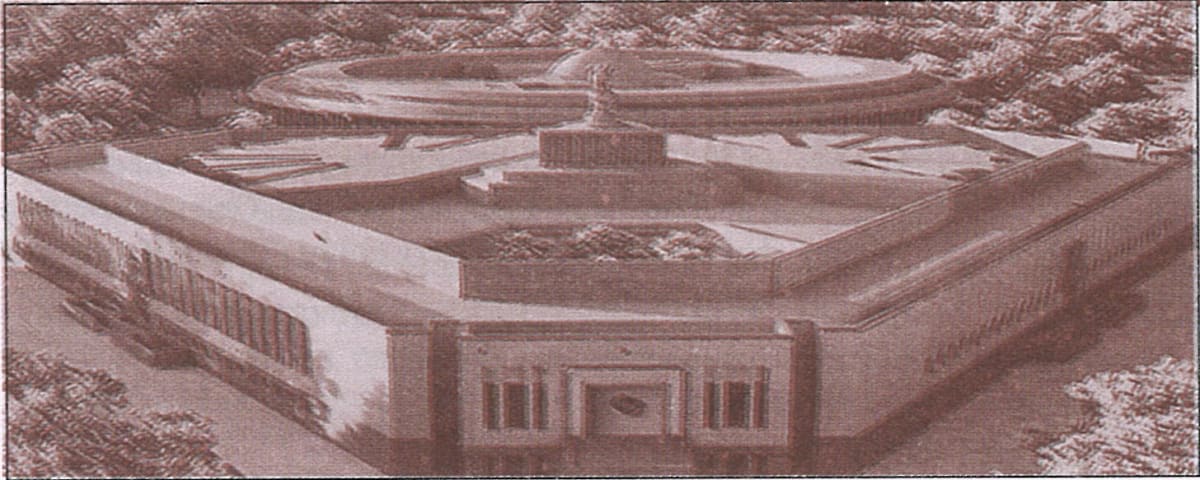
This picture is a symbol of our democratic rule. In this context, answer the following questions:
(a) How does the Parliament work to ensure that the people of India make laws for themselves?
(b) How does the Parliament exercise control over the Executive?
(c) When you grow up, you will have a chance to become an MP. Would you like to be an MP in the Lok Sabha or the Rajya Sabha? Why?
Show SolutionHide Solution↓
(a) The Parliament ensures that the people of India make laws for themselves as both the Houses of the Parliament are made up of the representatives of the people.
Lok Sabha — The Lok Sabha is the House of the People. Its members are directly elected by the people of India on the basis of universal adult franchise.
Rajya Sabha — The members of Rajya Sabha fall into two categories - nominated and elected. The 12 nominated members are nominated by the President from amongst persons who have specialised in the field of art, literature, science and social services. The remaining representatives of the States and Union Territories are elected by the elected members of the Legislative Assemblies.
Since no Bill can become a law unless it is passed by both the Houses, laws are in effect made by the people's own representatives.
(b) The Council of Ministers is collectively responsible to the Lok Sabha and remains in office only as long as it has the confidence of the Lok Sabha. Parliament exercises control over the Executive in the following manner:
Interpellation: Devices like Question Hour, Zero Hour and Calling Attention Notices help MPs seek information from the government. Question Hour, held in the first hour of a sitting, promotes transparency by allowing MPs to question government policies and actions.
Vote of No-confidence: If the government loses the majority's support, it must resign.
Adjournment Motion: Used to discuss and censure serious issues like government negligence or misconduct.
Other Motions of Censure: They include rejection of government bills or passing of private member bills against the government's stance.
Monetary Controls: Parliament exercises monetary controls through budget discussions, cut motions, and examination of government spending by the Public Accounts Committee, based on CAG (Comptroller and Auditor-General of India) reports.
These tools ensure the government stays accountable and acts in the public interest.
(c) I would like to be an MP in the Lok Sabha because the members of the Lok Sabha are directly elected by the people of the country and hence, the Lok Sabha has special powers which make it more powerful than the Rajya Sabha. A Money Bill can be introduced only in the Lok Sabha, and a No-confidence Motion against the government can be moved only in the Lok Sabha.
1Higher Order Thinking Skills
Why is the Lok Sabha often referred to as the 'House of People'? What does this title reflect on its role in Indian democracy?
Show SolutionHide Solution↓
The Lok Sabha is called the 'House of the People' because its members are directly elected by the people of India on the basis of universal adult franchise. The number of members elected from each State depends on its population, so the House represents the people of the country.
This title reflects its role in Indian democracy because:
The Lok Sabha is the direct voice of the people, as its members are directly elected.
The Council of Ministers is collectively responsible to the Lok Sabha and remains in office only as long as it enjoys the confidence of the House. A No-confidence Motion can be moved only in the Lok Sabha.
A Money Bill can be introduced only in the Lok Sabha, giving the elected representatives control over the nation's finances.
Thus, the Lok Sabha is called the 'House of the People' because it represents the will of the people and occupies a central place in India's democratic system.
2Higher Order Thinking Skills
How does the exclusive power given to Lok Sabha regarding the Money Bill highlight the principle of financial control by the people?
Show SolutionHide Solution↓
The Lok Sabha enjoys the following exclusive powers with regard to a Money Bill:
A Money Bill can be introduced only in the Lok Sabha and only with the President's recommendation.
The Speaker of the Lok Sabha decides whether a Bill is a Money Bill or not, and the Speaker's decision is final.
The Rajya Sabha cannot reject or amend a Money Bill. It can only make recommendations and must return the Bill within 14 days. The Lok Sabha may accept or reject these recommendations.
If the Rajya Sabha does not return the Bill within 14 days, the Bill is deemed to have been passed by both Houses.
This highlights the principle of financial control by the people because:
The members of the Lok Sabha are directly elected by the people, whereas the members of the Rajya Sabha are indirectly elected or nominated.
Therefore, the power to raise and spend public money rests mainly with the directly elected representatives of the people, making the Lok Sabha the final authority in matters relating to Money Bills.
3Higher Order Thinking Skills
Do you think the Speaker of the Lok Sabha can remain completely impartial despite belonging to a political party? Discuss with reasons and examples.
Show SolutionHide Solution↓
Reasons which support impartiality:
Once elected, the Speaker does not have affiliation to any party and acts in an impartial manner as the guardian of the rights and privileges of the members.
The Speaker votes only in case of a tie, when there are equal votes on both sides.
The Speaker is answerable only to the House, and no court can question the merits of the Speaker's rulings.
Shri N. Sanjiva Reddy resigned from his political party after being elected Speaker in 1967 to emphasise the neutrality of the office.
Reasons which raise doubts about impartiality:
The Speaker is elected from among the members of the Lok Sabha and generally belongs to the ruling party.
The Speaker exercises important discretionary powers, such as deciding the admissibility of questions, resolutions and adjournment motions, certifying a Money Bill, and deciding disqualification under the Anti-Defection Law.
The office of the Speaker is expected to function impartially and independently, but the extent of impartiality depends on the conduct of the Speaker and the constitutional conventions followed.
4Higher Order Thinking Skills
How does the system of Question Hour and Zero Hour empower the opposition in the Lok Sabha?
Show SolutionHide Solution↓
Question Hour — The first hour of every working day of the Lok Sabha is reserved for questions. The right of members to ask questions from the Government is known as interpellation.
All questions are addressed to the Chair, and if admitted, the Government is bound to answer them.
Members can ask starred questions, unstarred questions and short notice questions.
This keeps the functioning of the Government under scrutiny.
Zero Hour — The Zero Hour begins at 12 noon, immediately after Question Hour, and continues till the lunch break.
During Zero Hour, members can raise matters without prior notice or permission.
It enables urgent matters of public importance to be discussed immediately.
How this empowers the Opposition: The Question Hour and Zero Hour enable the Opposition to question the Government, seek information, raise urgent public issues and hold the Government accountable for its actions.
5Higher Order Thinking Skills
Do you think Members of Parliament should be fined for unruly scenes, frequent adjournments and disruptions in the Lok Sabha leading to loss of valuable working hours and wastage of public money? Give your views and suggestions.
Show SolutionHide Solution↓
Views in favour of a penalty:
Parliament is maintained out of public money and every hour of a sitting costs the taxpayer a considerable amount. Disruptions waste this money.
Frequent adjournments reduce the time available for law-making, discussion of the Budget and scrutiny of the Executive, so important Bills are passed without proper debate.
Members are elected to represent their constituencies; unruly scenes amount to a failure to discharge that trust and set a poor example for citizens.
Views against a penalty:
The Opposition often resorts to protest because it is not given adequate time to raise urgent issues; a fine could be misused by the ruling majority to silence dissent.
The Speaker already has disciplinary powers — he/she may order unruly members to withdraw, may suspend a member who disregards the authority of the Chair, and may adjourn the House in case of grave disorder.
My suggestions:
The Speaker should use the existing powers of naming and suspension firmly and impartially, and the day's allowance of a member named for grave disorder may be deducted.
All parties should agree to a code of conduct for the House.
More time should be allotted to the Opposition for raising matters of public importance so that disruption is not the only means of being heard.
Sittings lost due to disruption should be made up by extending the session, so that the loss falls on the members rather than on the public.
Live telecast of the proceedings should be used to make members answerable to their own voters for their conduct.
6Higher Order Thinking Skills
Do you think there should be limit on the number of times a person can be elected as Member of Parliament? Give your views with reasons.
Show SolutionHide Solution↓
Views in favour of a limit:
It would prevent the monopoly of a few individuals or families over a constituency and check the growth of vested interests.
It would create opportunities for new leadership, especially for the youth, women and weaker sections.
It would reduce the possibility of misuse of influence and patronage by long-serving members.
Views against a limit:
In a democracy, the people should have the freedom to re-elect a representative if they are satisfied with his or her performance.
Experienced Members of Parliament contribute significantly to law-making, Budget scrutiny and committee work.
The Constitution prescribes qualifications and disqualifications for membership but does not limit the number of terms.
My view: I do not think a fixed limit is necessary because free and fair elections allow the people to decide whether a Member of Parliament should continue. If a representative does not perform well, the voters can replace him or her in the next election.
11 Mark · Multiple Choice Questions
The States are represented in the Rajya Sabha on the basis of their ............... .
(a)GDP
(b)taxes
(c)population
(d)area
Show SolutionHide Solution↓
population
Reason — Seats in the Rajya Sabha are allocated to the States and Union Territories on the basis of their population; therefore, the representation of States is based on population.
21 Mark · Multiple Choice Questions
Complete the following analogy.
Lok Sabha : House of People :: Rajya Sabha : ...............
(a)Union of States
(b)Council of States
(c)Representation of the People
(d)Council of the People.
Show SolutionHide Solution↓
Council of States
Reason — The Upper House of the Union Parliament is known as the Rajya Sabha or the Council of States, just as the Lok Sabha is known as the House of the People.
31 Mark · Multiple Choice Questions
If the strength of a House is 230, what is the Quorum of the House?
(a)46
(b)32
(c)23
(d)20
Show SolutionHide Solution↓
23
Reason — The quorum of a House is one-tenth of its total membership. Hence, for a House with a strength of 230 members, the quorum is 230 ÷ 10 = 23.
41 Mark · Multiple Choice Questions
What happens if the Lok Sabha and the Rajya Sabha fail to agree on an ordinary Bill?
(a)The Bill is sent back to the Houses of Parliament for reconsideration.
(b)The matter is decided by the joint-sitting of the two Houses of Parliament.
(c)The Bill is sent back to the Lok Sabha for reconsideration.
(d)The Bill is sent back to the Rajya Sabha for reconsideration.
Show SolutionHide Solution↓
The matter is decided by the joint-sitting of the two Houses of Parliament.
Reason — If the two Houses disagree over an ordinary Bill, the Bill is referred to a joint-sitting of both the Houses, where the matter is decided by a majority of the members present and voting.
51 Mark · Multiple Choice Questions
Complete the following analogy.
Speaker of Lok Sabha : Deputy Speaker of Lok Sabha :: ....?.... : Deputy Chairman of Rajya Sabha.
(a)President of India
(b)Vice-President of India
(c)Prime Minister of India
(d)None of the above
Show SolutionHide Solution↓
Vice-President of India
Reason — The Speaker presides over the Lok Sabha and is assisted by the Deputy Speaker. In the same way, the Vice-President of India, as the ex-officio Chairman, presides over the Rajya Sabha and is assisted by the Deputy Chairman.
61 Mark · Multiple Choice Questions
Read the excerpt given below:
Amid vociferous protests by the Opposition members, the Union government introduced a contentious Bill in the Lok Sabha to replace the Ordinance over control of Delhi services.
— The Hindu, August 2, 2023
(a)needs the approval of the Lok Sabha only.
(b)needs the approval of the Opposition.
(c)needs to be approved by both Houses of the Parliament.
(d)does not need the approval of the Rajya Sabha.
Show SolutionHide Solution↓
needs to be approved by both Houses of the Parliament.
Reason — An Ordinance promulgated by the President has the same effect as an Act, but it must be placed before both the Houses of Parliament for their approval, failing which it ceases to operate six weeks from the re-assembly of Parliament.
71 Mark · Multiple Choice Questions
What happens in the case of conflict between laws on subjects in the Concurrent List?
(a)The State law prevails
(b)The Union law prevails
(c)A Bill is introduced in Parliament.
(d)The President decides which law will prevail.
Show SolutionHide Solution↓
The Union law prevails
Reason — Both the Parliament and the State Legislatures can make laws on subjects in the Concurrent List. In case of a conflict between the two laws, the Union law prevails.
81 Mark · Multiple Choice Questions
What is the tenure of the elected members of the Rajya Sabha?
(a)2 years
(b)4 Years
(c)6 Years
(d)8 Years
Show SolutionHide Solution↓
6 Years
Reason — The Rajya Sabha is a permanent House which cannot be dissolved. Each of its members is elected for a term of six years, one-third of the members retiring after every two years.
91 Mark · Multiple Choice Questions
Which of the following statements about the Rajya Sabha are correct?
P: Each member of the Rajya Sabha is elected for a period of five years.
Q: The minimum age for contesting election for the Rajya Sabha is 30 years.
R: One-half of the total members of the Rajya Sabha retire after every two years.
S: The Rajya Sabha cannot be dissolved.
(a)P and Q
(b)R and S
(c)P and R
(d)Q and S
Show SolutionHide Solution↓
Q and S
Reason — Q is correct because the minimum age for contesting a Rajya Sabha election is 30 years, and S is correct because the Rajya Sabha is a permanent House and cannot be dissolved. P is incorrect (term is 6 years, not 5 years) and R is incorrect because one-third, not one-half, of its members retire every two years.
101 Mark · Multiple Choice Questions
How are the Rajya Sabha members elected?
(a)By the elected members of the State Legislative Assembly by means of proportional representation.
(b)By the adult citizens of India by a single transferable vote.
(c)By the elected members of the Lok Sabha by means of proportional representation.
(d)By members of an electoral college by means of proportional representation.
Show SolutionHide Solution↓
By the elected members of the State Legislative Assembly by means of proportional representation.
Reason — Members of the Rajya Sabha are elected by the elected members of the State Legislative Assemblies through the system of proportional representation by means of the single transferable vote.
111 Mark · Multiple Choice Questions
Complete the following analogy with respect to members of the Rajya Sabha.
Elected : 238 :: Nominated : ....?....
(a)20
(b)15
(c)12
(d)10
Show SolutionHide Solution↓
12
Reason — Of the maximum strength of 250 members of the Rajya Sabha, 238 members are elected by the States of the Union and 12 members are nominated by the President.
121 Mark · Multiple Choice Questions
Which of the following statements about the powers and functions of the Lok Sabha and the Rajya Sabha are correct?
P: No-confidence motion against the government can only be introduced in the Rajya Sabha.
Q: The Lok Sabha can set up a New All-India Service.
R: The Rajya Sabha has virtually no powers in case of Money Bills.
S: In case of a deadlock between the two Houses, the will of the Lok Sabha prevails.
(a)R and S
(b)P and S
(c)S and Q
(d)P and Q
Show SolutionHide Solution↓
R and S
Reason — Statement R is correct as the Rajya Sabha can neither reject nor amend a Money Bill, and Statement S is correct as the will of the Lok Sabha normally prevails in a deadlock because its strength is more than double that of the Rajya Sabha. Statement P is wrong because a No-confidence motion can be introduced only in the Lok Sabha, and Statement Q is wrong because the power to declare the creation of a new All-India Service belongs to the Rajya Sabha.
131 Mark · Multiple Choice Questions
Lok Sabha
Adult citizens of India
Rajya Sabha
?
(a)Elected Members of Legislative Assemblies
(b)Elected Members of State Legislatures
(c)Elected Members of Lok Sabha
(d)Elected Members of Panchayats
Show SolutionHide Solution↓
Elected Members of Legislative Assemblies
Reason — The members of the Lok Sabha are directly elected by the adult citizens of India, whereas the members of the Rajya Sabha are indirectly elected by the elected members of the Legislative Assemblies of the States.
141 Mark · Multiple Choice Questions
Your mother is a renowned social worker. She has neither contested nor won any election to the Rajya Sabha. But she has recently become a member of the Rajya Sabha. How is this possible?
(a)She is appointed by the Chief Justice of India
(b)She is nominated by the President
(c)She is appointed by the Prime Minister
(d)She is nominated by the State Governor.
Show SolutionHide Solution↓
She is nominated by the President
Reason — Twelve members of the Rajya Sabha are nominated by the President from among persons having special knowledge or practical experience in matters such as literature, science, art and social service.
151 Mark · Multiple Choice Questions
Suppose you are a member of the Opposition Party in the Lok Sabha. You want to express lack of confidence in the ruling government. Which motion will you move in the Parliament to do so?
(a)Adjournment Motion
(b)No-confidence Motion
(c)Confidence Motion
(d)Impeachment
Show SolutionHide Solution↓
No-confidence Motion
Reason — The Council of Ministers is collectively responsible to the Lok Sabha. A No-confidence Motion can be introduced only in the Lok Sabha, and if passed by a majority, the Prime Minister and the Council of Ministers must resign.
161 Mark · Multiple Choice Questions
Select the option that shows the correct relationship between Statements I and II.
(I) The allotment of the number of members of Lok Sabha allocated to the various States is made on the basis of the size of the State.
(II) The Rajya Sabha can have a total of 250 members elected from all the States in the Union.
(a)(I) is true, but (II) is false
(b)(I) is false, but (II) is true
(c)Both (I) and (II) are true, but (II) is not the correct explanation of (I)
(d)Both (I) and (II) are false.
Show SolutionHide Solution↓
Both (I) and (II) are false.
Reason: Statement (I) is false because the number of Lok Sabha seats allotted to each State is based on its population, not on its size (area). Statement (II) is false because the maximum strength of the Rajya Sabha is 250, of which 238 members are elected by the States and Union Territories, while 12 members are nominated by the President.
1Short Answer Questions
State two occasions on which the President of India addresses a joint session of Parliament.
Show SolutionHide Solution↓
The two occasions on which the President of India addresses a joint session of Parliament are:
At the commencement of the first session after each General Election to the Lok Sabha.
At the commencement of the first session of each year (the Budget Session).
2Short Answer Questions
Who presides over the Rajya Sabha? Who elects the Deputy Chairman of the Rajya Sabha?
Show SolutionHide Solution↓
The Vice-President of India is the ex-officio Chairman of the Rajya Sabha. He presides over its meetings.
The Rajya Sabha elects a Deputy Chairman from among its members. In the absence of the Chairman, he performs all functions and duties of the Chairman.
3Short Answer Questions
Name the body which elects the Rajya Sabha Members. Mention any two matters where the Rajya Sabha enjoys equal powers with the Lok Sabha.
Show SolutionHide Solution↓
Rajya Sabha Members are elected by the elected members of the Legislative Assembly of each State.
The Rajya Sabha enjoys equal powers with the Lok Sabha in important matters such as:
Election of the President and Vice-President
Impeachment of the President.
4Short Answer Questions
What do we mean when we say that the Rajya Sabha is a permanent body? What is the term of office of a Rajya Sabha member?
Show SolutionHide Solution↓
The Rajya Sabha is a permanent House because it cannot be dissolved. One-third of its members retire every two years and are replaced by newly elected members, so the House continues to exist. Members may be re-elected if they so desire and if their electors support them.
The term of office of a Rajya Sabha member is six years.
5Short Answer Questions
Who is the ex-officio chairperson of the Rajya Sabha? Mention one of his/her duties other than being the chairperson of the Upper House.
Show SolutionHide Solution↓
The Vice-President of India is the ex-officio chairperson of the Rajya Sabha.
The Vice-President officiates as President in case of death, resignation or removal of the President till a new President is elected.
6Short Answer Questions
Name the lists which distribute the Subjects of legislation between the Union and the States. Mention any one circumstance when the Parliament can make laws on a state subject.
Show SolutionHide Solution↓
The lists which distribute the Subjects of legislation between the Union and the States are -
The Union List
The State List
The Concurrent List
The Parliament can make laws on a state subject during the proclamation of an emergency.
7Short Answer Questions
Mention any two circumstances under which the seat of a member of the Parliament becomes vacant.
Show SolutionHide Solution↓
The seat of a member of either House of Parliament becomes vacant in the following situations —
If a member resigns his seat by writing to the Speaker or to the Chairman, as the case may be.
If a member becomes subject to any of the disqualifications laid down in the Constitution or an Act of Parliament.
8Short Answer Questions
Mention any one provision of the Constitution which clearly establishes the supremacy of the Lok Sabha with regard to money bills. What happens when a Money Bill is not returned by the Rajya Sabha in 14 days?
Show SolutionHide Solution↓
One provision of the Constitution that clearly establishes the supremacy of the Lok Sabha with regard to Money Bills is that a Money Bill can originate only in the Lok Sabha.
If a Money Bill is not returned by the Rajya Sabha within 14 days of its receipt, it is deemed to have been passed by both Houses in the form in which it was passed by the Lok Sabha.
9Short Answer Questions
Which bodies have the right to legislate on subjects in the Concurrent List? What happens in the case of conflict between such laws?
Show SolutionHide Solution↓
In India, the Parliament and the State Legislature both have the power to legislate on the subjects of the Concurrent List.
In the case of conflict between such laws, the Union Law prevails over the State Law.
10Short Answer Questions
If the President does not give his/her assent to a Bill, what happens?
Show SolutionHide Solution↓
The Bill is sent back to the Parliament for reconsideration. However, if the Bill is passed again with or without amendments the President is bound to give his assent to the Bill.
1Structured Questions
With reference to the powers of the Union Parliament, state the following:
(a) Three of its Legislative Powers.
(b) Three of its Financial Powers.
(c) Four of its Administrative or Executive Powers.
Show SolutionHide Solution↓
(a) Three legislative powers of the Union Parliament are-
Matters in the Union List — Parliament has the exclusive power to make laws on all subjects in the Union List, such as Defence, Banking, Communications and Foreign Affairs.
Matters in the Concurrent List — Parliament, along with the State Legislatures, can make laws on subjects in the Concurrent List. In case of a conflict, the Union law prevails.
Residuary Powers — Parliament can make laws on matters not mentioned in any of the three Lists (Union, State and Concurrent Lists).
(b) Three financial powers of the Union Parliament are-
The Budget — Parliament passes the Union Budget, containing the estimates of the Government's receipts and expenditure for a financial year.
Supplementary Grants — If the amount authorised for the current financial year is insufficient, Parliament approves Supplementary Grants.
Salaries — Parliament determines the salaries and allowances of Members of Parliament and Ministers.
(c) Four executive powers of the Union Parliament are-
Vote of No-Confidence — Parliament can remove the Government by passing a No-confidence Motion, requiring the Council of Ministers to resign.
Adjournment Motion — Parliament may move an Adjournment Motion to censure the acts of omission and commission of Ministers.
Other Motions of Censure — Parliament exercises control through motions of censure, rejection of Government Bills, passing of Private Members' Bills against the Government's wishes, etc.
Monetary Controls — Parliament exercises financial control through Cut Motions and the Public Accounts Committee, which examines the reports of the Comptroller and Auditor-General (CAG) to ensure that public money is spent according to Parliament's decisions.
2Structured Questions
With reference to the powers of the Rajya Sabha, state the following:
(a) Any two of its legislative and one financial power.
(b) Any three of its administrative powers.
(c) (i) Any two of its exclusive (special) powers. (ii) Any two electoral functions.
Show SolutionHide Solution↓
(a) Two legislative powers of Rajya Sabha are-
Except for Money Bills, all bills can be introduced in the Rajya Sabha.
None of the bills can become a law unless agreed to by both Houses of the Parliament. In case of conflict between the two houses of the Parliament, a joint sitting is presided over by the Speaker of the Lok Sabha.
One financial power of Rajya Sabha is that it can delay a money bill by a maximum of 14 days.
(b) Three administrative powers of Rajya Sabha are-
Rajya Sabha can make laws on all the subjects mentioned in the Union and Concurrent lists.
It can punish a person for obstructing the work of the House or showing disrespect to the House.
It can remove the President from office through the procedure of impeachment.
(c) (i) Two exclusive powers of Rajya Sabha are-
Though the Parliament cannot, in normal times, make laws on a state subject, the Constitution states that under Article 249, the Rajya Sabha may, by a resolution adopted by two-thirds majority, empower the Parliament to make laws with respect to a matter in the State List. The Lok Sabha has no authority to assert itself in such matters.
The other special power enjoyed by the Rajya Sabha is that it may declare that the creation of new All-India Services be made in the national interest. Thereupon Parliament may create new services.
(c) (ii) Two electoral functions of Rajya Sabha are-
The Vice-President of India is elected by both the Houses of the Parliament.
Rajya Sabha elects its Deputy Chairman from among its members.
3Structured Questions
With reference to the differences in the powers of two Houses answer the following questions:
(a) Compare and contrast the elections to both the Houses.
(b) What is the procedure that is followed if there is a deadlock between the two Houses of the Parliament on a non-money bill?
(c) What is the difference between a money bill and a non-money bill?
Show SolutionHide Solution↓
(a) Comparison between the elections to both the Houses is listed below:
Election of members to Lok Sabha —
The Lok Sabha is the House of the People.
The members of the Lok Sabha, whose maximum strength is 550, are directly elected by the people of India on the basis of universal adult franchise.
The allotment of members to the various States is made on the population basis.
Election of members to Rajya Sabha —
The maximum strength of the Rajya Sabha can be 250 members.
12 members are nominated by the President from among persons having special knowledge or practical experience in matters such as literature, science, art and social service.
The representatives of each State in the Rajya Sabha are elected by the elected members of the Legislative Assembly of each State in accordance with the system of proportional representation by means of a single transferable vote.
The representatives of the Union Territories are chosen in such a manner as Parliament may prescribe.
The three representatives from Delhi are elected by the members of the Legislative Assembly.
(b) Ordinary Bills may originate in either House of the Parliament.
If there is disagreement between the two Houses, the bill is referred to a joint-sitting of both the Houses.
In such cases both the Houses are placed on an equal footing.
However, the Rajya Sabha is in a weaker position, since the total membership of Rajya Sabha is less than even half of the total strength of the Lok Sabha.
Besides, the joint session is presided over by the Speaker of the Lok Sabha.
(c) The differences between a money bill and a non-money bill are as follows:
Non-money bill
Money Bill
It can be introduced in either Lok Sabha or Rajya Sabha.
It can be introduced only in Lok Sabha.
Ordinary Bill can be introduced without the recommendation of the President.
Money Bill can be introduced only on the recommendation of the President.
Either a Minister or private member can introduce ordinary bill.
Only a Minister is allowed to introduce Money Bill in the Parliament.
If the Ordinary Bill originated in the Lok Sabha, then it does not require the approval of the speaker when transmitted to Rajya Sabha.
Money Bill requires the certification of the Lok Sabha Speaker when transmitted to Rajya Sabha.
The Rajya Sabha has the power to detain the Ordinary Bill for a period of 6 months.
The Money Bill can be detained for a maximum period of 14 days only by the Rajya Sabha.
Ordinary Bill can be returned for reconsideration, accepted or rejected by the President.
Money Bill cannot be returned for reconsideration by the President. The President can only accept or reject it.
In case of deadlock on Ordinary Bill there is a provision of a joint sitting.
In case of Money Bill, if there is a deadlock, there is no provision of a joint sitting.
4Structured Questions
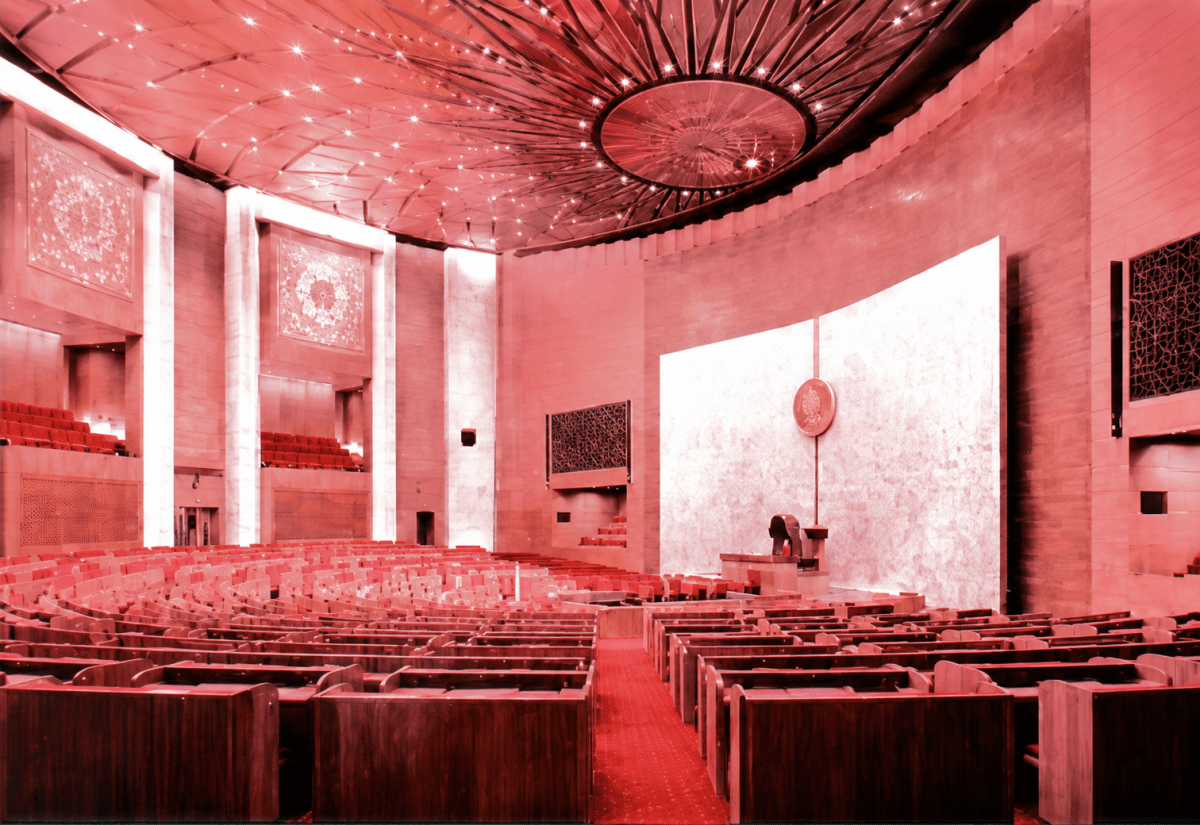
This picture is a symbol of the federal spirit of the Indian Constitution. In this context, answer the following questions:
(a) Why is the Rajya Sabha called the 'Council of States'?
(b) How does the election of Rajya Sabha members ensure that the House serves as a true representative of the States?
(c) How does it effectively represents the interests of the States?
Show SolutionHide Solution↓
(a) The Rajya Sabha is called the ‘Council of States’ because:
It is the Upper House of Parliament and represents the States of the Indian Union.
Of its maximum strength of 250 members, 238 represent the States and Union Territories, while 12 are nominated by the President.
Seats are allotted to the States mainly on the basis of their population, thereby giving the States representation in the Union Parliament.
(b) The manner of election of the members of the Rajya Sabha makes it a true representative of the States.
The representatives of each State in the Rajya Sabha are elected by the elected members of the State Legislative Assembly.
They are elected according to the system of proportional representation by means of the single transferable vote.
Thus, the representatives chosen by the people at the State level elect the State's representatives to the Rajya Sabha, enabling different political groups in the State Legislature to secure representation in proportion to their strength.
(c) The Rajya Sabha protects the interests of the States through its powers and position in Parliament:
Legislation on State subjects: By a resolution passed by a two-thirds majority, it can declare a subject in the State List to be of national importance and empower Parliament to legislate on it.
Creation of All-India Services: It can declare that the creation of a new All-India Service is necessary in the national interest, after which Parliament may create such a service.
Participation in legislation: Except in financial matters, the Rajya Sabha generally enjoys equal powers with the Lok Sabha; an Ordinary Bill must be passed by both Houses.
Continuity of representation: Being a permanent House, the Rajya Sabha cannot be dissolved. Thus, even when the Lok Sabha is dissolved, the States continue to have representation at the Union level.
1Higher Order Thinking Skills
The members of the Rajya Sabha are not directly elected by the people. Many times political parties send their loyalists or those could not win a popular election. Do you think it weakens the democratic principle of Indian Parliament? Give your views.
Show SolutionHide Solution↓
I do not think that the indirect election of Rajya Sabha members by itself weakens the democratic principle of Parliament.
The Rajya Sabha is meant to represent the States of the Indian Union, not the people directly. Its members are therefore elected by the elected members of the State Legislative Assemblies.
The election is held according to proportional representation by means of the single transferable vote, which allows different political groups in a State Legislature to secure representation according to their strength.
Since the MLAs themselves are directly elected by the people, Rajya Sabha members have an indirect democratic mandate.
However, if political parties use the Rajya Sabha merely to accommodate loyalists or defeated candidates, it can reduce the quality of representation and public confidence. Parties should therefore select candidates on the basis of ability, experience and capacity to represent the interests of the States.
Thus, indirect election is consistent with the federal and democratic character of Parliament; the problem arises from the manner in which parties may sometimes select candidates, not from the system itself.
2Higher Order Thinking Skills
The nominated members of Rajya Sabha are supposed to provide the expertise that elected politicians may not possess. But many nominated members remain inactive and fail to perform their assigned duties. Do you agree with this view? What solutions do you suggest?
Show SolutionHide Solution↓
Yes, I partly agree. The 12 nominated members of the Rajya Sabha are chosen from persons with special knowledge or experience in literature, science, art and social service, so that Parliament benefits from their expertise.
However, this purpose is weakened if nominated members remain inactive. To improve their contribution:
They should maintain regular attendance and participate actively in debates and committees.
Nominations should consider a person's willingness to contribute to parliamentary work, not merely fame or distinction.
They should be encouraged to raise issues and offer expert views particularly in the fields in which they have specialised.
3Higher Order Thinking Skills
Do you think that the two Houses of Parliament are not competing centres of power but are co-partners in the functioning of government? Give your views.
Show SolutionHide Solution↓
Yes, the two Houses of Parliament are co-partners in the functioning of government rather than competing centres of power.
Both Houses participate in law-making, and an Ordinary Bill must generally be passed by both Houses before becoming law.
They enjoy equal powers in matters such as Constitutional amendments, impeachment of the President, and removal of judges.
Their powers are complementary: the Lok Sabha has greater authority in financial matters and control over the Council of Ministers, while the Rajya Sabha has special powers concerning State subjects and the creation of All-India Services.
Thus, both Houses perform distinct but coordinated roles and together ensure effective legislation, federal representation and parliamentary control.
4Higher Order Thinking Skills
What is the role of Opposition Parties in a parliamentary democracy? What challenges do Opposition Parties face in presenting a united front against a strong majority government?
Show SolutionHide Solution↓
Role of the Opposition Parties in a parliamentary democracy:
Hold the Government accountable: Opposition parties question Ministers and scrutinise the policies and actions of the Government.
Use parliamentary devices: They raise issues through Question Hour, Adjournment Motions and No-Confidence Motions.
Represent alternative views: They bring different opinions and public concerns before Parliament.
Constructive criticism of legislation — By debating Bills and suggesting amendments, the Opposition improves the quality of law-making and ensures that the views of minorities and of different regions are heard.
Check misuse of power: They act as an important democratic check on the ruling party.
Challenges in presenting a united front against a strong majority government:
Opposition parties may have different ideologies, regional interests and political priorities.
Rivalries among parties and leaders may make coordination difficult.
They may disagree on a common programme or strategy against the Government.
A Government with a strong majority can usually defeat Opposition motions and pass its legislative programme.