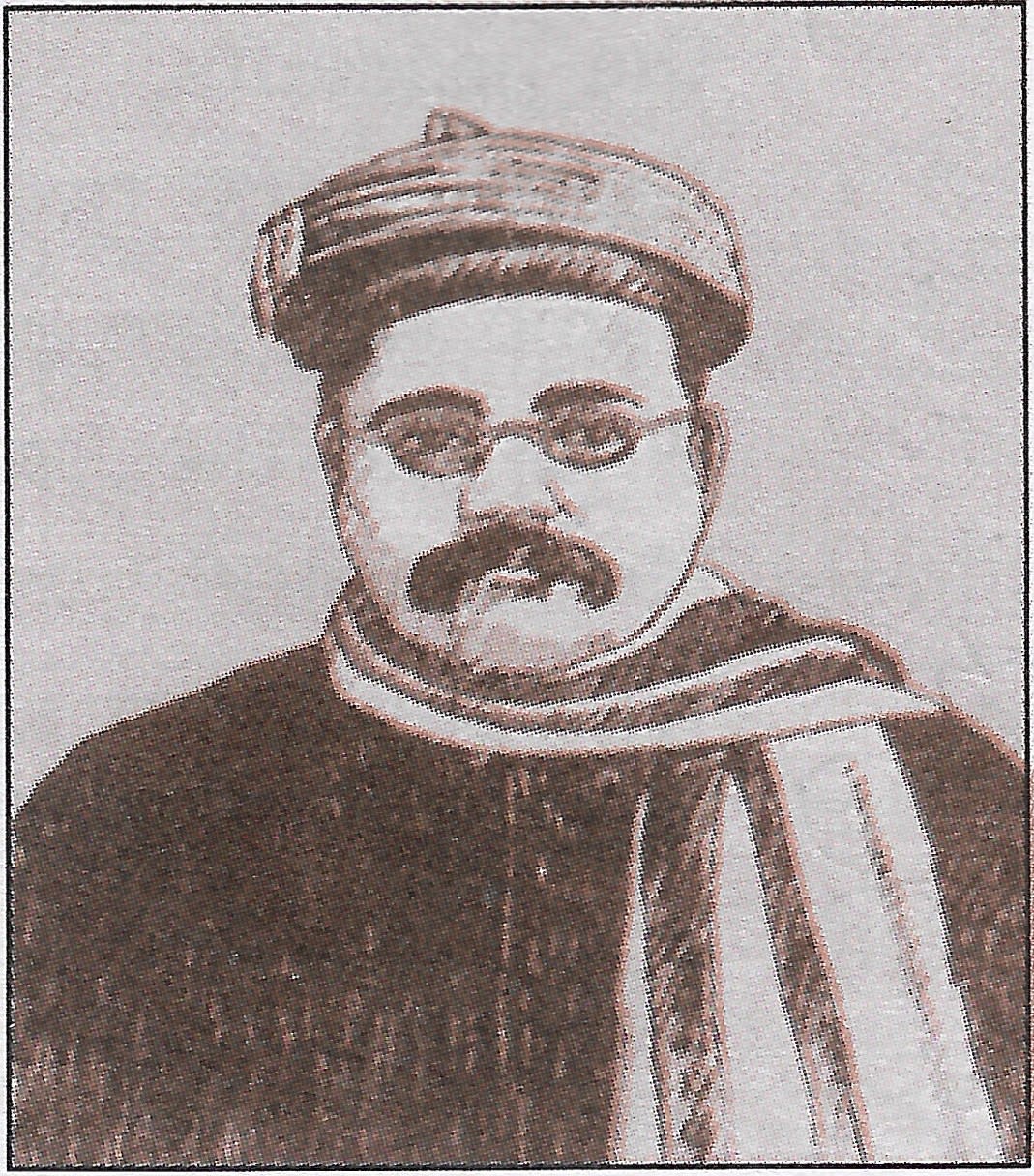
(a) Dadabhai Naoroji, also known as the "Grand Old Man of India" and the "Unofficial Ambassador of India" was a remarkable Indian political leader, merchant, scholar, and writer. He presented his 'Drain Theory' in his paper Poverty and Un-British Rule in India. He was thrice elected as the President of the Congress.
According to Dadabhai Naoroji, 'security of life and property' prevails in India in a sense that the people were secure from internal or external violence. Naoroji acknowledged that there is a certain level of security within India itself. People are relatively safe from violence inflicted by each other or by native rulers (despots). However, this security does not extend to protection from England’s grasp. Naoroji argues that under British rule, there is no genuine security for property. The British colonial administration, rather than safeguarding Indian property, often exploited it. The "Drain Theory" proposed by Naoroji highlighted how Britain was siphoning off India’s wealth and resources, leading to India’s continued impoverishment.
(b) According to Dadabhai Naoroji, England was ‘perfectly safe and secure’ because England was extracting India’s wealth at an alarming rate—approximately $30,000,000 to $40,000,000 annually. This exploitation occurred both within India (where England consumes the wealth) and outside India (where England carries it away). This drain of wealth was making England stronger and pushing India to poverty and starvation.
(c) Dadabhai Naoroji propounded 'The drain theory' to describe the exploitative nature of British rule in India.
The given line captures the harsh realities faced by millions in India during the colonial period. For those struggling to survive, life was reduced to “half-feeding,” starvation, and vulnerability to famine and disease. The over exploitation of Indian peasants, farmers and merchants was the root cause of all the economic ills of India. The draining of resources—whether through taxation or export—directly impacted the livelihoods of millions.